Showing posts with label Katy Searle. Show all posts

Saturday, 20 May 2017

"Well, I wouldn't accept them"


Laura Kuennsberg, holding forth

This week's Newswatch featured complaints about how BBC news bulletins are becoming "the Laura Kuenssberg show" with Laura providing a "running commentary" and plenty of "personal opinion". (Well, yes).

There were also 'complaints from both sides' about bias, with 'one side' complaining that the BBC is giving far too much airtime to Jeremy Corbyn and the Labour Party and 'the other side' (the more numerous one) complaining that the BBC is adopting "a sneering and condescending tone" in its interviewing of Labour its reporting of Labour policies. (Oddly, both could be true. Think of UKIP's treatment over the years).

Also the BBC's economics editor Kamal Ahmed came under fire his piece on Labour's manifesto on Tuesday's News at Six, which seriously botched the figures - to Labour's disadvantage. Kamal's graphics especially made out that those earning over £123,000 would have to pay and extra £23,000 in income tax - whereas, apparently, the correct figure would be £2,150! (Radio 4's More or Less also debunked Kamal Ahmed this week). Cock-up or conspiracy? Newswatch viewers were split between those who thought it was a "cock-up" and those who thought it was a "conspiracy". (Cock-up, I'd say).

And there were complaints about the use of vox pops, with a slightly absurd clip of John Pienaar asking panting gym users, mid-exercising, about their views of Jeremy Corbyn. What purpose do they serve? How representative are they? (Good questions!)

Answering all of this was our old friend Katy Searle. She was having none of the criticisms. (Shock! Horror!).

A transcript follows....


Katy Searle, waiting to say the BBC has got it right

Samira Ahmed: Well, let's discuss some of those issues with the BBC's editor of political news, Katy Searle, who's in our Westminster studio. Katy, let's start with the allegations of bias, mostly claiming that the BBC has an anti-Corbyn bias and it's quite a personal one. You've seen the examples that viewers raise. What would you say?

Katy Searle: Well, I wouldn't accept them. We have very strong and clear guidelines that we follow, our editorial guidelines, and they're in line with the Ofcom code of conduct as well, which show that we have strict rules to abide to across the election period and to reflect all parties' positions and policies. And that's something we do absolutely and we take that very seriously.

Samira Ahmed: Labour supporters are complaining that too much coverage is attacking the party. Tory supporters are saying Labour get more air time. So how is BBC News approaching that whole issue of balance and fairness?

Katy Searle: Well, it is a challenge every day. What we have to do is take our editorial judgments and that's always going to have to guide our coverage. And that's why programme editors across the BBC and correspondents on air, as well as Laura, the political editor, have long and careful discussions about what stories we're going to cover, what are the values in the news terms of those stories, and then how do they fit in line with the guidelines that I've just talked about.

Samira Ahmed: What's noticeable already in this election campaign is that perceived errors, and indeed some factual ones, are amplified on social media when people try to build a campaign around them saying, look, the BBC's being unfair. How should the BBC deal with those examples?

Kamal Ahmed, getting it wrong

Katy Searle: Look, we're all human, we do make mistakes. Look, you know, we're working to tight deadlines with lots of information coming in all the time and sometimes we do get it wrong. In those circumstances you just have to look and see where you can correct it as quickly as possible. And just on the detail I think it's worth adding that sometimes graphics actually can not be as clear. You are trying to sum up quite a lot of detail in one simple picture of numbers and figures. What we need to do is be very clear that our scripting goes around that and tells the full story.

Samira Ahmed: OK. We have seen a particularly vocal campaign online against Laura Kuenssberg alleging anti-Labour bias. What's the BBC's response?

Katy Searle: Well, Laura Kuenssberg is a first-class political editor who has worked incredibly hard to get her job right. Laura does the daily analysis of all of the political parties and, of course, no personal views are reflected in any sense on any party, and that's true not just of Laura but across the BBC. So Laura's doing her job and she's doing that brilliantly.

Samira Ahmed: More broadly, though, viewers do complain that there's too much personal commentary from political correspondents who are kind of filling airtime and it is not fact-based, it's not objective. Wouldn't the BBC be better, as at least one of our viewers has suggested, to sticking to factual reporting?

Katy Searle: Well, I think analysis is really important actually, as part of our coverage. Certainly in elections, and as we saw in the referendum last year, parties and campaigns have their own positions to push and they will do that and they will give us figures. And really, an important part of our job is to try and analyse and say to the viewer, well, on balance this is what it looks like to us. That's why we have very experienced people, from Laura down across the BBC, working on that and trying to give the audience something that means something and not just slogans and numbers.

John Pienaar interviewing a vox pop at the gym

Samira Ahmed: We have to talk about vox pops because they come up every election and the charge is two things, one is if they are too gimmicky - you're not going to get much of an answer if people are in the gym, or whatever. But also that they're not informed and aren't representative, and shouldn't the BBC be more careful about using them?

Katy Searle: Yeah, vox pops are tricky actually because I have a little bit of sympathy for that view. However, if we're doing a lot of politicians, and we are at the moment, and it's a very formalised way of presenting their views and opinions, I think vox pops gives us a bit of colour. It also does the most important thing which is to reflect the public's view. And in this campaign which goes on for several weeks we want to hear from our audience as well and try and, if you like, road-test some of the policies. A vox pop is an unscientific way of doing that but it's the best way that we can do when we're dealing with tight news agendas.

Samira Ahmed: Katy Searle, thank you. 

Sunday, 22 January 2017

"But it did leave many, many questions unanswered"


For anyone who's interested, here's a transcription of an interview on this week's Newswatch with Katy Searle, Editor of BBC Political News. 

Many of you will already know about it and, according to the Daily Express, it was highly "cringe-worthy":
She was left to repeat herself over and over again in a desperate attempt to defend BBC reporting during the embarassing [sic] car-crash interview.
Regular readers may remember Katy for her astonishing, repeated apologies on behalf of the BBC (on Feedback last year) where, very unusually for a BBC editor, she said three times that the BBC hadn't got it about right over its reporting of Jeremy Corbyn. 

This time around, however, it was very much back to normal. All we got was the usual 'The BBC has got it just about right' line from our Katy, and she was 'fessing up to absolutely nothing when it comes to the BBC's Brexit coverage: For her, all is for the best, BBC-impartiality-wise, regarding this most impartial of all possible broadcasters. 

*******

Samira Ahmed: So let's talk about this to Katy Searle, who's the Editor of BBC Political News and she joins us from our Westminster studio. Katy, let's start with the complaints about who's getting airtime. Many viewers, as you heard there, saying too many voices giving initial reaction to May's speech are hostile to Brexit and, essentially, the BBC is rehashing the whole debate that we had in the referendum. 

Katy Searle: I think the job as journalists - and it's true whether it's at the BBC or across other media or, indeed, the newspapers - is to question and to ask for answers that we don't have. And the country voted for Brexit but it's really left many, many questions unanswered. Actually, on Tuesday, when the Prime Minister gave her speech, we gave a great deal of coverage to the speech itself, which set out the arguments and the plans for Brexit from the government. But it did leave many, many questions unanswered. and you heard there from Jeremy Corbyn and Nicola Sturgeon with their own questions. So we're not just asking the questions just from the BBC's point of view - although we would do that as journalists. We're putting the concerns of the other main politicians in this country to try and get some answers and the answers that we don't have.

Samira Ahmed: Part of the concern though is about the language used by reporters. You know, a lot of people are very concerned. Is there too much hypothetical worry rather than straight reporting of what the Prime Minister said? 

Katy Searle: We did a piece that ran for about five-and-a-half minutes for the main six and ten o'clock news programmes that night - and actually that's a very long piece for the news at that point. And we did that specifically because we wanted to give the people, the audience, the chance to hear the Prime Minister's case on what was a defining speech from the government. So I think we did give airtime to that but, as I say, there's then the opportunity to say, well, hang on a minute, we're trying to do the job for the audience which is to raise questions they may have in their mind and answer questions that they may think 'Well, she didn't really explain that', and 'What does that mean?' and 'Why would we do that?' So it's very much our job as journalists to try and do that for the audience. In fact, that's part of what we're for - is to try and get to the answers and try and give some clarity where perhaps there is none coming from the government. 

Samira Ahmed: It sounds from some of the viewers' complaints that we're getting though that, you know, the BBC might say we're dealing where there's concerns, there's questions...in a sense you're looking for the drama...but perhaps the BBC needs to slightly rethink the tone in which it covers these things and the assumptions made?

Katy Searle: Certainly I would agree that tone is absolutely vital - and that's true of any story that we cover. And, you know, we think carefully about this and I think we try and...We look at our scripts over again, we think about the words that we use, and I'd be very careful if were adopting a tone that was...reflected one side or the other. I think the BBC continues to be committed to impartiality - and that's as true of the Brexit debate as it is on any other subject.

Samira Ahmed: Is it as simple as the BBC more often actually simply needs to caveat more that we just don't know what a lot of this is going to mean?

Katy Searle: I think that's absolutely true - and we do do that. One of the things we've set up in the past couple of years is the BBC's Reality Check, which is there to try and get to the bottom of those unanswered questions and try and provide the audience with some clarity and some facts and figures. Actually, very often the answer will come, 'Well, there's this evidence and that evidence but in truth we don't really know the outcome'.

Samira Ahmed: Do you actually think there might be more good news about Brexit out there that could the reported? 

Katy Searle: I think we should absolutely do that. We will try and make every effort, as the negotiations go on, to ask the question 'Is that a good thing?'. 'Is that a bad thing?'. Again, it's part of our job to present every side of that. And I agree that we will be looking for that opportunity as much as highlighting any concerns or problems with it. 

Katy Searle: Katy Searle, thank you very much. 

Saturday, 17 September 2016

Complaints from another side


Katy Searle

Something highly unusual and rather disconcerting happened on Radio 4's Feedback this week. Questions about BBC bias were put and a senior BBC editor repeated admitted that the BBC had got things wrong. 

I can't recall ever hearing such an interview before on Feedback - except over climate change, where various BBC editors have publicly confessed to the sin of not being hard enough on unbelievers like Nigel Lawson and Quentin Letts. 

Still, this interview was even more striking than those because the BBC editor in question - BBC Political News Editor Katy Searle - admitted error on the BBC's part not once, not twice but three times in the course of a single interview. 

That must be unprecedented.

The issue at hand was: Is the BBC biased against Jeremy Corbyn? 

Roger Bolton took the question very seriously indeed. 

The first Corbynista complaint was that TrainGate was a "non story" and that the BBC shouldn't have spent much time on it. Katy Searle rejected that particular complaint saying that TrainGate certainly was a significant story. (That's the one bit where she behaved like a typical BBC editor on Feedback).

The second Corbynista complaint was that an edition of The Week in Westminster had featured two Labour figures - Chris Mullen and Caroline Flint - discussing Jeremy Corbyn, both of whom said that Jeremy couldn't win an election. 'Why wasn't there a Corbyn supporter present?' was the question asked. Katy accepted that complaint and said, yes, on that occasion, more could have been done to find a Corbyn supporter. 

The third  Corbynista complaint was that the BBC has run "factually incorrect" stories about thuggish behaviour by Corbyn supporters, citing the BBC's reports about protests surrounding Stella Creasey that got where the protests happened wrong. Katy accepted that one too, saying, yes, a mistake was made there. "We" got it wrong, she said, adding. "In live broadcasting mistakes are made and I only think it's right we put our hands up to that".

A genuine new book

The fourth Corbynista complaint was that the BBC hasn't been reporting what Jeremy Corbyn has been saying at packed meeting up and down the country. Katy  rejected the idea that the BBC hasn't reported those meetings. However, she agreed that the BBC should talk more about the issues and said, "I would accept actually that we have done perhaps a little bit too much on the party leadership." 

Katy Searle was remarkably contrite and appealed, more than once, to Radio 4 listeners to believe that the BBC takes complaints about bias "very, very seriously": 

Any accusation or perception of bias is taken very seriously and I, on a day to day basis, look at what we're doing on output and make sure we correct that".

Isn't that something? 

Given all the years people like us have complained about BBC bias on issues of concern to us and got pretty much nowhere in terms of official concessions about, say, BBC pro-EU bias, or BBC pro-immigration bias, or BBC anti-Israel bias, etc, etc,...

...and given how often we've been told that single editions of ongoing programmes can't be taken as proof of bias but must be judged, bias-wise, over time and many episodes, and how often our side is excluded from discussion after discussion (or utterly overwhelmed numerically on programme after programme) without the slightest chance of an admission of bias from the BBC...

...and given how long and arduous the process of complaining about BBC bias usually is....

...isn't it then utterly remarkable how easily Katy Searle conceded those points to Roger Bolton and his Corbynista listeners, and just how apologetic she sounded?

We've had pretty much all such complaints dismissively waived away on programmes like Feedback and Newswatch for donkeys' years only now to find that the merest whiff of grapeshot from a few Momentum types has the BBC bowing and scraping.

As I say, a truly remarkable interview. 

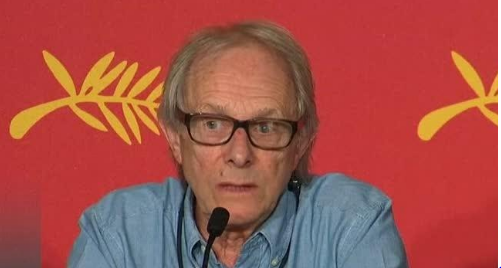
Red Ken

Curiously, as Politics Home reports, the day before this edition of Feedback saw an intervention from far-left film director Ken Loach urging Jeremy Corbyn supporters to flood the BBC with complaints about bias. 

Speaking to a Corbynista gathering, Mr Loach twice read out the number of the BBC Complaints line and coached his audience on the dos and don'ts of complaining to the BBC. (He didn't mention Feedback though.)

“The BBC is an arm of the state. The BBC is not some objective chronicler of our time – it is an arm of the state,” he told them. “They have this pretence of objectivity where in fact it is propaganda on behalf of the broad interests of the state.".

Given the referential treatment he's usually accorded by the BBC (see Today here and The World Tonight here) "the state" seems happy about the BBC giving Ken Loach a platform. And yet he's not remotely grateful, is he?