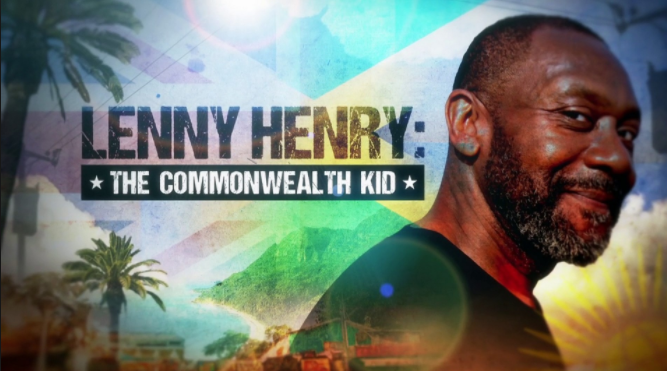
Black Classical Music: The Forgotten History on BBC Four, presented by Sir Lenny Henry and Suzie Klein, was much as you'd expect, but worth watching nonetheless.
You had, of course, to put up with lots and lots and lots and lots of Black Lives Matter-provoked, extremely earnest finger-wagging from Sir Lenny, Suzie & Co. about how bad we are for neglecting all these forgotten black names, and about the lack of diversity in classical music...
And you also had to also put up with Sir Lenny 'being funny', dancing, and fencing, and swooning with unrestrained enthusiasm over the 'neglected' music he was hearing...
But I love being introduced to 'unfamiliar' composers, even if most of them weren't unfamiliar to me, and I did learn some things I didn't know.
And we heard (fleetingly) some attractive bits of music along the way.
The problem is that the BBC programme massively overstated and distorted its woke-friendly case.
*******
I know no one (except me) wants to read a post about classical music, even if it's about BBC bias and BBC manipulation, but I'm going ahead with it nonetheless as I think it's important that someone says it. So headphones on and bugles raised...
*******
The first composer they presented as having been wickedly neglected by the 'gatekeepers' of classical music - George Walker - has, if you look at Wikipedia, had a highly successful career throughout his long life. He passed through prestigious school after prestigious school winning diploma after diploma, studied with the greats, thrived as a concert pianist, a respected teacher and an academic, won a Fullbright Fellowship, studied with Nadia Boulanger, won countless awards and achieved a Pullizer Prize. His Lyric for Strings (played twice at The Proms now) "has been one of the most frequently performed orchestral works by a living American composer".
We weren't told any of this by the BBC. He was merely presented as being badly done-by because it took till 2017 for one of his works to be played at The Proms.
But The Proms neglects lots of composers. One of my favourite American composers, Alan Hovhaness, received just a single performance at The Proms over the course of his very long career. I'm sure audiences would love works like the Mysterious Mountain Symphony and the Celestial Gate Symphony (the latter containing one of the loveliest tunes ever included in a symphony).
It was a sign of things to come on this BBC programme.
*******
After a spot of enthusing over Tudor "multiculturalism", we came to the (British) Georgian era composer Ignatius Sancho. Sir Lenny said his music has "pretty much disappeared". Well, basically every British composers' during the hundred years or so after Handel has "pretty much disappeared" too - with the possible exception of William Crotch (mainly for non-musical reasons).
*******
Another "shunted aside" composer who was "not only as good as their white peers but even better" (as Sir Lenny put it) was Joseph Bologne, Chevalier de Saint-Georges - a man contemporaries classed as being up there with Haydn, Mozart and Beethoven. (A lot of composers were overrated in their day).
I smiled as Suzie said that his 'centuries-long' neglect had lessened recently thanks to the likes of the 'diverse' orchestra the programme championed championing his music. Maybe, but recordings of Saint-Georges have been coming out in droves for decades now.
I've always found his music to be attractive, along the lines of Stamitz (similarly neglected now, but respected then). He's no Haydn though. Very few are.
And, apparently, Mozart possibly nicked an idea from le Chevalier, so it's so unfair that he's known as "the black Mozart". Hm.
And he's not generally known now because of...guess what?...yes, RACISM!!! Hm.
What about similarly fine figures like Kozeluch or Gossec? (They've never been played at The Proms.) Or even the mighty, delightful, highly sophisticated Boccherini, a truly neglected composer (except for two short movements from a couple of pieces) - the only composer of the pre-Beethoven era genuinely worthy of comparison to Haydn and Mozart? (The Proms has been fixated on his famous 'Minuet' - the one famous from The Ladykillers).
*******
And then came an "unfairly forgotten" black British violinist who Beethoven wrote a violin sonata for: George Bridgetower (the Kreutzer Sonata no less), before they fell out. Beethoven was always falling out with people.
This is when things became fully silly. George B's story is very interesting, but who in the name of Haydn knows about all the great violinists of the Beethoven age?
It's not racism to not know the name of a single violinist from the first decades of the 19th Century. But that was insinuated by this programme.
*******
As for Samuel Coleridge-Taylor, who was presented - at length - as a victim of racism too, he's someone I've known about for about 30 years. He's also been widely recorded.
Even the programme told us that his career was a successful one. His Hiawatha was massively popular and widely performed, and he's been performed at The Proms 127 times - and not just Hiawatha.
I have lots of old books on classical music and he's given his due alongside the likes of Stanford and Parry as pioneers of the British musical renaissance that reached its fullest bloom with Elgar, Vaughan Williams, Delius, Holst and the like. None of these books was dismissive of him. I've just reached for my massive 1938 Oxford Companion to Music (Scholes) which - nearly three decades after his death - still described his music as being of "distinction" and found his introduction of African-American themes "a refreshing break from musical conventions". This contradicts Suzie Klein's claim that the critics objected to such things - though it is, of course, merely a snapshot.
Elgar was an admirer too and gave him a major break, though Sir Lenny Henry talked about the racism he faced over...guess what?...Elgar's Land of Hope and Glory (a very lazy, loaded decision by the programme).
And a symphony of SC-T's that doesn't have a full score was presented as a sign of neglect because it hasn't been performed or recorded much until now. Lots of such scores are being filled-in or reconstructed in recent years, so why is that proof of racism? (There's a recording of it here by the Aarhus Symphony Orchestra under Douglas Bostok, so the BBC's favoured 'diversity orchestra' might like to take a listen to it. It's hardly a breathtaking masterpiece).
Suzie Klein really put on her angriest face to say how disgusted she was about the critical response to SC-T, implying racism - "the history books say it was not up to the standard of his white contemporaries". I've read a lot about him over the years, and I'm not sure what she's been reading. (I'm guessing certain dusty stuff from the post 1945 era when tuneful music like his was out of fashion in some critical circles?).
He wasn't up to the standard of Vaughan Williams or Elgar. But very few were. And he didn't live long enough to achieve his full promise. (Even the programme admitted that). And I don't think it's anything like an open-and-shut case that he's been neglected because of racism.
I will admit to having a bee in my bonnet about this now and I've dug out another old book - A.L. Bacharach's 1951 British Music of Our Time, which begins with Stanford, Parry, Sullivan, MacKenzie and Coleridge-Taylor and is by far the nicest to SC-T. It praises his "noteworthy and valuable contribution to world's musical development - the collection of the native music of his music of his own land (his father was West African)", calling it a "personal medium".
Again, however angry and passionate its presenters and contributors got, this BBC Four programme strikes me as being very far from being a fair and accurate portrayal of the critical reaction to Samuel Coleridge-Taylor.
The programme then played his Othello overture. Sir Lenny enthused, Suzie fumed that she'd never heard it in concert. A VAST number of wonderful pieces - legions upon legions of them - are never heard in concert. "You can't help wondering if his active Afro-centrism has played a part in that", wondered Sir Lenny. I'm sure Sir Lenny couldn't help wondering that, but it doesn't make it true.
*******
Has Scott Joplin been neglected recently? He was in his time, but has become popular in the last 50 years. This kind-of reversed the main argument of the programme, but they got round that by focusing on his opera not becoming "mainstream" and hinted at racism. Seriously, the number of worthy operas sitting unstaged must go into the many thousands.
*******
Then it was onto 'hard-done-by' Florence Price.
"Try being a black composer and a woman", said Suzie sententiously.
Florence Price composed lots of colourful, refined, charming knock-offs of Dvorak, splicing the great Czech's magical 'New World' style with black, ethnic touches - spirituals, juba dances, etc, and Radio 3's been very keen on her music in recent years.
The thing I took away from the Composer of the Week on her and reading about her is that she had some success - winning prizes, being critically praised, getting her music performed by orchestras, etc - but had a terrible personal life.
I like her music, but it's hardly first-rate. She's a loveable minor composer. And there are hundreds if not thousands of other loveable minor composers whose music also lies in a semi-coma. But she's now being doggedly lifted into the pantheon for reasons beyond merit.
Suzie Klein actually said to Sir Lenny that "She, I think, deserves her due alongsides [sic] the top-rate symphonists of her age". (She and Sir Lenny then said, "We love you Florence".) That's just silly virtue-signaling nonsense from the normally sensible Suzie. Florence Price is no Copland, and no Bernstein, whatever the BBC says.
To repeat: Florence Price is a decent, enjoyable, second rate Dvorak impersonator, and that's it. I've heard a lot of her music now (thanks to the BBC), and I think and hope I know of what I speak.
And then Sir Lenny Henry began going all 'conspiracy theorist' and checking online archives for 1950s things involving orchestras and not finding mentions of Florence, putting 2+2 together, sensing there's no smoke without fire, going 'Aha!' and very possibly making 5 (Racism!). (One for Marianna Spring, Mike Wendling & Co.?)
And former BBC presenter Chi-Chi Nwanoku, as a pleasant if unexceptional Dvorak-like string arrangement of 'Oh My Darling, Clementine' was playing in the background, wants mediocrity-made-flesh Florence put into A-level syllabuses and music board exams. Hm.
*******
If you've actually read this through, thank you. You deserve a knighthood or a damehood.
This was a programme I'm guessing Sir Lenny Henry and the BBC's woke brigade pushed the BBC into making.
It introduced BBC audiences to some decent classical composers, none remotely of the first rank.
It then used them for polemical, activist reasons and distorted the composers' lives to make them conform to a simplistic narrative.
This could be proof of a general rule: Drown a BBC programme in agenda-pushing and you ruin that programme and your reputation for honesty and accuracy.
I can see why Sir Lenny would be happy with this, but I can't see why Suzie Klein would willingly sink to this level.
Oh well. It's the BBC. At the moment, what else would you expect?