 |
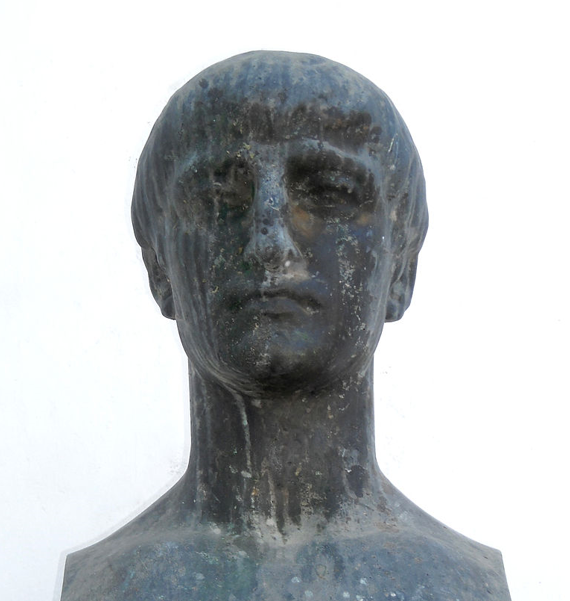
| Lord Lucan in disguise? |
I saw a plug for a forthcoming book on Twitter this morning by an American academic called John Kyrin Schafer.
He's about to publish a book about the Roman poet Catullus.
That led me, on a whim, to his university website and this description of one of the courses he runs - '"Lucan Bellum Civile" - Readings in Latin Literature'.
That doesn't sound particularly scintillating, but then came the details of the module.
Strap yourself in Boris and let the Hans Zimmer soundtrack begin:
That doesn't sound particularly scintillating, but then came the details of the module.
Strap yourself in Boris and let the Hans Zimmer soundtrack begin:
Once dismissed as second-rate bombast, Lucan's epic poem of the civil war between Caesar and Pompey has enjoyed a remarkable comeback: these days, "Lucan" is probably your average Latin hipster's expected answer to the question, "who's the best Roman poet?" From the time-delayed murderousness of his rhetoric and the shocking grossness of his violence to the eternal emptiness and infinite perversity of his world gone mad, Lucan's is an aesthetic of unremitting bleakness, and you'll love it. Extensive readings of his soul-scouring Latin.
Now that's how to sell a course!
Naturally I tried some Lucan and dived to the last book and Caesar and Cleopatra (and Ptolemy):
Now from the stream Pelusian of the Nile,
     Was come the boyish king, taming the rage
     Of his effeminate people: pledge of peace;
     And Caesar safely trod Pellaean halls;
     When Cleopatra bribed her guard to break
     The harbour chains, and borne in little boat
     Within the Macedonian palace gates,
     Caesar unknowing, entered: Egypt's shame;
     Fury of Latium; to the bane of Rome
70   Unchaste.  For as the Spartan queen of yore
     By fatal beauty Argos urged to strife
     And Ilium's homes, so Cleopatra roused
     Italia's frenzy.  By her drum she called
     Down on the Capitol terror (if to speak
     Such word be lawful); mixed with Roman arms
     Coward Canopus, hoping she might lead
     A Pharian triumph, Caesar in her train;
     And 'twas in doubt upon Leucadian waves
     Whether a woman, not of Roman blood,
80   Should hold the world in awe.  Such lofty thoughts
     Seized on her soul upon that night in which
     The wanton daughter of Pellaean kings
     First shared our leaders' couches.  Who shall blame
     Antonius for the madness of his love,
     When Caesar's haughty breast drew in the flame?
That last bit, in Latin (which I've never learned), is "quis tibi uaesani ueniam non donet amoris, Antoni, durum cum Caesaris hauserit ignis pectus?". I might try to learn that.
Such Latin thoughts were also on the mind of this morning's Broadcasting House on BBC Radio 4...though they came at the end.
More on that story later....
Sam, as you may be aware, is the until-very-recently tax-slashing, ultra-Thatcherite, globalist, Brexit-disliking Tory leadership contender and potential Conservative PM who's now suddenly transformed himself, within the two-month wink of a butterfly's eye, into a Lib Dem MP (and who everyone, it seems, likes and thinks is a nice guy). He's now claiming that liberal Tory Boris (a socially liberal, pro-immigration, pro-public spending Tory) is far too right-wing for him.
I'd have liked Paddy to tease some of those contradictions out with Mr. Gyimah but such teasing-out never came.
The BIG story though for BH was the David-Cameron-book-launch-related news.
This, after a tiny clip of Tim Waterstone spreading ordure over it, resulted in a weird discussion between former Labour spinmeister Ali Campbell (of 45 minutes/dodgy dossier/Dr David Kelly fame) and self-confessed Lib Dem voter Iain Dale, who were in almost total agreement about how great and important David Cameron's new book is - so much so that they kept on pointing out how much they agreed with each other.
Please allow me then to quote an alternative point of view, tweeted last night by Helena Morrissey DBE (any relation to THE Morrissey, who really ought to be knighted, then made PM?):
Back to Latin matters and, after a later onslaught from Quango Queen Dame Louise Casey (who mounted a massive stallion over Boris's Hulk comments, as if humour shouldn't be permitted while homelessness exists on the streets of Britain), the programme climaxed in a mini-lecture from one of the BBC's highest profile experts, Prof. Mary Beard, on the uses and abuses of historical (especially Classical) references by politicians.
Despite promises that politicians across the spectrum fell under her scrutiny, only one politician was held up to the full glare of Prof. Mary's magnifying glass.
Can you guess who? (Clue: He has blond, tousled hair).
Mary Beard, courtesy of Radio 4, 'debunked' Boris three times over his "half truth" and "extremely conservative version of the ancient world".
The first, I think, she showed he didn't get quite right. The other two I think she didn't prove at all, beyond ringing a bell to signify her disagreement with PM Boris.
She also said she'd "been fighting for most of (her) life" against the impression that Latin and Greek is "something that Tories do". (Very Radio 4!).
The weirdest thing, despite Mary not noticing it, is that - despite Prof. Mary conceding that he was right on some thing - the errors made by "Johnson" 'prove' him to be a liberal Tory.
Yes, Mary conceded, Boris got it broadly right about Sparta being a xenophobic, militarist regime but, aha, he was so wrong about (approvingly) claiming that Athens had a "welcoming" approach to immigrants. Athens wasn't "welcoming" to outsiders, Prof. Mary said. And I believe her.
The second example was Boris contrasting Jesus Christ and the Emperor Augustus. Boris said that Augustus was "all about glory, competition and success" and Jesus Christ "believed in turning the other cheek and kindness and compassion" and, thus, appealed to women, slaves and the non-winners of the Roman Empire. Prof. Mary called this "a classic howler", saying that - despite Christianity appealing to some women and slaves - it was mainly down to rich people and Roman emperors that Christianity became successful because "it plugged into the power structure". Now, I know she's an expert but I've read so much about the origins of Christianity and I think I know that until Constantine (some 300 years after Jesus) turned the Roman Empire into a Christian empire, Christians were (with intermittent savagery) often heavily persecuted. Yet they grew and grew. And they did include women and slaves and poor people. And Prof. Mary's objections rather sound to me like ideological hair-splitting.
And the third example, contrasting Julius Caesar and Alexander the Great, saw Prof. Mary grudgingly confessing herself "pleased" with Boris that he'd called Caesar being "an absolute b****" for his mass-murdering of the Gauls, yet still damning Boris for saying that Julius Caesar was, despite that, greater than Alexander the Great, her buzzer ringing with resentment. Her reason? Well, she didn't say, and we were left none the wiser. She thinks "neither of them deserve to be in pedestals". So was Boris wrong, as Prof, Mary buzzed in, to say that Julius Caesar, progenitor of the long-lasting Roman Empire that reshaped so much of Europe, the Middle East and North Africa, and who inspired the Holy Roman Empire and titles such as Shah, Tsar and Kaiser, was greater than the semi-ephemeral, ultra-violent, magnificent shooting star that was Alexander the Great? I'd say 'no', and that Mary Beard was wrong to ring her buzzer. And that the BBC was wrong to grant her an uncaveated authority to bluff her way through another BBC-licensed denunciation of Boris Johnson.
Now, yes, the BBC may be right to take Mary Beard as an interesting, free-thinking historian, but it doesn't mean that her expertise in the earlier Roman Empire necessarily makes her an expert on the rise of Christianity, or an unbiased arbiter of historical truth, or a commentator capable of completely debunking a Classics-taught PM she deeply disapproves of over Brexit.
But here's where we are. Is there a Latin phrase out there to sum all of this up?
*******
Such Latin thoughts were also on the mind of this morning's Broadcasting House on BBC Radio 4...though they came at the end.
More on that story later....
*******
The programme began with a surprisingly gentle interview with Sam Gyimah by my old favourite Paddy O'Connell. |
| #MeToo |
Sam, as you may be aware, is the until-very-recently tax-slashing, ultra-Thatcherite, globalist, Brexit-disliking Tory leadership contender and potential Conservative PM who's now suddenly transformed himself, within the two-month wink of a butterfly's eye, into a Lib Dem MP (and who everyone, it seems, likes and thinks is a nice guy). He's now claiming that liberal Tory Boris (a socially liberal, pro-immigration, pro-public spending Tory) is far too right-wing for him.
I'd have liked Paddy to tease some of those contradictions out with Mr. Gyimah but such teasing-out never came.
*******
The BIG story though for BH was the David-Cameron-book-launch-related news.
This, after a tiny clip of Tim Waterstone spreading ordure over it, resulted in a weird discussion between former Labour spinmeister Ali Campbell (of 45 minutes/dodgy dossier/Dr David Kelly fame) and self-confessed Lib Dem voter Iain Dale, who were in almost total agreement about how great and important David Cameron's new book is - so much so that they kept on pointing out how much they agreed with each other.
Please allow me then to quote an alternative point of view, tweeted last night by Helena Morrissey DBE (any relation to THE Morrissey, who really ought to be knighted, then made PM?):
One of the many issues people have with the media & the BBC is the “news” is so often just about the predictable media/political bubble. BBC is paid for by taxpayers - how many taxpayers think the D Cameron book is the most important news for them? It is the lead story tonight.I'm betting that D Cameron is going to be top news for the BBC all week.
*******
Back to Latin matters and, after a later onslaught from Quango Queen Dame Louise Casey (who mounted a massive stallion over Boris's Hulk comments, as if humour shouldn't be permitted while homelessness exists on the streets of Britain), the programme climaxed in a mini-lecture from one of the BBC's highest profile experts, Prof. Mary Beard, on the uses and abuses of historical (especially Classical) references by politicians.
Despite promises that politicians across the spectrum fell under her scrutiny, only one politician was held up to the full glare of Prof. Mary's magnifying glass.
Can you guess who? (Clue: He has blond, tousled hair).
Mary Beard, courtesy of Radio 4, 'debunked' Boris three times over his "half truth" and "extremely conservative version of the ancient world".
The first, I think, she showed he didn't get quite right. The other two I think she didn't prove at all, beyond ringing a bell to signify her disagreement with PM Boris.
She also said she'd "been fighting for most of (her) life" against the impression that Latin and Greek is "something that Tories do". (Very Radio 4!).
 |
| Two Beards |
The weirdest thing, despite Mary not noticing it, is that - despite Prof. Mary conceding that he was right on some thing - the errors made by "Johnson" 'prove' him to be a liberal Tory.
Yes, Mary conceded, Boris got it broadly right about Sparta being a xenophobic, militarist regime but, aha, he was so wrong about (approvingly) claiming that Athens had a "welcoming" approach to immigrants. Athens wasn't "welcoming" to outsiders, Prof. Mary said. And I believe her.
The second example was Boris contrasting Jesus Christ and the Emperor Augustus. Boris said that Augustus was "all about glory, competition and success" and Jesus Christ "believed in turning the other cheek and kindness and compassion" and, thus, appealed to women, slaves and the non-winners of the Roman Empire. Prof. Mary called this "a classic howler", saying that - despite Christianity appealing to some women and slaves - it was mainly down to rich people and Roman emperors that Christianity became successful because "it plugged into the power structure". Now, I know she's an expert but I've read so much about the origins of Christianity and I think I know that until Constantine (some 300 years after Jesus) turned the Roman Empire into a Christian empire, Christians were (with intermittent savagery) often heavily persecuted. Yet they grew and grew. And they did include women and slaves and poor people. And Prof. Mary's objections rather sound to me like ideological hair-splitting.
And the third example, contrasting Julius Caesar and Alexander the Great, saw Prof. Mary grudgingly confessing herself "pleased" with Boris that he'd called Caesar being "an absolute b****" for his mass-murdering of the Gauls, yet still damning Boris for saying that Julius Caesar was, despite that, greater than Alexander the Great, her buzzer ringing with resentment. Her reason? Well, she didn't say, and we were left none the wiser. She thinks "neither of them deserve to be in pedestals". So was Boris wrong, as Prof, Mary buzzed in, to say that Julius Caesar, progenitor of the long-lasting Roman Empire that reshaped so much of Europe, the Middle East and North Africa, and who inspired the Holy Roman Empire and titles such as Shah, Tsar and Kaiser, was greater than the semi-ephemeral, ultra-violent, magnificent shooting star that was Alexander the Great? I'd say 'no', and that Mary Beard was wrong to ring her buzzer. And that the BBC was wrong to grant her an uncaveated authority to bluff her way through another BBC-licensed denunciation of Boris Johnson.
Now, yes, the BBC may be right to take Mary Beard as an interesting, free-thinking historian, but it doesn't mean that her expertise in the earlier Roman Empire necessarily makes her an expert on the rise of Christianity, or an unbiased arbiter of historical truth, or a commentator capable of completely debunking a Classics-taught PM she deeply disapproves of over Brexit.
But here's where we are. Is there a Latin phrase out there to sum all of this up?


