She was talking about a programme called
Boston Calling and the "useful explainer" came from Andrew Marantz of
The New Yorker magazine, helped by BBC WS presenter Marco Werman.
Mr Marantz is no fan of the alt-right. but,
as he put it in The New Yorker recently, he has "spent much of this fall listening, both online and in person, to the connoisseurs of ugliness who call themselves the alt-right" and has written that, via the alt-right, "Trump connected to the segment of the population that was prepared to believe that racism was realism, misogyny was locker-room talk, inconvenient facts were media myths, and viciousness was the new normal."
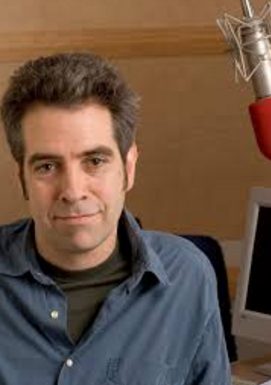
 |
| Andrew Marantz |
Here's a transcription of that BBC World Service interview:
Marco Werman: Here's something else that's become part of the Trumposphere - a right-wing political movement known as the alt-right. Now, when I first came across the word 'alt' I thought it was a weird word on my computer keyboard or a fringe music designation like 'alt-country' or 'alt-folk'. But 'alt-right'? That's a whole different thing. Andrew Marantz is a writer for The New Yorker magazine and lately he's been focusing on stories about the alt-right. So let's start with the description of what we call the alt-right today, Andrew, here in the US. How would you characterise it? Is it a movement?
Andrew Marantz: I think it's less an ideology than a sensibility. And it's actually, you know...It might not actually be as unlike alt-folk and alt-country as you might think actually, because it's not just more right than the right, it's not just more extreme, it's different - in the same way that alt-country is not just really country music, it's a different kind of country music. So this is a kind of right-wing thinking that does not really want to compromise on certain things - does not want to compromise on immigration or white nationalism or any number of intellectual positions that used to requires lots of sort of intricate compromises, and now the thinking is 'Let's just re-write the rules'.
Marco Werman: So as far as being kind of uber-conservativism, the Anti-Defamation League defines the alt-right as people "who reject mainstream conservatism in favour of forms of conservatism that embrace implicit or explicit racism or white supremacy". Would you agree with that definition?
Andrew Marantz: I think there are certainly some people who are members of the alt-right who are, in some sense, the founding members of the alt-right who are openly white nationalist - or 'identitarian' they sometimes call themselves - who are interested in preserving European power and European American power. There are others who are just sort of chaos agents who, you know, could just take that or leave it but are, sort of, on board for other reasons.
Marco Werman: Now we've got Steve Bannon, the head of the alt-right Breitbart media organisation, as Trump's chief strategist. How will that change the place the alt-right has had in the US?
Andrew Marantz: It will go from a completely ignorable fringe group to the absolute centre of the American media narrative. It's a complete overnight shift.
 |
| Marco Werman |
Marco Werman: Is the alt-right here in the US networked with similar groups in Europe?
Andrew Marantz: Oh yeah, very openly. I mean, Breitbart has an office in London. They're looking to open offices in Germany and France. Their front page, right after Trump got elected, was a piece by Geert Wilders, the Netherlands nationalist, saying, you know, this is a worldwide movement. So yeah, it's definitely networked, at least in Europe.
Marco Werman: Are they helping conservative groups here talk to conservative groups in Norway, for example?
Andrew Marantz: Er, well, you know, Donald Trump has said many times that he doesn't like to divulge too much of his strategy, so there are certain parts of the strategy that, you know, we don't know and must (hard to decipher) in the war room, but, yeah, there are definitely conversations happening across country lines. You know, Nigel Farage was on the stump campaigning for Trump in Mississippi. Geert Wilders, as I said, has openly voiced his support for Trump. Marine le Pen's people said they have been talking to Trump. Trump, for that matter, has said he's talking to Putin. So there's certainly communication going on both at the level of, you know, media strategy and at the level of just political strategy.
Marco Werman: So if you had to kind of describe the differences between the far-right in Europe and the alt-right here, what would you say they are?
Andrew Marantz: Every country's different. I think a common thread is what they would call 'secure borders' and what a lot of people would call 'extreme nationalism' - shutting down immigration, deporting people who are already in your country, painting immigrants as a violent threat. You know, that's the kind of thing that is common to right-wing, neo-fascist movements throughout the world, and that's something we've seen even before Trump, you know, with Golden Dawn and Hungary. It's been happening in many places for some time. It's hard to say to what extent that is alt-right because the alt-right is really an American creation. But, you know, I think a lot of these groups use whatever memes happen to be convenient to their advantage.