Showing posts with label 'Last Word'. Show all posts

Sunday, 10 July 2016

On Geoffrey Hill


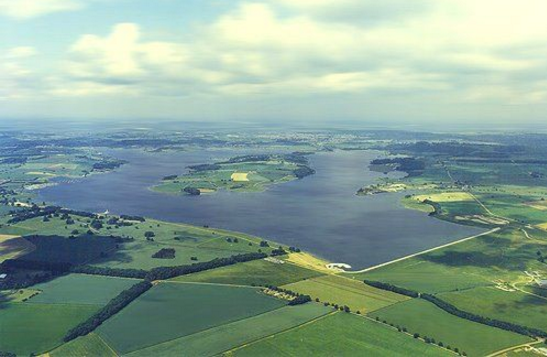
Rutland Water

One of this week's passings - as marked by Radio 4's Last Word - was the famously-difficult-to-understand poet Sir Geoffrey Hill - long known, with good reason, as Britain's "most difficult poet". 

Last Word noted that GH was proud to call himself "English working class", and featured his widow Alice Goodman  - the librettist for John Adams's notoriously controversial, antisemitism-accused opera The Death of Klinghoffer. 

I remember former BBC Two late night reviewer Tom Paulin (remember him?) raging against Geoffrey Hill as a fascist and a racist. There was far too much talk of England in GH's poems for ol' Tom 'It's absolutely appalin' Paulin. 

Alice Goodman recalled his "pink fuzzy socks" and his "really elaborate comb-over". 

I knew nothing about AG being GH's wife though when, on an impulse, I bought the poet's' mammoth collection of poems Broken Hierarchies  (nearly a thousand pages) a couple of years ago, 

I can honestly say that I've barely managed to understand even one of his myriad poems in full, but I like many of them nonetheless. They are part-fiendish cryptic crossword, part-TS Eliot multiplied by a factor of ten.

Here's a late, rather more lyrical example - and it rhymes too!:
From lead to mercury the sky; bare trees,
Refined archaic leaf-patterns of slate
Against the sky-tone, veins to arteries:
Mid-November, correctile, intricate,
Under strange genial suns; at least two.
Mute acoustics of light to bring aligned.
Why should Rutland Water, unsung, not glow;
Undulant midland shires, the many-faned?
They have been too long reflective, I grant,
In a bent mirror of longing not theirs
At all; concave to convex or mere slant,
Staggering hermeneutics of arrears,
Barely wrought to fixed legacy. Finish
So; finish with this or that absurd grief
In resolution; fields under varnish
Of new-sliced red earth held cunningly stiff.
Shall call this Bacchanal for over-pre-
pared Piano; nothing original;
Girt evanescent England, its display,
Whichever way I play it, not final.
Though I don't really understand the meaning of the allusion, I do at least recognise what the allusion in the final stanza relates too (he says, smugly). It's to this early, Indonesian gamelan-inspired piece by John Cage (long before he went all silent on us for 4 minutes and 33 seconds)


Trust me. From lead to mercury the sky is about as easy as Geoffrey Hill gets. It's almost Pam Ayres by his standards. (And I'm not being rude about the delightful, funny and very clever Pam there.)

Barely comprehensible? Maybe. Beautiful though. And very English.

Friday, 7 August 2015

On 'Last Word' this week...


I set Radio 4 a test earlier in the week (but kept quiet about it). 

My test was to see if tonight's Last Word (Radio 4's obituary programme) would feature the historian Robert Conquest - one of the most influential historians of the last century who brought the sheer scale of Soviet murderousness to the world's attention. Robert Conquest died this week.

I kind-of knew in advance that Ian Katz's Newsnight wouldn't mark his passing. He just's not their sort. Eric Hobsbawm, sociologist Stuart Hall, Gabriel Garcia Marquez & Co (to name but a few), yes, but Robert Conquest most definitely not. 

Today has done better, with an interview with Anne Applebaum and a brief mention during an interview with fellow revealer of Soviet atrocities, Antony Beevor. 

And the BBC website featured a fascinating, rather personal tribute from the BBC's Korea-based correspondent Stephen Evans, whose grandparents and parents were die-hard communists. Robert Conquest may not have penetrated their pro-Soviet armour but he certainly seems to have penetrated the future BBC man's.

Neither, however, have exactly gone overboard (Hobsbawm-style) over the news, and I can't find a BBC website obituary of Mr Conquest anywhere, or very much else besides.

My test, however, was always going to be Last Word. 

ChrisH (in comments both here and at Biased BBC) has made regular mentions of the left-liberal bias of Last Word, where obscure left-wing activists and academics crop up with surprising regularity. Surely not even Last Word could 'drop' Robert Conquest though? 

Well, yes it could. There was no Robert Conquest today.

Instead, we had Cilla Black and George Cole (understandably), as well as a Scottish activist (Evelyn Gillan), a Muslim former Indian president known as the "People's President" (APJ Abdul Kalam) and a history master at Eton who was David Cameron's favourite teacher (Michael Kidson). 

I think that says it all really.

Friday, 25 April 2014

Friday night quiz


The BBC is nothing if not sensitive to minority groups, even at the risk of parody.

Take today's Last Word on Radio 4. 

As it's Friday night, it's quiz time. So, which of the following is the real (Dr Leonard 'Bones') McCoy? - i.e. said by presenter Matthew Bannister in the course of the programe:
And we should warn vegetarians and vegans that this programme contains graphic descriptions of meat consumption.
And we should warn listeners from the Maori community that this programme contains descriptions of women undergoing their menstrual cycle.
And we should warn listeners from the Aborigine community that this programme contains the names of deceased people.
And we should warn Hindu listeners that this programme makes reference to the suffering of sacred animals. 
And we should warn Muslim listeners that this programme contains jokes about the Prophet Mohammed which some might find offensive. 
Please listen here to find the answer (in the opening seconds of the programme). 

Sunday, 24 November 2013

Passing by


This week's Newswatch highlighted another instance of what some (including yours truly) see as the BBC's anti-science bias.

Here are two e-mails the programme received:
I am curious to know the editorial justification behind the vastly different treatment given by BBC News to two British Nobel laureates who recently passed away. The author Doris Lessing was given a detailed obituary on the website, and her death was the top story reported on television news that day. The biochemist Fred Sanger who received two Nobel prizes for his important work in protein and DNA sequencing, did not receive even a cursory mention on the 6.00 pm news programme.
Why such scant coverage of Frederick Sanger's life and achievements on BBC News? Is this symptomatic of the lack of  understanding of progress in science, and lack of those with a science background working within the BBC?
You can see for yourselves the disparity in the BBC website's coverage by a simple search. On the 17th November, there was a full-length article, a full obituary, three video reports and one audio report for Doris Lessing, with another audio tribute the following day. Dr Sanger, in contrast, received just one full-length article on 20 November. 

Still, at least Last Word, Radio 4's obituary programme, covered both Doris Lessing and Fred Sanger.

They also covered broadcaster and gay rights campaigner Ray Gosling, GCHQ whistleblower Jock Kane, and folk music record producer Austin John Marshall. 

Friday, 1 November 2013

Friday Night, Sunday Morning


Radio 4's obituary programme Last Word gave its closing spot today to Lou Reed. [You can hear this edition here, for the foreseeable future.]

It featured extracts from some of Lou's legendarily prickly interviews, where he made the interviewer's life less than easy - to say the least; though given the tedious predictability of the questions asked, I found myself rather rooting for Lou. 

I liked his answer to this question, from a later, mellower interview:
Q: What's 'The Last Shot' about? The line in it which says, "I shot a vein in my neck". Have you ever done that?
A: Steve, that's the same kind of question when I wrote a song called 'Heroin'. It was very important to people: Is this true, Lou? Did you really do this? Did you really take heroin?
See, if I said, "No, I didn't", they'd be very disappointed, because they wanted it to be true.
So, if you go up to someone who's a writer...I mean, suppose you went up to Dostoevsky and said "Listen, are you really just telling us about how you got money from this little old lady? Did you really do that when you were a student?"
On the fame of Perfect Day, Lou said:
"There are lots of songs I've got that are as good as Perfect Day. People just don't know them."
He also said that his songs get better known if he doesn't sing them, and that he's "an acquired taste."

Presenter Matthew Bannister had no hesitation, however, in describing him as a "great man".

It may be Friday night, but here's a lovely example of Lou Reed, matching the magic of Perfect Day, concerning Sunday morning (and featuring a celesta):

Saturday, 26 October 2013

Obituaries


Is the BBC predictable in its bias? 

That thought came back to me on reading a comment from chrisH at Biased BBC. 

He wrote: 
"The BBC are so predictable that I was able to predict that Titos wife and Felix Dexter would comprise half of “Last Word”…the obituary show on Radio 4 at the moment."
My point being that the BBC is so predictable that we just know there`ll be lefties in their dotage, and multiculti useful tools of alternative comedians that get the tributes.
Safe to say that if you actually HAD changed things…or used to be a “right winger”-there`ll be no mention of them.
The BBC gives its paste and plaster medals to the Miliband archetypes, the Howard Marks safe rebels…you try bringing up a few kids not to riot?…the Beeb won`t bother its arse.
It`s the total predictability-the obvious perpetual engineering of the social soul…that cheeses us off. 
Oh hell-another dead social work lecturer-a champion of the profession! Didn`t get her, but 50% isn`t bad from the “ever-original BBC” is it?"
I tend to drive home to Last Word when I finish work on Friday, and rather enjoy it (if it's right and proper to enjoy an obituary programme!), but is there truth in what Chris says?

As an experiment, here's the list of the five people whose deaths were marked by this week's Last Word:
Sir Anthony Caro, leading British sculptor
Felix Dexter, comedian
Jovanka Broz, widow of Marshal Tito of Yugoslavia
Professor Olive Stevenson, social work academic
Noel Harrison, son of Rex, singer, actor, Olympic skier, best known for 'The Windmills of Your Mind'
And here's the full list of obituaries featured over the past week in the Daily Telegraph. 

Who did Last Word cover and who did they choose not to cover? Who did the Telegraph cover and who did they choose not to cover?

Decide for yourselves whether this supports the case for a biased, left-wing selection process by the BBC:
Augusto Odone, the economist whose devotion to his suffering son was portrayed in the film Lorenzo's Oil, father of Cristina
Sir Anthony Caro, Britain's greatest abstract sculptor
Captain John Hatton, the soldier whose tank fired Britain to glory in a Nato contest, pipping the Belgians
Tommy Whittle, the saxophonist who abandoned dance bands and became one of the best-known modern jazzmen in Britain
Jeremy Gotch, a former child internee of the Japanese who pioneered the use of containers to transport bulk freight
Sir John Batten, physician to the Queen who pioneered treatment for adults with cystic fibrosis
Gypie Mayo, the virtuoso guitarist who helped Dr Feelgood into the Top 10 and played with the re-formed Yardbirds
Lou Scheimer, the cartoon mogul behind teatime favourites such as He-Man who irked Disney with a sequel to Snow White
Major-General Pat Kay, the marine officer who helped to take 65 enemy prisoners in Normandy and later guarded the nation’s secrets
Lawrence Klein, the pioneer of economic forecasting who advised China and won a Nobel Prize
George Ortiz, the connoisseur whose unrivalled collection of ancient objets d’art earned both admiration and controversy
Charles Castle, tap dancer and TV producer who hobnobbed with stars and made an acclaimed film about Noël Coward
Jock Kane, the whistleblower who battled to bring sex scandals and security breaches at GCHQ to light
Professor David Barker, the epidemiologist who suggested that infancy had a crucial role in causing 'lifestyle’ diseases such as diabetes
Felix Dexter, the actor who made his name in comedy not law