Showing posts with label science. Show all posts

Saturday, 16 July 2022

The BBC and science


And talking of the Telegraph talking about BBC pay, here's the opening paragraph of from Telegraph arts and entertainment editor Anita Singh's rather entertaining piece about a BBC science programme where “viewers were told that space is cold and the speed of light is fast”:
It is part of my job to read the BBC annual report so you don’t have to. Once we’ve dealt with the astronomical salaries, other things swim into focus. Such as the fact that, of the corporation’s £1.78 billion TV budget, just £31 million is spent on the arts. There is no breakdown of the budget for science programming, but it is clearly a low priority. Search for the word “science” in the 280-page report and just a handful of mentions come up, almost all of them about the BBC’s commitment to Net Zero.

Sounds about right. 

Friday, 10 December 2021

Cut to spectacular visuals


He has a point:

Saturday, 10 March 2018

Sir John Sulston and the BBC Hijab Project


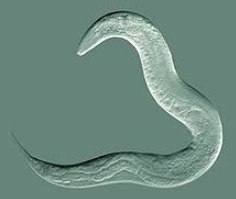
C. elegans

It was typical of the BBC's flagship news bulletins on BBC One (News at Six and News at Ten) that they each devoted just 14 seconds to the death of Sir John Sulston, the scientist who led the human genome breakthrough:
Sir John Sulston, who won the Nobel Prize for Medicine for his work on the Human Genome Project, has died. Sir John's work in decoding the sequence of human DNA, the building blocks of life, saw him awarded the prize back in 2002.
Bizarrely the BBC even managed to get this wrong, twice in the space of two short sentences! 

Sir John won the Nobel Prize for Medicine for work on 'genetic regulation of organ development and programmed cell death' through his study of a particular species of worm (Caenorhabditis elegans) - work which led to innovations in cancer research - and not for "his work on the Human Genome Project".  

Very poor journalism.

The death of Sir John Sulston (real news) got relegated to a mere quarter-of-a-minute footnote on both the News at Six and News at Ten in order to make way for the 'news' that a modelling agency has just signed its first British catwalk model who wears a hijab - an item which took up nearly four minutes of both prime time BBC One bulletins. 

Nomia Iqbal

Here's a transcript. Note the very heavy imbalance in favour of those who take a positive view of the hijab:
Nomia Iqbal, BBCThe spotlight is on the hijab. Many Muslim women choose to wear it proudly. For some, it's an act of modesty. For others, in countries like Iran, forced to wear it, it's a symbol to remove in protest. It may divide opinion, but the hijab is going high fashion. 20-year-old model, Shahira Yusuf, has been signed up by Storm, the agency that found supermodel, Kate Moss. Shahira is one of the first British models with a hijab taking to the catwalk. 
Shahira Yusuf, modelYeah, definitely don't want to be considered a token girl. I don't want these models like ethnic models or models from different religious backgrounds to just pave the way, I want the way to stay there, become the norm within society. Because it is the norm outside of the modelling sphere. 
Shahira is becoming the face of Modest Fashion. At the show in London, Muslim designers have come from all over the world to promote their clothes. The market for Modest Fashion is on course to be worth billions. I grew up in a Muslim family and none of the the women in my family wore the hijab. None of my Muslim friends wore it either. But now, more and more young women are wearing it. 
Shahira YusufThe reason why I wear it is to number one, cover my hair. And number two, to be honest, I actually enjoy wearing the hijab, I enjoy covering my hair, I enjoy the hijabs I have today. I feel like it makes a statement. It's part of who I am, it's my crown.  
Unnamed womanThe hijab to me is empowerment and it's feminism and it's taking control and ownership of what I choose to show to the world. 
Being online has given some women a powerful platform. Social media star, Mariah Idrissi, has a huge following on Instagram. 
Mariah Idrissi, online personalityThe hijab is a part of me, it's part of my career and its representation. You know, we shouldn't be ashamed or shy to represent who we are. 
Nomia IqbalIf you are a model wearing a hijab, and you're on Instagram and having thousands of people following you, aren't you doing the opposite of what the hijab is supposed to be about?  
Mariah IdrissiThe mainstream media, western media isn't representing Muslims on TV, in fashion, anywhere. The only time we are represented is for something bad. I just saw this as, you know I'm going on the news and I'm talking about something that's not about terrorism, not about women being oppressed, I'm talking about fashion. 
Some campaigners for Muslim women's' rights think the hijab's popularity is a political statement. They feel uneasy about its use as an expression of identity. 
Ahlam Akbar, Basira Women's Rights Group: Modest does not mean you need to wear the hijab. Modesty goes beyond that in your behaviour and your way of dressing. I don't need to prove to anybody what I am, but in the hijab, you are singling yourself and proving something unnecessary, especially in the Western world. 
The hijab means different things to different people. Shahira believes you can wear it and be a successful model. Her dream? The cover of British Vogue, wearing her hijab. Nomia Iqbal, BBC News. 

Monday, 6 April 2015

Whoops!


Time for a "Dost thou think, because thou art virtuous, there shall be no more cakes and ale?" kind of post from the frontiers of modern science...


the BBC has just as boldly gone this past weekend. Here's a caption that appeared on their New Channel:

Saturday, 21 March 2015

Applying the BBC's 'compassion pill'


There was an interesting closing discussion on one of the BBC's favoured topics (at the moment), the housing crisis, on this morning's Today.

It featured the famous left-leaning economic commentator Will Hutton from the Work Foundation and (the somewhat-less-famous) Naomi Clayton from the Centre for Cities (an offshoot of the left-leaning IPPR think tank). 

Naomi, by sheer coincidence, used to work for Will at the Work Foundation, so that was nice. And they pretty much agreed about everything too, which was also nice. Plus no one mentioned immigration, which was nicest of all. 

A lovely Today-induced glow of socially aware niceness resulted. So there was no need then for anyone to swallow that 'compassion pill' which Newsnight discussed last night.

There's a pill now, apparently, that promotes 'compassion'. And 'compassion', if you were wondering, apparently equates to believing in social justice and opposing social inequality. [The Newsnight-following Twitterati were quick to advocate force-feeding such pills to Cameron, Osborne and Farage].

We're in he area of neuroscience here, of course. Being a typical BBC current affairs presenter, though, Evan Davis, interviewing one of the scientists behind the 'compassion pill', quickly asked him not to go into the science of the pill (what parts of the brain it effects, how the chemicals work, etc). That, however, was precisely the one thing I did want to hear about. 

What is it with BBC current affairs types and their apparent dread of scaring audiences with detailed scientific findings? 

Thursday, 12 March 2015

Place cells, dark matter and BBC Radio 4


BBC Radio 4's bias towards the arts and the humanities is deeply engrained. However, there are certain exceptions: the jokey Infinite Monkey Cage and the Guardian Science-like magazine programme Inside Science. The occasional series Frontiers looks deeper, but is an infrequent part of the Radio 4 schedule. 

Still, Radio 4 does offer listeners The Life Scientific

However much it may (from time to time) infuriate those BBC bias watchers who hate the BBC's unabashed bias in favour of a belief in anthropomorphic global warming, it remains a wonderful series - and a credit to the BBC. It offers in-depth, insightful interviews with world-class scientists by a brilliantly communicative scientist (Jim Al-Khalili). 

This week's interview was with Nobel Prize-winning cognitive neuroscientist John O'Keefe - the man who described the idea of 'place cells' in the brain back in 1971. It's well worth a listen. His enthusiasm for the sound of brain cells "singing" (thanks to the minuscule electrodes that monitor their activity) was touching. He misses not hearing them. 

The other beacon of light for science lovers is Melvyn Bragg's In Our Time, which (every few weeks) boldly goes where no Radio 4 programme has gone before.

This week's edition discussed dark matter - that mysterious thing which appears to make up most of the universe. Thank to Melvyn and his guests - Carolin Crawford from Cambridge Uni, Carlos Frenk at the University of Durham and Anne Green at the University of Nottingham - I think I understand the matter now (if, somewhat, through a glass darkly). 

Besides the facts, part of the fascination of In Our Time is the excitement of hearing the academics face Melvyn Bragg. Will they be WIMPs or MACHOs? Will they do themselves justice? Will any of them make Melvyn laugh? Will Melvyn get annoyed with them?  

In the latest addition, Carolyn Crawford communicated fluently. Melvyn seemed relaxed about her contribution. He understood her (as did I). 

Carlos Frenk was, as ever, a superlative communicator. Melvyn seemed awe-struck by him (as was I), and understood him (as did I). 

Anne Green, in contrast, was magnificently scientific but seemed to lack the knack of easily speaking in a 'popular science' manner. She flummoxed Melvyn at times (and me). He struggled to understand her (as did I), but he persevered (as did I), and everyone (Anne, Melvyn and me) was a winner in the end.

Is there anything like In Our Time anywhere else in the world?

Saturday, 14 February 2015

Things can only get rounder


Commercial broadcasters have nothing on the BBC when it comes to seeking to boost ratings by using star names. 

The wonderful news that the BBC is planning a landmark series on BBC One answering big, simple-sounding-yet-complex scientific questions, such as 'Why is the sky blue?' and 'Why is the earth round?', might well be tempered (for some people) by a slight sinking feeling.

If you're familiar with the BBC's recent science coverage, I bet you  can guess who (out of the many thousands of UK scientists) the BBC has chosen to present this new, high-profile series.

Go on, have a guess!

In the meantime and just in case your were wondering...

The sky is blue because sunlight is comprised of all the colours of the rainbow. These colours come in waves of different lengths, and red light has a longer wavelength than blue light. When sunlight hits Earth's atmosphere, that atmosphere (comprised of gas and particles) scatters it in all directions. Because blue travels in shorter, smaller waves, it is scattered more than any other colour - which is why we see blue skies.

And ss for why the earth is (more-or-less) round, well, that's all because of gravity - the attraction of masses.  Massive masses, like the combined mass of this planet, exert a huge gravitational pull. The most efficient shape to reflect that is a sphere. And above a certain size, the force of gravity's desire to shape things into a sphere - to reach hydrostatic equilibrium - proves irresistible.

No need to watch this new BBC series now, eh?

Monday, 8 September 2014

Harrumph!


I've complained before about John Humphrys and his way of interviewing scientists about matters of general scientific interest:
Another gripe of mine about the BBC and science arises from John Humphrys and his larky, 'ooh,-look-at-me,-I-don't-know-much-about-science-so-I'll-affect-an-ironic-tone-whenever-a-scientist-comes-onto-Today-and-everybody-will-love-me-for-it' attitude. Give it a rest please, John.
It's always the same question too: 'What's the point of this?'
There was a particularly irritating example of this on this morning's Today (6.50 am)

John Humphrys was interviewing Terry Quinn from the International Bureau of Weights and Measures about how gravity gets in the way of measuring the earth's weight with precision - a fascinating subject - and Mr Quinn began by explaining the background with such skill and clarity that I found myself hoping he might be given his own Radio 4 series. 

I was hanging on his every word, hoping John Humphrys would just let him continue, but it wasn't to be. JH crashed in with the dread words, "But we haven't got long I'm afraid", and then asked the burning question on his mind. 

And, following all the fascinating stuff Mr Quinn had just told him, what was that burning question?:
Why does it matter? 
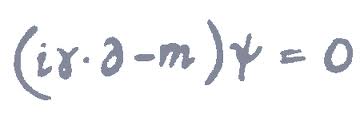
I was reading for switching off at that point - and I wish I had because, to add insult to injury, just as Mr Quinn was trying to get back into his stride again he happened to mention quantum electrodynamics and (with all the inevitability of the Second Law of Thermodynamics) then came the following low moans from John Humphrys:
Oh dear!....yes.....right.
I was all for ripping out the car radio at this point and chucking it out of the window, but if I'd done that silly thing I'd have missed JH's coup de grace, pausing the interview to say:
Look, I take you word for it that it's terribly important. I wish I could say I understand why but that's for another time.
Did I want to know that, John? No I didn't.

The interview ended with John H laughing, as if it was all such a hoot and Mr Quinn was such a sporting fellow for taking it all on the chin. 

I myself was very interested in hearing what Terry Quinn had to say. He's a brilliant explicator of science, by the sounds of it. Plus I'm interested in hearing about quantum electrodynamics - and the phrase never makes me groan. I suspect quite a few other early-rising members of the Radio 4 audience were also listening intently to Mr Quinn's contribution.

Why then did John Humphrys ruin it by doing his deeply boring 'routine' for the umpteen thousandth time? Just because he's not very interested in science, it doesn't mean that a good part of his listenership necessarily shares his lack of intellectual curiosity.

Radio 4, please can John Humphrys be taken off doing any interviews with serious scientists (that aren't mainly about politics) from now on? He's just awful at them.

Maybe the next time a scientist is invited to take part in a politically-charged interview with John Humphrys he should start sneering at the Today man's interest in party political squabbles - what one one minister said about another minister - and call it 'nothing but gossip', or start rubbishing the Today programme's habit of speculating about what some other politician might or might be saying in a speech later that day as something he can't see the point of, or end by quoting Plato's Socrates denouncing all the things which interest John Humphrys as 'mere opinion', 'shadows on the cave wall'.

Monday, 23 December 2013

The Infinite Monkey Cage


I do rather like Radio 4's The Infinite Monkey Cage

It's a robustly pro-science programme in the network's overwhelmingly arts-dominated schedule and almost every edition features bona fide scientists sharing their insights with the listening public. The results can often be fascinating and informative and the programme has covered a vast range of scientific fields over the course of its nine series.

Today's edition, for example, featured immunologist Dr Sheena Cruickshank of Manchester University. She specialises in parasitic worms and shared something that I found very interesting - so much so that I'll share it with you here (though not quite as much as I first shared when I posted this piece!).

Parasitic worms are something which we, in countries like the United Kingdom, don't suffer from any more. In the past, however, they've been a significant problem, and even King Richard III suffered from them -  as we recently discovered. 

Many countries though do have a serious problem with parasitic worms and some 2 billion people around the world still suffer from the the little blighters.

Parasitic worms, indeed, are the main reason why children in many countries don't go to school. Deworming in Kenya has, therefore, resulted in school attendance rising by 20% there. 

Intriguingly, according to Sheena Cruickshank, whilst we in the UK (and the U.S. and Europe) may not suffer from parasitic worms any more we do suffer a lot from allergies. In contrast, countries where worms are a serious problem don't have a significant problem with allergies. Why is that? (I'll leave that question hanging in the air).

I suppose the downside with The Infinite Monkey Cage is that its comedy + science format can force some of the serious scientists who appear on it to feel the need to try to be funny, resulting in some of them seeming over-larky - something which can make listeners squirm (like Richard III with his worms). Plus some of the comedians can spoil the programme by being either unremittingly jokey or seriously dull. 

What though of the two presenters, Robin Ince and Brian Cox?

They are, I suppose, a BBC arts graduate Radio 4 controller's dream pairing for such a programme: a left-wing 'Radio 4 comedian' [you know the type]...and Brian Cox [the BBC's go-to-for-everything-scientific man of the moment].

Still, I have to say that I don't have an issue with Brian Cox on The Infinite Monkey Cage. He's quite an engaging presence and doesn't intrude too much. 

Neither does Robin Ince, though he's less to my taste. 

I like his enthusiasm for science, but he rarely makes me laugh. I don't mean to be unkind but his level of humour is on a par with that of Marcus Brigstocke. (Ouch!) Plus, being a Rightie, I always await with a sense of grim inevitability his invariable left-wing/right-on crack, whatever it may be - a dig at Boris Johnson, Sarah Palin or the Daily Mail maybe - followed by the equally inevitable dutiful half-laugh from the audience. (Today we were 'treated' to another time-honoured right-on whinge about girls being given girls' toys and boys being given boys' toys). 

Still, even Robin Ince's 'humour' can be forgiven for the shafts of genuine laughter and scientific illumination provided by The Infinite Monkey Cage

Sunday, 24 November 2013

Passing by


This week's Newswatch highlighted another instance of what some (including yours truly) see as the BBC's anti-science bias.

Here are two e-mails the programme received:
I am curious to know the editorial justification behind the vastly different treatment given by BBC News to two British Nobel laureates who recently passed away. The author Doris Lessing was given a detailed obituary on the website, and her death was the top story reported on television news that day. The biochemist Fred Sanger who received two Nobel prizes for his important work in protein and DNA sequencing, did not receive even a cursory mention on the 6.00 pm news programme.
Why such scant coverage of Frederick Sanger's life and achievements on BBC News? Is this symptomatic of the lack of  understanding of progress in science, and lack of those with a science background working within the BBC?
You can see for yourselves the disparity in the BBC website's coverage by a simple search. On the 17th November, there was a full-length article, a full obituary, three video reports and one audio report for Doris Lessing, with another audio tribute the following day. Dr Sanger, in contrast, received just one full-length article on 20 November. 

Still, at least Last Word, Radio 4's obituary programme, covered both Doris Lessing and Fred Sanger.

They also covered broadcaster and gay rights campaigner Ray Gosling, GCHQ whistleblower Jock Kane, and folk music record producer Austin John Marshall. 

Wednesday, 20 November 2013

New-look 'Newsnight'


So, Ian Katz's attempts to revive knackered old Newsnight have resulted in him getting rid of presenter Gavin Esler, long-time reporter Tim Whewell and science editor Susan Watts. 

It's a bit of a shame about Susan Watts, perhaps, as she's quite unusual at the BBC in actually having a science degree and knowing what she's talking about. (She's got a BSc in Physics, if you're wondering.)

The Guardian quotes Mr Katz as saying that the programme's "commitment to covering science – including climate change – is as strong as ever. Just want to do it in a different way". 

(Being Ian Katz, he said that on Twitter.)

Will those different ways, by any chance, involve celebrities? (I'm having visions of Bill Bailey larking around in the Newsnight studio.) They could, of course, just follow the lead of the rest of the BBC and call in Professor Brian Cox whenever there's a sciency bit to do. 

Still, o joy of joys!, the programme is bringing Laura Kuenssberg back to the BBC as a reporter/presenter. (I can't wait, and the Cookie Monster tells me he's looking forward to meeting her too.) 

Paul Mason's job is still up for grabs though and, according to Newsnight insiders, the sharp money is now on Russell Brand.

Tuesday, 8 October 2013

Elementary reporting


On the day that an OECD report highlighted the poor levels of numeracy and literacy among English 16-24 year olds and observed that school leavers today have lower levels of basic skills than their grandparents, it was simultaneously heartening and disheartening to hear that someone from the good old days of English numeracy and literacy has won this year's Nobel Prize for Physics - namely Peter Higgs , the man who predicted the Higgs Boson (finally shown to exist by CERN last year), the elementary particle, popularly known as 'the God particle', which completes the periodic table of elementary particles necessary to back up the preferred theory of modern physicists - the Standard Model of particle physics. 

Professor Higgs shared the prize with the latest famous Belgian, Francois Englert.

I was glad that both the BBC and ITV's most popular TV news bulletins gave time for this wonderful story tonight. 

I did note, however, that the report on the BBC's News at Six said it was controversial that the scientists at CERN hadn't also been recognised by the Nobel committee. ITV's Lawrence McGinty, however, observed that there's a simple reason for that: The Nobel prize is given to individuals, not to a vast commune of scientists. 

Less pleasing though was the fact that the main TV news bulletins of both broadcasters failed to cover yesterday's awarding of the Nobel Prize for medicine to three scientists - James Rothman, Randy Schekman and Thomas Suedhof - "for their discoveries of machinery regulating vesicle traffic, a major transport system in our cells." 

According to the citations, Professor Schekman found a set of genes needed for vesicle traffic, Professor Rothman found the protein machinery which permits vesicles to fuse with their targets to allow the transfer of cellular cargo, and Professor Suedhof discovered how signals tell vesicles to release their cargo with such precision. 

What they discovered ultimately matters much more than who got reshuffled where in the cabinet and the shadow cabinet. It offers hope for sufferers of Alzheimer's, autism and diabetes. 

The neglect of that story can probably be put down to the general undervaluing of science by the arts/humanities-dominated media world. I'm sure viewers [speaking generally] would have been interested in hearing about what those three men discovered, and what their discoveries could mean for us all.

Still, a Lib Dem moved here and a shadow cabinet minister moved there is what seems to excite UK broadcasters more - and, as they are doing the broadcasting, that's what we get as a  result. 

Unless a Brit wins of course. [Hurray!]

Incidentally, for fans of physicists' humour, here's a oft-told joke about the Higgs Boson:
A Higgs Boson walks into a Catholic Church one Sunday morning. The priest looks up from the altar, sees the boson, points to the sanctuary door, and yells, "We don't allow your kind in here!"
The Higgs Boson protests, replying, "But Father! You can't have mass without me!"

Update: Oh dear, the crazy world of quantum physics has nothing on the crazy world of anti-Zionism. It turns out that Prof Higgs is an opponent of academic freedom. Yep, he's a boycotter of Israeli universities on the usual political grounds. FFS.

Wednesday, 11 September 2013

Is the BBC anti-science?


It's a point that keeps coming up: Does the BBC have an anti-science bias? 

The question isn't usually meant in the sense of 'Does the BBC dislike science?'; no, it's more a question of whether the BBC has a preference for the humanities and whether it undervalues science. 

An earlier post tackled the question of why BBC One's Question Time features so few scientists (a mere two in over three years), but Professor Lisa Jardine has recently raised a more general point. She claims the BBC is, as the Telegraph puts it, "dumbing down science programmes because it is staffed with humanities graduates who are ignorant about the subject".

Her essential point is that BBC producers - most of whom are trained in the humanities - assume that we, the public, know as little about science as they do. Hence, science presenters are "told to avoid using any technical terms for fear of alienating people, while arts presenters can reference relatively obscure cultural figures without any further explanation".

She concedes that Radio 4 is now introducing more scientific content, but says that its science department is still dwarfed by the arts unit.

(I have to say that my impression is that Radio 4 has rather less scientific content now that it had during the four-year controllership (if there's such a word) of James Boyle in the late 1990s.)

This passage from the Telegraph article (quoting Lisa Jardine) rather tickled me - especially for the Telegraph's helpful parentheses, which seem to assume that its readers don't know much about anything!:
"Anyone who has done broadcasting on science for the BBC will know that whereas you are never asked to explain who (actor) John Carlisle is, if I say 'mitochondria' (energy-producing components of cells), they say, 'Can't you say it in ordinary language because people won't understand'.
"They always say, 'Because my mother won't understand'. Many mothers now have PhDs, so let's leave out the mothers. In the rising age groups, 45 per cent of that cohort went to University for goodness' sake."
(That said, though I knew about mitochondria, I will confess that I'd hadn't a clue who John Carlisle was.)


Now, though the Telegraph article quotes a BBC spokesman saying that's everything's fine and that BBC is getting it about right, I do think there's a lot going for what Lisa Jardine is saying. 

I've got my Radio Times for next week, and there's not much science on either BBC One or BBC Two - though there's more than there usually is. 

There's a new landmark history of British science starting next Wednesday, but guess who's presented it? With the inevitability of the Second Law of Thermodynamics, it just has to be Professor Brian Cox. 

Yes, he's an enthusiastic, knowledgeable man - and, wow!, coincidentally, used to be a pop singer and goes down well with the ladies because of his youthful good looks - but does the BBC have an ulterior motive for using him on so many of its high-profile science documentaries? Something to do with its ratings, perhaps?

Still, that other trusty and time-honoured ratings-grabber Sir David Attenborough also has a new series starting next week on the evolution of vertebrates, which sounds splendid. Typically, the blurb promises "stunning CGI". 

Both are on BBC Two rather than BBC One, as BBC One seems to have largely given up on Reithian values of education long ago. 

History seems more the BBC's thing, if this coming week's TV schedule is anything to go by (and it is, with four such documentaries), and Radio 4's schedule is stuffed to the gills with humanities-based material over the coming week, but offers very little science - though, ironically, Lisa Jardine's Seven Ages of Science is one of the exceptions.  

Curiously, if you think about it though, both Prof Jardine's Seven Ages of Science and Brian Cox's Science Britannica are history programmes too. They come under the category of 'The History of Science'.

Did that help them get commissioned? Did the humanities graduates at the BBC find something they could relate to - and assume their audiences could relate to - in that? Would they have so willingly commissioned a true 'hard science' series? 


While I'm on (and am I ever off at the moment, lord 'elp me?), another gripe of mine about the BBC and science arises from John Humphrys and his larky, 'ooh,-look-at-me,-I-don't-know-much-about-science-so-I'll-affect-an-ironic-tone-whenever-a-scientist-comes-onto-Today-and-everybody-will-love-me-for-it' attitude. Give it a rest please, John. 

The other Today presenters aren't as bad, but they usually sound as if they want to say 'Gee Whiz!' after every science story. 

So what do you make of the BBC's science coverage? Has Horizon got worse? 

I'm not sure about the last question because I stopped watching it some years ago. In the '90s, it was passing tolerable, though it went through a phase when most episodes seemed to climax in something apocalyptic (the end of humanity, the end of the universe) - so much so that I used to laugh when the inevitable 'We all doomed, doomed I tells yer!' passage came up [and it usually came up again and again in each episode] - but then it started getting silly and I gave up on it. Has it improved again? 

(I did watch one recently about cats, as I tend to watch things about cats. I enjoyed it - as it was about cats - but I saw lots of online comments slagging it off for dumbing down as well).

So what do you, our well-informed readership, make of this question? Is the BBC clueless about science?

Thursday, 27 June 2013

An anti-science bias at 'Question Time'?


Further to Sue's post the other day regarding Russell Brand on Question Time....

Martin Robbins, The Lay Scientist at The Guardian, has published an interesting graph about the BBC's Question Time, based on analysis of all the guest appearances on the programme between May 2010 and June 2013:


He titled his blog 'Everything that's wrong with BBC Question Time in one graph', although he did qualify that with "Okay, so perhaps not quite 'everything'" soon after!

(The two scientists, if you were wondering, were Lord Robert Winston and Colin Blakemore - both Labour Party supporters).

Martin's accompanying commentary is decidedly Guardianesque but a blog his article links to offers a less familiar perspective - and another interesting graph:


Callum Hackett is concerned about media apathy towards science and finds the BBC's Question Time to the a prime example of what's wrong:
Unfortunately, like so many other news sources on the screen and in print, Question Time indefensibly neglects scientific and academic opinion, while shamelessly promoting the opinions of popular entertainers, which are either equally or considerably less valuable on important matters of government policy.
Scientists account for a mere 0.5% of Question Time guests, averaging about one appearance per year. 

Why might this be a problem? Here's Callum take:
I think this lack of a sensible, fair approach to programming is symptomatic of a larger problem that has infested the political system for some time. The UK government, for example, is largely occupied by career-politicians who have been involved with law, the media, or are arts graduates with little experience in other professions. Yet, for a complex, multi-faceted nation utterly dependent on science and technology to run successfully, we require a substantial number of scientists, engineers, academics, economists, doctors, and other well-educated professionals in parliament. Of course, we cannot fault the system if such people are not running for office, but we know all too well that political consultations with unelected representatives of these professions are often ignored in favour of party ideology.
The BBC, while maintaining a façade of openness and equality, is part of this problem, as is most of the media. On its prime political programme – hardly a show that attracts viewers looking for low-brow entertainment – they give regular voice to actors, singers, comedians, and TV personalities, but give hardly any time at all to the members of our society who shape the forefront of our collective knowledge and work on the technologies that may aid our economy and save our planet.
On this page, the BBC’s Deputy Head of Political Programmes in 2005, Ric Bailey, made it clear that one of their primary considerations is the tenor of debate: “The “non-party political” panellists primarily are chosen, we hope, to be lively and interesting and to add a different dimension of expertise or opinion.” There is a faint hope for the mention of “different dimensions” to give scope for inviting scientists or other under-represented figures, but the BBC has a clear bias towards ensuring “lively and interesting” debate by inviting people who more likely to be ideologues and closed to critical, empirical analysis. This is easily demonstrated given the fact that the political opinions of almost every panellist can be accurately predicted before they voice them on the basis of the party or newspaper or cause that they represent. Question Time is not a platform for considered debate where people use facts and reason to reach honest conclusions, it is a vehicle for publicising unconsidered opinions where the audience can agree with people who share they preconceived opinions without anyone actually changing their mind. It’s a sad state of affairs, but it’s just one depressing glimpse at a broken political system that infects wider culture – one that thrives on misinformation, under-education, and blind faith in party ideology.
I would certainly agree that scientists deserve greater representation on Question Time, and add that the audience deserve this too. Politicians and entertainers could quite easily shed a few spots to make space for them.