Showing posts with label Sunday. Show all posts

Sunday, 3 August 2014

Gaza, WWI, Muslim charities and the banks & the West's guilt over Iraq


This morning's Sunday dwelt mainly on the Gaza conflict and on the WW1 anniversary, with side features on how some Muslim charities are being badly treated by the banks and on the West's responsibility for the present plight of Iraqi Christians. 

If that sounds to you like a typical left-liberal-biased edition of Sunday then you wouldn't be far wrong. 

Here's what happened:

1. "As the Middle East crisis intensifies, Matt Wells reports from New York on the US Government's response to the conflict." 
Ed Stourton asked about public demos in the U.S. Matt Wells said the pro-Palestinian demos have been tiny while 10,000 people attended the New York "Stands with Israel" rally. (We heard a clip from Republican senator  from Charles Schumer, speaking to the crowd.) The White House's criticisms of Israel were in turn criticised by some Democrats. The first 'talking head' here was the World Jewish Congress' Evelyn Sommer, saying that the U.S. should not be criticising Israel at this time and should continue to support Israel regardless of casualties. The liberal organisation J-Street is also supporting the Israeli action. The second 'talking head' was Rebecca Vilkomerson from the Israel-bashing Jewish Voice for Peace. She says her organisation is growing, and denounced the pro-Israel lobby. Matt Wells said that, long term, the U.S. public's support for Israel is threatened, according to a new Gallup poll which shows that a clear majority of Americans under 30 think Operation Protective Edge is unjustified. It's "remarkable" how little support there is for the Palestinians, concluded Matt.

2. "We also get the perspective of the British Jewry and British Palestinians who have families in Gaza." 
This was a report from Charles Carroll, talking with British Palestinians in a coffee shop in W. London. A young Palestinian man and two young Palestinian women expressed their fears and aired their complaints about Israel's action, with much talk of families being "wiped out" or fearing being "wiped out". 

3. "HSBC wrote to a number of Muslim organisations in the UK this week informing them that their accounts will be closed. We examine why a bank might take a decision to close an account, and how a charity might fall foul of the rules."
It wouldn't be Sunday if there wasn't something along these lines. Does the Gaza conflict explain this?, Ed began by speculating (implying that the banks are coming under pressure from pro-Israeli sources?), but curiously this wild speculation wasn't followed up, merely left dangling in the air. He talked to Tom Keatinge from RUSI and Jahinger Malik from one of Sunday's favourite charities, Islamic Relief. Islamic Relief had its account closed by another bank back in 2012 and said they weren't informed of the process (or reasons) for the closure. Ed says "natural justice" would make many listeners think it's wrong to do that. Tom agreed, saying these actions can't help the banks' reputation. Ed took this "it's wrong" line and stuck with it, even though both his guests agreed with it. 


4. "Concluding our series exploring the views of faith groups at the outbreak of World War One, June Osborne, the Dean of Salisbury, looks at the Church of England's response to the war."
This was an interesting report from June Osborne. She's been looking through papers of Randall Davidson, the Archbishop of Canterbury during WW1. At the start of the war the main controversy facing him was the issue of whether clergy should enlist as combatants. He came out against it. A lot of clergy took no notice, however, enlisting as army chaplains and front-line soldiers. Archbishop Davidson was working at all different levels, making grand speeches and dealing with mundane things - questions such as 'What would the church do with their silver if the south of England was invaded by the Germans?' By 1915, more substantial issues - poison gas, conscientious objectors, etc - began to weigh on his mind. He saw the war as "a struggle on behalf of righteousness and freedom" through the Anglican Church's moral and spiritual weight behind the war and the need for a British victory, but he was far from oblivious to the dilemmas and tragedies of the war and was clear that war is "evil".

5. Iraqi Christians 
This was an interview with David Walker, Bishop of Manchester. He's been talking to the Observer, so Sunday naturally gave him a ring. He mainly blames us, the West, for the present perilous plight of Christians in Iraq - specifically the 2003 invasion. "We are responsible for what we left behind", he said. His solution? We have to take them in, just as we did with the Ugandan Asians. "Our doors have to be open", he said, regardless of the numbers. Ed asked him about the present anti-immigration mood in this country. He replied that that mood needs challenging, saying that immigration helps to "grow the economy" and "enrich us". "Immigration doesn't harm us, it enhances us", he said - and Ed didn't challenge him on the point. 

6. "We also get the perspective of the British Jewry and British Palestinians who have families in Gaza."
This was the counterpart to the earlier discussion in W. London. Trevor Barnes was in Hampstead, talking mainly to liberal British Jews. British Jews are "incredibly conflicted", said Hannah Weisfeld of Yachad ("pro-Israel, pro-peace"). Jonathan Arkush from the Board of Deputies described the present conflict as a "tragic war" but said "these are victims of Hamas". Various vox pops said that the conflict "tears us apart", that their sister in southern Israel has no protective room, and that she finds the Palestinians deaths "heartbreaking". Peacemaking rabbi Frank Dabba Smith said that Israelis are very, very depressed, seeing no end to the conflict. What of the rise in anti-Semitism? Jonathan Arkush said he was "surprisingly heartened" at what it is revealing about interfaith relations, praising both Justin Welby and the Muslim Council of Britain for their statements on the issue. Returning to the general topic, no subject is most divisive, said Frank Dabba Smith, saying that bringing people together is his aim. Hannah Weisfeld then rounded things off by saying, "You don't have to pick sides" and that the community "has to be for peace". 


7. "In the first of two exclusive reports for Sunday, Dr Rowan Williams, Chair of Christian Aid and former Archbishop of Canterbury, reports on the desperate situation he found in South Sudan when he visited the country this week."
"A bit of a scoop this", said Ed - namely Dr Williams' "decision to moonlight as a reporter for this programme". The former AB of C says that South Sudan could be facing famine. 

8. "The Rev Laurence Whitley, Minister of Glasgow Cathedral, looks ahead to the Centenary Commonwealth Service taking place in Scotland and tells the story of the four Anderson Brothers who lost their lives during the Great War." 
Today is the 100th anniversary of the phrase "the lamps are going out over Europe", supposedly said by the British Foreign Secretary of the day on 3 August 1914. Rev. Whitley outlined the details of the service to mark the start of the war.

Sunday, 15 June 2014

'Sunday' - Forced Marriage


Longstanding readers of Is the BBC biased? may recall an old regular feature - the citing of an unchanging 'set menu' for the Radio 4 Sunday programme, suggesting that the programme usually consisted of the following standard fare:
"the usual diet of breaking news from the Arab world, Christian-related abuse stories, bad news about the Catholic Church, something about human rights, the usual airing of Muslim grievances, a call for something or other by a left-wing campaign group, an Anglican row over something, that sort of thing"
Well, here's today's running order, It quotes the Sunday website [complete with its usual spelling mistakes], except for item 2 - a late addition. How many can you tick off from that menu?:
  1. Fawaz Gerges from London School of Economics analyses the recent events, who are ISIS and what role is religion playing in the latest crisis. 
  2. Justin Welby is in Rome to talk about the modern slavery campaign with the Pope.
  3. There is concern in the Church of England that Bats are turning historic church bulidings into "bat barns" Anne Sloman, Chair of of the Church of England church building council and Stephen Rudd from Natural England debate the issues. 
  4. Our correspondent in Santiago Gideon Long reports on the story of adopted children sold by the Catholic church. 
  5. Ahead of a new law coming into force criminalising forced marriage in England and Wales, Jasvinder Sanghera, speaks to William Crawley about how the new law will affect faith communities in the UK and whether it is likely to encourage victims to come forward.
  6. With the World Cup under way, Mark Dowd Catholic writer and broadcaster speaks about the relationship between faith and football. 
  7. Bob Walker meets up with a cross-section of young British Muslims gathering opinions on the government's approach to Islam in the shadow of the Trojan Horse enquiry. This is followed by a debate between Oliver McTernan from 'Forward Thinking' and Haras Rafiq from Quilliam foundation.
On the Iraq item, Prof. Gerges described ISIS being "on the far-right of al-Qaeda" and described Tony Blair's statement about the present situation having nothing to do with the 2003 US/British-led invasion as "rubbish", saying that the invasion "opened the gates of Hell".

On the new law outlawing forced marriage in England and Wales, Jasvinder Sanghera, the leading campaigner for the law, described her personal experiences of forced marriage. She comes from a Sikh background. Checking around afterwards, the government's own statistics on forced marriage in the UK (from January to December 2013) make striking reading: 
  • The FMU [Forced Marriage Unit] gave advice or support related to a possible forced marriage in  in 1302 cases. 
  • Where the age was known, 15% of cases involved victims below 16 years, 25% involved victims aged 16-17, 33% involved victims aged 18-21, 15% involved victims aged 22-25, 7% involved victims aged 26-30, 3% involved victims aged 31+. 
  • 82% of cases involved female victims and 18% involved male victims. 
  • The FMU handled cases involving 74 different countries, including Pakistan (42.7%), India (10.9%), Bangladesh (9.8%), Afghanistan (2.8%), Somalia (2.5%), Iraq (1.5%), Nigeria (1.1%), Saudi Arabia (1.1%), Yemen (1%), Iran (0.8%), Tunisia (0.8%), The Gambia (0.7%), Egypt (0.6%) and Morocco (0.4%). The origin was unknown in 5.4% of cases. 
  • Within the UK the regional distribution was: London 24.9%, West Midlands 13.6%, South East 9.9%, North West 9.3%, Yorkshire and Humberside 6.8%, East Midlands 4.2%, East Anglia 3.5%, Scotland 2.9%, North East 2%, South West 1.6%, Wales 1.6%, Northern Ireland 0.3%. The region was unknown in 19.4% of cases. 
The government stats don't break the figures down by religion, but we can all do the sums and work out roughly where the balance between Islam, Sikhism and Hinduism really lies from the above figures.  

Bob Walker's report with that "cross-section of young British Muslims" didn't so much gather opinions "on the government's approach to Islam in the shadow of the Trojan Horse enquiry {sic}" but rather on the media's portrayal of Muslims. The "cross-section" all felt aggrieved by that. They don't think there's that much of a problem at all. The discussion between Oliver McTernan from 'Forward Thinking' and Haras Rafiq from Quilliam followed a predictable path with Mr Rafiq saying that Islam itself isn't the problem but that Islamism - a "perverted" version of Islam - is, and with Mr McTernan complaining that even that was going too far and is unfair to Muslims. 

Typical Sunday.

h/t David McAndrews

Sunday, 8 June 2014

Sunday at the Breakfast Table with Ed


This morning's Sunday on Radio 4 began with: Israeli President Shimon Peres and his Palestinian counterpart Mahmud Abbas will join Pope Francis at the Vatican on Sunday to pray for peace in the Middle East. Alan Johnston assesses the significance of the meeting.

Edward Stourton talked first to a softly-spoken female BBC journalist [ed - no, it was actually the BBC's Alan Johnston]. Ed described the meeting as "a very significant gesture, I suppose" and the softly-spoken female BBC journalist [ed - No, no, no! It was Alan Johnston] described it as "an island of hope in the gathering gloom in the region". Both, however, also expressed scepticism about the impact the Vatican meeting would have on the Middle East.  

Ed was also keen to announce a scoop for Sunday. The programme had learned, he said, that (in parallel with Pope Francis' initiative), both Cardinal Nichols and Archbishop Welby had taken part in a prayer meeting with with the Israeli Ambassador and the head of the Palestinian Mission in London. Cardinal Nichols, unfortunately, let him down by telling him that Justin Welby hadn't been there after all, somewhat puncturing poor Ed's scoop. 

Next...As part of the D-Day 70th anniversary service at Portsmouth Anglican Cathedral, Joan Scott Allen tells Edward Stourton about the letters her 27 year-old father penned to his family just days before embarking on the D-Day.

This was an interview with a lady who had never known her father. He was there for her birth though. He was killed during a post D-Day operation, having  "received gunshot wounds in his head". She had found a cache of his letters in a box in the attic, from which she'd learned about the depth of her mother and father's love and the "extent of their Christian faith together". She was read one such letter - his last letter - at the service broadcast after Sunday on Radio 4 - a service her son and grandson would be attending. She read another one for us on Sunday which, I will have to admit, brought a lump to my throat.


Next came: Trevor Barnes reports on the 30th anniversary of the 'Sikh Genocide' in India and asks what the anniversary means to Sikhs in the UK today and why they are renewing their call for an independent inquiry into the involvement of the UK government.

It is very rare to have a story about Sikhs on Sunday. This one concentrated on divisions within the Sikh community and concerns about the UK government's alleged assistance of the Indian government's crackdown on the Sikhs during the raid on the Golden Temple in Amritsar and its aftermath. 

Next: Ahead of next week's Global Summit to End Sexual Violence in Conflict, hosted by William Hague and Angelina Jolie, Baroness Warsi tells Edward how religious leaders and faith communities can play a role.

Followed by a report: With the World Cup days away, Bruce Douglas reveals the Brazilian football team are training without a chaplain for the first time since 1986 and how the country's dynamic, fast-growing evangelical church is proving a good fit for its footballers.

Then came an interview about the plight of Nigeria and its stolen girls - a plight caused by the appalling Islamic nutjobs of  Boko Haram. The programme interviewed Dr Stephen Davies, a former canon of Coventry Cathedral, who is helping in the attempts to free the girls. A very brave man by the sounds of it. He refused to tell Ed Stourton where he was given that Boko Haram might hear it on the BBC and take violent action in response.


Next: A COMRES survey for BBC Local Radio reveals people who practise a religion are more charitable than those who do not. Edward asks if a person's faith really influences charitable giving.

Talking with a BBC colleague, Alex Strangwayes-Booth, we learned that 7/10 of us say we have given to charity over the last month. 3/4 of people who are religious gave, while only 2/3 of those who aren't religious gave - not a huge difference, but a statistically significant one nonetheless, allowing the BBC reporter to say that you're "less likely to give if you don't practise a religion". She also said that we're twice as likely to give if we think friends and families are doing the same and that we prefer to be asked to give face to face rather than online. 

As for the reasons why religious people are more charitable, Alex suggested that Christians may be copying the example of Jesus and the Good Samaritan, and some still believe if the idea of tithing. 

As for Islam? Well, she said that giving is a key part of being a Muslim and that £100 million raised during Ramadan. We heard from just one 'talking head' here. I've said before that Sunday has its own favoured charities, and that Islamic Relief is one of them. And, lo and behold, here they were again! 

Nearly there now. 


Next up, more Islam: As the bitter row continues over allegations of extremism in state schools, we debate where extremism comes from and how it should be tackled.

Yep, it was Trojan Horsey time again, BBC-style. Edward Stourton interviewed Farouk Peru, Lecturer in Islamic Studies, King's College London. 

Farouk Peru said that part of the problem the government has with identifying extremists is that...
...what the government calls 'moderate Islam' is not easily separable from 'extremist Islam'. And the reason is that they refer to the same texts and often at times the same scholars.... 
The thing is the conservatives tend to...and I must emphasize this is a tendency not a necessity...they tend to believe in things which can manifest as extremist ideas - for example, the apostasy punishment. Now if you ask conservative Muslims what they think of apostasy, they'll say "It's allowed". Now that is only one step from saying, "OK, well there's a capital punishment for it".
If the government throws its weight behind movements which has [sic] beliefs that can manifest into extremism - so what I call 'latent extremism' - then, indeed, it's not going down the best route in my opinion. 
I was actually teaching at an A-level college and they said, "Shi'ite Muslims are not Muslims. I was shocked to hear that, really".
He wants "a post-modern teaching of Islam" in schools [textbooks by Sheikh Jacques ibn Derrida presumably].

Finally, Sunday returned to a story it's been plugging for weeks - the story of a singing nun in Sicily who's been storming through some TV singing contest there. Well, she's won. Sunday duly cracked upon the champagne and blessed us all. 

Sunday, 1 June 2014

The Pollyanna of the MCB


Using the blurb on the Sunday website, here's what was on the menu on this week's Sunday, hosted by Edward Stourton: 
- We discuss the religious implications in the upcoming Syrian elections with Seyed Ali Alavi, Middle Easter [sic] Politics Analyst from SOAS.
- It's been more than ten years since the launch of the Street Pastors. Trevor Barnes has been out on a night patrol in Brixton with the founder of the movement - Rev Les Isaac.
- The stoning of a pregnant woman outside a court in Lahore this week has led to renewed concerns about the passive acceptance of this extreme action in Pakistan. Shaykh Ibrahim Mogra explains the religious law that allows stoning.
- This week the Church of England announced three pilot schemes in an attempt to 'compete' Wonga out of business. Kevin Bocquet visits a scheme at St Andrews Church in Liverpool and asks can the church really be a serious competitor?
- Lord Falconer's Assisted Dying Bill will have its first reading in the House of Lords on the 5th June. Rabbi Jonathan Romain and Peter Williams, Executive Officer Right to Life, discuss.
- Three new musical settings of the "Stabat Mater" - the 13th Century Catholic hymn reflecting on Mary's suffering at the crucifixion - are about to receive their world premiere. We speak to the man who commissioned them: John Studzinski.
- Edward talks, to Gabriel Wani, the brother in law of Meriam Yahia Ibrahim, jailed for apostasy in Sudan, and asks, how she is coping following the birth of her daughter in jail this week.
I've not got much to say about any of this, other than to note that Sunday's 'Wonga' fixation continues unabated and that the 'assisted dying' discussion was balanced - though Ed Stourton did ask the anti-'assisted dying' guy from Catholic Voices to admit that he was "on the wrong side of history".

The interview with Shaykh Ibrahim Mogra, however, calls for more attention though. 

Shaykh Mogra is one of Sunday's go-to 'Muslim Community spokesmen'. Sue calls him "the BBC’s favourite kindly moderate Muslim" and "the Pollyanna of the MCB".


The Sunday blurb promised that he would "explain the religious law that allows stoning". Of course, being Shaykh Mogra, he did no such thing. He tried to explain it away instead. 

Such practices are "unIslamic", he said. "This has nothing to do with Islam whatsoever", he reiterated before citing Mohammed telling his followers to "treat women well". He blamed it instead on "patriarchal societies", "religious misinterpretation" and "pure ignorance". "The Koran calls on us to respect human life", he continued. 

Now, Ed Stourton did ask him about sharia law and the sharia principles often cited as justifications for such extreme acts of punishment. "This incident has no relation with those concepts", asserted Shaykh Mogra. 

Ed then asked him about the lack of denunciations for this barbarity from Islamic scholars in Pakistan. The Pollyanna of the MCB said, oh no, Pakistan's Islamic scholars are just as disgusted as he is about it. It must be the media's fault for not reporting them. Oh, and such crimes against women go on in India and in Britain too. 

Ed did ask him some good questions but he didn't press him anywhere near hard enough. Indeed, Ed's showed something of a passive acceptance for his slippery, Pollyannaish answers.

Sunday, 25 May 2014

Pope in the Holy Land, a Muslim extremist group, the Vicar of Fleet Street, an anti-Semitic terrorist attack in Belgium, NI schooling, and the Pope in the Holy Land again


This morning's Sunday dealt with serious matters pretty much throughout and focused on the visit of Pope Francis to the Holy Land. 

Both Sue and myself were rather dreading it, but it turned out OK. Please see what you make of it. 


1. "As Pope Francis continues his three day pilgrimage to the Holy Land, Samira Ahmed asks if his trip will go any way to revitalising the peace process there?"

Curiously, that question wasn't really asked or discussed. 

First we heard from the BBC's veteran Rome correspondent, David Willey, who described the visit as "a sort of obstacle race for the Pope". He said the Pope would be spending around six hours in the Palestinian territories and then the rest of the time in Israel, with a very packed schedule - so packed that the Pope's visit to Yad Vashem ("a very moving place" David Willey called it) would last just half an hour. He said that the main purpose of the visit is to further Catholic-Orthodox relations on the 50th anniversary of the first meeting between a pope and a patriarch for many, many centuries. 

David Willey said that the Pope won't to able to engage with the public too much in Israel. Most people won't get to see him - even most Israeli Catholics. The latter mainly live in Galilee, and the Pope won't be visiting there. There will be no public masses, only a private mass. Many Israelis would like to see him, said David Willey.

Then it was off to Bethlehem, and Yolande Knell in Manger Square. She said that the Palestinians are hoping he'll give them them a "show of support" and back their calls for an independent state. She said he will stop to look at the "8-metre concrete wall", the "Israeli separation barrier" that has "blocked" Bethlehem off from Jerusalem. He will also go for lunch at a Franciscan convent called Casa Nova where Palestinian families will talk about the "different hardships" facing them, said Yolande.


2. "The Islamic Education and Research Academy are under investigation by the Charity Commission amid concerns about comments made by their speakers at campus meetings. Is this organisation a 'hate group' as the Quilliam Foundation claim or have their comments been taken out of context? Bob Walker investigates."

This feature was prompted by a call from the very brave Council of Ex-Muslims. They've issued a report calling for iERA to be designated "a hate group" for its "anti-Semitic, misogynistic and homophobic views". 

Bob Walker's report began by presenting the views of a range of the organisation's (many) critics, beginning with a woman who attended that  infamous UCL meeting where iERA heavies tried to enforce gender segregation on the audience. 

Then came Prof. Anthony Glees from the University of Buckingham who said that iERA is an extremist organisation. 

Next up was Haras Rafiq from the Quilliam Foundation. Bob Walker introduced him by saying that some Muslims critics say the Quilliam Foundation promotes "Islamophobia". Mr Rafiq said that the Islamic Education and Research Academy is an organisation that promotes "hate, racism and xenophobia" and that it is pro-Bin Laden. 

Next was Rupert Sutton of Student Rights. Bob Walker introduced him by saying that his group was backed by the Henry Jackson Society, whose critics call them an "insidious" "Neo-con" organisation. Rupert also criticised the iERA and said that its views are "very socially conservative".

Ibrahim Ali of the Federation of Student Islamic Societies, in contrast, broke with the trend so far and defended the Islamic Education and Research Academy's right to be heard on the grounds of freedom of speech. [An admirable position, though I suspect he wouldn't be quite so keen on it for the likes of Robert Spencer, Pamela Geller and Geert Wilders].

Then Bob Walker went to Kings Cross to speak to Maryam from the Council of ex-Muslims. He said he couldn't be more specific about where he met her, from which Radio 4 listeners were to infer that security fears were the reason. She described iERA as being part of the "far Islamic Right". 

Finally, Bob Walker went to North London to interview iERA's Saleem Chagtai. He said that the organisation espouses "true Orthodox Islam". "We are Islam as it is," he said.

Bob Walker played him three clips of iERA members making extremist statement - (1) a shocking clip of a Hyde Park speaker calling for a Jewish member of the audience to be sent away because of  "his stench", (2) the same speaker calling for adulterers to suffer "a slow and painful death" by stoning, and (3) for apostates to be subject to the death penalty. 

Saleem Chagtai said they are no longer anti-Semites and that the extremists statements made were "pre-iERA" but didn't recoil from affirming some of those other sentiments. He said that the belief in stoning for adultery is "classic Islam" and that belief in the death penalty for things such as apostasy and homosexuality is "Orthodox Islam". He added, however, that it's all "very theoretical" as he doesn't support such measures in this country.

A creditable report from Bob Walker.


3. "Samira meets David Meara, Rector of St Bride's the 'spiritual' home of the media. As he prepares to leave the Church after 14 years, how does he now regard the profession of journalism as the phone hacking trial continues in the Old Bailey just around the corner?"

This was the nearest thing to light relief in the whole programme and, as you'll see, it was hardly light.

Nearly all the papers have gone from Fleet Street now, but St Bride's (and the Fleet Street wine bar!) is a place where journalists still like to meet up.

They talked about the Journalists' Altar, which features photos of journalists. It was set up in the mid '80s, during the hostage crisis in Lebanon, as "a place of vigil and prayer so that they wouldn't be forgotten". It now shows photos of journalists killed or injured in conflicts, plus some of the greats of journalism.

Inevitably, Samira asked him about "Hackgate". He knows many of the people caught up in it, and says that there's been "a healthier balance" recently between the press, the politicians and the police.

As there are fewer journalists  these days and, thus, a lack of job security, and because a lot more journalists now work in isolation, and because of the 'perfect storm' of events about "Hackgate" and the "demonisation" of journalists that resulted, David Meara feels that the pastoral care St Bride'a offers allows journalists to feel better about themselves and their profession. 

Not an uninteresting feature.

The programme then moved on to a shocking news story that 'broke' too late to feature in their website preview...


4. The killings at the Jewish Museum in Brussels

The BBC's Duncan Crawford said that the city's mayor says it was probably a terrorist attack and that three people have been killed - an Israeli couple in their 50s from Tel Aviv, on holiday, and a female volunteer at the museum.

Samira Ahmed asked him if anti-Semitism is rising in Belgium? He said that the Jewish community in Belgium are saying that it reminds them on attack in 2012, Toulouse, where an al-Qaeda affiliate attacked a Jewish school.

Duncan Crawford said there are 42,000 Jewish people in Belgium, half of whom live in Brussels. 

He ended by quoting Benjamin Netanyahu saying that the crime is more proof of the "the endless incitement against the Jews and their state".


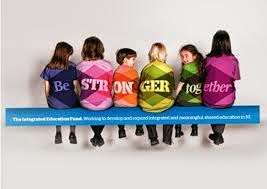
5. "Politicians in Northern Ireland are coming under pressure over their failure to promote integrated education. Sixteen years after the Good Friday Agreement why are only 7% of children study at an integrated school."

This was a report from Andrea Catherwood which put the case for integrated education. 

The headmistress of one integrated primary spoke of what they'd achieved so far. Jim McConville (son of Jean, murdered by the IRA) said he's a great believer in educating Catholics and Protestants together. Andrew said they provide "neutral spaces". A student outside an integrated college though notes that despite Catholics in her local community would still stop Protestant friends coming to her house. All four 'vox pops' (from the streets of Belfast) were in favour. Andrea said there's popular support for it too (shown by polls). Grass roots action has resulted in all the integrated schools so far as the two main political parties are unwilling to support it. The report ended with the headmistress say that integrated school are "very, very worthwhile" and "hopeful", and her children singing of sunshine.

A one-sided report then, but Samira said that the NI minister responsible, John O'Dowd [Sinn Fein], was "unavailable for interview", so a short statement from him was read out saying that parents are being given what they want.

Finally...


6. "The Pope will be accompanied on the visit by two close friends from Argentina, Rabbi Sorka and Omar Abboud, Muslim Director of the Institute for Interreligious Dialogue. We discuss the current state of interfaith relationships in Israel and the West Bank."

This was a longish discussion between a Muslim, a Jew and a Catholic - namely Mohammed Dajani, Founder of the Wasatia Movement, Rabbi David Rosen, Director of Interreligious Affairs at the American Jewish Committee, and Rev Father David Neuhaus, Latin Patriarchal Vicar [for Hebrew-speaking Catholics in Israel]. There were no jokes.

There was a a measure of disagreement between the two Davids over the lack of interfaith events during the visit. David Rosen catch himself as being the one pouring a little cold water over the others' enthusiasm, saying that it is "disingenuous" for the Pope to bring along his two friends but for there to be no interfaith events during the whole visit. He also expressed surprise that the Pope isn't travelling to Galilee, where 80% of Israeli Christians live.

Both Mohammed Dajani and Fr Neuhaus were wholly positive about the Pope's visit.

Samira Ahmed asked them, among other things, about the "far-right Jewish attacks" [abusive graffiti daubed on Christian buildings] and noted the drop in the Christian population of Bethlehem since 1990 (from 60% to 18%), but - as is her way - she played it pretty straight throughout to my ears.

Sunday, 18 May 2014

Only Connect

I suppose it would be quite hard to calculate how many news items over, say the last couple of years, were Islam-related, and then perhaps to compare that number with all non-Islam related news put together.

Apart from turmoil in the “Arab World” and Africa, there is no shortage of Islam-related violence in the West. The Trojan Horse phenomenon is taking place right under our noses and the Islamisation, or normalising of alien practices in areas where there is a high proportion of Muslims in Britain and Europe.

Certain crimes seem to be committed, disproportionately, by ‘Asians’. There is the Halal meat controversy, all manner of cultural incompatibilities and a serious problem with radicalisation in our prisons and universities. 

One way and another, negative stories about Islam abound, and the BBC can play them down with all its might, but simply can’t avoid them all. 

Their only recourse seems to be to separate Islam-lite from Islam-extra, in other words, use the phrase “Al Qaeda terror” rather than Islamic terror, insist that terrorism and violence in the name of Allah is a perversion of something called the real Islam. (like the real IRA?)  They put up straw men, such as indignant condemnation of people who say ‘all Muslims are terrorists’ (have you ever heard anyone actually say that?) and invent euphemisms to avoid confronting the truth, in a perversion of something called reality.

So, whatever uncivilised, violent, undemocratic, misogynistic, stark raving bonkers Islam-related incidents occur, and however unavoidable the conclusion that there is a definite relationship between these things and Islam, there is one straightforward connection that can’t be made. That is simply acknowledging the obvious, unpalatable nature of the Israel Palestine conflict.

People can decipher a complicated word grid, but they can’t solve this mystery with or without Victoria Coren Mitchell.

Boko                 Suicide          Al               Grooming 

Bomb           Martyr           Hamas         Sharia

Palestine                Gangs           Haram               Shabab 

Sea                   Kuffar          Hezbollah     Apostasy

The BBC won’t say it, the public won’t admit it and the world says: whateva’.

After dwelling on price-tag attacks on this morning’s Sunday programme, Paddy Agnew stated that Jerusalem is very important, don’t you know, “to Christians --- and Jews, but also for Islam”; as Craig said, Edward was more interested in discussing what hard-line Zionists are doing to the Christians in Jerusalem. Pope Francis better watch out! He might get spray-painted.

If you search online for ‘price-tag attacks’ against Christians up pop pages and pages of reports of anti-Christian graffiti by right-wing Israeli Zionists, but amongst them there are pieces describing attacks, far worse than graffiti, aimed at Christians, by Muslims.
Christie Anastas is a brave Palestinian lady confronts-anti-israel-lies who has had death threats for speaking out.


Sunday, 26 January 2014

Thirded! (apparently)


Being, as you may know, something of a follower of Radio 4's Sunday, I like to keep an eye on its Twitter feed

It usually tells listeners what's coming up or what a guest on the programme has just said. It also occasionally retweets comments sent to it via Twitter. 

Its latest retweet, however, is something it just happened to pick up on Twitter about the findings of a Theos report on UK religious affiliations and voting patterns (which the programme had discussed). It's a rather partisan thing to retweet, isn't it?

RT : Tory vote is all about self interest, which is not what my faith is all about <-- Seconded!

Saturday, 18 January 2014

Addressing the problem directly?


During the reign of Pope Benedict XVI, sections of the BBC personally hostile to Benedict - especially Ed Stourton's Sunday and the BBC's Rome correspondent David Willey - would feature regular criticism of Benedict's Vatican for doing too little about priestly child abuse in the Catholic Church. 

Pope Benedict has plenty of opportunity during his brief weekend visit to Malta to talk about the clerical sexual abuse which has scandalised members of his faith around the world, and created a credibility crisis for the world's largest Church, the Church of Rome.
But he has chosen to speak in generalities and metaphor rather than to address the problem directly.
Given that Sunday has been rigorous in its coverage of child abuse with regards to the Catholic Church, covering its every twist and turn, it will be interesting to see how (or if) it covers this story:
The former Pope, Benedict XVI, defrocked nearly 400 priests over a two-year period for allegedly raping and molesting children, according to a leaked Vatican document.
That's from Sky News today, and the Sky report goes on to say:
Before becoming pope, then-Cardinal Joseph Ratzinger took action after determining that bishops around the world were not following church policy and putting accused clerics on trial in church tribunals.
This is not the picture of Benedict painted over time by Messrs Stourton and Willey, so how will they report this story?

Probably grudgingly, and perhaps in the manner of BBC News's online take on the same story which briskly mentions that "Close to 400 priests were defrocked in only two years by the former Pope Benedict XVI over claims of child abuse, the Vatican has confirmed", merely adding:
Benedict, who was elected in 2005, took the helm as the scandal of child sex abuse by priests was breaking.
We'll see.

Sunday, 15 December 2013

What constitutes a religion?


This morning's Sunday with Edward Stourton did mostly what you would expect Sunday with Edward Stourton to do. There were segments dealing with two of the programme's main obsessions - same-sex marriage and priestly abuse within the Catholic Church - plus three distinct features on Nelson 'Madiba' Mandela. 

The report on same-sex marriage featured a balanced range of voices but did what such reports tend to do on Sunday: End with the liberal point of view. (One day, when I've got some spare time, I'll properly test that hypothesis out). It looked at the continuing debate within the various denominations of Christianity and Judaism (though, oddly, not Islam). 

All the usual Sunday talking points rather crowded out the other stuff, but the other stuff was genuinely interesting. 

The crowding-out problem in particular resulted in a somewhat cramped closing discussion about what constitutes a religion.

This took place in the light of the UK Supreme Court's ruling this week in favour of Scientology, and the programme's guests were Professor John Haldane from St. Andrew's University and Professor Linda Woodhead from Lancaster University. The discussion seemed to have barely got underway when they ran out of time. 


Professor Woodhead supported the court's ruling, while Professor Haldane disagreed with it (so that was a balanced choice of guests); however, it was their more general discussion of how to define a religion which was particularly absorbing, and of which I'll try to give you a flavour.

Edward Stourton asked if belief in God was a necessary part of any such definition. I instantly thought, "What about Buddhism then?", and Linda Woodhead echoed that very point soon after. John Haldane agreed that belief in God isn't a necessary part of religion. 

So what is? 

Well, Prof. Woodhead proposed that religion is focused on "alternative orderings of things, ways that are considered more beautiful, more true, more moral and more potent."

Ed read out the court's description of a religion as "a spiritual or non-secular belief system which claims to explain mankind's place in the universe and relationship with the infinite".

John Haldane queried the words "spiritual" and "non-secular", describing non-secular as "a contrastive term": "You might say, 'What does that contrast with?', and the obvious answer would be 'religion'" - i.e. a circular argument!

He proposed instead, if you're attempting an abstract definition, that a belief in a transcendent reality, a belief in something beyond the natural order, must be an essential part of that definition. 


Linda Woodhead was sceptical, raising the old 'Brains Trust' point: 'Well, that depends on what you mean by 'transcendent'. 

Prof. Haldane defined it as being the idea that religion "seeks a source of meaning of the world beyond the world, that is outside the order of nature" and argues that Scientology isn't a religion in those terms, merely a kind of "cosmological speculation about people on other planets".

Ed Stourton raised the question of strength of belief and whether that's a factor. 

Linda Woodhead preferred the idea of sincerity of belief. Hence, the Jedi Knights (of Census fame) aren't considered a real religion because they weren't really sincere, just a bit of a joke.

John Haldane was sceptical about using sincerity as a criteria as you can be sincere about all kinds of things that couldn't be considered grounds for religion, such as your sincerity towards your relationships with other people or your belief in science. (Richard Dawkins is sincere and strong in his belief that there's no God and that religion is a bad thing, of course). 

Just as Linda Woodhead said that Prof. Haldane was moving towards the question of what is true, Edward Stourton had to bring things to a close. 


The other interesting segment reported on the plight of Jamaica's tiny Jewish community - and it was quite a good news story. 

When the Spanish monarchy proclaimed the expulsion of the Jews in 1492, Columbus was sailing the ocean to blue to the Caribbean and (without intending it) opened up one escape route for Spanish and Portuguese Jewish refugees, the first of whom arrived in Jamaica as early at 1494. That makes them one of the oldest Jewish communities in the Western hemisphere. 

Recently, the tiny community there (of around 200 people) has received an academic boost - as well as a growing number of converts. 

DNA testing has revealed that around 424,000 Jamaicans have some Jewish ancestry. Doing a quick calculation, that suggests that just under 15% of the Jamaican population has Jewish ancestry. Jewish-sounding surnames are common on the island, we were told, so that might have been a big clue anyhow!

When it's not beating its various drums, Sunday can be such an interesting programme. 

Sunday, 22 September 2013

Sunday Sunday


It's a bit late today, and I know you've all been waiting with baited breath, so...

This morning's Sunday began with the massacre in Kenya, concentrating on al-Shabab - who are they and what they want - with the BBC's guy there [and rather him than me], Mark Doyle. 

Guest presenter Shelagh Fogarty then talked to Labour's Stephen Timms about the Labour Party and faith. He thinks there's something of a left-wing tendency among believers in the UK - unlike in the USA - which could work to Labour's advantage. This follows last week's interview with Lib Dem minister Steve Webb about the Liberal Democrat Party, and faith.  Presumably next week it will be an interview with a Conservative MP about the Conservatives and faith. [Failure to do that would look terrible for them, bias-wise].

There then came a report  about Bishop Edward King Chapel at Ripon College, Oxfordshire - the first religious building to be shortlisted for the RIBA Stirling Prize.  This is what it looks like:


The burqa/niqab debate didn't pan out in the pre-announced way. There was no niqab-wearing Muslim student after all, merely Dr Sara Silvestri from City University, London. She's not in favour of 'banning the niqab'. Maybe they realised that having such a one-sided debate [as the one planned] wasn't a wise move, bias-wise. 

Dr Silvestri said the issue of 'Muslim women and the veil' is "not really a big probably", it's "a phantom" people bring up for "ideological" reasons to take attention away from bigger issues. Shelagh echoed that straight back to her, "Almost as though I have this big problem I can't solve, so I'll go to this small thing that isn't really a problem and turn it into one." 

That discussion was prefaced by an interview with the BBC's Switzerland correspondent Imogen Foulkes, who I only ever seem to hear when there's a story about 'racist' or 'Islamophobia' in the country. [Does nothing else happen there?] A Swiss canton is holding a ballot on whether to ban the burqa, and local Muslims are feeling aggrieved about it. The supporters of the move are all "right-wing" - if Imogen's account of the story is accurate. We heard from one such aggrieved Muslim, but from no supporters of the move. Imogen Foulkes sounded even less keen on banning the burqa than Sara Silvestri [though Sara isn't the one who's supposed to be an impartial BBC reporter].

There was also a chat with Paddy Agnew of the Irish Times about Pope Francis and his views on the Church, which panned out much as you'd expect, and the programme ended with another discussion [and there have been a few in recent weeks on the programme] about Northern Ireland with Rev Norman Hamilton, a Presbyterian minister in North Belfast, David McKittrick, Ireland Correspondent for the Independent and the Rev Alistair Smyth, Deputy Grand Master of the Grand Orange Lodge of Ireland.

There was another feature, but I'll deal with that separately.