Showing posts with label 'BBC News at One'. Show all posts

Sunday, 31 July 2022

Priorities


As discussed on the open thread, here's the running orders of the main BBC One news bulletins since Friday...

Friday News at One
1. 'Wagatha Christie' trial
2. Fatal stabbing of a nine-year-old girl in Lincolnshire

Friday News at Six
1. 'Wagatha Christie' trial
2. Calls for compensation in blood scandal
3. Fatal stabbing of a nine-year-old girl in Lincolnshire

Friday News at Ten
1. Commonwealth Games
2. Calls for compensation in blood scandal
3. 'Wagatha Christie' trial
4. Cost of living
5. Ukraine War
6. Fatal stabbing of a nine-year-old girl in Lincolnshire

Saturday 1pm Weekend News
1. Train strikes
2. Fatal stabbing of a nine-year-old girl in Lincolnshire

Saturday 5pm Weekend News
1. Train strikes
2. Fatal stabbing of a nine-year-old girl in Lincolnshire

Saturday 10pm Weekend News
1. England women's football final the next day
2. Fatal stabbing of a nine-year-old girl in Lincolnshire

Saturday, 12 February 2022

I hear you're a racist now, Mr Coyle


The suspension of Labour MP Neil Coyle yesterday is receiving the kind of low-key BBC reporting we'd expect. 

The story appeared on BBC One's News at One and News at Six but not on BBC One's News at Ten. On both News at One and News at Six it was treated as a minor story, getting just 18 seconds on each bulletin.
 
The News at One version lacked detail:
The Labour MP Neil Coyle has had the party whip suspended, following allegations that he made racist comments to a journalist on the Parliamentary estate. Mr Coyle said he was "very sorry" for his "insensitive comments", which politics reporter Henry Dyer said made him feel uncomfortable in his place of work.
And the News at Six barely added much more:
The Labour MP Neil Coyle has been suspended from the party following allegations he made racially insensitive remark in a bar in the House of Commons. Mr Coyle says he's very sorry for his insensitive comments, which were reported in a formal complaint by a journalist who's of British-Chinese heritage. 
This morning's BBC Breakfast has been giving it 24 seconds:
The MP Neil Coyle has been suspended by the Labour Party after allegations he made racist comments in a House of Commons bar. The member for Bermondsey and Old Southwark has apologised for what he called his "insensitive behaviour" when talking to a political journalist of British-Chinese heritage. Mr Coyle said he wants to "re-prove" his Labour values and be readmitted to the party in due course.

Another interesting aspect of the reporting of this story is how the BBC has sensitively avoided mentioning, or even hinting at, the "racial stereotype" Mr Coyle is said to have used - Sax Romer's Chinese supervillain Dr. Fu Manchu. Other broadcasters mentioned it. 

And the BBC's online report went through 6½ hours and seven edits before finally getting the name of Mr Dyer's employer correct. 

For trivia fans, here's Wikipedia's list of who's play Fu Manchu in film. It's an intriguing list:

Harry Agar Lyons, Warner Oland, Boris Karloff, Lou Marcelle, Henry Brandon, John Carradine, Glen Gordon, Christopher Lee, Peter Sellers and Nicolas Cage.

Tuesday, 14 December 2021

The Curious Case of the Vanishing Welsh NHS Logo


This is a bit odd...

There was a report by BBC health correspondent on the BBC's News at One yesterday which contained the following section:
Dominic Hughes, BBC: And in hospitals, where staff are already under pressure, there is real anxiety over what the next few weeks may bring, particularly for patients that need high levels of care.
Dr Ami Ross, intensive care consultant: It's awful, you feel like you are giving them a Third World service.
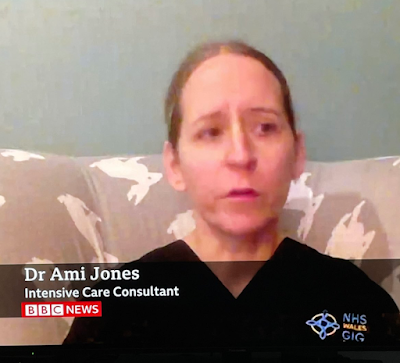
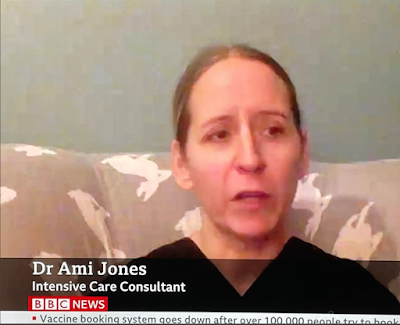
The report was re-broadcast every hour during the afternoon, but someone on Twitter spotted a slight change between the report as broadcast at 1:05pm and the report broadcast at 2:05pm and later and took to Twitter about it:
Sam Lowry: Spot the difference - Dr Ami Jones on BBC News at 1pm, saying how terrible things are with intensive care wards, then again on BBC News at 2pm when they’ve realised this reflects badly on Keir Starmer & have edited out the fact this is happening in the Labour-run NHS Wales!!
Here's the screengrab Sam took at 1:05pm:
And here's her 2:05pm screengrab:
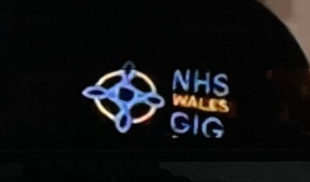
As you'll have spotted, what disappeared was this:
Now, I never just trust screengrabs posted on the internet so I checked TV Eyes to see if this really did happen. 

And it did. 

The report was otherwise identical.

So what do you make of this? 

Why did they crop it? Was it because the BBC was removing something inconvenient for Labour? Or did they remove the 'NHS Wales GIG' logo because it was advertising, even though it was only adverting the public sector Welsh NHS [so not a commercial brand]?

[Note: 'GIG' is the Welsh acronym for 'National Health Service' - 'Gwasanaeth Iechyd Genedlaethol'.]

Friday, 19 November 2021

I confess


So, a lead story on today's BBC One's News at One concerned a former cricketer who's been forced to apologise after someone released a photo of him dressed up as one of his favourite rappers, Tupac Shakur, at a fancy dress party in 2009. 

His crime? Wearing JustinTrudeauface

I suppose I ought to confess too. When I was in my last year at primary school I played The Ghost of Christmas Future in Scrooge. I dressed in black and floated over the assembly hall menacingly, only slightly spoiling the effect by tripping over Scrooge's bed. But I'm ashamed to admit that I had gold make-up applied to my face at the time. 

Yes, I'm guilty of goldface. 

I was only 10 at the time, but that's no excuse.

And that, of course, as cultural historians well know, was why Auric Goldfinger was such a great Bond villain. He turned his enemies into racists. 

Mea culpa.

Meanwhile, that BBC report really laid it on with a trowel. The bit about Alex Hales [by the BBC's Laura Scott] said that Mr Hales ''became further embroiled in the scandal after a photo emerged showing him dressing in a racially offensive way at a fancy dress party in 2009''. 

Sunday, 31 January 2021

Some people might say...


David Buik, a man who knows a thing or two about the global economy, was watching BBC One a few minutes ago and then took to Twitter:

David Buik: Really negative take by BBC News on the UK applying to join a free trade area made up of 11 Asia and Pacific nations, Sneering comparison to EU. From little acorns do great big oak trees grow! We've left the EU. Please get over it! Shoulder to the wheel - EVERYONE!

This is what he saw and heard:

Ben Brown: The Government has announced that Britain wants to join a trade partnership of 11 countries including Australia and Japan. The partnership is known as CPTPP. It was only formed in 2018 but could offer tariff-free trade with a host of countries in the Pacific. Well, our Global Trade Correspondent Dharshini David is here with me now. Dharshini, some people might say, why have we let the EU to join another big global trading block?

Dharshini David: One that's thousands of miles away when we've only just shaken off the dust from the one next door. And don't forget as well, this has got a far less catchy name than the EU. And on top of that, Germany buys as much of our exports as all those 11 nations put together. And when you consider we already have trade deals with seven of them, economists say the gains to businesses and consumers in the short run is going to be pretty limited. But the Government says that this, the first major move since Brexit on the trade scene, is about the UK 's future ambitions, about growing those ties with the fastest growing markets and deepening our links when it comes to stuff like robotics and banking and advertising. We don't talk a lot about digital and services in general but those really are our strengths right now. But the big prize would be if other big nations, for example, the US, joints, then we get an American trade deal almost by the back door and it creates a more powerful bloc. But this is going to be a very long process. We are just at the start. We don't even know yet what the Government's wish list is, and talks will have the start after we get those. And who knows, on that list we could have demands perhaps for a more catchy name!

Ben Brown: All right. Indeed. Dharshini, thank you very much! 

Though they was some balance in the middle, the framing was certainly negative here (and not without hints of sarcasm) and I'd say David Buik has a point, wouldn't you? 

Friday, 24 January 2020

History in the making, despite the BBC


History in the making, despite the BBC.

The European Withdrawal Bill passed its final Parliamentary stages this week and received Royal Assent yesterday. 

As noted earlier today, BBC One's main news bulletins yesterday evening chose not to report this - extraordinarily, almost as if it were a case of sour grapes on the BBC's part.

*******

History rolls on...

Today, the European Union formally signed the Withdrawal Agreement. Ursula von der Leyen and Charles Michel, the leaders of the European Commission and Council respectively, with the EU's chief negotiator Michel Barnier poised behind them, put pen to paper this lunchtime. 

John and Arthur T on an earlier thread noted that the BBC's News at One gave made it a blink-and-you'll-miss-it minor story towards the end of the bulletin.

John timed it and found that the BBC gave it 19 seconds. I've checked it out myself and re-timed it (as I like to be thorough) and, yes, John was spot on: it was exactly 19 seconds. And it came 21 minutes into the bulletin, very thinly sandwiched between Babs Plett-Usher in Bethlehem and Martin Patience in Baghdad. 

Shouldn't it have been a lead story, maybe even the lead story, what with it marking a major moment in UK and EU history?

History in the making, despite the BBC, then. And yet more sour grapes?

*******

And late this afternoon, in the hour before BBC One's News at Six, the United Kingdom's Prime Minister, Boris Johnson, added his signature to the Withdrawal Agreement too.

Another landmark moment in history.

Was it the top story on tonight's BBC One's News at Six, as you'd expect?

Oddly not.

Nor was it among the other top stories on tonight's BBC One's News at Six. Or even among the minor stories. Or even mentioned in passing.

To cut a long story short, BBC One's main early evening news bulletin - BBC News at Six - didn't report today's historic events at all.

Not even for 19 seconds.

Extraordinary. And the sourest grapes yet?

*******

History in the making, despite the BBC.

*******

Seriously, dear reader, am I missing something (and need putting down)?

Why, other than for reasons of extreme bias, would the BBC's main evening news bulletin not be reporting this tonight?

*******

Update: And what's the BBC's  busy, Twitter-friendly 'Europe Editor' Katya Adler tweeting today?

Nothing at all relevant to this. Where is she on this?

*******

Further updateI see someone on Twitter is seeing things my way:
David Gregory: What’s happened to the BBC's Katya Adler? No news at all from Brussels? 
David Gregory: Very strange news values on BBC 6 PM TV. Long horrific rape story, infant death. Kids watching. No mention of Brexit Bill signing. No news from Brussels or France. Understand the BBC's Katya Adler has been sacked.

Saturday, 14 December 2019

The BBC and the earlier parts of the past week


Charles Moore's fine column in The Spectator this week also dwelt on "mainstream media triumphalism which equates its own interests with those of the general population," though he focused specifically on  the BBC's coverage of the final days of the election campaign.

As it chimed with my impressions, I hope it's OK to quote this at length from (Sir) Charles:
The following morning, on the BBC Today programme, Nick Robinson — who seems almost obsessively opposed to Boris Johnson, perhaps because of something or other in Oxford days (a failure to gain election to the Bullingdon Club?) — was riding the highest of horses. When an ITV journalist had shown the Prime Minister the photograph of young Jack on his phone, Nick complained, Boris had declined to comment and put the journalist’s phone in his pocket without looking at it. Psychoanalyst Dr Laura Kuenssberg later diagnosed this as an amazing ‘lack of empathy’. In a further act of lèse-majesté, which Nick reported in shocked tones, the Johnson entourage had somehow misled ‘some very high-profile journalists’ over an obscure related issue. Nick did not mention that, in the interview, Boris had expressed his sympathy with the boy’s case. Nor did he acknowledge that any Tory politician approached with the offer of a sight of a picture on a media phone while on camera in an election campaign would rightly have suspected a trap. Later, Iain Watson filed for the BBC a mawkish item online called ‘One sick boy and the NHS’, equating extreme protest with wider public opinion. On Tuesday’s lunchtime BBC News, efforts were made to imply that a Tory social media campaign had spread lies saying that the hospital picture had been staged. The BBC never offered a clear narrative about what had actually happened, or explained who had put Jack on the floor and why. It just wanted to keep going for as long as possible with the Jack picture.  
This contrasted sharply with the BBC’s handling, also on Tuesday, of the leaked phone conversation between Jon Ashworth, the shadow health secretary, and a Tory friend of his about how normally Labour voters in the north and Midlands ‘can’t stand’ Jeremy Corbyn, and how he would be seen in government as a risk to national security. Here it concentrated not on what Mr Ashworth had said, but on how his friend had betrayed him — not a line the BBC, with its uncritical praise for ‘whistleblowers’, usually deploys. In its PM programme, Evan Davis turned the Ashworth revelation into part of a story about ‘the fight between honesty and mendacity’, introduced with a quotation from the fiercely anti-Boris Lord Patten of Barnes, the BBC’s ex-chairman. 

Sunday, 24 November 2019

Rapid reaction


Peter Oborne demands an answer (to a conspiracy theory). The BBC gives him one:


Saturday, 14 September 2019

One of Our Nations is (Almost) Missing


Royal Courts of Justice, Belfast (built 1933, architect Sir Richard Allison - who also designed London's Science Museum)

On this week's Newswatch Samira Ahmed noted that "strongly-worded complaints that BBC News has a bias against Brexit significantly outnumber objections of a prejudice in favour of Brexit, though there have been plenty of the latter too." 

Those who inhabit Twitter might be surprised by that - though not us. 

The programme began with complaints about the BBC's "completely 100% biased, totally one-sided" (anti-Brexit) coverage of the Scottish High Court's ruling against Boris's decision to prorogue Parliament, using footage from BBC One's News at Six on Wednesday, which devoted its first ten minutes to the story. 

The Scottish ruling was on one of three cases brought against the Government - one in England/Wales, one in Scotland and one in Northern Ireland. The English/Welsh High Court had earlier ruled in the Government's favour. 

Not complained about by Newswatch viewers something I saw objected to on Twitter - that Thursday's ruling by the Northern Irish High Court in favour of Boris didn't get anywhere near like the same extensive coverage as the Scottish ruling. 

Indeed, checking via TV Eyes, it transpires that none of the three main BBC One news bulletins (News at One, News and Six and News and Ten) even mentioned the ruling from Belfast, never mind led with it. 

It didn't rank as enough of a story for them, evidently. 

It got mentions on the BBC News Channel in the late morning - the first (as 'breaking news') at 11:21, the last at 12:09, with nothing thereafer. 

Meanwhile, as TV Eyes also shows, Sky News - including the famous Kay Burley - began reporting the story at 11:23 and kept on reporting it throughout the afternoon into the early evening. 

Am I missing something, or isn't this serious bias by omission from the BBC?

TV Eyes shows that Channel 4 News and ITV News ignored it, so they agreed with the BBC - which doesn't necessarily make the BBC's downplaying of the development any less questionable. 

Saturday, 20 July 2019

Nick Bryant calls Donald Trump "racist" (again and again)


Having been out of action for most of the past couple of weeks, I've got a lot of catching up to do. I did, however, see the original trio of Donald Trump tweets about 'The Squad' (14th July)... 
(1) So interesting to see “Progressive” Democrat Congresswomen, who originally came from countries whose governments are a complete and total catastrophe, the worst, most corrupt and inept anywhere in the world (if they even have a functioning government at all), now loudly... 
(2)...and viciously telling the people of the United States, the greatest and most powerful Nation on earth, how our government is to be run. Why don’t they go back and help fix the totally broken and crime infested places from which they came. Then come back and show us how... 
(3)...it is done. These places need your help badly, you can’t leave fast enough. I’m sure that Nancy Pelosi would be very happy to quickly work out free travel arrangements!
...and, though having only come across BBC programmes very occasionally, I did hear a couple of reports by Nick Bryant that focused on the "go back" bit but 'forgot' to mention the "come back" bit and said to my family, 'No wonder Trump accuses the media of 'fake news''.

And, on trying to catch up, it seems as if vast swathes of the world and the media also 'forgot' the "come back" bit too in their urge to denounce the US president as "racist".

Even if Donald Trump's tweets were racist in intent or content, merely reporting him as saying "go back" and not telling people that he continued (within the same tweet) to say "then come back" is surely not honest reporting? Is it?

If a racist tells someone to 'go back where they came from', then that's unequivocal. But do racists usually tell their victims to "then come back"? I bet not. 

I suspect a lot of people have already made this blindingly obvious point, but I'm still catching up and can't be sure that they have. 

Whether the pro-Trump crowd chanting "Send her back!" about the antisemitic Somali-born congresswoman Ilhan Omar was being racist or not, or just registering their dislike of a highly controversial figure who they feel has been ungrateful to the country that took her in, Donald Trump was doubtless right to distance himself from them slightly. After all, he wanted her to then come back. 

Anyhow, back to Nick Bryant of the impartial BBC...

The BBC's high-ups obviously had no problem whatsoever with him repeatedly stating that the President's tweets were racist - no ifs, no buts. 

This is seriously-off-the-scale stuff - angry journalism making a point, relentless opinion-pushing on a matter of controversy.

Seriously, in what way is this impartial reporting?:


15 July BBC News at Six 18:13
Donald Trump was at a 'Made in the USA' business event at the White House today, showcasing the kind of economic nationalism that has become a hallmark of his America First presidency. But it's his white nationalism that's caused the latest political storm, a racist Twitter attack aimed at four women of colour, three of whom were born in the USA. 

16 July BBC News at Six 18:13
Last night, the four non-white Congresswomen who were the target of the President's racist Twitter onslaught stood in shoulder to shoulder solidarity on Capitol Hill.

16 July BBC News at Ten 22:17
Last night, the four non-white Congresswomen who were the target of the President's racist Twitter onslaught stood in shoulder to shoulder in a tableau of American diversity.

17 July BBC News at Six 18:20
On Capitol Hill, fierce words of condemnation for the President's racist tweets. 

17 July BBC News at Ten 22:06
The White House put out this video today - easy-listening patriotism in a week when Donald Trump's brand of nationalism has been more strident and at times racist. 

18 July BBC News at Six 18:24
This is a rally that will be talked about for decades to come. After the racism of Donald Trump's original attacks on the four Congresswomen of colour came the kind of racial demagoguery we've not heard or seen from a modern-day American President.

Saturday, 24 November 2018

Ruddy Hooligans!


Norman, looking hard

Credit to Samira's Newswatch this week for featuring a couple of complaints about hardline BBC labeller Norman Smith. 

The background was that Newsnight's Nick Watt had asked Jacob Rees-Mogg about the ERG-led attempt on Mrs May's premiership,  "Doesn't it has more of the Dad's Army feel about it?", and Mr Rees-Mogg had replied in his deadpan way, "I always admired Captain Mainwaring". On Thursday's News at One, however, Norman Smith said: 
Hope will be, no it's not going to win over the hard-Brexiteers, the Dad's Army Brigade, but there may be enough in this to get some of those middle-ground Brexiteers on board to back the government.
...and that drew criticism:
Chris Oldershaw: How dare your political 'guru' use the offensive expression 'Dad's Army Brigade' to describe people who want a clean break from the EU? 
Phil Carr: Pretty derogatory language - or do you want to nudge listeners in a certain direction?

Saturday, 3 November 2018

For IFS's Sake


All through Tuesday, the BBC led with the news that the Institute for Fiscal Studies — ‘expert’, ‘independent’, ‘respected’ etc etc — thought Philip Hammond’s Budget was ‘a bit of a gamble’. One has nothing much against the IFS, but why is this news? Why is it not treated the same way as the Institute of Economic Affairs on the free-market right or of the Institute for Public Policy Research on the Blairite left — as a body whose views are probably worth hearing, but only as one among many? Behind the IFS’s exaggerated prominence is a false idea that it is objective and the others are biased. They are all biased — or rather, coming from a particular political point of view — and there is nothing wrong with that, so long as it is stated. The IFS is a centrist, anti-Brexit outfit of the usual Whitehall-ish goody-goodies. It is not the court of final appeal as to whether this is a good or bad Budget.
He's not wrong about the BBC leading with the news all day. Here's how BBC One's three main news bulletins began on Tuesday:
BBC News at One: The big winner of the budget is the NHS - says a leading think tank - but warns yesterday's budget may be a bit of a gamble with the public finances. The Insitute for Fiscal Studies also says that more than 2 million families on Universal credit - the new flagship benefit - will be hundreds of pounds better off a year but some public services will continue feeling the squeeze.  
BBC News at Six: The Chancellor is accused of taking a gamble with his Budget despite an uncertain economic future. The Institute for Fiscal Studies suggests Philip Hammond may have to increase borrowing and says many public services haven't benefited. 
BBC News at Ten: Tonight at Ten, the Budget was a gamble with the public finances - the independent verdict of a leading research organisation. 

Thursday, 31 May 2018

Piecing the story together


Oh no, I thought, on seeing the BBC News website headline:


Is this a BBC producer getting in trouble for egging on Frankie Boyle to make one of his more 'outrageous' anti-royal jokes? 

But no, the 'man' in question was just the usual Islamic fanatic preparing murderous terrorist attacks on the UK monarchy, shopping centres, the British army, sports stadiums and the UK's Jewish community.

Now, as Not a Sheep notes, the BBC's online coverage has previously focused on Prince George and the sports stadiums and hasn't previously mentioned his calls for attacks on Britain's Jews.

Even this article gives his intent to attack the UK's "Jewish communities" just two words. 

Reading about the story elsewhere, the would-be terrorist also called for other children's ice cream to be poisoned (a particularly troubling detail the BBC's account misses). 

The Daily Mail also has the horrifying detail that the ISIS fanatic "taught at the Mohamadi Mosque in Nelson, Lancashire". That's my dad's old town and I note that none of the BBC's online reports about him in recent months goes further than saying that he's from Nelson. That said, Dominic Casciani did call him "a teacher at a local mosque in Nelson" on BBC One's News at One (though he only mentioned the threats to Prince George and nothing else). 

You always have to read around quite a bit these days to get a proper picture of events.

And, within a short space of time, the story is now slipping out of the main headlines on the BBC home page. It's now in 11th place. 

Saturday, 21 April 2018

BBC One (Monday to Friday): A Brexit Survey


As I said in the previous post, it's us who claim that the BBC is biased against Brexit who have the evidence

And here's some more...

******

Using TV Eyes, I've tracked every mention of Brexit on BBC One over the past week (Monday-Friday).

As TV Eyes uses the London version of BBC One, the following includes BBC London news programmes too. 

65 results came up.

And here's what BBC One has been up to...

******

Monday began (overnight) with two reports on a campaign by anti-Brexit campaigners to have a second referendum.

And then came a Hardtalk interview with an anti-Brexit Northern Irish politician (Monica McWilliams of the Women's Coalition (Sample - BBC interviewer: "Maybe one reason, for more than a year, it hasn't worked is because Brexit seems to be directly affecting the mood of people in Northern Ireland, because one of the biggest controversial and unknowns right now about Brexit is what it's going to do to the border between Northern Ireland and the Republic of Ireland. How big a factor is that, do you believe?" Monica McWilliams: "Huge, and it's - you've put your finger on it, it's unknown. It's the uncertainty, it has driven us back into silos that we did not need to go back into"). 

Further repeats of both followed. 

BBC Breakfast discussed Brexit in the course of a segment on farming. The BBC interviewer's question was "And that is one element of the cost, that the weather has been so bad when there is extra bedding and feed to pay for. A lot of uncertainty as well around Brexit, which will affect what farmers invest in" and the reply came" and the reply was negative and about the problems faced because "our biggest market is Europe". No one said anything optimistic about Brexit.

A later interview with the Manic Street Preachers promised they'd be "political" about Brexit, but, oddly, they didn't mention Brexit. So that was a damp squib (probably thank goodness). 

BBC One's News at Six cryptically tied in Brexit with the Windrush controversy. (John Pienaar: "This department is under pressure. Brexit is coming and they will be watched very closely as they deal with people in this country, individuals and families, many of whom have been here for you is").

BBC London's local news programme majored on "a senior business group [the Institute of Directors]...warning there's an "information drought" on Brexit - making it hard for companies to plan ahead". A company worrying about access to the Germany market was its focus. It wants something like the Single Market we have now to continue. Opposing voices weren't featured.

Soon after the same BBC London local news programme discussed the pressure on secondary school places in London. "All this is a real headache and a constant balancing act. House prices have an effect, Brexit has an effect", we learned. Quite what effect Brexit was having wasn't explained, but it was obviously somehow adding to the "real headache".

Next came this gem from Eastenders:
How can I say it? ..a con woman. Yeah! Ye... No, it's nothing to be proud of. I've been called worse. Well, why not try to prove them wrong by boosting the local economy, providing employment during these tough Brexit times, eh? I can get you your money, Mas. All of it. In a week. 
BBC London's late night news bulletin repeated the 'worried about Brexit' company and the IoD's concerns.

A repeat of Have I Got News For You mocked David Davis over his negotiations with the EU.

******

And God saw that it was biased and the evening and the morning were the second day, Tuesday.

And Tuesday began with some early morning good news:"The British pound has hit its highest level against the US dollar since the Brexit referendum in June 2016".

There was nothing else Brexit-related until a Stephen Lawrence documentary that evening featured  clips of a small white supremacist group in the UK chanting for repatriation and a black man saying that "Brexit has changed the nation" and "brought back these feelings of, 'Maybe I'm not part of this community'", thus tying Brexit to racism.

That night's News at Ten had John Pienaar on again, relating Brexit to the Windrush controversy. ("More broadly, this could make harder her mission of protecting Britain's standing and influence up to Brexit and beyond. A member of the negotiating team says that Europeans may fear harsh treatment when they assert their rights to stay in the country. Ministers would deny that, as they you would expect, but this has all come with a cost in moral authority, certainly to the Government, possibly also to the country").

******

And God saw that it was biased and the evening and the morning were the third day, Wednesday.

Overnight came extensive clips from a parliamentary committee interview about Cambridge Analytica, Brexit, Arron Banks and Leave.EU featuring the testimony of someone highly critical of the aforementioned. 

A business interview around 5.45 featured a newspaper report saying that if we get a decent Brexit deal it could see the UK outstrip the Eurozone. The response? It's all about uncertainty. It's "difficult to predict". Will we get a decent deal? That's "the big thing here". 

For Wednesday's BBC Breakfast, the Windrush-related angle was:
Questions about the competence of the Home Office and this morning. Also questions from Brussels about what all this says about how the Government will handle the registration of EU citizens who will be staying here after Brexit.
A business guest at 6.45 am was optimistic that we will get a Brexit deal and said "that has given a short-term slight stability to the outlook for Britain versus what we've had in the past." The BBC interview (looking on the dark side!) responded, "We know how quickly that can change, so if we're looking at this and thinking we're in a good position right now, how do we make the most of it and bank that rate?" 

BBC Breakfast interview with Bill Gates about malaria saw the BBC immediately reminding him about his earlier plea that Brexit shouldn't lead to UK aid budgets to tackle malaria dealing slashed and asking him if he was "still concerned about that happening". Mr Gates refused to be drawn on that into making further derogatory remarks about Brexit.

A very brief news report then said:
British firm De La Rue has said it will not appeal against the Government's controversial decision to choose a Franco-Dutch company to make the new blue UK passports after Brexit. De La Rue, the current passport provider, said that it had "considered all the options", but would not challenge the move, which will see the half a billion pound contract handed to Gemalto, which has its headquarters in Amsterdam.
On BBC One's News at One we were being given the EU's perspective on the Windrush controversy: 
In Brussels, officials are watching with concern. The government's handling of the Windrush fiasco has not filled them with confidence about how EU nationals will be treated in the UK after Brexit.
That evening's BBC One News at Six covered the House of Lords voting down the government and demanding that the UK stay in the EU Customs Union. (The word "unelected" wasn't used). It wasn't good news for the Government and John Pienaar concluded by saying, "You may have thought the Battle of Brexit had gone quiet, but there are plenty of battles still to come. And the shape of Brexit and the authority of the government and the Prime Minister rest on the outcome". 

The same story was covered on that night's BBC One News at Ten with the same report.

******

And God saw that it was biased and the evening and the morning were the fourth day, Thursday.

Naturally, overnight the BBC continued reporting the pro-EU Lords' defeat of the Government over the Customs Union.

And then a BBC Click episode about automation on farms. This was classic BBC as far as language about Brexit goes - e.g. (from the BBC presenter):
  1. "Brexit threatens to cut down the number of people available to work on the land"
  2. "There are fears about the availability of migrant workers post Brexit".
Brexit also got a mention on that evening's BBC One News at Six. Kamal Ahmed has been talking to Mark Carney, Governor of the Bank of England:
He said why this is a big year for Brexit and that would weigh heavily on their decision-making. The big picture, for people watching, is that, yes, prepare for a few interest rate rises over the next few years.
The story that a cross-party alliance of MPs will follow the Lords in forcing a vote to make the UK stay in the EU Customs Union was also a story on BBC One News at Six.

The One Show had a Brexit-related quip:
It would be nice if it was cold during the week and hot at the weekend. We should make that a condition of the Brexit deal .
Mark Carney was a lead story on BBC One's News at Ten that Thursday:
The Governor of the Bank of England, Mark Carney, has told the BBC that a rise in interest rates this year is still likely, but that any increases will be gradual and will depend on progress in the Brexit negotiations. 
The phrase "Brexit uncertainty" was used repeatedly.

This Week featured Richard Madeley (of Richard and Judy fame) reviewing the week. He covered the latest calls for a second referendum and the Lords' defeat of the government over us staying in the EU Customs Union. Quite what Richard's view of Brexit it I'm not sure after this. Pro-EU Alan Johnson and anti-EU Priti Patel then debated it. (Fair enough).

******

And God saw that (except for This Week) it was biased and the evening and the morning were the fifth day, Friday

The early hours saw an airline business owner being asked by a BBC reporter, "How worried are you and your clients about the Brexit effect and the open skies agreement?". The businessman said his company had "prepared to switch to other countries" but his "personal opinion" was that "I don't think [the worst case scenario] will happen".

A review of parliamentary proceedings included a section beginning, "The Transport Secretary has dismissed the idea that holiday-makers could face air travel delays after Brexit". An SNP MP had raised a scare story. 

By the time of BBC One's News at One, James Lansdale was back linking Brexit to the Windrush debacle:
Theresa May had hoped to use this summit to highlight Britain's global ambitions after Brexit. But the row over Caribbean immigration has made that harder.
The same bulletin later including a segment beginning:
Newsreader: The EU's chief Brexit negotiator, Michel Barnier, has warned there is still a chance that talks on Britain's withdrawal deal from the bloc could fail. Mr Barnier said that while three-quarters of the deal had been agreed, the Irish border issue remained a key stumbling block. Our correspondent Gavin Lee is in Brussels for us with the latest. Tell us more. 
Gavin Lee: This is the EU's chief negotiator for the EU making crystal clear that whilst three quarters they are pretty much in agreement on what the Brexit deal or the withdrawal agreement of both the UK and the European Parliament have to ratify by March next year, the last 25% come because of the series issues involved, said could be problematic and risks failure, he said. 
BBC One's News at Six was back at it too, linking Brexit to the Windrush debacle:
Newsreader: The meeting of the Commonwealth leaders was supposed to be a chance for Theresa May to talk about matters such as trade but instead it ended up being overshadowed by the row over the Windrush migrants.
John Pienaar: That's right. This week, the Commonwealth Summit was supposed to be a show of Britain's weight in the world. Instead, we saw the Prime Minister saying sorry for the mistreatment of Commonwealth migrants and their families by a country once known as the mother country. And not just the government, the Home Office, which Theresa May lead for years, reflecting her own unyielding approach to immigration control in a way that her successor Amber Rudd described as appalling. Mrs May was meant to be standing tall among Commonwealth leaders but we saw her saying sorry again and again to leaders of countries Britain wants to have as friends and needs as trading partners in the world beyond Brexit. 
The latest Have I Got News For You - just like the previous week's edition - made a joke at David Davis's expense, EU-negotiation-wise, and a passing quip at some comedienne insulting a pasty eater saw a comedian quip "This is how Brexit happened".

Finally, BBC One's News at Ten saw John Pienaar continuing the BBC Theme of the Week, Brexit-wise, over the Windrush affair:
Downing Street clearly wanting to be seen to be making amends. Climbing out of that hole. Maintaining Britain's influence and standing and its weight in the world with Brexit approaching, that was always a challenge, and there will be many more challenges as time draws by. But I think the Windrush scandal may just have made that mission that much harder.
Just read the language of that! I don't think Lord Adonis would mind it one bit.

Indeed, Lord Adonis has nothing to complain about as far as any of this is concerned.

That said, there's certainly been plenty of bias on display here, and it's all gone the other (anti-Brexit) way.

Seriously, can anyone read the evidence I've detailed here and still content that the BBC isn't biased in a negative way about Brexit?

I know the dangers of confirmation bias, but this is a list covering every mention of Brexit on BBC One over five days and the evidence couldn't be clearer, could it?

******

Despite what we heard on Feedback, the BBC still has a case to answer. 'Complaints from both sides' won't wash.

The Adonis/Campbell side has nothing substantial to go off.

This side has

Monday, 20 February 2017

Editorials


From this lunchtime's BBC One News at One came this report from Richard Lister. It wasn't entirely free from editorialising:
Richard Lister, BBC: But it's the President who calls the shots, and he uses Europe as a model for all that's wrong in the world - even if he has to make up his own facts to fit the argument
Donald Trump: You look at what's happening last night in Sweden - Sweden! Who would believe this? Sweden! They took in large numbers and they are having problems like they never thought possible. 
Richard Lister: There was no such incident in Sweden. The country has taken in large numbers of refugees and hasn't suffered any terrorist attacks as a result. But the policy's not without its Swedish critics. 
Swedish man on Fox News: I think we were caught off-guard.
Richard Lister: The president said later he was referring to this Fox News report, claiming that violence has risen in Sweden along with refugee numbers. That claim, too, is questionable. But Mr Trump's backers insist his points are valid. 
Dr. Jan Halper-Hayes: People seize upon it and you see these articles, and when I pulled it up on Google, it's like, well, Donald Trump was really right. There were the neo-Nazis going to the refugee camps, and there's been a lot of corruption and rape going on. 
Richard Lister: That's not the message Mr Pence is pushing, but President Trump's voice is louder and Europe is unsettled. On the streets outside his meetings, these protesters are sending a message of their own, that the values of the Trump administration are not welcome in Europe. That's a debate which is getting even more personal in London as members of Parliament consider an online petition signed by almost 2 million people suggesting that Donald Trump's state visit to the UK would cause embarrassment to the Queen. Richard Lister, BBC News. 

Saturday, 22 October 2016

Duly credited


Credit where credit's due to BBC business reporter/presenter Andy Verity for this (which I transcribed from Wednesday's BBC One News at One (no longer on the iPlayer), following the release of the latest employment/unemployment figures:
You might think this rise in unemployment is significant, especially as it's the first time the figures have covered a period which is mostly after the referendum. But it's a rise of 10,000. That's not huge. It's within the margin of error. It could be wrong. 
And it's nothing like the official predictions of a rise in unemployment that were made before the referendum. 
Predictions made my HM Treasury - endorsed by distinguished economists as reasonable - said that after a vote to leave there'd be an immediate shock to the economy, pushing unemployment up by 500,000 over two years or, worse, a severe shock that would put it up by 800,000, and the economy would fall into a recession with four quarters of negative growth. 
Those predictions now look way out.
And though he followed that by saying that some companies are struggling in this post-Brexit vote period, the business he actually included in his report was doing well, buoyed by the cheap pound.

And though he then included an economist (of the Remain persuasion I guessed) saying that it's early days and things could still go wrong, that still struck me as being a decent, fair report from the BBC.

It can be done.

Friday, 16 September 2016

Fashionable opinions


The BBC One News at One bulletin today featured another negative report about Brexit. 

The item was introduced as follows:
The fashion industry is big business for the UK, bringing in around £28 billion into the economy. But as London Fashion Week prepares to welcome visitors from 58 countries some industry experts have expressed concern about the impact Brexit could have on the industry's global status. Well, Emma Simpson has been in Soho to see Fashion Week get underway....
According to Emma Simpson, "the real talking point here is what will Brexit mean for British fashion". [Really, Emma?]

After one pro-Remain designer, Anya Hindmarch, admitted that the cheap pound, post-referendum, has boosted trade at the moment, it was then straight onto the negatives (when the vast bulk of Emma Simpson's report lay) - "But this industry is worried about the potential downsides" - and then specifically onto the main concern: the possible stopping of free movement. 

Caroline Rush of the British Fashion Council argued that it's vital that talent from abroad can continue to come here, and then Emma introduced us to Roksanda, a very successful designer and led her along a particular path: 
Emma: She's Serbian but her fast-growing business is British. She came here to study and never looked back, now dressing some of the world's most famous women.
Roksanda: I came to London from Serbia because I was so inspired with all the incredible imagination that is coming from London. And I think that London is still a little melting pot of ideas. Huge innovations, pushing the boundaries are what fashion needs.
Emma: Would you be where you are today if you hadn't been able to come to London?
Roksanda: Definitely not. And this is a very straightforward answer.
Emma Simpson end her report by saying that the fashion is is "determi best of Brexit" before adding, in a more downbeat tone of voice,  "whatever that may bring". 

Woe, woe and thrice woe!


Incidentally, as  others have spotted, Serbia isn't a member of the EU. Roksanda didn't come here, settle down and build her successful business in this country because of the UK's membership of the EU and EU free movement rules, despite what Emma's viewers doubtless took her to be suggesting here.

In fact, it looks here as if the BBC's Emma Simpson herself simply assumed that Serbia is in the EU and that Roksanda must have come to the UK because of the UK and Serbia's 'joint membership of the EU' - which would be a pretty basic error on a BBC reporter's part. 

Monday, 20 June 2016

Another incendiary intervention


With the House of Commons (at the time) about to pay tribute to Jo Cox, here's a transcript of the opening of a BBC-BBC exchange on this lunchtime's BBC One News at One which struck me as being a classic example of how to 'frame the debate' over a particular news story through the use of loaded language:
Sophie RaworthOur Assistant Political Editor Norman Smith is in Westminster. Controversial comments from Nigel Farage. What do you make of them?  
Norman Smith: Another incendiary intervention by Mr Farage...
And then on they went...

Thursday, 12 May 2016

Bone of contention


Today's The World at One on BBC Radio 4  began, as you'd expect, with coverage of the BBC Charter Renewal review. (Naval-gazing is a BBC speciality.)

After a short review of events in parliament came a discussion between the BBC's Martha Kearney and Steve Hewlett of the Guardian/BBC Radio 4's Media Show, which suggested the review wasn't as bad as the BBC and its supporters feared but that there are still issues of concern for the BBC and its supporters. 

Then came a much shorter interview with Peter Bone MP, a BBC critic. It was the 'balancing item' -even though it lasted barely more more than a minute (the shortest interview by far).

Astonishingly, Martha forcefully stopped him in his tracks as as soon as he raised what he described as his "main concern": BBC pro-EU bias. Martha clearly wasn't going there for anything in the world. Realising that, Mr Bone just laughed.

Then came Jesse Norman MP saying that the government's plan is great and the BBC is great. 

Then came Labour-supporting former BBC Trust boss Sir Michael Lyons (not that Martha even hinted at such a thing) attacking the government for going too far but saying that there is a problem with BBC bias: bias against Labour's Jeremy Corbyn. A somewhat-startled-sounding Martha Kearney not only didn't cut him off when he raised it (in contrast to how she treated Peter Bone when he tried to air his concerns about pro-EU BBC bias) but actually went on to press his pro-Labour 'BBC bias' point with Lord Hall. 

And Lord Hall was the big WATO interview today

He didn't agree with Sir Michael about the BBC's anti-Corbyn bias (you won't be surprised to hear), saying that the BBC is impartial (you also won't be surprised to hear) and that the BBC brings "light to controversy".

Lord Hall sounded pleased with what the government has announced. The BBC's Martha (gently) pressed him largely from a pro-BBC, Peter Kosminsky-type standpoint rather than an anti-BBC Andrew Bridgen-type standpoint.

And that was that: Lots of pro-BBC types having their say, plus (very briefly) Peter Bone. 

Meanwhile over on BBC One's News at One bulletin we got more of the same, plus three items on the EU referendum: Mark Carney of the Bank of England's dire warnings of the economic dangers of voting to leave the EU came first. A little later came the Vote Leave/ITV spat over whether Nigel Farage should be involved in a TV debate with David Cameron. And finally, immediately before the sports news (i.e. as the last 'serious' news item), came the news that the ONS has finally conceded that immigration from the EU has been massively under-represented in the government's official figures (not that the short BBC news item put it like that) - a point that many people have been saying might well give a huge boost to the Leave campaign.

So why did BBC One choose to 'bury' that story as a very short new item near the end of its lunch time news bulletin?

Wasn't that Peter Bone's point being proved? 

Monday, 11 January 2016

David, I'm Only Blogging


I was driving to work this morning and switched over to Radio 4 at 7.10 to hear Nick Robinson talking about the "shocking news" that was just coming in. 

His tone of voice made me gulp. I thought there'd been a sickening terrorist attack or a major assassination but then I caught him saying that David Berry had died and that he was one of the biggest names in modern music, alongside the Beatles and the Stones. I was racking my brains trying to remember who David Berry when it suddenly struck me that David Bowie might much better fit that description and began hoping he hadn't actually said David Bowie. Then he said David Bowie's name again and I realised I'd misheard. "Oh no!", I thought.

That all took place in the space of a few seconds, of course - longer than it look me to write that last paragraph and probably longer than it took you to read it. Still I thought I'd share it with you in the time-honoured spirit of blogging. 

Will you always remember where you were when you first read that anecdote of mine? 

Everyone was talking about it at work, of course - not for long though as we had work to do, but for a few minutes at least - so I'm not surprised that it's being given a massive amount of coverage by the BBC, Sky, ITV and the papers. 

For example, watching the BBC News Channel from 2 o'clock this afternoon, the first 18 minutes were spent on David Bowie before moving onto Syria (after a short advert for what was coming up). Sky News, which I also had on, spent the first 15 minutes of the hour on it before moving straight onto Syria at 2.15 and then onto the latest from Cologne. Both channels were soon back onto David Bowie though, with guests reminiscing, medleys of his songs and further reports. As I'm writing this paragraph the BBC has Paul Gambaccini and Sky has a music industry executive called Jack Steven who has an uncanny look of Bowie (to my eyes):


There's a lively debate going on over at Biased BBC this afternoon over whether there's too much coverage, with some saying "enough already" and others saying that Bowie was a cultural icon (even if his music wasn't to their taste) and that it's curmudgeonly to complain about it.

I'm firmly in the latter camp over this - hence this post! (and David Bowie's music was to my taste).

If someone as important to so many people as David Bowie can't be given a single day of heavy news coverage, then the news would be letting a lot of people down.

Anyhow, for those who are more interested in the BBC than Bowie, here's a comparison of BBC One's News at One and ITV's somewhat shorter lunchtime bulletin. 

It's always interesting to compare what different news organisations consider worth reporting in the main TV bulletins, to see what they miss and what they include - just as, unlike Sky, the BBC News Channel didn't bring its viewers the latest news from Cologne over the past hour. (Maybe they forgot?):

BBC News at One 
1.00 Death of David Bowie
1.15 Aid convoy approaches besieged Syrian town
1.17 Partner of murdered Eastenders actress to appear in court in Ghana
1.19 Labour frontbencher resigns
1.21 Anglican Church meeting
1.24 Junior Doctors' Strike
1.25 Spanish princess stands trial
1.28 Weather
1.30 David Bowie tribute
1.31 End

ITV Lunchtime News 
1.30 Death of David Bowie
1.39 Junior Doctors' Strike
1.42 Aid convoy approaches besieged Syrian town
1.44 Brimstone missiles used by UK govt in Syria
1.44 Anglican Church meeting
1.44 Lin Homer steps down as head of HMRC
1.45 Labour frontbencher resigns
1.46 Government funding for mental health problems
1.48 Golden Globes
1.49 Headlines (David Bowie)
1.50 End

And now the obligatory David Bowie song - my favourite, in its full-throated, full-length version. RIP.