Sunday, 23 January 2022

Rachel Burden, Jeremy Corbyn & antisemitism


A Survation poll back in 2018 found that 85% of British Jews believed that Jeremy Corbyn is antisemitic. And as Tam Heinitz writes:
Now it might feasibly be argued that such evidence as there is does not constitute conclusive proof that Corbyn himself is antisemitic. Certainly it would be right to acknowledge that he strongly disputes such an assertion.
But given the Mural, the Wreath, his comments about Hamas and Raed Saleh, his associations with Paul Eisen, his glowing Foreword to an antisemitic book, his comments about British Zionists lacking a sense of ‘English irony… despite having lived here a long time, probably all their lives’, not to mention the Labour Party under his leadership being found guilty of harassing and discriminating against Jewish members, there is, to say the least, a feasible case for the prosecution.
And that is why the Campaign Against Antisemitism has complained to the BBC because on 12 January, Breakfast presenter Rachel Burden interviewed businessman John Caudwell, who called Mr Corbyn  “a Marxist and antisemite”.  Later, towards the end of the programme, she apologised to 5 Live listeners:
I should have challenged him on the particular allegation of antisemite [sic] because there is absolutely no evidence that the leader of the Labour Party at that time, Jeremy Corbyn, was or is antisemitic. He had to deal with allegations of that within his party but there is nothing to suggest that he himself as an individual was. So I apologise for not challenging more directly, I should have done, and I want to emphasise there is no evidence for that at all.

Au contraire, Rachel. Au contraire. 

The whistleblower returns


The Spectator's pseudonymous BBC whistleblower is back again.

This time he criticises his employer for “hypocrisy” over Partygate, arguing that the looming elephant in its coverage was that the rules themselves were the problem causing ordinary people so much grief during the darkest days of lockdown and that the BBC played a deeply helpful role: 
Hearing of parties at No. 10 undoubtedly rubbed salt in people’s wounds but these wounds were not caused by ‘partygate’. This wasn’t acknowledged by a single BBC presenter. How could it be? Throughout the pandemic, the BBC has used its platforms to proselytise about every Covid rule and restriction, inducing the public to see unquestioning compliance as a virtue and dissent as sociopathic selfishness.
When it comes to the coverage of ‘partygate’, I find myself wincing at the level of hypocrisy shown, not just by Boris — but by the BBC. It’s pretty clear the PM didn’t want to go down the route of lockdown rules and restrictions. He sowed the seeds of his own destruction and the misery of millions when he bowed to pressure from panic-stricken advisers who had convinced themselves that the repressive example of Communist China must be followed. Once this route had been taken, BBC correspondents pressured the government to go further and further, obsessing over the details of how to correctly follow every rule to the letter, irrespective of the impact on transmission...But the BBC can’t admit this because by doing so it would have to concede that by throwing its full weight behind the lockdown approach, it too should bear responsibility for the harms it caused.

None of that is really whistleblowing. This, however, gives a proper glimpse behind the scenes: 

And this slanted stance continues, evidenced by the BBC’s recent coverage of Novak Djokovic’s ordeal at the hands of the Australian authorities. Djokovic was characterised as the villain rather than a victim. And while much was said of the tennis player’s eccentric attitudes towards vaccinations, reporters displayed a marked reluctance to question the ethics of Canberra’s Covid zealotry or the longer-term implications for international sport, travel and bodily autonomy in general. Talking to colleagues about the tennis player’s plight gave an insight into the Covid groupthink endemic in BBC offices. One called him ‘an idiot’ for declining a coronavirus jab. Another showed barely contained contempt for the unvaccinated, making clear they would welcome any measures that excluded those who decline jabs from wider society.

Saturday, 22 January 2022

Fran's last outing

    
This week's Newswatch is worth a transcript. 

It featured outgoing BBC director of news and current affairs Fran Unsworth and got a bit 'meta' towards the end when the usefulness (or otherwise) of Newswatch was discussed. 

And it got odder still when Fran did what many a BBC editor on Newswatch has done before: She didn't answer Samira's question about editors avoiding the programme when big stories break and then asserted "we have the most robust complaints process as well".

Anyhow, enjoy!


TRANSCRIPT

Samira Ahmed: Hello and welcome to Newswatch with me, Samira Ahmed. Not for the first time, the BBC's political coverage comes under fire for an alleged lack of balance. We asked Fran Unsworth, soon to leave the corporation after four years leading its news division, about impartiality, accountability and making the most of a shrinking budget. It's been a significant week for a BBC, with Monday's announcement from Culture Secretary Nadine Dorries that the licence fee would be frozen for the next two years. BBC chairman Richard Sharp reacted like this:
Richard Sharp: What it means for the BBC is with less money in real terms we are going to have to address how we do what we do differently. and there will have to be changes and consequences. If you diminish capital resources, there are going to be effects. Now, the BBC has already had ten years of real reduction by about 30%. 
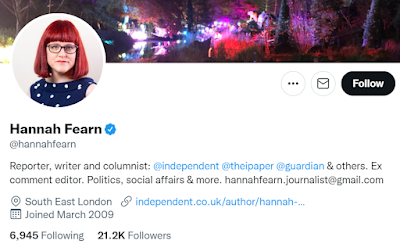
The news department has not been exempt from those cuts with an £80 million savings target to be met by this year. And that's meant job losses in areas such as political and business news. Some viewers have been detecting an effect on the output over recent months, with Hannah Fearn tweeting: 
Hannah Fearn: Well, what do you know. Turns out journalists do a really important job and can't just be slashed without impact on quality and breadth.
Well, let's talk to Fran Unsworth, who first joined the BBC in 1980, starting in local radio, but who rose to become its director of news and current affairs and she retires next week. Thank you, Fran, for coming on Newswatch
Fran Unsworth: It's a pleasure. 
Samira Ahmed: Would you say you're leaving BBC News in a better place than it was when you first started working here? 
Fran Unsworth: Well, it's a very different place than when I first started working here because, of course, we do so much more output. So, when I joined BBC News, it was just radio and television. And now, there is the website, there's social, there's the app, there is continuous news TV, radio continuous news, so there's a lot more of it. 
Samira Ahmed: So, is that better or worse? 
Fran Unsworth: It's better in that I think we are responding to what people want and how they live their lives and how they don't want to just kind of make an appointment to see news or to listen to news. They need it there, instantly so it's better in that respect. Is the quality of what we do worse or better? I think the quality of what we do is actually incredibly good. 
Samira Ahmed: You mentioned quality but, as you've heard, some people think there has been a loss of quality because of the cuts that you've had to make of the past few years. Recently, the BBC admitted it had been a mistake to interview the lawyer Alan Dershowitz after Ghislaine Maxwell's conviction. Do you accept that with fewer experienced journalists in the newsroom, mistakes like that are going to happen more? 
Fran Unsworth: Well, mistakes do happen - I'm not going to deny that - but I think in that particular case, it was less to do with cuts, to be honest, and more to do with Covid! It was also 28 December, it was night. I think the teams, actually, are quite thinned out, there's no doubt about it, but that's not because of cuts so much as because of where we are between Christmas and new year. 
Samira Ahmed: Really? People thought you should have just Googled Alan Dershowitz, you'd have known you shouldn't be putting him on air in that context. 
Fran Unsworth: Well, possibly - actually, I think there was - I think the teams now know that actually, they could have avoided it by doing some kind of more considered handovers to each other on it. But - and we admitted it was a mistake and dealt with it. Mistakes happen - they do - but I don't necessarily think there are any more of them now than when I joined the BBC nearly 40 years ago - or if there are, it's probably a factor of having so much more output. 
Samira Ahmed: After this week's announcement on the licence fee, BBC News is going to have to make more cuts, it's a tough time. Is it time to just cut a whole programme or a service like say, Newsnight
Fran Unsworth: Well, it might be something we would want to look at. but obviously we are in the early stages of what this licence fee settlement means. We have planned quite carefully over the past few years. As you've alluded, in news, part of our modernising news plan was - it wasn't just about taking money out, it was in order to us to shape news for the future so that we could have more impact with what we were doing across a greater number of platforms and also put digital at the heart of our commissioning process. Now, it's not for me to second-guess my successor's views about if there are any further cuts expected of the News division, where those might be. I'm sure that she will come in and have a look around and think about it. But where we start from is what are the audiences that we need to serve, and how do we need to serve them? 
  

Samira Ahmed: Let's pause there for a moment, Fran, because since you've been in post, you've faced as busy a news agenda as most journalists can remember. And this week was no exception with the temperature at Westminster raised to fever pitch. 
Huw Edwards: Tonight at 10:00, we are live in Downing Street after a day in which Boris Johnson faced a wave of calls for his resignation. 
Reporter: Is it all over, Prime Minister? 
Well, we mentioned on last week's programme complaints that the BBC's coverage of those Downing Street parties has been "excessive" and "biased" against the Prime Minister. And those continued this week, for instance with this phone call:
Woman: I'm ringing to complain about the amount of news on Boris Johnson. It's about time you stopped being judge, jury and executioner. I think as for the BBC being impartial, I most certainly don't think you are. 
As ever, though, others see another side to the story, and Philip Pooley agreed that: 
Philip Pooley: So called BBC impartiality is a myth.

But he went on:  

Philip Pooley: Any honest assessment of news coverage over the last few years will clearly show a bias against the Labour Party and pro-government reporting.

You have been in news for a very long time so complaints like that - one side and then the other side - won't come as a surprise, but does it feel to you like the polarisation of political views has become kind of nastier? 
Fran Unsworth: Um, it's a really interesting question, whether it's become nastier. It certainly feels more polarised, yes. And it certainly feels as though people kind of want to default a bit to their own echo chambers sometimes. And if they don't see the views that they agree with reflected then I do think they perceive us as being biased. But, you know, our job is to hold a national conversation. Our job is to show people that there is a whole range of views on every subject. I don't subscribe to the view that just because we are getting hammered by both sides - one set of the audience sees us as biased and the other from another political perspective sees us as biased too - we must be getting it right. I don't buy into that idea. But I do think that the whole nature of discourse has been quite impacted by social media, for instance. It's become pretty robust. It's become quite difficult, well, very difficult for some of our journalists, in fact, who are repeatedly subjected to online abuse of the most horrible, vicious nature, quite often. Misogynistic. And I could - Laura Kuenssberg, Marianna Spring - and I think that's what I have seen change over the course of my career. 
Samira Ahmed: It's interesting you say that, because we do get complaints from viewers that they feel BBC political journalists are often putting a personal spin on stories, and I wonder if that compromises the BBC's commitment to impartiality. 
Fran Unsworth: Yes, it would do, and that's why we brought out social media guidelines, to remind our staff that we need to be cautious in the social media space about your insertion of your own political views and political opinions. Because if we are not impartial, there is no point to us. We can't charge a licence fee off everybody in the UK if we are not impartial. And it's beholden on all of our staff to remember that and to act accordingly in that way. 
Samira Ahmed: Stay with us again, Fran. We want to talk about another of the principles behind BBC News, which is accountability. And we want to talk in fact a little bit about Newswatch itself. This programme started in 2004 after the Hutton Inquiry which strongly criticised the BBC over its coverage of the lead up to the Iraq War and the death of the government scientist David Kelly. In response, Newswatch was established as part of an initiative to make BBC News more accountable. But viewers regularly question whether it is truly fulfilling that role. Here's Howard Price:
Howard Price: Does Fran Unsworth think there is enough accountability to licence fee payers, when very often we are told that 'no one was available to come on the programme' or 'a BBC spokesperson (anonymous) has issued this statement' and then a statement is read? Isn't the attitude of the BBC management that 'we are always right' and that 99% of the time they will ignore all criticism?
How would you answer that?
Fran Unsworth: Well, we obviously don't take the view that 99% of the time we're always right. and I will admit that we don't always get everything right. We actually, I think - executives from News do appear on Newswatch quite frequently. 
Samira Ahmed: (interrupting) Hmm, not a great hit rate, I would say. We've checked, and on the big stories, you're not coming on. 
Fran Unsworth: Well, we normally would give a statement if an executive isn't available. But I would also say it's not the only bit of accountability that the BBC has in place, of course. We have Feedback on radio. And we have the most robust complaints process as well. Which means that anybody can write in a complaint and get an answer to it. 


Samira Ahmed: Under your tenure, there's been a number of controversies involving BBC News management, such as the revelations about Martin Bashir and the row over Naga Munchetty's comments on Breakfast about Donald Trump. What's your biggest regret? 
Fran Unsworth: Oh... LAUGHS. I've got quite a few, to be honest! Hindsight is a wonderful thing, isn't it? You look back and you say, "Oh, if only I'd taken a slightly different decision there." I'm not going to go into them here, but believe me there are some things I wish I had done differently over the course of my career. It would be arrogant and blind of me not to recognise that. 
Samira Ahmed: Fran Unsworth, thank you for coming on Newswatch
Fran Unsworth: Thank you very much. 

END OF TRANSCRIPT

*********

Update: Talking of odd things...

This bit of the programme caught my eye (see transcript above): 


I was curious and checked it on Twitter. Unless I'm missing something, rather than reacting to event in recent months, Hannah Fearn tweeted that way back in March 2020: 


This leads me to wonder: Rather than Hannah Fearn being a viewer who contacted Newswatch over this, did Newswatch simply come across her tweet on Twitter and NOT realise it was nearly two years old, and then just put it out, without checking? If so, that's very strange behaviour on Newswatch's part. 

Friday, 21 January 2022

The doctor is in.


Tim Davies’s attempts to defend the BBC from the current tsunami of BBC-bashing inadvertently highlight the unsurmountable obstacle to reform.


As a self-appointed graduate of the famous Lucy school of psychiatry, I humbly submit my diagnosis - kindly regard this as my booth.


There’s something of the Greg Dyke about Tim Davie. If that sounds like some obscure rhyming slang, it’s not that.  The intended comparison merely concerns speech patterns and body language. Left-wing body language. You don’t need actual glottal stops to convey that certain je ne sais quoi. 

What I call ‘contrived lefty’ (calculated not-posh enunciation) communicates ‘institutional lefty’. All traces of acquired ‘down with the plebs’ articulation signals red flags danger. 


That’s enough subjective, snobbish and, if you like, bitchy analysis from this doctor.


I’d rather look at various articles about the latest terrorist incident at the Beth Israel synagogue in Colleyville, Texas. 


I wondered if it was worth spending time addressing that issue on this blog at a time when all eyes are on Boris, and the media’s campaign to unseat him. Who knew that Beth Rigby was running the country? I think we all accept that the media is in the driving seat.


On first inspection, the BBC’s articles seem fairly innocuous. They merely iterate (some of) the facts. 

But 

Stephen Pollard begs to differ. “Well, he would,”  I hear you say. This is the Jewish Chronicle.

The BBC has a serious issue with Jews.


Take last night’s coverage of the Beth Israel shul siege in Texas, when a rabbi and three other Jews were taken hostage in the synagogue. Not once in its report on its flagship 10pm news did it mention antisemitism. Not once, at any point, did Ed Thomas, the BBC’s Special Correspondent, even hint that the gunman might even possibly, just perhaps, you never know, have had an issue of some kind with Jews. 

Mr Thomas began his report by asking: “What made Malik Faisal Akram leave Blackburn, the place he called home, to travel to Texas , arm himself with a gun and hold people hostage inside a synagogue?” A real mystery that, eh? I don’t know, Ed. I am really struggling to think what might have motivated him. But obviously it had nothing to do with Jews.


That’s funny. The FBI came to the same conclusion. Gotta laugh, eh? No. Not laughing.


I Am A Jewish Advocate And The Way The World Has Reacted To The Texas Synagogue Siege Is Terrifying


It's time for the non-Jewish world to actively free itself from antisemitism. If you're not Jewish and you think Jews are centring themselves in cries about media bias, you don't have a clue what it feels like to watch mainstream media serve your enemies and jeopardise your security. You have no idea the act of courage and resistance that it is to walk into a synagogue in 2022 and pray. America tells itself it's a safe place to do that. That is a lie. This could have happened at any Jewish institution in this country. Why don't more people care?


Here’s another weird thing:

The BBC has admitted to shortfalls in its initial coverage of the Colleyville siege.

More than five hours after Akram launched the siege that ended with his death, the BBC was still referring to his captives as ‘hostages’ - in speech marks.


Trivial maybe, but the cumulative effect….


Much more detail here.


In a chilling conversation with his brother in Blackburn from inside the Congregation Beth Israel synagogue in Colleyville, Malik Faisal Akram, 44, said: "I'm opening the doors for every youngster in England to enter America and f*** with them”.


Addressing fellow jihadists, he shouted: “Live your f***ing life bro, you f***ing coward. We’re coming to f***ing America. F*** them if they want to f*** with us. We’ll give them f***ing war.


It’s a bit odd that the most widely respected media organisation in the world was slow to pick this up. At first: “Probably not antisemitic, just generally deranged. You know, mentally ill.” chorused the BBC. Still, the emphasis is on Akram’s mental ‘elf, even though it’s now being grudgingly speculated that antisemitism might also be a factor.


Anti-Semitism is rife in the British Pakistani community

Last June, the Jewish Chronicle published an investigation into Urdu-language anti-Semitism on YouTube. Hundreds of hours of the vilest Jew-hatred is freely accessible on the video sharing platform, we revealed, racking up millions of views. 

In one particularly vivid clip, the Pakistani broadcaster Zaid Hamid said: “Hitler was an angel, the way he took action against Jews, the way he killed Jews.” In another, Imran Riaz Khan, a television personality with 1.6 million followers, said: “[The Jews] lobby a lot in America and have strangled America, have it totally controlled.”


Now, as your psychiatrist, I have no doubt whatsoever that Malik Faisal Akram was mentally ill. You’d have to be a bit off-colour in the brain department to travel to America from Blackburn to try to leverage the release of Aafia Siddiqui, a Pakistani neuroscientist known as “Lady al Qaeda” who was convicted of trying to kill US troops in Afghanistan. And, to be frank, he even looks distinctly unhinged in the immediate lead-up to the event. 


But, was he much more mentally ill than any other devout Muslim from Blackburn?


Sunday, 16 January 2022

Party

Send him to the store Let's buy some more
 

The BBC arrives at self-parody


Continuing on from an earlier post...

If the BBC wishes to take issue with and disprove Ben Harris-Quinney's claim that the BBC has a preference for guests that are "embodiments of the liberal metropolitan establishment" and that the corporation constantly draws on a limited pool of comment ("the same people with the same views over and over again"), they shouldn't refer him to this morning's Broadcasting House or they'd end up with egg on their faces.

The press panel today was firmly in 'you couldn't make it up' territory. Ben can use it as Exhibit A from now on.

The three guests were Baroness Tanni Grey-Thompson, Stephen K Amos and Salma Shah, and - among other things - they discussed the BBC, the government and the BBC licence fee. 

As was openly admitted, Baroness Tanni Grey-Thompson sat on the board of the BBC for many years, Stephen K Amos has worked for the BBC, and Salma Shah used to work for the BBC.

What are the chances of that happening!

It's as bad as the Ofcom board.

Joe Biden's First Year Report, BBC-Sunday-style (among other things)


Sunday on Radio 4 exemplifies Ben Harris-Quinney's comment that the BBC uses "the same people with the same views over and over again". 

For example, I've joked before that David Walker, Bishop of Manchester, is on the programme so often that he should be officially enthroned as The Bishop of Radio 4's 'Sunday'. He was on it yet again today as part of the closing discussion on morality in public life in the wake of the Partygate scandal. 

It was a classic BBC religious discussion: a nice liberal Anglican bishop in discussion with a nice imam and a nice liberal rabbi, all saying nice things. 

The programme also had a bit on the amendment to the Policing Bill intended to tackle the likes of Insulate Britain, featuring an opponent of the amendment - a 'woke'-spouting Quaker - but no one in support of it. 

And the programme marked a year of President Joe Biden by interviewing an African-American professor who campaigned for Catholics for Biden and a Catholic journalist - another very 'BBC' discussion, with the journalist (Christopher White, NCR) being all 'impartial' and the other guest (Prof Anthea Butler, who teaches about slavery) critiquing Joe Biden from the left for being a 'right-leaning' president (yes, really!) and 'no better than Trump' on things like immigration. It's so often like that on Sunday. On their programme right-leaning Americans [about half the country] are rarer than refugees in a Gary Lineker property. 

We also got a cautious interview on the Jewish synagogue hostage situation, a piece on how chaplain in schools and hospitals have dealt with the pandemic featuring only women and a black man, an interview about China's crackdown on religion and an interview with a campaigner from the Romero Trust about a Salvadoran assassinated liberation theology priest who's being beatified by Pope Francis [a topic Sunday's been closely covering for at least a decade].

I see from the blurb on the programme's website that something got dropped. We didn't get to hear this week from Naomi Verber, Head of Environmental Policy at the United Synagogue, about ‘Dorot’, their year-long environmental initiative to tackle climate change. I'm guessing we'll be hearing that next week, so put it in your diary.

Plus ça change, plus c'est la même chose.

Peter Whittle interviews Nigel Rees: Diversity Quotas & Woke Interference at the BBC


Context


There's a new nightly programme on the BBC News Channel called Context, presented by Christian Fraser.

The Daily Express isn't giving it a warm welcome though: 

Christian Fraser says:  “[Context will bring] a wide range of opinion and analysis to the hottest topics from around the world. The show will provide lively debate as we welcome a different panel of experts every day, ensuring we leave no stone unturned.”

The Express also quotes Ben Harris-Quinney, chairman of the Bow Group, making a number of points: 

  • I made the point just the other day that for years we we’ve been told that the BBC makes every effort to provide balance, but what the BBC do on programmes like Question Time is have a Conservative MP, a Labour MP, and a Liberal Democrat MP on and argue that represents balance. 
  • The reality is they are all of the liberal metropolitan world view, with minor differences on the nuances of policy.
  • This couldn't have been better underlined by the BBC's subsequent announcement of a fresh new political show [Context].
  • [The guest announced so far are] the perfect embodiment of the tired liberal metropolitan establishment that underpins every aspect of what the BBC does.
If you're wondering, here's a list of who's been the main guests so far:

Monday 

  • Sonia Khan, former special adviser to Conservative MP Sajid Javid when he was the Chancellor, now the Health Secretary,
  • Amanda Renteria, top aide to Hillary Clinton in her 2016 presidential campaign. 

Tuesday

  • Ruth Smeeth, a Labour MP until the last election
  • Ron Christie, former advisor to George W Bush 

Wednesday

  • Sarah Vine, Daily Mail columnist
  • Pippa Crerar, political editor of the Daily Mirror

Thursday

  • Jess Barnard, chair of Young Labour
  • Bryan Lanza, former member of Donald Trump's presidential transition team 


I can see what Ben Harris-Quinney means. It's quite a 'BBC' selection.

The bit I particularly agree with though is Ben's final thought on the matter. This is very well said and provides the real context for Context:
  • What channels like talkRADIO and GB News have exposed is that there is an entire parallel universe of commentators, organisations and individuals.
  • The BBC have an infinitely greater budget than both of those channels combined to source a greater variety of guests, yet they use the same people with the same views over and over again.
That is so true. 

"This licence fee announcement will be the last. The days of the elderly being threatened with prison sentences and bailiffs knocking on doors are over"


Shippers & Co. at The Sunday Times tell us that Boris is trying to "save his tottering premiership" through "a series of populist announcements", including:
•Freeze the BBC licence fee for two years to help the cost of living.
And this morning Nadine Dorries has indeed announced a two-year freeze on the licence fee that the Mail on Sunday says, "with anticipated inflation rises, means the BBC will need to find savings of circa £2billion". And the Culture Secretary has  just tweeted:
This licence fee announcement will be the last. The days of the elderly being threatened with prison sentences and bailiffs knocking on doors are over. Time now to discuss and debate new ways of funding, supporting and selling great British content.
Blog favourite Rob Burley, ex of the BBC, probably sums up the BBC supporter's view today:
  • Part of “operation red meat” - distract from partygate by effectively cutting BBC funding again. This will mean services will have to be cut, staff in news and elsewhere will be lost, more mistakes will be made. Short-sighted doesn’t cover it.
  • Also in the Times today, I post to pre-empt the defunders who will pointlessly clog up my timeline. Just because you don’t like it doesn’t mean the public don’t support the BBC.
And in response to Nadine's tweet, Rob simply wrote:
  • Oh great.
Things are moving. Pro-BBC Twitter is already up in arms.

News from America


The BBC's coverage of the hostage situation at a synagogue in Colleyville, Texas drew considerable criticism overnight from British Jewish commenters on Twitter.

I first saw tweets about it from Sky News, but it was about an hour till BBC News got round to reporting it. We're used to the BBC being cautious about such things, but others sounded surprised:
Philip Rosenberg: Still nothing on @BBCNews or @BBCBreaking…
Bella Wallersteiner: Weird BBC still aren’t covering this…
When people saw the BBC's headline though their surprise turned to anger. It read: Texas police respond to synagogue 'hostage' situation. Here's a flavour of the response to that:
Tracy-Ann Oberman: What does ‘hostage’ mean @BBCNews? @BBCWorld? Are you suggesting they are not real hostages?
Gnasher Jew: Enter the BBC, trying to cast doubt on the fact that these Jews are being held HOSTAGE by placing inverted commas around the word. BBC News never knowingly missing an opportunity to insult Jews…
Alan Curtis: The above news was reported by 'journalists'.
A journalist who worked for the BBC, Leonid Ragozin, intervened with an attempted defence:
A. C. Kaminski: Why the quotation marks?
Leonid Ragozin: Because reporters can’t verify independently and quote the police.
A. C. Kaminski: Oh, right. But why does the CNN website not use quotation marks, then, when discussing same hostage situation? Does that mean that their reporters were able to verify independently?
Leonid Ragozin: Can only speak for the BBC, which I think has better standards than any network in America. Not that it doesn’t deserve criticism.
What Newssniffer shows is that, despite edits, the BBC News website still kept those quotation marks in their headline for five hours before removing them. 

Anyhow, this morning brought a new headline: Texas synagogue hostage stand-off not related to Jewish community - FBI. People who aren't inclined to believe the FBI assertion (given that the hostage taker was reportedly agitating on behalf of an imprisoned al-Qaeda-linked terrorist and entered a synagogue and took Jewish hostages) aren't impressed with the BBC's parroting of that either:
Gnasher Jew: And of course BBC World news once again attempts to downplay antisemitism, picking up on a ridiculous FBI statement. They really are an utterly repulsive organisation. 

Is it safe to say that BBC relations with British Jews are at an all-time low?

Saturday, 15 January 2022

Both sides now

The BBC will illustrate an article with an unflattering photo if they wish to ‘unflatter’ someone in the news. I particularly notice this because we do it ourselves, but when we do it it’s with humorous intent.  


Anyway, someone has picked an especially ugly mugshot and used it in two pieces about Alan Dershowitz because they do not like him.  They’re not being funny though. Not in the humorous sense. The BBC has done it with malicious intent. 


Since the BBC has apologised for giving Alan Dershowitz a platform without (what they see as) the requisite disclaimer, should we be holding our breath till further BBC apologies emerge? After all, it’s not the first time the BBC has given ‘interested parties’ a platform without full disclosure of partisanship, affiliation, and agenda. Indeed without any disclosure whatsoever. 


Well, I won’t be holding my breath, obviously. The BBC’s apology comes despite the fact that during the interview Dersh voluntarily self-disclosed his alleged involvement in the Virginia Giuffre mess. I urge you to watch the whole of this video just to get an idea of the other side of the story. I ask for this merely for the sake of editorial standards, and for the sake of balance, you understand.


If this video disappears again, here's the link: https://youtu.be/8QteYBnT-yw


Full disclosure. I believe Alan Dershowitz. I’ve been a Dershowitz admirer ever since I read his book “The Case For Israel’. 


I’m not claiming he’s unbiased and I am well aware that anti-Israel literature exists and is frequently cited by Israel-bashing commentators to ‘prove’ the veracity of their side of the story. 

Since the overt anti-Israel / covert antisemitic narrative is routinely promoted by all BBC Middle East correspondents and is apparent in domestic reporting we must conclude that the BBC’s default position is….. biased.

Having each other's backs


Talking of spiked, Mick Hume has a piece in the Daily Mail today headlined Whatever you think of Boris, the BBC’s obsessive campaign to destroy him is a disgrace. Along the way he criticizes Nick Robinson for leading the "Boris-bashing" on Today, and "sneering" and "going beyond what could be considered objective journalism".
Far from being impartial, Robinson was editorialising at every opportunity, the tone always scathing or sarcastic — to the point where one could almost hear him rubbing his hands with glee during each dramatic pause in his diatribe.
Mick Hume puts it down to BBC bias:
It has built itself in the image of the woke metropolitan elites who run it. And they long since decided that, to appropriate Margaret Thatcher’s famous phrase, Boris is not ‘one of us’.
Interestingly, the comments at the Mail are going the BBC's way for once. "Boris-bashing" has spread in recent weeks among the public, unimpressed at everything they've been hearing about Partiesgate.

Still, I've rather enjoyed the irony today of the very personification, indeed the living embodiment, of those "woke metropolitan elites", ex-Guardian editor Alan Rusbridger, riding to Nick Robinson's aid on Twitter:
Alan Rusbridger: Portraying Nick Robinson as a member of the woke metropolitan elite - the latest Mail obsession - is wide of the mark. I doubt it will stop him doing his job rather well. It’s called journalism.
Nick Robinson: Thanks Alan. I rather enjoyed the irony of being accused of anti-Tory bias by a former editor of Living Marxism 🤣.
And Gary Lineker has popped in too with a smug "quick reminder":
Gary Lineker: Quick reminder: the BBC has tens of thousands of people that work for It, with a huge cross section of views. The corporation doesn’t think as one. There’s no political criteria from above other than impartiality in news & current affairs. Any perceived bias is probably your own.

It may be a typo on Gary' part, but I shall think of the BBC as "It" from now it. Never mind 'Auntie Beeb', it's 'Cousin It' from now on.

The BBC is caught fibbing


Here's the editor of the Jewish Chronicle Jake Wallis Simons:

1/ It is with a heavy heart — I love the BBC and it has always been a privilege to work there — that the JC reports on the corporation again this week…
2/ We reveal that the BBC fully recorded an incendiary radio debate about whether anti-Zionism should be a “protected characteristic” despite claiming just hours later that no such item was planned for broadcast.
3/ The discussion for Radio 4 (for which I’ve worked quite a bit), in which Rabbi Jonathan Romain opposed Jewish anti-Israel blogger Robert Cohen, took place last Friday and was set to go out on Sunday.
4/ Later that day, responding to widespread criticism, the BBC told the JC: “We are always exploring a range of possible topics but there’s no planned item about anti-Zionism on the Sunday programme.”
5/ However, Rabbi Romain told the JC that after the segment was recorded, producers told him it would be broadcast on Sunday. It was later pulled.
6/ Read full story, written by Rosa Doherty, here: 

A promotion for Jonathan Munro


BBC’s new head of news is journalist who sang the praises of Martin Bashir runs the headline in the Daily Telegraph. 

Yes, Jonathan Munro has been appointed on an interim basis as the new director of BBC News and current affairs, replacing Fran Unsworth.

Time to re-post something from Is the BBC biased? from 2 October 2021 concerning Mr Munro:

You may remember him for:

[a] His role in the Cliff Richard affair, where the judge described him as “overly guarded” in his defence of the BBC. And the judge further accused him of “almost wilfully failing to acknowledge inconsistencies” and of “refusing to acknowledge the plain effect of some of the emails in the case”. 

[b] His role in the re-hiring of Martin Bashir in 2016, when he said he was attracted to the reporter’s “track record in enterprising journalism” and respect within the industry.

[c] His statement that “We don’t want all our editorial meetings to be dominated by what white people think”. 

[d] His sarcastic tweet about things going badly for Nigel Farage and UKIP...in 2015, a year before the UK voted for Brexit. 

[e] His branding of certain ex-BBC senior editors [Roger Mosey and Mark Damazer] in an internal BBC email as “male, pale and stale” sexists after they dared to criticise the BBC, despite him being male, pale and possibly stale himself. 

[f] His previous defences of the BBC on Newswatch where he's been disingenuous and/or factually wrongor both, and never particularly fleet-footed.  

Samira stands by her woman


As Charlie pointed out on the open thread, the woman who presents a BBC show about how BBC News conducts itself, Samira Ahmed, was lending support to Carole Cadwalladr at her libel trial yesterday (she's been sued by Arron Banks), adding:
I view this as overt political support but the BBC will view it as just one journalist helping another.
In response to Samira's decision, GB News's Liam Deacon took to Twitter to say:
Just BBC anchor Samira Ahmed out campaigning with ultra hardline anti-Brexit activist Carole Cadwalladr. I have no problem at all with journalists having politics and opinions. But remember this next time they say GB News is somehow too ideological.

The lunatics have taken over the asylum


Further to an earlier post, recently departed Quote...Unquote host Nigel Rees has been taking to spiked, giving us further glimpses into the mentality holding sway at BBC Radio 4 - a mentality he calls "systemic wokery".

Her describes his frustration at the BBC's interference with his programme's guest selection, saying it  "used to be a gender thing" but "in the past few years, it became about minorities – particularly people of colour": 
During the recording of the last series, I was told that there should never be an all-white panel on panel games or quizzes.

He was also told there had to be disabled representation on the panel:

A talent agent had complained to the BBC and specifically said that we did not have disabled people on the show. So this imposition was put on the programme.

It was completely unnecessary. I just wanted people who could do the programme. There was no need to tick boxes. But this is now everywhere in the BBC.
There's also "the other side of the wokery...which had been going on for rather longer than the representation and diversity aspects". 

Besides banning a line from Mad Dogs and Englishmen by Noël Coward "because the song represents colonial attitudes" (which it doesn't), the BBC refused to allow a quotation from Chattanooga Choo Choo
They said no, you cannot refer to that song because it is racist (at the beginning, there is a black porter). This is now a well-known, established forbidden area – you cannot do Chattanooga Choo Choo
He says he "doesn't know who, upstairs at the BBC, has pushed this forward – but it is now part of the way things are done", and gives this explanation: 
One of the reasons is that a lot of activists have joined the BBC and they push it. Once upon a time, BBC producers and executives were very straight and balanced. But now you have got activists in production and research and they try to enforce their viewpoint. 

Anyhow, in tribute to Nigel Rees, here's an account of the first usage of the phrase 'the lunatics have taken over the asylum':

The term appears to have been first used in 1919, when the four most powerful figures in the American film industry—Charlie Chaplin, Douglas Fairbanks, Mary Pickford, and D.W. Griffith—decided to found their own distribution company, called United Artists. In response the producer Richard Rowland remarked, “The lunatics have taken over the asylum.” The remark got wide publicity and entered the language, subsequently applied to many other situations of a comparable nature and becoming a cliché. 

Wednesday, 12 January 2022

The Eric Gill statue outside Broadcasting House is attacked

 
The Eric Gill One

Following the Colston Four's acquittal for pulling down the Edward Colston statue in Bristol, someone this afternoon might have high hopes of also being acquitted after taking a hammer/sledgehammer to the Eric Gill Prospero and Ariel statue at Broadcasting House - a sculpture that shows an aging Prospero and a naked, child-like Ariel fiddling on his flute.  

As many of you will know, Eric Gill was a paedophile who slept with his two daughters and the family dog. 

That fact is tattooed in my brain because, like many of you, I've watched Alex Belfield's YouTube channel and he's fond of repeatedly pointing it out. He wants the statue gone. I don't. Eric Gill was a bad man who wrought some wonderful work, including at Morecambe's Midland Hotel. I prefer separating the man from the work wherever possible. If we didn't we'd lose many great works. But I respect the views of those who can't do that on moral grounds. I wouldn't just dismiss them. 

Enter Mike Wendling and Marianna Spring's colleague, Shayan Sardarizadeh. He was straight onto Twitter linking it - as the BBC Trending/BBC Disinformation Unit seem to link everything, obsessively, whenever they possibly can - to QAnon. They are somewhat like conspiracy theorists in that respect:
A man has taken a sledgehammer to the Eric Gill statue outside the BBC Broadcasting House. The statue has been an obsession for British QAnon, "save our children", "Satanic ritual abuse" and other conspiracy groups for a very long time. Police have now arrived at the scene.

He could well be right, but it's typical how some BBC Trending/BBC Disinformation Unit types ignore Marianna's repeated cautions about speculating without facts. 

I hope she'll be having a word in Shayan's shell-like about waiting till facts emerge before speculating on social media. 

That said, let me 'do a Shayan' and speculate too: 

Maybe it could just be someone following their conscience and being on the right side of history as far as paedophilia and the BBC's shameful historic links to paedophilia go, and wanting the statue removed to avoid causing grave offence to passers-by who are forced to see it, even if not actually noticing it, out of the corner of their eyes. The vandal might even eventually claim to have increased its monetary value. With that paltry hammer, however, I'm certain he won't be dragging and dropping it into the Thames any time soon, even if Dame Dick's lot all bend their knees to him while he's doing permanent damage to his hip attempting to do so. 

Update: It looks as if Mike Wendling won't be making Marianna have a word in Shayan's shell-like after. She's deployed on Twitter too this evening, making it all about herself

Sharing an earlier message, she's tweeted:
This message I shared mentions the Eric Gill statue currently being attacked at the BBC. Gill’s crimes are appalling - and this statue has often become a focal point for online conspiracy movements. But it raises concerns about willingness to resort to violent tactics.

I'm guessing you're all as aware as I am of the 'cognitive dissonances' over this kind of thing. There's more than a bit of it about here. 

As far as Marianna Spring goes it's less clear. As a statue outside the BBC is attacked, Marianna calls that attack “violent”, but did she ever describe the “violent tactics” used by the Colston Four as “violent tactics” too?

Sunday, 9 January 2022

Penguins and Polar Bears


OMG The Daily Mail, bless them, give so much free content to their website users that people ought to be at least a bit grateful to them, despite everything.

So much content. No paywall. And no licence fee. And certainly no paywall/licence fee collectors.

Today, they've been reporting on immigration matters under the headline: Migrants 'are staying in four-star hotel rooms at £125-a-night on the taxpayer' as Britons struggle to afford spiralling energy bills amid cost of living chaos, saying that “more than 18,000 migrants are staying in hotels across Britain”.

Meanwhile, over at the licence-fee-funded BBC News website, 'blog favourite' Dominic Casciani has a new piece with a very different headline: Asylum seekers: The homes where ceilings have fallen in

He writes:
Damp, debris and falling ceilings - a BBC investigation into accommodation for asylum seekers has uncovered serial concerns about housing conditions. Refugee organisations say they hear regularly about properties residents believe are unsafe, and they struggle to get help on a national phone line.
The BBC and OMG The Daily Mail really are at absolute opposite poles on this - though I'm not sure which are penguins and which are polar bears.

The piece by the BBC's Dom C results from “a BBC investigation”. 

Or so Dom says. 

I'm inclined to agree with StewGreen when he writes, over at Biased BBC, that “since the article quotes charity Refugee Action I suspect the report actually comes from them”.

I strongly doubt that Dominic Casciani didn't do too much investigating here, and that he mainly just listened and took notes from campaign groups and talked to one asylum seeker called Adam. 

Could be wrong of course, but that's what it looks like to me.

To conclude then: I don't believe that the Daily Mail is approaching this without a biased agenda. And I certainly don't think the BBC is approaching this without a biased agenda either. 

Only one of them claims to be impartial though. And only one of them extorts a licence fee from the British public. And it's not OMG The Daily Mail. Cue RVW:

“Faceless - nameless- shameless”


That BBC article that so got my goat last night - BBC seeks swift response to bus anti-Semitism story complaints - remains unchanged. David Collier isn't impressed with it either and makes a further point:
This is part of the problem. Look at the article. A typical BBC report. Not a single name attached to it. The identities are all hidden - no byline, just an unnamed 'spokeswoman'... an anonymous article with no accountability. Faceless - nameless- shameless. That's the BBC.

From the Sunday papers


Here are a few BBC-related stories from the Sunday papers that you may have missed...

The Sunday Times alleges that the BBC is “glossing over” human rights abuses against migrants and detainees in Dubai and that an Emirati minder “oversaw filming” of the corporation's new “observational documentary” Dubai: Playground of the Rich. The paper gives examples, including:
In the third episode, a short segment shares the stories of tourists who have paid a “heavy price” in the past for not abiding by the “letter of the law”, including public displays of affection, sex outside marriage and homosexuality. But the section lasts only a minute and does not detail the long prison sentences, reported abuses of detainees or the UAE’s failure to allow access to UN experts and human rights organisations.
The Sunday Times accuses the BBC of “skirting controversy” - which sounds plausible. As we know all too well, they tiptoe very carefully around certain topics.

*******

Now, I must admit when I heard that Newsnight's 'everywhere correspondent' Gabriel Gatehouse had spent a year working on a podcast series about the events on Capitol Hill, Washington on 6 January 2021 I thought that Gabriel might have better spent that time preparing a 7-part podcast about the first year of the hapless Biden/Harris administration. Still, a review by Patricia Nicol in The Sunday Times has me intrigued:
Gatehouse tries harder here, reminding us that there have been information black ops, and blackouts, from both sides. He recounts the BBC’s own (fruitless) efforts, in early 2017, to stand up sensational claims that Trump was a Russian asset — smears that today look more like another disbelieving establishment trying to unseat a democratically elected president.
Interesting. Wonder why the BBC's QAnon-obsessed disinformation unit didn't tackle this?

*******