Showing posts with label Jenny Hill. Show all posts

Tuesday, 13 November 2018

Choosing an angle


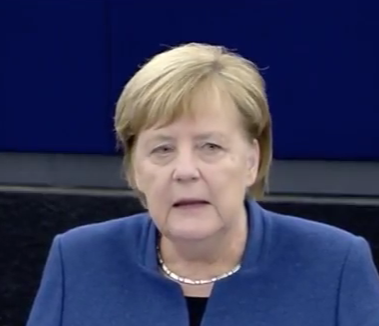
Has anyone ever noticed how much Mrs Merkel looks like Ken Clarke in drag?

Listening to tonight's Radio 4 Six O'Clock News and its coverage of Mrs Merkel's calls for a European army, I was very struck by its angle. 

The angle I've been reading this afternoon/evening concerns lots of pro-Brexit people saying that the likes of Nick Clegg have been proved to be liars, so you'd expect the idea of a European army to be at least acknowledged, in the usual BBC terminology as "controversial" - if only in passing. 

But, no. 

Instead we got Jenny Hill presenting it almost as if Mrs Merkel had finally, thankfully, got off the fence and done the right thing.

For here was Jenny telling us that "an uncharacteristically impassioned Angela Merkel was on fighting form" today and that, "after months of fudging her position on the subject", Mrs Merkel  had "unequivocally" backed President Macron in calling for the creation of a European army ("..albeit one day.."). And Mrs Merkel didn't just back M. Macron; her statement was also likely to "enrage" Donald Trump. Meanwhile, Donald Trump "took aim" at M. Macron "over Nato contributions, the Second World War and wine production". 

So the angle was: Mrs Merkel taking M. Macron's side against President Trump. 

Cast it in that way and the idea of a European army might well appear uncontroversial and might especially appeal to people who don't like Donald Trump.

Cast it, in contrast, as being the latest federalist move from the increasingly unpopular leaders of France and Germany and as something which will inevitably arouse concern among the EU's Eurosceptic voices and reinforce UK Eurosceptic voices then a different audience reaction might very well result.

It really is how you choose to angle it.

Saturday, 20 October 2018

Tristan and Jenny


Jenny Hill, neither portly nor rotund

Jenny Hill was on this morning's From Our Own Correspondent. She'd been to see her first Wagner opera, Tristan and Isolde, and was using the experience to draw parallels with the present German political situation (as you do).

She found herself having to "suppress a giggle" at the sight of "the two rather portly lead singers", especially as "the rotund figure of Tristan prepared to fling an equally substantial Isolde onto a rather flimsy table".

In the spirit of the age, I was frankly outraged by that. That's fat-shaming, body-shaming, and I was tempted to kick up a Twitterstorm and ruin her life, but thought better of it. (Anyhow, the painfully thin-looking Jenny appears to have weight issues of her own.)

Nonetheless, here she was, still preferring to say "refugees" rather than "migrants" and talking of the "open xenophobia" of AfD, and sounding chirpy about the protests in favour of an "open" Germany and the rise of the Greens.

She seems to have liked the opera though. 

Tuesday, 11 September 2018

Many of the people we've spoken to say...


Here's how Jenny Hill concluded her remarks about the Swedish election outcome on last night's BBC News at Ten
In the meantime, Swedes are digesting the news that the far-right have made such significant gains here. Many of the people we've spoken to say they are horrified by the anti-immigrant rhetoric of the Sweden Democrats and that they are embarrassed that this country, like so many other EU states in the wake of the migrant crisis, appears to be shifting to the political right.
Wonder if Jenny is ever embarrassed at her own reporting?

Monday, 10 September 2018

No Winner Takes It All in Sweden


First came this tweet (yesterday) from Guardian-writing professor Christian Christensen: 
In today’s  Sweden Election, the Left Party could see gains (compared to 2014) almost as large as the far-right Sweden Democrats. But, that doesn’t really fit into “Collapsing Sweden Sees Huge Lurch To The Right” clickbait, so hardly anyone mentions it. 
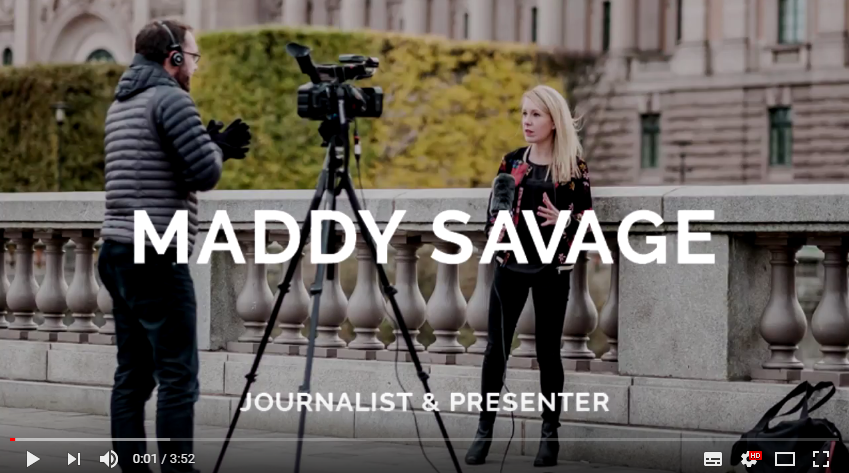
Maddy Savage, one of the three BBC reporters covering the Swedish election (along with Jenny Hill and Gavin Lee), duly replied:
Very valid point. Been trying to include this when I’m interviewed on radio. One left-leaning voter sobbed on me yesterday at a polling station because she’s so sad about rise of Sweden Democrats and wants Sweden to remain “open”.
I heard that report with the sobbing voter on yesterday's The World This Weekend. It was one of those reports which left little doubt about the reporter's own position. 

And, checking TV Eyes, I've found plenty of evidence of Maddy doing just what she said she did. For example, on the BBC World Service a week ago today talking of the Left being "up" and talking of "increased support for the Green Party here" due to concerns over climate change, and she was still doing so yesterday:
Something of a curve ball. Climate change has really raced towards the top of the agenda here following the hottest summer on record here in Sweden, resulting in drought and forest fires. That's led to more support for the Green Party and the most left-wing party, the Left.
Well, the Left Party didn't get over 10%, as Professor Christensen was expecting, and Andrew Neil (for one) was noticeably less impressed with the validity of the professor's initial point:
Just as well we didn’t mention it since Left gains were much less than Far Right gains and more than offset by Green losses. SD result well below its own expectations but big enough to make it harder for mainstream parties to form stable Coalition.
And support for Maddy's Greens didn't increase either. It fell.

Re-checking TV Eyes, her World Service interviews overnight haven't included any mentions of what happened to the Greens! She did talk about the predictions that the Sweden Dempcrats might get 25% though. 

It looks as is the final results will be as follows:

The left-leaning bloc:
Social Democrats - 28.4% (down 2.6%)
Greens - 4.3% (down 2.6%)
Left - 7.9% (up 2.2%)
The right-leaning bloc:
Moderates - 19.8% (down 3.5%)
Centre - 8.6% (up 2.3%)
Christian Democrats - 6.4% (up 1.8%)
Liberals - 5.5% (up 0.1%)
And 'the far-right':
Sweden Democrats - 17.6% (up 4.7%) 
So, after all the predictions about the Sweden Democrats possibly coming first in the Swedish election, which later got downgraded to them possibly coming second, they actually came third - just as they did last time, albeit achieving the largest leap in vote share (4.7%) of all the competing parties.


So, yes, the Sweden Democrats certainly made significant gains, have complicated the coalition-making plans of the two main blocs and have put themselves in a potentially king-making situation (if - and it's a very big 'if' - the Moderates, who fell back most, and their centre-right allies, who compensated for them by gaining more ground than the Moderates lost, can bring themselves to swallow the SDs arms-length support). But, at 17.6%, the Sweden Democrats are still nearer one-sixth of the popular vote than the one-fifth (or more) people were predicting.

Still, as Fraser Nelson had been saying at the Spectator (at the start of election day yesterday), thanks to the rise of the Sweden Democrats most of the other party leaders have been "expressing views that they’d have denounced as racist not so long ago". In the process, however, the Sweden Democrats have "lost their monopoly" on discussing immigration-related problems, so "if it flops tonight", he wrote, "this might be why".

So is Jenny Hill, still sticking like a limpet to her original narrative this morning, actually correct then when she says, "The Sweden Democrats have upended the country's liberal tradition" and "Like so many other European countries Sweden, for all its liberal values, has shifted to the right"?

Saturday, 8 September 2018

Jenny Goes to Sweden


Jenny Hill, in the dark with a female Syrian migrant to Sweden

Writing on Twitter, Spectator editor Fraser Nelson had this to say this morning:
Some UK newspapers today run pictures of a nutty skinhead rally in Sweden as if to illustrate a nation going Nazi. A myth hard to puncture as no one wants to say a good word about the Sweden Democrats, but it fundamentally misjudges what’s going on over there. Even BBC News describes Sweden Democrats in one sentence “has roots in neonazi movement”. Åkesson has not a single policy that is more extreme than, say, UKIP, that so recently finished no1 in UK euro elections. This is populism, but certainly not Nazism.
Indeed, the party, as per Wikipedia, has moved so far away from its Neo-Nazi beginnings that it now sits in the same group as the UK Conservative Party in the European parliament. 

Regardless of that though, the BBC's new bulletins today have been saying things like: 
Opinion polls suggest that the Sweden Democrats, who have roots in the Neo-Nazi movement, will take about 20% of the vote. 
(That was from Today's 8 o'clock news bulletin.)

You say "Even BBC News" as if it comes as a surprise to you. Their portrayal of anything outside of the political norm and not of the left is described as far-right. The report by Jenny Hill was the usual one-sided garbage. 
Jenny Hill's report on Today this morning began with Peter making jokes about elections and ended with a Swedish woman who "worries about where the country is going" and, with a little prompting from Jenny, classes the Sweden Democrats as one of the "evil forces" in the country. 

In between came a short interview with a councillor for the Sweden Democrats, which, Jenny said, "began life as a Neo-Nazi party. It doesn't like the EU and it doesn't like migrants". 

She asked him such questions as:
Is it responsible as a political party to spread this kind of message of fear?
and, concerning the party's desire for a Swexit from the EU:
And having seen the political complications that Brexit is involving, does that not put you off?
Does that count as "the usual one-sided garbage?"

Jenny Hill, in a car with a Sweden Democrat politician

Well, for a fuller taste of Jenny Hill's reporting from Sweden, here's her report for last night's BBC News at Ten

It is textbook Jenny Hill, from the labelling to the undercutting of the right-wing politician ("even though its falling"), the loaded questions, the contrasting treatment of the two politicians,  the talk of "hundreds of thousands of people...seeking asylum on Sweden's shores" (when many if not most were migrants not asylum seekers), the choice of a sad-looking, young female Syrian refugee (rather than a male migrant) to illustrate the migrants' side of the story, and the closing imagery of a "rich, secure" Sweden imperilled by 'dragging' right-wing currents:

Viking battle re-enactor: Today we fight. 
Jenny Hill: And it's a battle for the soul of this country. As they recreate Sweden's past, populists fight the establishment for its future.
Bjorn Buttler Jakobsen, Viking enthusiast: They are the voice of the people. They are sort of taking the people's voice and putting it into politics. 
He's talking about the Sweden Democrats. Once a neo-Nazi party, they don't like the EU and they don't like migrants.
Helmuth Petersen, Sweden Democrats: This is where they live, where they live. They put cars on fire. It's very common. 
They blame them for crime, even though it's falling.
Helmuth Petersen, Sweden Democrats: If they say it's more safe now it's false, because there is much more of the gang violence, the gang rapes. Some things wasn't before, but now it's all the time. All the time.
Jenny Hill: Is it responsible as a political party, to spread this kind of message of fear?
Helmuth Petersen, Sweden Democrats: Yes, yes.
Jenny Hill: Why?
Helmuth Petersen, Sweden Democrats: It's information for the citizen.
Jenny Hill: And have you met any of the asylum seekers who still live in the town?
Helmuth Petersen, Sweden Democrats: No, no. I'm not interested. 
It's three year since hundreds of thousands of people began to seek asylum on Sweden's shores. Other issues, health, the environment dominate now, and yet it's migration which could yet change the political landscape.
Torbjorn Karlsson, Trelleborg mayor: Apparently, classical parties like we, we do not provide a vision of the future, which is really attractive, so we are doing something wrong.
Jenny Hill: Is Sweden changing as a country?
Torbjorn Karlsson, Trelleborg mayor: Well, perhaps not more than other countries, I would say. Maybe we are turning to be more like a normal European country. 
The Vikings are long gone. Perhaps Sweden's liberal era is ending too. This Syrian refugee is now part of the Viking clan. Even so, Manal knows, she tells us, there are people who don't like foreigners. "When I meet them", she says, "I tell them I'm learning Swedish, I have a job here." As political currents drag Europe to the right, even Sweden, rich, secure, may not be able to resist. Jenny Hill, BBC News, Trelleborg. 

Sunday, 2 September 2018

Degrees of separation


A recurring headline on BBC Breakfast this morning ran as follows:
Thousands of people have taken part in more anti-migrant protests in the Germany city of Chemnitz last night. A week ago a German man was killed  allegedly by two asylum seekers - triggering a series of violent demonstrations. The far-right political party in the country - the AfD - has been accused of inflaming tensions.
And yet who was accusing the AfD of "whipping up" tensions on the BBC News Channel yesterday? Yes, it was a BBC reporter - one Jenny Hill no less:
I've spoken to people today who say, elderly people who say, they're really worried about what they perceive to be migrant-fuelled criminality in the city, but then you speak to right-wing extremists or political leaders who appear to be rather whipping up those concerns

Saturday, 1 September 2018

Lying press?


Given that there unquestionably are neo-Nazis protesting in Germany, it pays to tread carefully here.

Wikipedia has an entry for 'Lying press'. It gives us a potted history of the term in Germany:
Lying press (German: Lügenpresse, lit. 'press of lies') is a pejorative political term used largely by German political movements for the printed press and the mass media at large, when it is believed not to have the quest for truth at the heart of its coverage. It can be considered synonymous with the term 'fake news'
History
The term Lügenpresse has been used intermittently since the 19th century in political polemics in Germany, by a wide range of groups and movements in a variety of debates and conflicts. Isolated uses can be traced back as far as the Vormärz period. The term gained traction in the March 1848 Revolution when Catholic circles employed it to attack the rising, hostile liberal press. In the Franco-German War (1870–71) and particularly World War I (1914–18) German intellectuals and journalists used the term to denounce what they believed was enemy war propaganda The Evangelischer Pressedienst made its mission the fight against the "lying press" which it considered to be the "strongest weapon of the enemy".After the war, German-speaking Marxists such as Karl Radek and Alexander Parvus vilified "the bourgeois lying press" as part of their class struggle rhetoric. The Nazis adopted the term for their propaganda against the Jewish, communist, and later the foreign press. During the protests of 1968, left-wing students disparaged the liberal-conservative Axel Springer publishing house, notably its flagship daily Bild, as a "lying press".
Interestingly, in the news bulletin on tonight's PM, the BBC's Jenny Hill mentioned that far-right demonstrators in the German city of Chemnitz have been shouting that very term at media today, but she shrank its history down to just the Nazis:
NEWSREADER: Thousands of people have gathered in the German city of Chemnitz for rival protests over the killing of a German citizen which has been blamed on immigrants.  Police officers from all over the country have been deployed to keep the peace after violent demonstrations by far-right groups in recent days. Our Berlin correspondent Jenny Hill is there. 
JENNY HILL: German flags flutter in the wind as thousands of men and women, dressed in black, some carrying white roses, fill a large section of what is usually a busy ring road. Mounted police officers look on as the protesters chant the old Nazi slogan 'Lügenpresse', or 'lying press' at TV crews. The demonstration has been organised by several far-right groups including the anti-migrant party AfD in protest at the death of a German man, apparently at the hands of immigrants last weekend. Counter-demonstrations are ongoing too. The authorities expect at least 10,000 people to take to the streets of this troubled city. 
She's far from alone is doing this, of course. Many media outlets from across the world (from Time to Haaretz, from The Economist to The Washington Post and The FT) have been saying that its revival is a sinister echo of one of Hitler's favourite terms of abuse. Here, for example, is The FT: "Mr Trump’s attacks on the “lying media” for pointing this out have strong echoes of Adolf Hitler’s demonisation of the “lugenpresse” — the lying press."

Are they - and Jenny Hill - right? Or are they lying, and smearing?

Jenny Hill in Chemnitz


From this morning's Today, here's Jenny Hill returning to her recurring theme that "there is a bit of a gap between the reality on the ground when it comes to migration and the political view of migration":


NICK ROBINSON: First let's talk to Jenny Hill. Our correspondent is in the city of Chemnitz. Jenny, let's look at the figures first of all. The AfD are able to point to figures, they say, that show an increase in violent crime and also, they say, an increase in crime carried out by migrants. Is that the whole picture? 
JENNY HILL: No, it's not. In fact Germany is currently the safest it's been in 25 years. Overall crime was down by well over 9% in 2017, and violent crime down by 2.4%. I'm looking at police statistics here. Was she right to say that historically there's been a link between migration and rising crime? Well, yes. If you look at 2015-2016, during the height of the migrant crisis when hundreds of thousands of people came into this country, yes, crime did rise, and so did violent crime. It is worth pointing out that a lot of the rise in overall crime during those years was fuelled by, for example, illegal entry of the country, and people getting on public transport not paying for tickets, using stolen cards and so on. If you want to look specifically at violent crime during those years - and let me again emphasise these are for 2015-2016. It's a very different picture today - one particular study looked at one German state where researchers found that 90% of a rise in violent crime was due to young male migrants. Should the public have been concerned? Well, a third of the victims of those violent crimes were other migrants. In the cases of murder, attempted murder, manslaughter 90% of the victims were other migrants. So the researchers say you've got to look at the societal conditions here. You've got a lot of young men - and regardless of nationality young men are more likely as a group to commit crime - put in an asylum-seeking, asylum seekers' home together where there are a lot of fights, a lot of violence, and that's why you do see a bit of a spike here... 
NICK ROBINSON: The other issue for those protesters is not just the crime rate but the claim that people who could and should be deported are NOT being deported. It was one of the subjects of the row within the coalition, wasn't it, after the election, and this particular case raises it again? 
JENNY HILL: Yeah, and it has been a concern to the authorities and certainly there are concerns around that. The authorities have tried to speed up deportations but the figures aren't particularly high, of course. So, yes, there are concerns around that. I think what's also worth pointing out though is that there is a bit of a gap between the reality on the ground when it comes to migration and the political view of migration. The number of people coming into this country is now far, far smaller than it was back in 2015-2016. There are bits of evidence which suggest that integration is starting to work. It's certainly by no means perfect. One in four migrants, they reckon, now has a job for example. But migration continues to be a highly charged political theme and, of course, the far at the base of all that what's behind a lot of protests here in Chemnitz is the thought that it might all happen again. Angela Merkel has promised there won't be a repeat of 2015 but people don't necessarily believe her. 
NICK ROBINSON: Brief word. On the streets of Chemnitz tonight there won't just see protesters against migrants. We'll also see anti-Nazi protesters as well. 
JENNY HILL: That's right, and police are expecting well over 10,000 protesters. You're quite right. AfD will be on the street, Pegida and far-right groups, but so are counter-demonstrators. Police preparing for the worst. They've got water cannon at the ready, police horses at the ready. Let's wait and see what happens. 
NICK ROBINSON: Jenny Hill in Chemnitz. Thank you for joining us.

Saturday, 2 June 2018

Jenny Hill lands in Rome


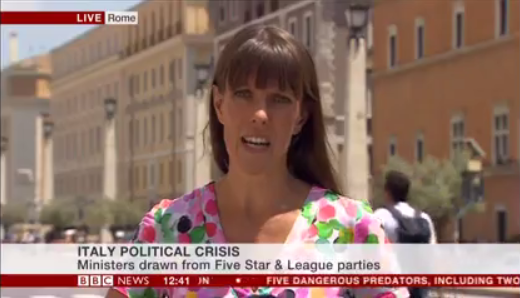
Jenny Hill, the BBC's Berlin correspondent, has been dispatched to Rome to discuss the formation of the new Five Star Movement/League coalition government there. 

Her reporting for BBC TV and Radio over the past couple of days has been interesting for its language and its consistency. Monitoring ten different reports and interviews (i.e. ignoring all the duplicate reports in hourly news bulletins), certain words and phrases crop again and again. 

For starters, the new government is "controversial", especially its migration policies (which she's called "controversial" six times), and the new government's economic and migration plans are "raising eyebrows" (a phrase she has used nine times). That the voters voted for the parties that espouse such policies and that opinion polls show huge support for such policies is something Jenny glides over without mentioning. 

It's also interesting that when she uses the word "rhetoric" it's always in connection with the language used by 'the populists'. (She repeated talks of their "Eurosceptic rhetoric and anti-euro rhetoric", and once of them being "a little bit heavy on the anti-Europe rhetoric"). She never mentions the "rhetoric" of the pro-EU forces, including the controversial rhetoric of Mr. Juncker, Mr. Oettinger et al, which have landed them in such hot water in recent days and which many other media outlets - and, of course, social media - have reported heavily. And it's not just Jenny Hill here. The downplaying of this angle has been right across the BBC. Even the Guardian has reported such unhelpful-to-the-EU stories, so the BBC has, once again, out-Guardianed the Guardian here - a bit of 'bias by omission' which I think provides another piece of clear evidence of the BBC's biased, pro-EU way of thinking and acting. 

As for the bone of contention between Italy's president and the two parties seeking to form the new government - the president's refusal to appoint as finance ministry a 'Eurosceptic' academic - well, Paulo Savona is repeatedly described by Jenny as "outspoken" in his views about the EU and the euro. She twice described the man who is now set to be finance minister, Giovanni Tria, as "more moderate", and also called the latter "a rather pragmatic chap" and "a rather more cautious fellow than the original candidate". This is classic 'bias by labelling'. 

Not 'moderate', in Jenny's eyes, are the League's migration policies. She called them "very right-wing" on yesterday's The World at One. She said Mr. Salvini's illegal migrant deportation plans "are already raising eyebrows causing huge controversy not just here in Italy but well beyond". 

"There's a lot there which is making this country nervous" she said about the new government's programme. (The two parties that comprise it now have around 60% of the vote in the latest Italian opinion polls, so not all of the country must be feeling nervous. Is she projecting her own fears onto the Italian public?)

And if you take the line... 


...that this was "a fight between on the one hand the EU establishment elite in one corner and Europe's populists in the other corner" then think again. Jenny called that "an oversimplified narrative". 

And as for criticism of the Italian president, well he got off very lightly. She said she suspected he recognised that "he has made a little bit of a mistake" and, therefore, agreed to the changed list of candidates.

You can always trust Jenny Hill to fling labels around right, left and centre (though mainly right!) and to have a simplified narrative on hand. 

Monday, 9 April 2018

Getting things wrong


The BBC hasn't exactly done its reputation for reporting much good over its coverage of the Hungarian election. 

Firstly, there was the misinterpretation of the meaning of a high turnout:


BBC One's early evening news bulletin was still reporting that "the high turnout could benefit opposition parties" as the polls closed last night. 

I follow a Twitter feed called Europe Elects, which provided updates on turnout throughout the day, and I noticed them reporting, some four to five hours before that BBC One bulletin, that Fidesz-leaning counties were performing better than opposition regions, turnout-wise so I suspected this was nonsense. Yet still the BBC ploughed on regardless, and, bizarrely, persisted in saying "the high turnout could help the opposition" as late as last night's BBC One News at Ten

Jenny Hill (rightly) took some flak for that tweet about a high turnout possibly leading to "greater resistance to Orban" but her colleague Nick Thorpe was entirely on the same page as her, telling the BBC News Channel that a high turnout was "important" and that an "upset" was possible.

Well, they were wrong. The historically high turnout led to a significant swing in the popular vote towards Fidesz. 

Was it wishful thinking (i.e. bias) on their parts? Or had they taken the predictions of Hungarian political 'experts' on trust?

******


Secondly, having failed to stop digging that hole, Jenny Hill then decided to start digging another one on last night's BBC One News at Ten:
We are just getting preliminary figures which suggest that Viktor Orban has done it, securing himself a third consecutive term in office. But, something has shifted. It looks as, if these figures are borne out, that his Fidesz party has a majority but it has narrowed. Something has really shifted here. It has been an extraordinary day, record turnout and some voters queuing for hours to demand change. It's as if a country is holding its breath. Tonight could, just could, affect profound change for Hungary. 
Wrong again. The only shift was towards 'no change', with Fidesz increasing its vote share and the two biggest opposition parties falling back. 

After all this I had to grin at how the BBC was introducing this story this morning:
Hungary's Viktor Orban has defied critics at home and abroad again with an impressive win in Sunday's general election. 
Never mind the "critics at home and abroad", he also "defied" the BBC!

******

The third area where the BBC fell down yesterday is frankly bizarre... 

At 9.19 am, 10.29 am, 12.26 pm and 1.21 pm on yesterday's BBC News Channel variations on the following were read out by the BBC newsreader:
Hungary will elect a new parliament today, with the Prime Minister, Viktor Orban, hoping to win another term in office. He's been in power since 2003.
People in Hungary are going to the polls today, with the Prime Minister, Viktor Orban, hoping to win another term in office. He's been in power since 2003.
"He's been in power since 2003" was the recurring phrase over those 4-5 hours of BBC reporting. And yet it's completely untrue. Viktor Orban hasn't been in power for the last 15 years. He was first PM from 1998-2002 and then again from 2010 onwards.  Why did it take so long for anyone at the BBC News Channel to spot this error?

******

The incompetence of the BBC's reporting here is quite something, isn't it? 

Tuesday, 20 December 2016

Welcome to Germany

I don’t know if Jenny Hill was aware of it, but I detected an ominous black cloud over Jenny Hill’s report from Berlin this morning. 


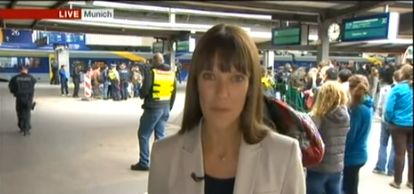
Why, it seems like only yesterday when she was reporting the latest arrival of migrants at Munich station, and (somewhat inappropriately) chiming in with the greeting: “Welcome to Germany. ”

Saturday, 3 December 2016

On a Haydn to nothing


There was a pre-recorded report by Jenny Hill from Burgenland, Austria on this morning's Today. Jenny was reporting on the re-run presidential election there tomorrow. 

Go to 15:17 and, talking of that very election election, you'll hear her say, "The role of Austrian chancellor is largely ceremonial". 

She's confusing the Austrian chancellorship (the Austrian chancellor being the head of government) with the Austrian presidency (the largely ceremonial head of state) there...

...which only adds to my impression that the BBC should stop parachuting reporters into countries they don't understand.

Sunday, 20 November 2016

Half an hour in the life of the BBC News Channel (continued)


Susana Mendonça

Continuing to focus on that 5.00-5.30 period on the BBC News Channel this afternoon (as part of my new, random-sampling mission)...

Susana Mendonça's report on the road-related bits of the upcoming Autumn Statement included the following, ramping up the negatives re the consequences of Brexit:
This focus on on roads isn't just about rebuilding infrastructure though. It's about boosting confidence ahead of the Brexit negotiations at a time when economic forecasts are pointing to slowing growth. The Chancellor has admitted there is greater uncertainty and he wants to calm nerves ahead of any economic storm that may lie ahead
With a bumpy road to Brexit ahead the government will be hoping its road plan makes it smoother.
****** 

Then we had Jenny Hill reporting on Mrs Merkel's plans to stand for a fourth term as German chancellor. 

Jenny gave Mrs Merkel a favourable review, quoting a poll showing that 55% of Germans support her and saying that her approval ratings are "still the envy of many world leaders", even though they've gone up and down because of her "refugee policy":
She will be going into battle though against the tide of populism that, of course, has swept Donald Trump to victory in the States and is washing across the whole of Europe too.
Ah yes, those "populists"! (like "populist, anti-immigrant, anti-Muslim AfD".) And Jenny then gave into temptation (being her own tempter) and speculated: 
It's very tempting to wonder what it is that's make Mrs Merkel make up her mind. I suspect...She's a woman with a strong sense of duty. She wants to finish what she began with the refugee crisis, to try and shore up the causes of the problem. She's also a passionate supporter of the EU and she's very concerned about its future and its survival, particularly in the light of the Brexit decision. But I wonder too, it's very tempting to speculate whether Donald Trump's victory has ultimately pushed her into this decision. She's congratulated him but, remember, at the same time she reminded him of his duty to respect the shared values of freedom, democracy and the rule of law. Very uncertain times, not just for the continent but, of course, for the world too. 
Jenny Hill

The language there is striking, isn't it? She's positive about Mrs Merkel ("She's a woman with a strong sense of duty"). She insists on calling 'the migrant crisis' "the refugee crisis". She talks of "reminding" in connection with what Mrs Merkel said to Donald Trump). And she ends by being negative ("very uncertain times") about the state of the world, post-Brexit, post-Trump).

Jenny then went on to opine:
I think that he decision will be met with relief, generally-speaking, all round.
At which I will admit to thinking, "Yes, including at the BBC"...which, no sooner had I thought that, then Jenny inadvertently reinforced that impression by ending:  
In the words of one public broadcaster here this morning. "Angela Merkel the Indispensable". 
One public broadcaster here seems to be taking the same view at the moment. (See last week's Newsnight too).

******

Later came a section on the centre-right Republican Party's primary election to choose their presidential candidate. I had to smile at the captions accompanying the mini-profiles of the front-runners. 

Hugh Scofield

I'm guessing the BBC aren't too keen on M. Sarkozy because he's "moved to the right on immigration and security issues":

Nicholas Sarkozy, 61
Failed to be re-elected
Moved to the right

Alain Juppe, 71
Campaigned as moderate
Led polls for months

Francois Fillon, 62
Campaigned as a centrist
Wants deep economic reform

Hugh Schofield, in Paris, then reported on the vote. It's not looking good for Nicholas Sarkozy, due to the high turn-out, Hugh is saying. M. Fillon, "the dark horse", is "very much a man to be reckoned with". (The facts seem to be bearing that out tonight).

******

The BBC then reported a "reported" attack on a school in Assad-controlled West Aleppo by rebels, which counters persistent claims that the BBC rarely reports attacks on civilians by the rebels. The bulletin spent 9 seconds on that and then spent 15 seconds recounting earlier attacks by the government side on rebel-held Eastern Aleppo, which probably counter-counters that countering of those persistent claims, if you know what I mean.

******

And there was a preview (plug) of an undercover Panorama report, featuring secret filming, in a private nursing home in Cornwall. I read comments elsewhere earlier today wondering why it always seems to be the case that the BBC uses secret filming against private businesses but rarely against public sector institutions. Is that fair? (It does ring true).

******

Sarah Corker

And the half hour ended with a report on what will keep the lights on here in the UK and, guess what? It turned out to be wind farms.

There have been calls for the government to back wind power more and the BBC reporter, Sarah Corker, certainly enthused about the wonders of wind farms and their economic benefits here. Does your company need more clarity from the government? she asked. "These energy companies are brushing off any Brexit uncertainty", she gushed.

******

I think I've faithfully recounted what happened during this half hour of BBC News Channel broadcasting. Taken in tandem with the two previous posts about another item during this half hour, doesn't it show BBC bias in full flowering?
Sunday, 13 November 2016

Did Jenny Hill compare Donald Trump to the Nazis?


Jenny Hill

I've read plenty of comments (on several sites) in recent days about a BBC News website piece by BBC Germany correspondent Jenny Hill on the German reaction to the election of Donald Trump:


It's the implicit linking of Donald Trump to the Nazis there that has aroused people's anger. Many find it outrageous.

It certainly looks outrageous. The question about Jenny Hill here then is: Was she making that link or merely reporting it? 

In other words, it would be absolutely fine for a BBC reporter to explain why Germans are reacting so badly to the victory of Mr Trump if, in the course of her reporting, she finds lots of Germans making that Kristallnacht/Trump victory parallel (however far-fetched others may find the comparison). If she has quotes from such people saying that very thing then all the better.

The worrying thing about this article, however, is that Jenny Hill, having made that highly provocative link in the first four paragraphs of her piece, provides no evidence whatsoever that people in Germany are actually making such direct comparisons, and she gives us no direct or indirect quotes to show that she's merely reporting what people in Germany are saying rather than giving her own view.

So, was this the German people speaking through Jenny Hill or Jenny Hill speaking through the German people? 

Please read it for yourselves. What do you think?

Saturday, 17 September 2016

A bias for green eyes


Jenny Hill, talking to a pro-mass migration politician

Your ears did not deceive you. Jenny ‘Welcome to Germany!’ Hill was back on From Our Own Correspondent this morning, eulogising over a wonderful, hardworking, green-eyed refugee. 

(She's clearly got a think about green-eyed refugees. Her wonderful, kindly refugee last time round had "striking green eyes".)

This new report from Hamburg - ostensibly about German politics - focused on the migration issue. 

30,000 asylum seekers have arrived in the city in the past year, Jenny noted before singling out just one of them:
Take Abdul. A young man, a welder by trade from Syria. When I met him he was hard at work, blue sparks flying across the work bench and reflecting in the visor over his face. He lifted it and revealed startlingly green eyes and a big grin. 
Abdul's new boss, "a great, kindly bear of a man", is full of admiration for him. Abdul was just what he needed. Young Germans can't do these jobs. Plus, he motivates the other employees too through his hard work. 

And that's exactly the kind of thing Mrs Merkel wants to happen, said Jenny - namely a well-integrated, skilled migrant population to help with Germany's ageing population and to boost business. 

"But, of course, that's easier said than done", she added, before moving onto Melanie Leonhard, the Hamburg official responsible for integration. 

Dr Leonhard "looks tired", said Jenny, but is determined to turn the influx into "a new chance for our society and a success".

Melanie Leonhard, thankfully looking less tired

Along with other German officials Jenny has spoken to, she thinks it can be done, especially as migrant numbers have fallen dramatically since the closure of the Balkan route and migrant organisations now feel in a position to cope.

So all's starting to go well for Mrs Merkel's open-door policy, it seems. But...oh those pesky voters!

"German voters are running out of patience", she continued, and increasing turning to what Jenny called "the anti-Islam party Alternative für Deutschland":
I recently listened to one of AfD's founders speak at a hustings.  [She didn't think to either personalise him or even give his name].  
"Islam", he declared, "is a religion of blood which has no place in Germany."  
"The new arrivals are culturally behind us", he added. "They can't - or don't - want to integrate".
Of course, FOOC listeners will have heard Jenny's earlier story about grinning, hard-working, much-liked, Abdul earlier who, according to Jenny's own account, very much does want to integrate and already has integrated. They could well have heard the unnamed, rhetorical AfD founder's statements through that prism. Abdul was there to contradict him in advance.

Jenny then ended by reflecting on public trust in Mrs Merkel. Do voters believe her any longer?

To which can be added another question: Do Radio 4 listeners believe the likes of Jenny Hill any longer, with her very-carefully-chosen lovable green-eyed migrants and her ways of humanising - or not humanising - the figures in her stories to taste (as they say on squash bottles)?

Tuesday, 8 March 2016

Potato peelings, anti-migrant sentiment and the Nazis

"The second world war ended over 70 years ago, and only those of a certain age still remember its events at first hand in Germany, and that includes those who worked at the extermination camps at Auschwitz and of course the survivors of the Holocaust. 
Of the thousands of Germans who worked at the death camps, only some of the senior figures were ever prosecuted. But now there are several trials being held in Germany, of lower ranking officials such as guards accused of being accessories to mass murder. They and their surviving victims are in their 90s, and as Jenny Hill’s been finding, it’s reminding Germany of its dark past. All the while anti-migrant sentiment is growing:

"Angela Orosz is small, energetic and she smiles a lot. I find myself laughing along with her as she tells me that her family never threw away potato peelings, preferring to eat them instead. “Potato peelings!” she exclaimed “Can you imagine?” 
Angela was born in Auschwitz. her story is an unimaginable story of human cruelty and human resilience. Her mother was pregnant when she was transported to the death camp. Somehow she survived despite the experiment she was subjected to. Somehow she sustained the pregnancy, eating potato peelings from the camp kitchen, and somehow Angela was born, concealed, and lived the first few months of her life in the camp before its liberation.  Decades later this immaculately dressed dark haired woman sits in front of me. we’re not smiling any more. “Potato peelings”, she repeats, carefully. “They saved my life.” 
Angela recently gave evidence at the trials of two SS guards at Auschwitz. A recent court ruling has made it possible for prosecutors to pursue anyone who worked in a death camp, regardless of their role. One man who’s been convicted of aiding and abetting mass murder, several others have been charged, but they’re all now in their nineties, it’s a race against time to bring them to safe justice. 
The trials fascinate and horrify Germany. They’re a searingly painful reminder of this country’s past. In the municipal blandness of the courtroom survivors recount surprisingly vivid detail. A young woman with bright red hair, shot by a uniformed Nazi; a father’s hand closing the gate on the family home before he was marched roughly away; a sewing machine, carefully, hopefully, carried into the chaos of the train to Auschwitz. It’s all recounted with quiet insistence as weak sunshine pales the wooden floor and traffic faintly murmurs past outside. 
Recently I watched as one of those survivors spoke directly to the former guard in the dock. Leon Schwarzbaum’s eyes are strikingly bright. he has a beautiful smile, but it’s often washed away by an expression of profound sadness. His whole family was killed in Auschwitz. Leon’s eyes were fixed on Reinhold Hanning who was accused of murdering tens of thousands of Jewish prisoners. Crammed together on flimsy plastic chairs, the watching journalists were absolutely still, and I realised I was absolutely holding my breath. “Mr Hanning” he began. “We are about the same age. We will soon face our final judge. I want you to tell the truth about what you did.” 
This, I thought really was Germany, confronting its past, face to face. 
I chatted recently with a lawyer who represents some of the survivors. “These trials” he told me, “really matter” His face creased, emphatic. “It’s about justice, yes, but it’s also about making sure this country doesn’t forget. It’s already forgetting.” 

I wonder whether he’s right, because it seems to me that as Germany confronts the horror of its past again, it’s also facing a stark present reality. 
The refugee crisis has revealed a painful glimpse of what the country’s president Joachim Gauck refers to as ‘dark Germany’. It’s there in the faces of screaming anti migrant protesters illuminated harshly in the headlights of a bus carrying refugees to what should have been a safe house. Or the mob, violently silhouetted by flames who clapped and cheered as a refugee home burned to the ground in front of them. And then there are the swastikas crudely splashed by night discovered by day on the walls of buildings, which house asylum seekers. There have been more than a thousand attacks like these on refugee homes in the last year. Most Germans are horrified. Even so, supports has grown for the grassroots political party in Germany which campaigns against migrants. Its leader recently proposed border guards should make use of their firearms. Germany’s constitutional court is currently deciding whether to ban another political party. The far-right NPD. Many here blame them in part for the current anti-migrant sentiment and violence, but in fact proceedings began two years ago when Germany’s 16 states petitioned the court to outlaw the party, which they claim is racist, antisemitic and has similarities to Hitler’s Nazis. 

I think back to Angela and her potato peelings. She’d also told me how she’s made her nine-year old daughter navigate the city’s subway system alone so that she could survive by herself if the Holocaust happened again. For all her determination and bravery, the circumstances of Angela’s birth have infused her life with a profound insecurity. It’s a frailty that touches Germany, even now.

That is a transcription of Jenny Hill’s FOOC (preceded by Kate Adie’s intro) I’ve done that so that you can judge for yourself. Jenny Hill (Welcome to Germany) regards all refugees fleeing from poverty or war, or seeking ‘a better life’  as unquestionably entitled to unlimited hospitality from western European countries, no matter who, why or where. 

But is the  plight of would-be migrants fleeing from poverty and war really comparable to Germany’s industrialised extermination of the Jews in WW 2? 


Does Germany’s guilt oblige European countries to absorb, permanently or temporarily, millions of destitute and desperate Muslims, when there are vast prosperous Arab countries that could accommodate them without those troublesome ideological differences? 

Did you wonder why Jenny Hill sought to sandwich the refugee crisis in between two slices of Holocaust? Well, she’s by no means the only one who does that, but it seems profoundly crass. She sees superficial similarities, so conflates the two. She alludes to ‘lessons’ that she thinks the Holocaust should have taught us. 
Not ‘Don’t tolerate antisemitism’.  The ‘lesson’ she takes from the Holocaust appears to be:  ‘opposing mass Islamic immigration is racist’ and those who do so (the far-right) are no different to the Nazis.


Is  she really equating Muslim refugees with victims of the Holocaust? Is she saying that opposing the influx of Muslim, (very likely antisemitic) refugees is racist? Have the recent  incidences of sexual harassment and violence in German cities, the rapes in Sweden and so on escaped her? 

I’d like to know what that lawyer meant by “Germany is already forgetting.” I do wonder if he meant that in the way Jenny Hill was emoting. Or the opposite. Forgetting about the consequences of antisemitism perhaps?  Never mind. 

I found Jenny Hill’s use of that ‘potato peelings’ tale cheap, inappropriate and clumsy.  

Sunday, 6 March 2016

FOO(B)C


Continuing with the catch-up posts from yesterday....


Sue has already praised Shaimaa Khalil's piece about the Pakistani assassin and his large number of murderous supporters in yesterday's From Our Own CorrespondentWhat else was there on this weekend's edition?


Well, the lead item was about....drum roll, followed by surprised expressions all round....Donald 'The Donald' Trump. (Bet you didn't see that coming!) It came from the BBC's North America editor Jon Sopel and didn't seem particularly biased to me. It did seem very stylish and enjoyable though. I find him a much more engaging communicator than the far-more-plodding (and politically partisan) Mark Mardell.


As well as pieces on attempts to save ancient calligraphy in Afghanistan and a piece on the perils of driving in Burma (after the old military dictatorship, apparently on the advice of soothsayers, ordered that everyone should drive on the right-hand side of the road - despite all Burma's cars being left-hand drive)...

...there came a piece from the BBC's Berlin correspondent Jenny Hill, who's been gaining something of a reputation for bias over the past year after projecting strong pro-migrant sentiments in her reporting (a perception that didn't exactly diminish after she cheerfully yelled 'Welcome!' to migrants as they arrived in the country last summer).

Here Jenny told us about the ongoing trials of Nazi death camp guards and how they are coming face to face with survivors in court - and how Germany is still coming face to face with its past.

Being Jenny Hill, a moral was then drawn: A "dark Germany" still exists - the "dark Germany" that attacks migrants, burns migrant shelters and daubs swastikas on migrant buildings. She identified that with two political parties - the Neo-Nazi National Democratic Party (NPD) and Alternative for Germany (AfD). Quite whether the latter deserves to be lumped in with the NPD and the rest of "dark Germany" is open to question (though evidently not in this BBC reporter's mind).

Saturday, 9 January 2016

Talking of Jenny Hill...


In it you'll hear from one of the victims of the attacks in Cologne, Michelle, who Jenny quotes saying, "It would be wrong to blame refugees. They need our help", which is followed by Jenny herself saying, "Many here fear a violent backlash against the 4,000 asylum-seekers living in Cologne."

You'll also hear from a young, male Iraqi refugee "with striking green eyes" who enthusiastically declares his gratitude to Mrs Merkel and his love for Germany but becomes sad when reminded of the attacks. "I'm so sorry this has happened," he says. "But Iraqi and Syrian men are good people". Jenny wistfully wonders if his hopes that his mother and brother will soon join him might not happen now.

And her closing section is just as wistful:
It feels like a long time since Angela Merkel told Germany it could cope with the vast number of migrants arriving. Back then, so many were impressed by her moral direction. Germany was, she argued, a rich stable country with much to offer. 
But I think of those fragile flowers left at the cathedral - delicate petals in a harsh winter wind.

After Cologne


Nothing shows the crazy world we're living in than the official response to the waves of sex attacks in German cities on New Year's Eve by 'Arab and North African' gangs. It was as if the German authorities were re-playing, on fast forward, everything that happened in slow motion in places like Rotherham, Rochdale, Oxford and other British towns and cities, and for exactly the same reasons.

As for the behaviour of the media: At first they told us nothing. Then, after social media sites and Breitbart began reporting what had happened, they began reporting it - four to five days after it had happened. (One German TV station at least had the decency to apologise for failing to report it earlier.)

They then appeared to play catch-up whilst still seeming to try to cling to the hope that the 'Arab and North African' men weren't recent asylum seekers/refugees.

BBC reports, for a day or two, all stressed (without questioning or further investigation) statements from German officials saying that there was no evidence of such a link, just as they used to do when the issue of race or religion (specifically the religion of Islam) arose in the wake of Rotherham, Rochdale, Oxford, etc. They also cited commenters calling for people not to jump to conclusions. Their  main online report on the story on 5th January did cite one policeman saying that eight detained suspects were asylum seekers but that was in paragraph 25/27 of the article (for some reason) and the following paragraph 26 then tried to counter it by repeating official cautioning comments.

The BBC's main online 'explainer' piece by Jasmine Coleman on 6th January waited 9 paragraphs before mentioning that the young men were 'of North African or Arab appearance', focusing initially instead on the area of Cologne's notoriety as a crime hotspot. Some 13 paragraphs later she returned to the question of the perpetrators saying that anti-immigration campaigners had "seized on" the incident and that some had criticised the media before quoting a German official cautioning against making the link to refugees and, in a very strong echo of the BBC's coverage of Rotherham, Rochdale et al, then cited one expert:
Meanwhile experts stress that sexual violence is an issue for people of all ethnic origins. 
Figures show the majority of people carrying out sex attacks in Germany do not come from an immigrant background. In two-thirds of cases, the perpetrator is known to the victim, Ms Kopetzky says.
As with the UK's problem with grooming gangs, such points miss the point. They ignore the specific nature of the crimes and they 'forget' about considering the statistics proportionally. Yes, most sex attacks in the UK and Germany are carried out by non-immigrant people and most perpetrators are known to the victims, but the UK is well over 80% non-immigrant yet the vast majority of those convicted of being part of paedophile grooming gang members were from an immigrant, Muslim background - i.e. a vastly disproportionate number - and they targeted non-immigrant (ie white) children, just as the mob in Germany targeted non-immigrant (ie white) women.

Then came the news that the bulk of those arrested so far have indeed been asylum seekers. and the news that four young, male Syrian refugees had gang-raped two girls aged 14 and 15 in a small southern German town. The BBC's main online article reporting this on 8th January was unusually forthcoming (though the ages of the girls wasn't given, only being mentioned in a later, separate article): 
Germany must contemplate deporting foreigners convicted of crimes following the Cologne sex attacks, Chancellor Angela Merkel says.
She said "clear signals" had to be sent to those not prepared to abide by German law.
Gangs of men described as of North African and Arab appearance were reported to be behind the attacks.
Police also received reports of sexual attacks in cities in Finland, Austria and Switzerland on New Year's Eve.
Meanwhile, four young Syrians are being held over the suspected gang rape of two teenage girls in the southern German town of Weil am Rhein on the same night, according to German media.
Last night's News at Six on BBC also had Jenny Hill saying as much, albeit tentatively:
The authorities now admit that some of the men who attacked [the women] may have been asylum seekers.
Her report marked something of a step backwards. She featured a Yazidi refugee from Iraq "who [she said] fears reprisals", adding that "anti-refugee violence is already on the increase". He denounced the perpetrators as newly-arrived and not representative of other refugees like him (which in his case, being a Yazidi, is likely to be true at least, most of the rest being Muslim). She then featured two young German woman as vox pops (both of whom looked, unless my eyes deceived me, as if they might also come from an immigrant background):


...both of whom downplayed the dangers, saying if you were careful, had "a trusting heart" and "saw these as single incidences" you should be OK - prompting the obvious question: Were they representative? Or were they simply the ones saying what the BBC reporter wanted to hear? 

Those are just some initial impressions on the BBC's reporting in recent days. Do they match yours, or not?