Sunday, 24 January 2016

Trump Trump Trump


I do like that tune.

I watched the circus in Westminster Hall on ‘the parliament channel’.  

A couple of days later I switched on the BBC’s very own parliament channel and there it was again! Bring on the clowns as they say. Dafter than ever and twice as excruciating.

The first thing every single speaker did was denounce Donald Trump. They needed to establish their heartfelt condemnation of 'The Trump' and made quite sure they were publicly seen to distance themselves from ‘his appalling views’. This ritual was performed by the banners and the no-banners alike.  

The BBC had a rolling bar at the bottom of the screen explaining that Donald Trump has proposed a ban on all Muslims from entering the United States. They did not include the qualifier.
The standard of debate was pretty terrible. Speaker after meandering speaker made illogical and repetitive observations; speaker after speaker made irrelevant, time wasting interventions.

It was bad enough seeing this once, let alone twice or thrice. Obviously I didn’t sit through it in its entirety the second time.

Much of the rhetoric focused on prejudice and racial hatred (as in Islamophobia) but I heard nary a squeak about the elephant that inhabits large swathes of the “Muslim Community” - antisemitism - unless it was lumped together with Islamophobia like a Siamese conjoined twin.

The old doddery speakers seemed to know little or nothing about Islam, and the earnest, virtue signalling members seemed a bit thick.  Quite a bit thick.

Jack Dromey was monumental old bore. Hypocritical and badly informed to boot. He attempted to ridicule Trump by reading out a list of “Trumpisms” in a silly voice, presumably to illustrate what a buffoon Trump is. Someone made an intervention to the effect that ‘outing Trump’s buffoonery’ would be better than banning him, only for Dromey to retaliate witheringly “This is not a matter for flippancy.” 

Several speakers argued that other bloggers and inciters of hatred whom the home secretary has previously banned set a precedent for banning Trump.  Dromey mentioned Pamela Geller and Robert Spencer by name, both of whom were banned from entering this country for the sin of opposing Islamisation, but Dromey had trouble enunciating the word Islamisation, blurting out instead “Islamisisation”. 

People kept saying that Trump would ‘preach hatred,’ as if he was a preacher.

He wants to ban me and my family
Surprisingly eloquent


Two passionate speakers in favour of the ban were Tasmina Ahmed-Sheihk, the SNP member with the big hair, and her surprisingly eloquent colleague Anne McLaughlin. They both argued for banning Trump on the grounds of consistency. ‘Ban him because we’ve banned other hate speakers. Because of the risk of inciting hatred. Hatred or Islamophobia.’


Tasmina kept saying “the Muslim community “ this and ‘the Muslim community” that, but one does wonder whether she can legitimately speak for ‘all muslims’ whilst being incensed that Trump is tarring “all Muslims” with the same ban? Only Muslims are allowed to make generalisations for some reason?

One (or perhaps two) speakers pointed out that Trump hadn’t actually advocated a permanent ban on all Muslims, but vocal Muslim MPs like Tasmina and Tulip Siddiq still chose to emote victimhood. “He even wants to ban me and my innocent family.”

Trump’s ban might very well have been grossly unfair and clumsy, but there is another aspect to this, which I put to you just in case it’s worthy of your consideration. 

‘Innocent Muslims’ (those who sincerely want to integrate and embrace the culture of country they inhabit) who are caught up in whatever backlash, fallout, proposed ban, unfair prejudice or bigotry that results from acts of terror, could be regarded as victims of terrorism like everyone else. 
They’re victims of terrorism, just the same as innocents and bystanders of every creed and culture who are, unfortunately, caught up in the aftermath of terrorism. Collateral damage if you like. We’re all subject to extra scrutiny at airports these days. No-one likes it, but it’s there for a reason. Precautions.  We all suffer because of terrorism; we all have to bear certain restrictions on our freedom in states of emergency and so on.   In war time enemy aliens were interned for what was thought at the time to be the general well-being of the country. To be on the safe side. Unfair, but all’s deemed fair in war. Terrorism of the kind we’re seeing now is tantamount to war.

Trump’s temporary ban on Muslims does seem ludicrous and impracticable. I certainly don’t see how or why Trump could or should be banned from the UK. It’s unenforceable and dumb. However, under the circumstances a little profiling might not go amiss

The whole debate was conducted as though Trump had said what he said out of the blue. Someone mentioned San Bernardino, which had apparently been forgotten or ignored.
Everyone kept saying they’d like to take the Trump to their local mosque to show him what a wonderful multicultural place the UK is and how harmonious we all are.
How we’d show him up. Argue with him, show him the error of his ways, ridicule his ideas, and call him a buffoon; as the pot said to the kettle.
“I would urge the alternative of inviting Mr Trump here. I would be delighted if he could show us where the so-called no-go areas for police are in this country—I have never been able to find one. It would be a pleasure to take him down to Brixton and show him the rich mixture of races and creeds that are living happily together there. ”
That was Paul Flynn MP, the person who brought the debate to parliament. He was against banning Trump, but he also happens to be one of the persons who criticised the appointment of Matthew Gould to the British Embassy in Israel. 
“The position, he said, required someone with “roots in the UK“.
Discrimination against people based on their heritage, much? It begins to seem as if 'it all depends'.


Bitchy article

One of the things that came and went was an amusing piece in the Daily Mail about our old friend Lauren Booth. I’m using ‘friend’ in the Corbyn sense. I only mention it really because she looks so weird. Her rebuttal can be read here. 


Is this woman a journalist by the way? How odd. 

Granted, this has little to do with the BBC.  Please treat it as a frivolity.

Abusers of language (and of human rights)

If you’ve been paying attention you’ll know I’ve been ‘out of the office’ for a few days During my awol many troubling issues came and went. Far too many, and now it’s too late to try and catch up. These issues might have remained unaddressed forever - if it weren’t for the fact that others have dealt with them quite satisfactorily thank you very much. I’m redundant. Superfluous. Surplus to requirements, which is great. I didn’t even watch Galloway’s Newsnight, but BBC Watch did.

Actually I do think something is happening. An ever increasing number of people are saying that they’ve more or less given up on the BBC. They seem to have concluded that it’s a lost cause.  They’re resigned to the fact that if you don’t share the BBC’s approach to life, the world, the universe and everything, you’re stuffed. 

We all know that complaining is a waste of time. You get rebuffed. If one complaint does sneak through the barricade, it’s logged on an obscure website and hardly anyone is any the wiser. Nothing changes. No “lessons” are learned.

I’ll just tackle a general theme, which is the effect of the public’s reliance on the BBC for information about things they aren’t deeply familiar with or knowledgeable about, like politics and religion. Despite our relative ignorance, some of us are especially opinionated about these matters. 
There’s also the issue of language, obfuscation, bias and bigotry.  Here’s something that’s just up my street,  about language by A.J. Caschetta.
“The belief that "political chaos is connected with the decay of language" led him (Orwell) to conclude that language had become "ugly and inaccurate because our thoughts are foolish [and] the slovenliness of our language makes it easier for us to have foolish thoughts." Today, the ways we speak and write about the threat of Islamism are often inaccurate and slovenly, making "foolish thoughts" almost inevitable. Everyone involved needs Orwell's prescription.
The post-9/11 era is rife with what Orwell called "the abuse of language" ("war on terror," "overseas contingency operations"), but no abuse more obviously illustrates his complaints than the media cliché describing how a moderate Muslim becomes an Islamist: he becomes radicalized. This euphemism (a passive construction in grammatical terminology) denotes almost nothing. Orwell calls it a "verbal false limb," that is, a device used to "save the trouble of picking out appropriate verbs and nouns." It has become the default explanation for a phenomenon few want to discuss.”
 Khaled Abu Toameh has written a piece called: Palestinians: Western Media's Ignorance and Bias
“These "parachute journalists," as they are occasionally called, are catapulted into the region without being briefed on the basic facts of the Israeli-Palestinian conflict. Sadly, correspondents such as these are more the rule than the exception.” 
 Do take a look at the comments below this article (as well as the piece itself.) 
“Mark Twain commented, over 100 years ago, "If you don't read the daily newspapers you are uninformed. If you do read the newspapers you are misinformed!" “ 
said a commenter.

It’s accepted - taken as read - that in any given incident you’re getting (from the BBC and other media) a combination of half-truths based on someone’s agenda rather than a complete picture, impartial, factual and fair. 
Specially where the issues are contentious, like, say, Trump. I’ve lost count of the times his infamous “Muslims ban” has been repeated without the qualifier.  It’s not only with left wing media. (there’s another example of lazy terminology)  The others are just as bad. Jeremy Corbyn’s infamous ‘friends’ statement, and the ‘tragedy’ one.
“Afterwards, when these comments were widely reported, Corbyn’s supporters said they’d been taken out of context — the standard defence whenever he is criticised for saying something positive about Islamist terrorists, such as describing Hamas and Hezbollah as his ‘friends’ or the death of bin Laden as a ‘tragedy’. 
said Toby Young in the Spectator.  Of course they were taken ‘out of context’, not least because the caveats Corbyn appended were flimsy and unconvincing, as was Trump’s “until we figure out what’s going on” . But nevertheless, seizing on the statements and omitting the qualifiers altogether to make a political point is quite iffy.


The staggering ignorance shown over the public’s perception of Israel is one I’d lay at the foot of the BBC. Is that an expression? Lay at the foot of? - I mean hold it responsible. I would hold the BBC responsible for the findings of this random survey. Out of a possible choice - Israel; ISIS; N Korea; Saudi Arabia; Iran, “who's the worst human rights abuser?”

Sorry, who?


Don’t bother to tell me. I knew which it would be before the film properly got going. 

Such a shame.


Saturday, 23 January 2016

"...without the BBC even blinking"


His piece ends:
The damage has been done. A terrorist supporting propagandist, has elicited more sympathy for the Palestinian cause simply because the BBC have become willing and blind accomplices. They fell for a PR trick and spread the work of a PR man for the Palestinian cause, undiluted. The ‘reporters’ who regurgitate the spin do not perform even the most cursory of background checks. Our taxes [i.e. the licence fee] funded unfiltered Hamas propaganda without the BBC even blinking.
I strongly urge you to read the whole thing. It shows just how wrong Mario Cacciottolo's decision was.

"It most certainly does not have a veto over any legislation"


Thursday night saw Radio 4 broadcasting its second major documentary of the year relating to a possible Brexit - In Business, with Jonty Bloom. The programme was called Norway's European Dream. 

I think it's fair to say that quite a lot of 'Leave' supporters weren't impressed by its 'impartiality' - or its accuracy.

Take, for example, Dateline London's Alex Deane:


There's also a write-up of the programme by Jonty Bloom on the BBC website headlined How does Norway's relationship with the EU work?

The case against Jonty Bloom is laid on on various blogs - the clearest statement (so far) being at LeaveHQ under the title Another pack of BBC lies. 

Its main point is that Jonty was wrong to write that Norway "most certainly does not have a veto". Norway's agreement with the EU (through the EAA), however, says otherwise - see Section 6.1.4 The right of veto which begins:
According to the principle of unanimity applied in the EEA Joint Committee, all the EFTA states must agree in order for new EU legislation to be integrated into the EEA Agreement and for it to apply to cooperation between the EFTA states and the EU. If one EFTA state opposes integration, this also affects the other EFTA states in that the rules will not apply to them either, neither in the individual states nor between the EFTA states themselves nor in their relations with the EU. This possibility that each EFTA state has to object to new rules that lie within the scope of the EEA Agreement becoming applicable to the EFTA pillar is often referred to as these parties’ right of veto. 
So far, this right has not been exercised. This is partly because when EU legislation is to be integrated into the EEA Agreement it is submitted to the EEA Joint Committee at the final stage of an extensive process of information and consultation between the contracting parties. The purpose of this process is to ensure that agreement is reached on such decisions. During the negotiations on the EEA Agreement, compromises were found if a state had constitutional objections to the content or could invoke fundamental national interests. Even though constitutional problems are unlikely to arise in the day-to-day EEA work, the will to reach necessary compromises must still be regarded as a basic condition for cooperation.
The interesting thing in comparing what LeaveHQ quotes from the BBC website article and the BBC website article article itself is that the passage LeaveHQ especially takes issue with -
It most certainly does not have a veto over any legislation and yet the consequences can be huge.
- isn't actually to be found in the BBC website article. Indeed, the word 'veto' is entirely missing from the piece.

The invaluable Newsniffer site provides the answer. 

The article has been through several versions since it was first published on Thursday, yet only one paragraph has ever been changed - and that's the one quoted by LeaveHQ (and other anti-EU blogs)! 

It originally said exactly what they quote:
It most certainly does not have a veto over any legislation and yet the consequences can be huge.
I'm guessing Jonty received some strongly-worded emails or tweets as that bold (and wrong) assertion was fairly swiftly (stealth-)edited out of the article. 

The first edit changed it to something that's considerably more accurate:
In theory it has a veto over any legislation but it has never used it, and yet the consequences of using the veto could be huge.
The final version, however, marks a step-back:
Now, as Norway is not a member of the EU, it has no say over these or any other EU rules. 
It can lobby against them, but it does not sit round the table when they are proposed, discussed, amended, debated, or voted into law.
The consequences can be huge.
That's very carefully (you might say 'knowingly' put). It skirts around the fact that Norway does have a say through the EEA agreement at certain stages outside of the EU's structures and can veto legislation (though it chooses not to).

This is evidence that someone at the BBC, probably Jonty himself, realised that he'd got it wrong and went it to edit the article and remove the offending passage - which had already been getting him into serious trouble with anti-EU bloggers.

Of course, you won't see a message at the bottom of the BBC article informing readers that the article has been amended. That would be far too honest!

Still out of office, but...


As you'll have spotted, we've not been able to post anything much over the past week or two. 

There's very little time today either, so - apart from that Jonty Bloom post above - here's a brief reprise of last Sunday's Sunday on Radio 4, which didn't do much to lessen the impression it often gives of being "the most liberal programme on Radio 4".


The Anglican meeting that sanctioned the Church in the United States over gay marriage was discussed with the bishop of Washington DC, Mariann Budde (above), who - naturally - took the US Episcopal Church's (liberal) side of the argument.

Then came a discussion on the government's legislation to regulated less-than-scrupulous charity campaigning. It featured someone who strongly opposes the government's policy and someone else who fairly strongly opposes the government's policy. It's surprising how often this kind of thing happens on Sunday.

Then came a report on Germany's "sanctuary churches", described as the last resort for refugees. We heard from various refugees - a Muslim and a young Yazidi who was told not to reveal name of church because of threat from "anti-immigrant groups" - plus the scheme's organisers and backers. As you can imagine, all were singing from the same (pro-migrant) hymn-sheet here. (O Come All Ye Migrants by the sounds of it).

After a bit on a monastic cookbook came a Trevor Barnes report on the Anglican primates' meeting which did strike me as being fully balanced between the wings of the Church...

...however, the final studio interview was with Jayne Ozanne, the woman who called for the church to apologise over its treatment of gays. (Various Archbishops and bishops had "declined" to appear, apparently, and Sunday chose not to invite anyone else from the other side to balance the discussion).

(Almost) all very Sunday!

Monday, 18 January 2016

'Out Of Office' message


Sorry for the lack of posts at the moment. Hopefully normal business will resume within the next week or so.

In the mean time, here's former FA boss David Davies and some girl...

Thursday, 14 January 2016

Free to campaign?


Talking of the BBC's editorial guidelines on Impartiality...

It looks as if there have been some recent changes to them. 

Last September we posted a piece, via DB, that quoted - and linked to - the BBC editorial guideline on Campaigns and Impartiality: 


That link no longer works, and if you read through the BBC's editorial guidelines now, from 4.4.1 through to 4.4.31, you'll notice a sudden leap from 4.4.19 to 4.4.22. 

In other words, two sections of the BBC's editorial guidelines - including the one on Campaigns - have gone missing: 


Why has that happened?

"I think they've got a point today..."


And, with another h/t to DB,...


**********


Look what Mario spotted!


Talking of DB...

He also spotted a BBC Trending article headlined Gaza medics back striking English junior doctors...:


...less than an hour after it was published, and sent the following tweet to the BBC journalist responsible for the piece, Mario Cacciottolo:


As you can see, Mario had tweeted about the piece himself to telling us all how it came about:


Fancy that!

Given that BBC Trending is supposed to report on major 'trends' in social media, this was hardly much of a 'trend', let alone yer actual news, was it? 

DB suggested as much to Mario.


Now, what was it about a tweet linking Gaza with the junior doctors' strike that first attracted BBC reporter Mario Cacciottolo to this story, as Mrs Merton might have asked)? 

Would the ever-trending hashtag #bbcbias help supply the answer?

More anon-sourced blame-deflecting from Hugh Sykes?


Pace DB:


Here's the BBC's Hugh Sykes:


So let's get this straight....

Hugh meets a (nameless) woman at a demonstration and immediately decides, simply on the basis of his brief encounter, that she's an "honest woman". 

As Hugh 'knows for a fact' that she's an "honest woman" (despite not really knowing her), we're obviously supposed to take her unverified tale about a "Pegida man" (saying something unbelievably disgusting) on trust.

Really?

Now, if this anecdote ends up as part of a broadcast report from Hugh Sykes, then we'll be able to ask the following question: Is this what BBC journalism has sunk to these day?

Anyhow, "honest" now joins the word "respected" in Hugh's lexicon of anonymous authority.

Wednesday, 13 January 2016

Not worth the wait after all


So Woman's Hour finally got round to covering the attacks on women in Germany and Sweden this morning, devoting the first 18 minutes of the programme to the subject.

It was, however, much as might have been expected - a group of people sharing the same similar, narrow, left-liberal, feminist outlook agreeing with each other and uniting in condemnation of 'right-wing' people who don't think like them, put centre stage and stage-managed by the BBC.

The guests consisted of two left-leaning journalists, Joan Smith of The Independent and Imke Henkel of Die Zeit (last heard on Sunday's Broadcasting House), plus Egyptian journalist and activist Sarah El-Rashidi and Dr Andrea Den Boer of Kent University (last heard on Saturday's Today).

Here's how Dame Jenni Murray framed the discussion:
Given the reports that the attacks in both Sweden and Germany are said to have been carried out in crowds and by men of mostly North African backgrounds, how should the Women's Movement be reacting? How do you make a complaint about behaviour that may well have a racial source without being racist and causing the kind of backlash against migrants that's already being reported in Germany?
Her own left-liberal angst was soon matched by the rest of the participants.

Imke Henkel began by characterising the debate in Germany and saying that feminists and the Women's Movement didn't want to hush it up, as "conservatives" claim, but were saying 'we need to talk about it as violence against women, whether by foreigners or Germans'.

Joan Smith said the initial reluctance to talk was "understandable". The way the news leaked out meant that many didn't want to "rush to judgement". It is "very difficult for feminists" though. Yes, to defending women's right obviously, she continued, but "we don't want to play into the hands of people who are simply anti-immigrant". Now a non-racist analysis is emerging, she went on: The refugee entrance system in Europe is discriminating against women.

Sarah El-Rashidi compared events in Tahrir Square and Cologne. She was describing "taharrush" without using the word. (She sounded as if she might be sensible, but later events proved otherwise).

Andrea Den Boer then repeated her theories about marginalised men and population bulges and "hesitated" to say this is a migrant issue. The phenomenon of "crowd gathering and sexual assaults" isn't confined to one culture or religion, she said. It even happens around Canada Day, apparently. 

Jenni Murray then moved onto the backlash, making a startlingly hyperbolic analogy: 
Imke, there have been newspaper reports this morning making the right-wing response look I have to say rather like Kristallnacht - you know [a chorus of 'yeses' from the other guests], shop windows smashed, very frightening images, posters with 'Rape refugees not welcome'. How much has this fuelled a dangerous backlash?
Imke replied "I think it has fuelled a dangerous backlash", though she distanced herself slightly from the Kristallnacht analogy. ("These events are not as bad"). It is "frightening" though, she said. "I agree with everything that's been said before", she continued, saying that the feminist angle is important. The Right are trying to hush up feminists but feminists should talk about the issue, she went on. We should also distinguish between Algerian men and Syrians. Algerian men has a record of this kind of thing; Syrians are "unlikely" to do that sort of thing. [That's not what the recent rapes of a 14 and 15 year old girl in Southern Germany by Syrians necessarily suggest though].

Dame Jenni's next question was: 
So Sarah, what we've heard from Andrea is this can happen anywhere where there are a lot of young men without purpose who are in a crowd. How possible would you say it is to talk about a particular form of misogyny and emphasize the relevance of the North African backgrounds of these men? Or that not really relevant?
Egyptian journalist Sarah didn't directly answer that, saying instead that she was "in total agreement" with Andrea about the 'crowd gathering' point before going on to 'do a Hugh Sykes':
Now I think that we shouldn't totally disregard...me being the conspiracy theorist I might be accused of being...We should disregard the point that there is a possibility this could also be linked to a political agenda from the right party...from the national party leader.....Now I think there's a possibility of that. I think we should also look at these sort of issues.
Astonishingly, no one - and certainly not Jenni Murray - even batted an eyelid at that. The conversation went straight on.

Jenni did mention Rochdale, Rotherham and Oxford though. Joan Smith criticised the Right for saying that "white women" were attacked there [girls actually]. ("I think that's completely wrong"). It's about "all women" being attacked. The opportunity now is to teach universal rights to migrants and refugees "if we can ignore all this kind of right-wing clamour", she went on.

Imke said the liberal immigration policies of Mrs Merkel and Sweden "are not to blame at all". Such policies are "absolutely right". She then agreed with Joan that refugees and migrants need to be taught Western human rights and that it's an "opportunity" that should be taken, repeating that point several times.

And there you have it - the much-delayed Woman's Hour discussion on the NYE attacks.

It would be a very unbalanced listener who found that a 'balanced' discussion.

It's this sort of thing that ought to give the BBC a very bad name.

Tuesday, 12 January 2016

"You never talk about..."


I promise you this isn't me being satirical in the wake of some of the preceding posts. It actually happened on this morning's Woman's Hour (at 21:47 - h/t Sue). 

Cue Jane Garvey: 
Now, Woman's Hour tries very hard to please everyone listening - which, of course, is impossible. And we often get complaints saying we too much of one thing, not enough of another. But lately is has been a bit of a feature on Twitter at least that listeners have been in touch to say, "You never talk about bisexuality." So we're going to try and put that right this morning. 

Saturday on BBC Radio 4


There's a very interesting piece by Jane Kelly of the Spectator and Salisbury Review over at The Conservative Woman: Feminist BBC would rather canonise Bowie than admit the ugly truth of Cologne. 

Part of it records her monitoring of Saturday's coverage of the Cologne attacks on BBC Radio 4, some of which I'd like to share with you here whilst strongly urging you to read the whole piece (if you haven't already done so):
As evidence of the attacks in Cologne had mounted and over a hundred women complained to the police, the BBC had been forced to report the events. I spent Saturday listening out for their updated reports...... 
By 10 am we were back to BBC equivocations. Radio 4 news concentrated on far-right demonstrations in Cologne, after what they termed vaguely, ‘a night of crime in the city.’ They knew what crime it was but didn’t say, and also knew that it had not just happened in Cologne but right across northern Europe in what were suspected to be co-ordinated attacks. 
Then came the Woman’s Hour weekly roundup. The programme aims to, ‘give the female point of view.’ It’s a notoriously hard-left programme, often entering the realms of extreme silliness, but I was interested to hear what their take on Cologne would be. They didn’t mention it. That silence of course spoke volumes. For them, migrants being ‘victims,’ can do no wrong. If they do, it cannot be mentioned. 
At 12 noon a news report described the attacks in Europe as, ‘attacks on women by some migrants.’ 
The main news report was on mosques in Germany where imams were inviting non-Muslims in to read the Koran, ‘in the interest of cohesion.’ 
Later in the day, BBC news reports were taken up by the C of E fighting about gay rights again, this time accusing itself of not being kind enough to gays and trannies in the past. We were into futile historic breast-beating. No mention of events in Germany. Obviously the rights of heterosexual woman are lower in the pecking-order than those with, ‘gender issues,’ at least for the Left. 
By the early hours a complete retrenchment seemed to have taken place as a BBC voice referred to, ‘rare incidents such as the events on New Year’s Eve.’ 

More on Jane Garvey...


Following on from the previous post....


...but this time (and 16 hours later) answer came there none! 

So I think we can infer from that that Jane Garvey really did mean that unplanned 44-second mention of Cologne by a Woman's Hour guest during a discussion about 'women to watch in 2016' to be her justification for so dismissively replying "No, it isn't" to DB's question, "Is it true that Woman's Hour hasn't covered the NYE sex attacks?". 

The word 'disingenuous' springs to mind. 

In every meaningful sense of the word, Woman's Hour didn't 'cover' the attacks. Just because one of their guests briefly mentioned it in passing that doesn't amount to 'covering' it. 

(Hence, perhaps, Jane's sudden introduction of the word 'mentioned' rather than 'covered' after being challenged to provide an iPlayer link to the relevant discussion).

Anyhow, we did learn from Jane Garvey that tomorrow's edition of Woman's Hour with give listeners "more" about the NYE sex attacks. (What? 45 seconds this time?)

Maybe they'll do it justice. 

Maybe they won't just have some Guardian journalist blaming it on men in general and warning us all against 'xenophobia'; or a German academic/social worker/politician blaming it on men in general and warning us all against 'xenophobia; or both. 

We'll have to wait and see.

Monday, 11 January 2016

Jane Garvey defends Woman's Hour


Going back to the question of whether Woman's Hour has ignored the mass assault of women in Cologne and other European cities...

DB has put the question to Jane Garvey via Twitter:


Now, as the Woman's Hour website, which supplies pretty detailed information about each of its segments, didn't include any mention of the subject, DB wondered whether it had been briefly mentioned during another discussion.

So I thought I'd better check.

I've now thoroughly checked all last week's editions of Woman's Hour and, yes, Jane Garvey was correct. It was "mentioned one day last week" during one of the programme's discussions. 

If you click on Thursday's edition...

...which had 'chapters' on (a) Who are the women to watch in 2016?, (b) Alessia Cara, (c) Parenting In The Digital Age, (d) Mazi Mas: The restaurant offering work to migrant women living in the UK; and (e) Jessica Raine...

...and go to 5:14, midway through the 'Who are the women to watch in 2016' segment,...

...you will hear guest Anne McElvoy mention the attacks in Cologne during the bit on Angela Merkel's 2016. 

Anne McElvoy talked about it for precisely 44 seconds. 

Jenni Murray then moved the discussion on to another politician. 

And that was it!

I think that makes it even worse, don't you? A guest brings it up and the presenter moves it on.

(The phrase 'watertight oversight' springs to mind here.)

Beyond belief!


After all those brickbats, a couple of bouquets.

First, this afternoon's Beyond Belief on Radio 4 on French secularism. It is well worth a listen. 

Its three guests were: Kay Chadwick, Reader in French Historical Studies at Liverpool University; Mona Siddiqui, professor of Islamic and Inter-religious Studies at the University of Edinburgh; and Natasha Lehrer, writer and literary editor of the Jewish Quarterly.

The first part looked at the history of French secularism; the second part look at how French secularism stands now; and dividing the two parts was an interview with a Muslim gentleman from a French "organisation against Islamophobia" who blamed the French state for pretty much everything, whose contribution was then discussed.

I found it all very interesting, and I suspect the discussion about the tensions between French secularism and French Islam didn't pan out quite how listeners would have expected. (It certainly didn't pan out how I expected - to put it mildly!).

The three guests were well contrasted. 

Mona Siddiqui gave a defence of French secularism and the way it "puts the citizen before the religion." She criticised the "mantra" of Muslims across Europe - whether they be Turks in Germany or South Asians in the UK - that the state is to blame. She said she didn't agree with them. She also said there are lots of issues that are "endemic" to these communities that aren't being looked at by those communities - and that those communities are the ones that need to "do some soul-searching". She said that the "visibility" of French Muslims is a "problem" - and meant that their hijab-wearing (etc) causing that problem. 

Natasha Lehrer espoused what might be called 'the left-liberal line', that it's understandable if French Muslims find French secularism problematic and that they blame the French state. They feel as if they have "no hope" because they face long-term, increasing mass unemployment and systematic discrimination, she said (which, of course, is uncannily close to 'the BBC line' in report after report from the banlieues).

Kay Chadwick rejected the 'anti-Islamophobia' guy's claim that "Islamophobia is the acceptable face of racism in France", and rejected the term 'Islamophobia'. She agreed with Mona, saying that French secularism discards ethnicity in favour of 'being French' first and foremost. 

Natasha countered that the French state is failing to bring ethnic minorities "into the fold" and that discrimination is rife.

Mona Siddiqui

Mona replied that the big issue facing Europe is "about values", and that we would welcome immigrants if they bought into our values of liberal European democracy. However, we are now seeing that no matter what we do with these communities "their values are essentially different from European liberal values" - and some of those people's values are essentially different because they choose to keep them different, and a lot of these communities "do fail" on those values.   

Natasha disagreed saying that allowing and valuing diversity is what a tolerant multicultural society demands, but Mona interrupted her to say "But that's only if it's positive", and a lot of the "demands" aren't a positive contribution to liberal democracy. It's all very well talking about diversity, Mona went on, but when different "diversities" rub up against each other that can be a problem. You've got to buy into liberal democracy. 

Natasha persisted in her point that the state is failing and there's discrimination. (50% of people in French jails are Muslim, she said - obviously blaming the French state for that). 

Mona said that shouldn't "eclipse the other problems", and it's a chicken and egg situation anyhow. Problems like low educational standards could be the result of problems within these communities or within society as a whole. It's hard to measure.  

Kay said many do live integrated lives; others don't. Everyone should respect each other. 

Mona said that a lack of integration and extremism don't necessarily tie up and Natasha surprisingly agreed with her, saying that many of the people who have gone off to fight in Syria (etc) come from fairly comfortable backgrounds and that "to simplify it to being a question of deprivation or exclusion is fairly inaccurate" - though that is what she herself appeared to have been arguing all along up till that point! 

As for their concluding comments? Well, Mona said she loved France when she lived there and would be happy to live there again; Natasha said that being Jewish in France isn't a problem and that French secularism is being used by politicians - and damagingly so for "cohesiveness"; and Kay said that we should hold on to cross-cultural unity but that France is a place where you can be many things, thanks to French secularism.

As for presenter Ernie Rea, he let it all flow and gave the 'anti-Islamophobia' guy a fair hearing but raised sceptical point about the man's incessant blaming of the French state both during the interview and after it.

As I say, well worth a listen - though I probably should have put something about 'spoilers' at the top of the post first!


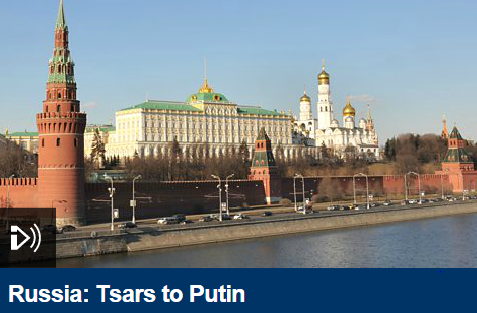
As for my second bouquet, that must go to Andrew Marr and this morning's Start the Week on Russian from the Tsars to Putin - and not forgetting the commissars. 

It had Simon Sebag Montefiore on the Romanovs, presenting a highly juicy take on their wickedness (which suggests that his blockbuster on them probably isn't written 'in the academic style'); plus Amanda Vickery on the Siege of Leningrad and that Shostokovich symphony; Arkady Ostrovsky on the fall of the Soviet Union, very interestingly putting the case for Boris Yeltsin (among other things); and David Aaronovitch engagingly discussing his communist parents' cult-like ties to The Party.

Also well worth a listen. 

Never, ever


Woman's Hour was on my mind as, by some strange stroke of fate, I was just listening to an interview between Jane Garvey and Gordon Brown's former pollster Deborah Mattinson (as you do).

Something Jane Garvey said struck me as worth noting down for posterity - though I'm not quite sure why. Nevertheless, here goes...

Jane started by doing that thing you used to hear quite a lot from the BBC when they started talking about the EU (as well as that thing the BBC are still doing - namely calling the EU 'Europe'):
So to Europe then. Now, I am begging you not to nod off or turn off right now, but it is nevertheless..it used to be a plain fact..that for many people the issue of Europe sort of comes in that category of 'probably quite important but boring' but for others - sizeable minorities on both sides of this argument - it is vital, it is the stuff of their lives.
Jane placed herself very emphatically in the former camp: 
Right. What intrigues me about this issue is it's been around as long as I've been a journalist - Europe. We know about the 1990s and Maastricht and everything else. It is one of those topics that I have never, ever discussed outside my professional life.
Have you never, ever discussed the EU at home or with friends?

Never?

Ever?

Now I know I'm a man and, apparently, we're more nerdy than women (guilty as charged), but I have discussed the EU with some women on a few occasions over the years - and it wasn't just me talking or always me who started it.

How on earth has Jane Garvey managed never, ever to have a discussion with anyone outside of the BBC about it?

What do Dame Jenni and Jane have to say about Cologne?


Here's a curious thing: If you look back through the Woman's Hour archive for 2016, you'll find they haven't discussed the extraordinary wave of attacks on women on New Year's Eve across several European countries.

Whether you're a fussy eater or not, a restaurant offering work to migrant women, bisexuality, whether allowing MPs to vote from home would make parliament more family-friendly, etc - all of those have been discussed, but not the wave of attacks on women in Cologne and other cities across Europe.

Strange, isn't it?

David, I'm Only Blogging


I was driving to work this morning and switched over to Radio 4 at 7.10 to hear Nick Robinson talking about the "shocking news" that was just coming in. 

His tone of voice made me gulp. I thought there'd been a sickening terrorist attack or a major assassination but then I caught him saying that David Berry had died and that he was one of the biggest names in modern music, alongside the Beatles and the Stones. I was racking my brains trying to remember who David Berry when it suddenly struck me that David Bowie might much better fit that description and began hoping he hadn't actually said David Bowie. Then he said David Bowie's name again and I realised I'd misheard. "Oh no!", I thought.

That all took place in the space of a few seconds, of course - longer than it look me to write that last paragraph and probably longer than it took you to read it. Still I thought I'd share it with you in the time-honoured spirit of blogging. 

Will you always remember where you were when you first read that anecdote of mine? 

Everyone was talking about it at work, of course - not for long though as we had work to do, but for a few minutes at least - so I'm not surprised that it's being given a massive amount of coverage by the BBC, Sky, ITV and the papers. 

For example, watching the BBC News Channel from 2 o'clock this afternoon, the first 18 minutes were spent on David Bowie before moving onto Syria (after a short advert for what was coming up). Sky News, which I also had on, spent the first 15 minutes of the hour on it before moving straight onto Syria at 2.15 and then onto the latest from Cologne. Both channels were soon back onto David Bowie though, with guests reminiscing, medleys of his songs and further reports. As I'm writing this paragraph the BBC has Paul Gambaccini and Sky has a music industry executive called Jack Steven who has an uncanny look of Bowie (to my eyes):


There's a lively debate going on over at Biased BBC this afternoon over whether there's too much coverage, with some saying "enough already" and others saying that Bowie was a cultural icon (even if his music wasn't to their taste) and that it's curmudgeonly to complain about it.

I'm firmly in the latter camp over this - hence this post! (and David Bowie's music was to my taste).

If someone as important to so many people as David Bowie can't be given a single day of heavy news coverage, then the news would be letting a lot of people down.

Anyhow, for those who are more interested in the BBC than Bowie, here's a comparison of BBC One's News at One and ITV's somewhat shorter lunchtime bulletin. 

It's always interesting to compare what different news organisations consider worth reporting in the main TV bulletins, to see what they miss and what they include - just as, unlike Sky, the BBC News Channel didn't bring its viewers the latest news from Cologne over the past hour. (Maybe they forgot?):

BBC News at One 
1.00 Death of David Bowie
1.15 Aid convoy approaches besieged Syrian town
1.17 Partner of murdered Eastenders actress to appear in court in Ghana
1.19 Labour frontbencher resigns
1.21 Anglican Church meeting
1.24 Junior Doctors' Strike
1.25 Spanish princess stands trial
1.28 Weather
1.30 David Bowie tribute
1.31 End

ITV Lunchtime News 
1.30 Death of David Bowie
1.39 Junior Doctors' Strike
1.42 Aid convoy approaches besieged Syrian town
1.44 Brimstone missiles used by UK govt in Syria
1.44 Anglican Church meeting
1.44 Lin Homer steps down as head of HMRC
1.45 Labour frontbencher resigns
1.46 Government funding for mental health problems
1.48 Golden Globes
1.49 Headlines (David Bowie)
1.50 End

And now the obligatory David Bowie song - my favourite, in its full-throated, full-length version. RIP.

Hugh Sykes again


For those who aren't allergic to Twitter conversations, here's DB's encounter with Hugh Sykes (almost) in full (following on from yesterdays' Broadcasting House)...

(If you're not into Twitter you might like to think of it as an epistolary short story!)


And here's Part Two:  DB gatecrashing a love-in between Hugh and a fan:


Sunday, 10 January 2016

Keep your distance

Did you see Ayesha Hazarika doing the papers this morning with Tim Montgomerie on the Marr show?   She reminds me of Lulu. She makes me wanna shout. No, not that - it’s her round face.
 But did you notice her casually referring to Pegida as ‘fascists’? Is that what she meant? I wasn’t quite sure. If so, she slipped it in good and proper, no-one batted an eyelid.
Marr said something about ‘what’s been going on in Cologne.’
Here’s what she said:
”Well absolutely and we all were horrified by the awful  events on NYE when lots of women were attacked, but what’s now happened is the fall-out from these events has been quite interesting because the far right has seized upon those attacks as, you know, as an excuse to say, look you can’t have migrants coming in to the west, they don’t agree with our culture - I mean, obviously that’s not the right way to approach this and interestingly, lots of women have now taken to the streets to march against the fascists, saying actually the police did not take the right action as well, and I think what we’re seeing, all these facts, that there needs to be a proper examination across the whole of Europe about how we actually deal with this migrant crisis.”

Marr
What really went on in Cologne and who was really responsible is a bit of a murky business....
 [..]

A H
It’s incredibly important in this very sensitive and complex situation  to not pitch race and religion against these attacks on women. I think that’s a dangerous game to go down.

Douglas Murray has written a memorable piece about Cologne, which touches on interesting immigration-related issues, namely Trump and Tommy Robinson.
At times we all feel the need to distance ourselves from certain other people. On Harry's Place, Sarah AB seems to need to do it with Douglas Murray when she’s in the process of agreeing with him, or conceding one of his more incontrovertible points. 
Almost everyone does it with forthrightly anti-Islam characters like Geert Wilders, Robert Spencer, Pamela Geller, and Paul Weston. In some cases a certain amount of distancing is appropriate, in other cases it’s less so. Pat Condell is another person with whom one must apologise for citing. Sorry Pat. But cite him one must.


Anyway, it’s Tommy Robinson time again. Tommy has distanced himself from the EDL and has teamed up with Paul Weston and Anne-Marie Waters to create a UK version of Pegida. The shocking thing is that after making this announcement, the police, or some mysterious body which believes it's contributing to social cohesion, has unearthed a charge against him which had previously been dropped.... and resurrected it. Presumably with a view to shutting him down - putting him back in prison again with some of his enemies, long-term violent jihadis with ‘nothing to lose’. Goodness knows what would happen if they succeeded in murdering him. 

While in prison for eight days recently, on what seems to have been a vexatious / frivolous sentence for ‘mortgage fraud‘, Robinson preemptively punched another prisoner who later accused him of racially motivated assault. The punch in question was  to prevent an arranged ‘boiling sugar-water’ attack on him at the behest of another dangerous prisoner. The police have decided to reverse their decision to drop the case, now that Tommy Robinson has started “causing trouble”.


If the state or the police are capable of trying to ‘no-platform’ Tommy Robinson by maliciously throwing him into prison every time he tries to make his voice heard, it’s an absolute scandal.  You can see more about this on Breitbart - a site I usually try to distance myself from a little. Sometimes they seem to be a bit too keen on digging things up and spinning them in a particular way. But sometimes I think that’s what needs to be done.