Showing posts with label Matt Wells. Show all posts

Sunday, 14 June 2015

"The Pope..."


After last week's fascinating edition from Russia with Caroline Wyatt, it was very much back to business as usual on this week's Sunday. Edward Stourton returned to the fray and his opening words were, "The Pope...". 

Pope Francis's "anticipated encyclical on the environment" was the programme's main focus, with a report from BBC reporter Matt Wells from the US on "concerns among conservatives that the Pope will be critical of consumerism and capitalism", and an interview with Fr Augusto Zampini, Argentinian priest and theological advisor to CAFOD. 

Fr Zampini said that the Pope's encyclical will "be a Magna Carta for the environment". 

Matt Wells's report featured a range of views on man-made global warning, beginning with a clip of Rush Limbaugh and ending with the words (from Matt himself), "The Vatican is relying on American church members to put stewardship of creation above patriotism when it comes to mitigating climate change before it's too late".

The programme also included a sound montage of Muslim voices describing their various internet projects to promote the experience of Ramadan. One wants non-Muslims to share the experience of their holy month by fasting for a day and then going for a meal at the Muslim family's house as dusk falls. (He didn't say if we'd need to bring our own wine).

An Islamic scholar and Libyan ambassador, Dr Aref Ali Nayed, was on too, discussing the rise of Islamic State in Libya. Sunday reckons he might be prime minister of the country soon. He tried to sound hopeful. 

There was also a traditional Sunday feature on disagreements over women bishops in the Church of England and a report by Bob Walker from Lincoln to mark tomorrow's 800th anniversary of the sealing of Magna Carta.


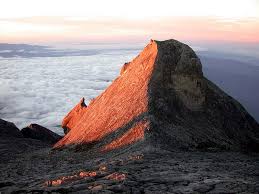
Sunday regular Martin Palmer was also back on discussing the sacred significance of Mount Kinabalu in Malaysia following the stripping incident there. Martin Palmer is always interesting, and his take on what the Western tourists did there was similar, in message if not in style, to Rod Liddle's brilliant piece in today's Sunday Times.

For those who can't get beyond the Times paywall, here's how Rod's article begins:
The summer holidays will shortly be upon us and by now you will almost certainly have decided at which revered foreign landmark you intend to whip out your genitals and take a selfie. Which you will then post on Facebook. “Look — here I am at Angkor Wat. And yes, that’s my old fella flapping about in the breeze, just beyond the grasp of those cheeky macaques. Having a lovely time, wish you were here. Megalolz.”
We are casting the net wider and wider each year, we Brits, finding ever more exotic and alluring places to display our todgers and front bottoms and then display them on social media sites. Never mind yer Costas and yer Ayia Napas — they’ve seen it all before, those people, and very grateful they were too. These days we go much further afield. 
I’m slightly surprised the tour companies haven’t cashed in on our relentless obsession with baring ourselves. “Moon at the locals from a parapet in the Hagia Sophia — all inclusive package to Istanbul, £800. Or get your tits out for the lads beside the Taj Mahal — £2,000. Lawyers’ fees extra.”
More than 5,000 British people were arrested for behaving like feral dogs on holiday last year, and the number of countries in which they were arrested grows by the year. It’s one of the many benefits of globalisation: our genitals get everywhere, they zip around, hither and thither, demanding to be photographed wherever they land. They crave recognition, our gonads. They want to be seen in exciting, happening places.

Sunday, 3 August 2014

Gaza, WWI, Muslim charities and the banks & the West's guilt over Iraq


This morning's Sunday dwelt mainly on the Gaza conflict and on the WW1 anniversary, with side features on how some Muslim charities are being badly treated by the banks and on the West's responsibility for the present plight of Iraqi Christians. 

If that sounds to you like a typical left-liberal-biased edition of Sunday then you wouldn't be far wrong. 

Here's what happened:

1. "As the Middle East crisis intensifies, Matt Wells reports from New York on the US Government's response to the conflict." 
Ed Stourton asked about public demos in the U.S. Matt Wells said the pro-Palestinian demos have been tiny while 10,000 people attended the New York "Stands with Israel" rally. (We heard a clip from Republican senator  from Charles Schumer, speaking to the crowd.) The White House's criticisms of Israel were in turn criticised by some Democrats. The first 'talking head' here was the World Jewish Congress' Evelyn Sommer, saying that the U.S. should not be criticising Israel at this time and should continue to support Israel regardless of casualties. The liberal organisation J-Street is also supporting the Israeli action. The second 'talking head' was Rebecca Vilkomerson from the Israel-bashing Jewish Voice for Peace. She says her organisation is growing, and denounced the pro-Israel lobby. Matt Wells said that, long term, the U.S. public's support for Israel is threatened, according to a new Gallup poll which shows that a clear majority of Americans under 30 think Operation Protective Edge is unjustified. It's "remarkable" how little support there is for the Palestinians, concluded Matt.

2. "We also get the perspective of the British Jewry and British Palestinians who have families in Gaza." 
This was a report from Charles Carroll, talking with British Palestinians in a coffee shop in W. London. A young Palestinian man and two young Palestinian women expressed their fears and aired their complaints about Israel's action, with much talk of families being "wiped out" or fearing being "wiped out". 

3. "HSBC wrote to a number of Muslim organisations in the UK this week informing them that their accounts will be closed. We examine why a bank might take a decision to close an account, and how a charity might fall foul of the rules."
It wouldn't be Sunday if there wasn't something along these lines. Does the Gaza conflict explain this?, Ed began by speculating (implying that the banks are coming under pressure from pro-Israeli sources?), but curiously this wild speculation wasn't followed up, merely left dangling in the air. He talked to Tom Keatinge from RUSI and Jahinger Malik from one of Sunday's favourite charities, Islamic Relief. Islamic Relief had its account closed by another bank back in 2012 and said they weren't informed of the process (or reasons) for the closure. Ed says "natural justice" would make many listeners think it's wrong to do that. Tom agreed, saying these actions can't help the banks' reputation. Ed took this "it's wrong" line and stuck with it, even though both his guests agreed with it. 


4. "Concluding our series exploring the views of faith groups at the outbreak of World War One, June Osborne, the Dean of Salisbury, looks at the Church of England's response to the war."
This was an interesting report from June Osborne. She's been looking through papers of Randall Davidson, the Archbishop of Canterbury during WW1. At the start of the war the main controversy facing him was the issue of whether clergy should enlist as combatants. He came out against it. A lot of clergy took no notice, however, enlisting as army chaplains and front-line soldiers. Archbishop Davidson was working at all different levels, making grand speeches and dealing with mundane things - questions such as 'What would the church do with their silver if the south of England was invaded by the Germans?' By 1915, more substantial issues - poison gas, conscientious objectors, etc - began to weigh on his mind. He saw the war as "a struggle on behalf of righteousness and freedom" through the Anglican Church's moral and spiritual weight behind the war and the need for a British victory, but he was far from oblivious to the dilemmas and tragedies of the war and was clear that war is "evil".

5. Iraqi Christians 
This was an interview with David Walker, Bishop of Manchester. He's been talking to the Observer, so Sunday naturally gave him a ring. He mainly blames us, the West, for the present perilous plight of Christians in Iraq - specifically the 2003 invasion. "We are responsible for what we left behind", he said. His solution? We have to take them in, just as we did with the Ugandan Asians. "Our doors have to be open", he said, regardless of the numbers. Ed asked him about the present anti-immigration mood in this country. He replied that that mood needs challenging, saying that immigration helps to "grow the economy" and "enrich us". "Immigration doesn't harm us, it enhances us", he said - and Ed didn't challenge him on the point. 

6. "We also get the perspective of the British Jewry and British Palestinians who have families in Gaza."
This was the counterpart to the earlier discussion in W. London. Trevor Barnes was in Hampstead, talking mainly to liberal British Jews. British Jews are "incredibly conflicted", said Hannah Weisfeld of Yachad ("pro-Israel, pro-peace"). Jonathan Arkush from the Board of Deputies described the present conflict as a "tragic war" but said "these are victims of Hamas". Various vox pops said that the conflict "tears us apart", that their sister in southern Israel has no protective room, and that she finds the Palestinians deaths "heartbreaking". Peacemaking rabbi Frank Dabba Smith said that Israelis are very, very depressed, seeing no end to the conflict. What of the rise in anti-Semitism? Jonathan Arkush said he was "surprisingly heartened" at what it is revealing about interfaith relations, praising both Justin Welby and the Muslim Council of Britain for their statements on the issue. Returning to the general topic, no subject is most divisive, said Frank Dabba Smith, saying that bringing people together is his aim. Hannah Weisfeld then rounded things off by saying, "You don't have to pick sides" and that the community "has to be for peace". 


7. "In the first of two exclusive reports for Sunday, Dr Rowan Williams, Chair of Christian Aid and former Archbishop of Canterbury, reports on the desperate situation he found in South Sudan when he visited the country this week."
"A bit of a scoop this", said Ed - namely Dr Williams' "decision to moonlight as a reporter for this programme". The former AB of C says that South Sudan could be facing famine. 

8. "The Rev Laurence Whitley, Minister of Glasgow Cathedral, looks ahead to the Centenary Commonwealth Service taking place in Scotland and tells the story of the four Anderson Brothers who lost their lives during the Great War." 
Today is the 100th anniversary of the phrase "the lamps are going out over Europe", supposedly said by the British Foreign Secretary of the day on 3 August 1914. Rev. Whitley outlined the details of the service to mark the start of the war.

Sunday, 29 June 2014

Catholic social attitudes, gay marriage, Nigeria, "Islamophobia", the living wage and then gay marriage again


This morning's Sunday talked about Catholic social attitudes, gay marriage, Nigeria, "Islamophobia", the living wage and then gay marriage again.  

First up, Catholic matters. (It wouldn't be Sunday if it didn't discuss Catholic matters!). The topic today were the early results of a Vatican survey into Catholic views on social matters. Ed Stourton talked to liberal Catholic commentator Fr Brian D'arcy about it. Ed said "people expect and hope there will be...change" as a result of it, and Fr Brian said "I hope...there could be a better pastoral approach" as a result of it.

Then it was onto the subject of gay marriage in the United States. "We'll hear from Christian conservatives in the United States", Ed said about this section at the start of the programme. Well, so we did, though the report from the BBC's Matt Wells actually split 4:2 against Christian conservatives, with the two conservative voices sandwiched between four liberal voices. One of liberal voices talked of "scary right-wing rhetoric", after which we heard some scary right-wing rhetoric on the issue from a US pastor. (Are they no reasonable-sounding conservative opponents of gay marriage out there?) 

Next it was onto Nigeria and another interview with Dr Stephen Davies, the former canon of Coventry Cathedral, who is helping in the attempts to free the abducted schoolgirls there. He was very insistent that the violence there now is not a Christian v Islam thing, merely a political thing as various political forces sponsor Boko Haram to stage anti-Christian attacks to help them in the upcoming elections. He says that many of Boko Haram's original supporters are horrified at its behaviour. Those who merely wanted a return to the pure Islam of the time of Mohammed are beginning to split from it, he said.

More Islam next. A listener email was then read out saying that we should dwell more on "the peaceful side of Islam". Another email was against women bishops.

More Islam next. To mark the start of Ramadam, Sunday invited in Tell Mama's Fiyaz Mughal to talk about his organisation's latest report into "Islamophobic hate crime". Alongside him was Usama Hasan of Quilliam. It was a friendly discussion. Fiyaz said there was a "very large spike" after the murder of Lee Rigby. Dr Hasan accepted that there's been a "rise in Islamophobic hate crime", but - at Ed's invitation - also discussed Muslim-on-Muslim violence, specifically Muslim "extremist" attacks on Muslim "moderates". He's received "serious death threats" himself. Fiyaz agreed that there is "intra-Muslim hate". They then discussed the "symbiosis between far Right" and what Fiyaz described as the "resistance" to it from "small" section of Muslim community. Usama said there's "no such thing as a Muslim community", only "Muslim communities" and that saying otherwise helps the far-right. Fiyaz said that's a "valid" and "fair" point, and agreed that lumping all Muslims together only helps the far-right to smear Muslims.

Then it was onto another familiar Sunday subject - the campaign for a "living wage", specifically "the moral challenges raised by the Archbishop of York's report into the living wage", as part of the Living Wage Commission's campaign. Trevor Barnes reported. We heard a fair range of opinion (3:2 in favour of the living wage), though it was another classic Sunday sandwich - lay out the 'liberal side' first, then give the 'conservatives' a say, then end with the 'liberal side', here in the form of a Slovakian immigrant grateful for the living wage. 

Finally it was back to gay marriage (and another Sunday favourite - a good old Anglican row) and an interview with Reverend Andrew Foreshew-Cain, vicar of St Mary with All Souls, who has just defied the Anglican Church and gone through a gay marriage with his long-term partner. Alongside him in the discussion was Alan Wilson, the pro-gay marriage Bishop of Buckingham. Bishop Alan was even more critical of his fellow bishops than Rev Andrew, saying they've "painted themselves into an extraordinary corner", behaved in a way that's "almost like bullying" and done a "a very stupid thing". Bishop Alan was wholly supportive of Rev Andrew. Ed Stourton was obviously aware of how biased this looked so insisted at some length that they had tried to get another bishop to appear but none would do so. [Did it have to be a bishop though?]

Nothing much here then, is there, to undermine Damian Thompson's claim that "Radio 4's Sunday programme offers perhaps the most undiluted liberal bias to be found anywhere on the BBC"?

Still, the sun's shining again (visibly) and the birds are singing and the power drills and loud lawnmowers that make sunny Sundays what they are don't just plug themselves in....

Sunday, 18 May 2014

Pope in the Holy Land, Oz refugees, Roger Scruton, aggrieved Muslims, 'Hallelujah', business ethics, Baha'i & homophobia and the C of E


Was this morning's Sunday as bad as I feared? Here's what happened.


1. Edward looks ahead to Pope Francis' upcoming historic and politically sensitive visit to the Holy Land with Vatican Correspondent for the Irish Times Paddy Agnew.

We got the background to the trip from Paddy Agnew: The Pope is going at the invitation of the Patriarch of Constantinople and visiting "Israel, Jordan and Palestine". He will go to the banks of the Jordan, the Church of the Nativity, the Church of the Holy Sepulchre, Yad Vashem, and refugee camps "in Palestine". 

Ed wondered: What about the Pope's safety? What about anti-Christian attacks?

That was the cue for Paddy Agnew to talk about anti-Christian attacks by Jewish groups - "price-tag attacks by ultra-orthodox Jews". 

Ed asked him to explain the "price-tag attacks" some more, and Paddy said they involved the spraying of Christian sites with anti-Christian slogans.

The Pope is taking a rabbi and a Muslim professor from Argentina with him, old friends of his.

This was as bad as I feared.


2. Phil Mercer reports on the Australian Church leaders calling for a wholesale review of the way the government treats asylum seekers in the offshore processing centre in Papua New Guinea.

Given Phil Mercer's past bias on this issue, I expected the worst here. 

We heard first from a 21 year old Sri Lankan refugee telling his story of flight from Sri Lanka. Phil asked him about his "frightening" boat journey and about how he felt about his time in a detention centre ("very upset"). Phil was getting us primed emotionally.

Then came a Sri-Lankan born pastor who said he was "in no doubt" the Australian government's policy is "inhumane". Phil led him on, asking him if it "shames this wealthy country".

Then came Misha Coleman  from the Australian Churches Refugee Taskforce saying the policy is "unfair", that people shouldn't worry about Muslims, and that there's been a"culture of fear" since 9/11.

The sop to impartiality came with the contribution of Gerald Henderson of the Sydney Institute, a "conservative think tank", who defended the policy on the grounds that it saves lives, saving the would-be immigrants from from drowning.

But then there was a prayer for refugees and Phil's closing lines left us with the message that the policy risks making Australia look bad.

A biased report for sure, but at least there was a creditable conservative voice included. That doesn't always happen in Phil Mercer's immigration reports.

This was almost as bad as I feared.


3. Edward talks to philosopher Roger Scruton about his new book The Soul of the World and asks him about his defence of the Anglican Church.

Edward invited Roger Scruton to attack "the usual suspects", Richard Dawkins & Co. 

"I have a great respect for Dawkins", replied Prof. Scruton.

Still, he disagrees with his "evangelical" brand of atheism, and rejects "triumphant" science and "nothingbutery" [the Mona Lisa is nothing but pigments, chemicals, etc.]

Ed asked him if his affection for the Anglican Church was "fairly conventional", but Roger Scruton defended stable belief and the Anglican Church's "respect for the mysteries" and "easy-going, relaxed attitude" towards spiritual beliefs.

I could have done with more of this.


4. As the National September 11 Memorial Museum opened this week Edward talks to Matt Wells about the row over a museum film some say unfairly links Islam and terrorism.

The row here concerns a film called, 'The Rise of al-Qaeda', and astonishingly some Muslim groups - and supportive politicians and academics - are up in arms about it because it uses the word "Islam". 

They dislike the fact that the film says that "Islamists" were behind the 9/11 attacks because the "Islam" part of "Islamist" could make people connect the two words together and make them think (Allah forbid!) that Islam is somehow associated with violence whereas, as we all know, Islam is a religion of peace. We heard from a Muslim activist making that very point (Islam is about peace) and claiming that the film could be "offensive to Muslims".

Matt Wells put that side of the argument and then challenged Joe Daniels, the 9/11 Memorial president over the issue, pressing him the "offence" issue. 

Matt then reflected that there are "acute sensitivities" among the Muslim community and "extremists who vilify the whole religion of Islam".

So far, so typical Matt Wells reporting; however, in a closing shaft of reason, Matt did say that he feels there's been an "overreaction here".

This was almost as bad as I feared.


5. As a nun continues to power her way through the Italian version of musical talent show The Voice, Father Ray Kelly, an Irish Catholic priest who's own interpretation of Leonard Cohen's "Halleluja" went viral on YouTube last month, tells us what it's like juggling a vocation and a music career.

I've watched this video too, and it's delightful.

During a wedding ceremony, Father Ted Ray suddenly put on a background track and starting singing the Leonard Cohen song, with words adapted to welcome and bless the couple being married and, my goodness, what a wonderful singer he is! (Great song too, of course).

The couple didn't know he could sing, and it was a surprise to them.

They e-mailed him shortly after to thank him, and told him he was a huge hit on YouTube. 

The video achieved 34 million hits before being removed. (Why was it removed?)

Ed talked with him about the singing nun in Sicily who's doing well in a TV talent show there, then recalled The Singing Nun from the 1960s.

Sony and Universal are speaking to him and he's now in the process of finding a manager.

His bishop [Brennan?] asked him about how many hits he'd got, and replied "Ah bless!" when Father Ted Ray told him.

I do hope he'll record My Lovely Horse at some stage. 


6. How do you rebuild trust in business? Kevin Bocquet reports on a new plan to do just that with 'do unto others as they would do to you' at its heart.

Ah, yes, business ethics - that perennial Sunday theme! 

The Institute of Business Ethics has called for multinationals, etc, to sign up to a moral code - "global ethical standards, based on scripture". We heard from Simon Webley of the IBE arguing this case, but we also heard from Sunday morning Radio 4's 'only right-winger in the village', Richard D North of the Institute for Economic Affairs, "a free-market think tank", pouring sceptical cold water on the idea, along with a couple of other 'talking heads' who added further caveats.

The result was a surprisingly balanced report, even if the choice of theme in the first place suggests bias.


7. An Iranian cemetery which is the resting place of ten Baha'i women who refused to recant their faith in 1983 is being demolished by the country's Revolutionary Guard. Edward talks to a member of the Bhai community in Britain whose sister is buried in the cemetery.

We heard from the brother of one of the ten women (aged between 17 and 57) executed by the Iranian regime in 1983, martyrs who refused to recant. 

There have been over 200 executions of Baha'i in post-revolution Iran. There are employment bans, their kids are excluded from schools, etc. (Iran is an apartheid state!) The persection even seems to have intensified since cuddly President Rouhani came to power. 

We're lucky not to be Baha'i in Iran.


8. The Archbishop of Canterbury has published guidance on tackling homophobia in Church of England schools. But how does the church square this message with its opposition to same-sex marriage? Rev Jan Ainsworth and Bishop Alan Wilson discuss.

We heard first from Stonewall's Luke Trill, who welcomes Justin Welby's move, then came the debate with Rev Jan and Bishop Alan [strongly pro-same sex marriage.]

It is on areas of social attitudes that Sunday's liberal bias really comes into its own, as here. Edward Stourton pursued Luke Trill and Alan Wilson's point that the guidance doesn't square with the Church's opposition to same-sex marriage and that that opposition is a problem, and pursued it will some vigour, repeatedly re-asking it, interrupting and challenging Rev Jan and putting words into Bishop Alan's mouth. ("I think that's exactly right", said Bishop Alan at one point, reacting to an Ed Stourton question to him). 

Edward Stourton conducted this interview in such a one-sided way that bias is the only explanation.

This was even worse than I'd feared.


Still, the sun is out again, so enjoy your Sunday - even if you don't enjoy their Sunday.

Sunday, 16 March 2014

R.E., Americans and the Pope, David Cameron's Jewish ancestry, Tony Benn, a Catholic prize winner, & Francis and Justin


This week's Sunday.


1. R.E.
Religious education can reduce religious misunderstanding and conflict according to a new report by the All Party Parliamentary Group on RE. Edward Stourton talks to Stephen Lloyd MP and former counter terrorism minister Hazel Blears.


This opening segment returned to a topic first discussed on Sunday a couple of weeks ago, when the programme featured a very one-sided report about the effect government bursary cuts might have on RE knowledge. That report consisted of campaigners from only one side of the argument (the side critical of Michael Gove). Then, on the edition of Sunday from two weeks ago, came an interview with Liberal Democrat MP Stephen Lloyd from the All Party Parliamentary Group on RE, who turned out to be on the campaigners's side and critical of Mr Gove. It all sounded rather biased...ah but, the presenter of that edition, Shelagh Fogarty, informed listeners that the government was invited onto that edition of Sunday to respond but "declined to put anyone up". I wondered, on that day's blog-post, why Sunday hadn't tried harder to ensure the presence of someone from the opposing side of the debate even if no minister was available, especially given all the time they'd had in the run-up to Sunday morning to make contingency plans.

Well, this week we heard again from Lib Dem Stephen Lloyd...though Edward Stourton wrongly introduced him "the Conservative MP Stephen Lloyd". (Ed will need to say several 'Hail Mary's for that.) We heard Mr Lloyd re-iterating his point that RE is essential for reducing tension in multi-faith communities and criticising Michael Gove again. Then came Labour's Hazel Blears, who agrees that RE helps reduce friction between communities - though her focus was more on (Muslim) extremism and terrorism. (Mr Lloyd seems rather more concerned about countering what certain newspapers say about a certain faith community). Edward asked her if Michael Gove "gets that", but she refused to bite on that invitation to attack the Education Secretary.

So where was the voice from the other side of the argument this time? Where was someone, say, who thinks that the bursary cuts for RE teaching are unfortunate but necessary in the present economic climate, with the funding being better spent on other subjects, like ICT, Science or Maths?


Or someone who thinks that the way RE is presently taught doesn't help reduce tension in multi-faith communities, or might even harm it?

Once again though, the answer came: No one from the Department of Education was available, with Edward Stourton huffing that Sunday has now asked them twice to put up someone to appear on the programme.

For the life of me, I can't work out what's so flipping hard about having a contingency guest on stand-by to ensure a fair range of opinions if the government refuses to appear on your programme - especially when you've got an entire week to prepare for such an eventuality.


2. How Pope Francis is seen by U.S. Catholics
Matt Wells reports from the grassroots of American Catholicism on reaction to Pope Francis' first year in office.

Edward Stourton introduced this report by citing a recent poll showing that 7 out of 10 American Catholics think that Pope Francis represents a major change in direction for the church, but that (despite, the so-called Francis Effect), there's been no return to the pews by lapsed Catholics.

As I like ferreting out polls, the one cited is from Pew. Its main graphic struck me as an interesting one, showing that Francis may be outpolling Benedict XVI but he's still got some way to go to beat the approval ratings of John Paul II. 


Matt Wells talked briefly to a conservative Catholic before spending the rest of his report talking to a nun who works with illegal immigrants (plus some of those nice illegal immigrants.)


3. David Cameron's Jewish ancestry & Israel's conscription policy
Following David Cameron's comments about his Jewish ancestry while in Israel this week, Edward Stourton talks to Jewish historian Dr Yaakov Wise who has researched the PM's Jewish roots. Yaakov Wise also comments on the news that Israel has passed a law conscripting ultra-orthodox Jews into military service for the first time.

David Cameron mentioned Dr Wise's (late 2000s) discovery of his Jewish ancestry during his speech to the Knesset this week. Using sources ranging from the University of Leipzig's library and Burke's Peerage through to the 1871 Census of England & Wales and a gravestone in the Lido Jewish cemetery in Venice, he found that Mr Cameron is a descendant of Emile Levita, a German who came to Britain in 1851, became a very successful banker, owned a grouse moor in Wales and sent all four of his sons to Eton. He's David Cameron's great great grandfather. Through Emile Levita, Dr Wise was able to trace the PM's ancestry back to Elijah Levita (1469-1549), who wrote the 1541 Translator’s Book, the first dictionary of the Targums or Aramaic commentaries on the Hebrew Bible, as well as what is thought to be the first ever Yiddish novel - the Bove-bukh (The Book of Bove) - in 1507. Yaakov Wise said that Mr Cameron was "thrilled" by all of this. 


Edward Stourton also asked Dr Wise about the hugely contentious issue of the Israeli parliament's decision to conscript ultra-Orthodox Jews int the military. Dr Wise says the ultra-Orthodox won't accept it, and thinks the Knesset has made "a very, very big mistake". 


4. Tony Benn
Methodist minister, Lord Griffiths, discusses the non-conformist religious influences on Tony Benn and his political ideals.

Sunday was bound to talk about Tony Benn...

When Margaret Thatcher died Sunday invited three guests to speak about her, only one of whom was an admirer of the Iron Lady (namely, Harvey Thomas). The other two guests were a left-leaning bishop (not a great admirer of Mrs T) and a historian who was/is an active member of the Labour Party.

Here we heard from just one guest - Leslie Griffiths, a Labour peer, Christian socialist and Methodist minister. He talked, sympathetically, to Edward Stourton about Mr Benn's views on faith.

Tony Benn himself said that his radical Christian upbringing gave him an advantage, and Lord Griffiths described his mother's influence on him. We heard that Mr Benn liked the Levellers (English Civil War-era radicals, if you didn't already know. I've always been more a Fifth Monarchist man myself), and that congregationalists [the tradition he was brought up in] are the nearest thing we have to the Levellers today. He was a "remarkable" man, said Lord Griffiths, but he ended [to my amusement] by attacking the most ultra-left of Britain's big political beasts for his "privileged position", calling him "a patrician" from a "quite wealthy background" and saying that, as a result, what he said "didn't always ring true" [which is about as unexpected a sting in the tail as I've heard in a while].


5. Tomáš Halík
Edward Stourton talks to the 2014 Templeton Prize winner Tomas Halik, a Czech priest and philosopher who established an underground university under the Soviet Union.

I will admit that I was rather hoping to hear about Msgr Halik's experiences of communist oppression but Sunday was much more interested to hear his view on "what President Putin is up to in Ukraine" [as Edward Stourton put it]. We heard from John Templeton Jnr, the Czech ambassador to London, then Tomas Halik himself. 

Msgr Halik is strongly critical of Vladimir Putin. He said that we need a "strong united Europe" to balance him, that the EU is "a great idea", and that "I'm very sceptical towards the Eurosceptics". He also talked about how English Catholic writers GK Chesterton and Graham Greene influenced him.

We've not had a Templeton Prize winner on Sunday for a long time, but the liberal Catholic Msgr Halik was an obvious choice for them.


6.  Pope Francis and Archbishop Justin
One year on from the appointment a new Pope and Archbishop of Canterbury we explore what the past 12 months tell us about the direction both are taking their churches - Edward is joined by Paul Handley of the Church Times, Madeline Teahan of the Catholic Herald and the BBC's Religious Affairs Correspondent Robert Pigott. 

The final third of the programme was given over to a discussion about the respective 'first years' of the new pope and the new archbishop.

The choice of guests fully met my requirements for fairness - a conservative-leaning Catholic and a liberal-leaning Anglican - and, yes, the Catholic voice from the once-ignored Catholic Herald (kudos, us!). [The Sunday website did manage to spell her name wrong though, typically. Her name is Madeleine Teahan].


Yes, 'devil's advocate' Robert Pigott was a very BBC kind of devil's advocate [a drippingly liberal demonic creature by the sounds of it], but I rather enjoyed this discussion and it wasn't just a gathering of Edward Stourton's mates from The Tablet, as it might well have been a year or two back - which counts as progress in my book.


And that's it for another week. I'm so late in posting it today, it nearly is another week already.

Sunday, 26 January 2014

Ukraine, Noah's Ark, the first Anglican woman priest, politics and religion, a radical nun and anti-clergy abuse


This morning's Sunday began by looking at the role being played by the main churches during the current unrest in Ukraine. William Crawley discussed it with the BBC's man there, David Stern. Apparently, the Ukrainian Orthodox Church-Kyivan Patriarchate (formed in 1992 after schism from the Moscow Patriarchate Orthodox Church) is strongly backing the protests. The Ukrainian Orthodox Church-Moscow Patriarchate (a branch of the Russian Orthodox Church which became autonomous in 1990), on the other hand, is remaining cautious, initially ordering its priests not to back the protests but now relenting somewhat. Finally, the Ukrainian Greek Catholic Church (which follows Orthodox rites but recognises the authority of Rome) is also backing the protesters, but has come under most pressure from the authorities. So now you know. 

Then came a fascinating interview (by Trevor Barnes) with Dr Irving Finkel of the British Museum on the remarkable discovery of an ancient Babylonian cuneiform tablet - a sixty-line passage from their Story of the Flood written around 1750 B.C. What's new in this telling of the story is that the ark built to carry the Babylonian Noah was a round vessel - a sort of huge coracle about two-thirds the size of a football pitch. As it was round, all it could do was float. And that's all it needed to do - just bob about, keeping anything on it safe and sound until the flood waters subsided. Unlike any of the other Babylonian accounts of the Flood, this one also mentions that the animals went in two by two - an interesting echo of the account in Genesis. The main difference between the Babylonian and the Biblical accounts, according to Dr Finkel, is that the Babylonian gods chose to wipe out the human race because they were too noisy whereas the God of the Bible chose to wipe humanity out because of its sinfulness.  


Dr Finkel was asked for his views on the Bible. This was his reply:
My view of the Bible is a very sympathetic view because it was put together out of very disparate sources, I think for a very specific purpose, and it has had a durability of a remarkable length of time. It is worth considering this, that when the Bible was being written down the Judean population, for whom it became their central text, they were surrounded by the religion of the Babylonians and the Egyptians, with their big powerful gods, huge pantheons of gods, and all those gods have gone forever but the God that was central to the Judean tradition is still alive and the Jewish religion is exactly the same thing as it was at that stage. So you have something quite remarkable, that this ramshackle group of people who were taken out of Jerusalem, dispossessed and dumped in Babylon, ended up with a religion that is still alive today. 
Next it was onto a familiar Sunday theme, banks and alternative banks. This focused on a new not-for-profit "community bank", run entirely by volunteers from St. Andrew's Church in Hampton, Kent. The programme's website blurb frames this feature well:
As the world's economic and business elites gather in Davos the first church bank opens in Kent. William talks to the Bishop of Dover, Trevor Wilmott, about the project and what difference it might make.
People can put their savings in it, take out loans, sit and have a coffee, get debt advice and receive counselling. In time, there will be craft activities and games for children. 


Bishop Trevor blessed the bank the other day (above), so he's naturally a warm supporter of it, and we didn't hear any dissenting views. 

It all sounds much like the Big Society in action to me, and good luck to them.  

From one favourite Sunday theme to another - women priests (shading eventually into women bishops), and it was time for William to chat to Thought for the Day (and Sunday) regular Christina Rees, one of the leading campaigners for women bishops. She took the opportunity to bash "patriarchy and male heirarchy" in the Church and called for women bishops. This is much as you expect from Sunday, with its pronounced liberal bias.

Still, she brought with her an interesting story - the story of the first Anglican woman priest, Rev Dr Florence Li Tim-Oi. She was ordained as a deacon by Bishop Hall of Hong Kong seventy years ago this weekend (25 January 1944), because the Japanese occupation of northern China prevented priests from travelling to perform the eucharist. Bishop Hall informed the then Archishop of Canterbury, William Temple, who replied saying he couldn't condone his action but gave them both his blessing. "A kind reaction", Christina called it. Other Anglican bishops, however, were furious and wanted Bishop Hall's resignation. To forestall that Florence Li Tim-Oi renounced her licence but not her holy orders. She then lived for thirty years in Maoist China where she was banned from her priestly duties, forbidden to express her faith publicly, forced to cut her vestments into shreds with scissors in front of them and then put out to feed the chickens. When things in China eased after Mao's death, she began to minister again and then left to join her family in Canada. Christina credits her visit to England in the 1980s with Archbishop Runcie's decision to support the ordination of women. When he met her he said, "Who am I to say who God can or cannot call?"


Next up was a discussion centred on a new report from the religious think tank Theos (launched November 2006, with Sunday's Edward Stourton presiding) about the political affiliations of faith groups in the UK. One of the report's co-authors, Nick Spencer, was put up against a less-than-wholly-enthusiastic left-wing politics professor from Manchester University, Maria Sobolewska (who, incidentally, doesn't much like 'the Tory cuts'). 

The report itself is interesting. (You can read a short version of it here). It comes with a fair few caveats, foremost of those being that there's no U.S.-style religious bloc vote in the UK and no moral majority issues. Moreover, it makes it clear that there are other overlapping factors - the historical attachment of certain communities to a particular party, regional attachments and ethnicity - which may be more important. Also, regular churchgoers of whatever denomination share a lot in common, such as now-untypical views in favour of high welfare spending and taxes. 

Basically, though, it finds that Anglicans and Jews are more likely to vote Conservative, Catholics and Muslims more likely to vote Labour, and Buddhists more likely to vote Lib Dem. Hindus used to be Labour-inclined but are growing less so, and Sikhs also have a Labour tilt but are more evenly split between the main parties. Among the Muslims, the Bangladeshis are overwhelmingly pro-Labour, the Pakistanis less heavily so (having switched to the Lib Dems recently). The stats are derived from many decades' worth of editions of the British Election Study and around ten years' worth of the British Social Attitudes Survey. 


Next up, it was a real Sunday classic - a report on an American left-wing activist nun from the BBC's biased Matt Wells. Matt almost guarantees Radio 4 listeners a left-leaning perspective on things. (It was he who did that drippingly admiring report about the far-left Catalan nun who so grabbed the BBC's attention last year). Here we heard of elderly nun Megan Rice (above), a pacifist and 'Christian anarchist', who is facing imprisonment for breaking into a nuclear weapons storage facility and defacing it. Matt's report was typically one-sided. Everyone was on Sister Megan's side. (Except, presumably, those who aren't, who we didn't hear from). 

The closing section of this week's Sunday returned to a subject they touched on a couple of weeks ago - violence against the clergy. Then, you may recall, they seemed rather intent on dismissing the calls of a "centre-right think tank" (as they remembered to call it) for such attacks to be branded as religiously-motivated 'hate crimes'. William reminded listeners of that (this time calling it a "right-leaning think tank"). 

This week we heard more worrying testimony from clergy with experience of this kind of thing and Sunday carried out a survey, inviting every diocese of the Church of England to respond, into whether the Anglican hierarchy is providing enough training to its clergy to help them cope with situations of abuse and the threat of violence. It clearly isn't. Only one third of responding dioceses said such training was offered. Some people want compulsory one-day training courses for all clergy, and the programme seemed to enter campaigning mode on behalf of that point of view. BBC favourite Bishop Stephen Lowe (on his way to The Big Questions studio to sit next to Seamus Milne of the Guardian) was then interviewed and was also sympathetic to this way of thinking. 

Bishop Stephen did drop a bit of a bombshell though. As William invited him to dismiss (again) that think tank's suggestion that such attacks were based on religious hate, Bishop Stephen agreed but then added that he had come across some such attacks on clergy (not many, but some). He specified the attackers as Muslims. William didn't explore that point any more.

Such was this week's Sunday - plenty of food for thought and a decent smattering of BBC bias for good measure!

Next week's edition will be a special, hosted by Ed Stourton, on immigration and religion. Gawd 'elp us!

Sunday, 8 December 2013

Faith schools, Pope Francis, U.S. conservatives, the Central African Republic and the Buddha


Back to this week's Sunday on Radio 4, hosted by Edward Stourton.

What else was there besides happy memories from all concerned of Nelson Mandela? Well,  there was time for some of the usual sorts of thing as well.


There's usually some left-wing campaign that needs plugging, and this week's chosen left-wing campaign group was the Fair Admissions Campaign. They claim that faith schools discriminate against poor pupils. (It's part of their more general campaign to abolish faith-based selection completely in all state-funded schools). They are supported by various secularist organisations, unions, left-wing MPs, equality think tanks, etc. Kevin Bocquet went to - and challenged with their findings - a Jewish and a Catholic faith school (Quelle surprise!). We did hear from both sides of the argument during the report, but it was tilted towards the campaign by having the BBC's Gillian Hargreaves describe the Church defenders' responses with the somewhat dismissive word "utterances", by Kevin's open encouragement to Radio 4 listeners to check out the map on the Fair Admissions Campaign's website, and (almost always a sign of where the heart of a report on Sunday really lies) by giving the last word to a campaigner from the F.A.C. (the programme's favourite Jewish guest, Jonathan Romain).

No less surprising was another piece about Pope Francis, introduced with the words "Pope Francis has, by and large, had a very good press on this side of the Atlantic." (Well, yes, especially on Ed Stourton's Sunday - unlike his predecessor Benedict XVI.) 

This report, however, looked at the less favourable take on Pope Francis from some U.S. conservative Catholics, who aren't impressed with his anti-capitalist rhetoric or his apparently more liberal tone on certain sexual matters. It was presented by the BBC's very own Matt Wells, a reporter who sprays labels (like "hardline", "defensive" and "extreme") around like confetti whenever he reports on the doings of U.S. conservatives, yet never does the same when talking about U.S. liberals. (Funny that!) 


His three expert 'talking heads' were firmly on Francis's side (and the most pro-Francis one was, as usual, given the closing words of the report). Besides some guarded comments from one parishioner, the only voice from the critical conservative camp - the side we were meant to be hearing from - was Rush Limbaugh (a clip from one of his rants) - as if ranting Rush were really representative of that wing of Catholic opinion in America (especially as he's not even a Catholic!). Couldn't Matt be bothered to try to locate and talk to a less easily-dismissable U.S. conservative voice? Did he even try? Probably not. 

Typical biased Matt Wells reporting. 

In the course of the report though Matt played an extract from the Pope's favourite piece of music - the Et incarnatus est from Mozart's Mass in C minor. Good choice, Your Holiness!

There was also a report from the Central African Republic where, as you may already know, the country's Muslim minority spawned first a rebellion, then a military coup and now a staggeringly vicious marauding Muslim militia (alongside Muslim mercenaries from Chad and Sudan) which began murdering, raping and looting on a massive scale, attacking Christians and Christian churches. Vigilante Christian militias formed in response, to fight back and defend both themselves and their churches. It's a desperate situation, verging (according to some) on genocide - and there's been more than enough of those in Central Africa over the past twenty years. 


That's the version of events that I've gathered from following the story over recent months. The account on Sunday gave an impression of the chaos wrought by the conflict there but gave such a scanty account of its origins that most Radio 4 listeners would surely have been left scratching their heads. If I'd been listening to this discussion between Ed Stourton and the BBC correspondent in the area, I'd have assumed that the problem began with the Christians attacking the Muslim population - especially as that's where the BBC reporter began when reporting the very latest developments, and that - now - both sides are as bad as the other. That's not a fair impression for them to have given us, as far as I can see. 

Still, at least the programme had an interesting feature that would have appealed to the programme's Buddhist listeners. As I've said a fair few times before, Buddhists (like Hindus and Sikhs) get a raw deal from Sunday. They rarely get any attention from the programme. (Sikhs fair worst of all). 

The programme discussed some intriguing archaeological discoveries about the Buddha, possibly pinning down the exact place of his birth in the gardens of an active shrine in Lumbini, Nepal and plausibly providing a much firmer date for his date of birth - some time in the sixth century B.C. Until now, that date has been subject to wildly diverging speculation. 

The work - a mixture of science and logic - was done by a 15-strong British team, led by Professor Robin Coningham of Durham University, so well done to them. Nothing is absolutely proven though, so it's far from being the end of the story. Still, it's good to see British academics giving our Buddhist friends some fascinating research. I'd love to know what they make of it out East. 


If Sunday didn't seem to be constantly looking through its own narrow, liberal lens and if it didn't give the impression of pushing various angles so often, think what an absorbing programme it could be.

As this has been a rather serious post, let's end with some Buddhist jokes:
Two monks were sitting in a cave. One was silent. The other one said, ‘I could have done that’.
Q: What happens when a Buddhist becomes totally absorbed with the computer he is working with? A: He enters Nerdvana.
A Zen master once said to me, ‘Do the opposite of whatever I tell you.’ So I didn't.

Sunday, 29 September 2013

Déjà vu


Another Sunday morning, another Sunday and another review of Sunday....

7.10 Introduction by William Crawley

7.11 UK government cuts. An interview with the Dean of St Paul, Dr David Ison [the man who replaced Giles Fraser], on whether disabled people are suffering - including dying (committing suicide) - because of the government's welfare cuts. Dr Ison has signed a letter by campaigning charities criticizing the government, and joined a prayer session in Parliament Square yesterday with Occupy-related groups. I've noted, on several occasions before, that Sunday only ever interviews critics of the government's benefit reforms. We've not heard a single supporter of the reforms making an ethical, faith-based case for them on the programme, which - given BBC guidelines on impartiality, which state "We must be inclusive, considering the broad perspective and ensuring the existence of a range of views is appropriately reflected" - cannot be right.

7.16 Suicide bombing on an Anglican church in Pershawar. We heard from Wilson Choudary, a British Pakistani Christian, who lost relatives in the terrorist atrocity. He has been banned from visiting Pakistan after protesting about the treatment of Christians there. 

7.19 Christians in Pakistan. An interview with Mustafi Quadri from Amnesty International. Mr Quadri painted a grim picture of life for non-Muslims in Pakistan:
"What usually happens is that Christians are more likely to be accused of blasphemy after a dispute. They are more likely to have their women and girls kidnapped and raped, and have forced conversions. They face systemic prejudice and discrimination. For example, under Pakistan's constitution Christians and other non-Muslim cannot be president or prime minister. The value of evidence from a Christian or other non-Muslim is less than that of a Muslim. So there is all sorts of discrimination. There's all sorts of violence against Christians. But even despite that the attack last Sunday was unprecedented." 


7.22 Sister Teresa Forcades. A report on the radical far-left [Occupy-style] nun and Catalan independence campaigner by the BBC's Matt Wells. Sister Teresa is challenging the Spanish government and the world economic order. Matt Wells has something of a crush on her, by the sounds of it. He did a For Our Own Correspondent about her a few weeks ago. This was their second meeting. Everyone Matt talks to seems to have fallen for her too, though he did quote a sceptical professor to her saying that she was naive. She disagreed. 

7.29 England is running out of cemeteries. You may have seen the report that almost half of England's cemeteries could run out of space within twenty years. Sunday decided to make the response of the Muslims community its lead angle. Muslims don't allow cremation, and they aren't happy about it. Still, the BBC reporter, Alex Strangways-Booth, did then discuss what the impending grave shortage might mean for the Orthodox Jewish community and for followers of the Church of England. 

7.34 The Big Society. "And is the Big Society still the Tories Big idea? As the Conservatives gather in Manchester for their annual conference, the minister for civil society Nick Hurd debates with Steve Bobb, who represents the chief executives of voluntary organisations."  [Sunday website blurb]

This was the third of the programme's party conference-based interviews. Unlike those with the Lib Dems and Labour over the last couple of weeks, this one didn't allow the party spokesman in question to discuss his party's relationship with faith or to make a positive case to Radio 4 listeners; instead, it brought in a critical voice to share the interview and put the Conservative minister on the defensive. 'Steve Bobb' turned out to be Sir Stephen Bubb. Sir Stephen and William Crawley worried away about whether "cuts" are damaging the vision of the Big Society, and Sir Stephen attacked the Lobbying Bill too. Compared to Steve Webb of the Lib Dems two weeks ago and Labour's Stephen Timms last week, both of whom got full-length interviews to themselves, Conservative Nick Hurd got a raw deal here.

7.40 Modern Slavery. Last year there were 2,000 victims of modern slavery in the UK, a quarter of whom are children. Trevor Barnes talked to various faith-based charities who are campaigning on the issue. 

7.47 The Church of England invests in RBS. A topic close to Sunday's heart, this one: The banks and bankers. Andrew Bryant, from the Church Commission, was interviewed by William about the Church's buying of a 10% stake in RBS, with the aim to help create "a good bank", and to generate some revenue for the Anglican Church. Executive remuneration, bonuses, will be decided in line with the Church's ethical guidelines, Mr Bryant said. 


7.52 National Poetry DayTo mark National Poetry Day (3 October) the programme ended with Love III by one of my favourite poets, George Herbert.

Love bade me welcome, yet my soul drew back,
        Guilty of dust and sin.
But quick-ey'd Love, observing me grow slack
        From my first entrance in,
Drew nearer to me, sweetly questioning
        If I lack'd anything.

"A guest," I answer'd, "worthy to be here";
        Love said, "You shall be he."
"I, the unkind, the ungrateful? ah my dear,
        I cannot look on thee."
Love took my hand and smiling did reply,
        "Who made the eyes but I?"

"Truth, Lord, but I have marr'd them; let my shame
        Go where it doth deserve."
"And know you not," says Love, "who bore the blame?"
        "My dear, then I will serve."
"You must sit down," says Love, "and taste my meat."
        So I did sit and eat. 

Saturday, 1 December 2012

#Occupy


One of the things about monitoring a particular BBC programme over a long period is that you can see how a story develops over time - and how the BBC adapted to those developments. 

An example of this is how BBC Radio 4's Sunday covered the Occupy protests. Do you remember them? They were 'big news' a year ago. They brought about the collapse of the capitalist system  a couple of resignations at St. Paul's Cathedral. Sunday provided extensive coverage at the time and, I believe, showed themselves to be sympathetic to the Occupiers' (somewhat nebulous) cause. 

It all started in America and the BBC was quick off the blocks in reporting the Occupy Wall Street protests - which it did in very great detail. (For a flavour of that coverage please have a read of David Preiser's coverage at Biased BBC). Sunday was somewhat late to the party but soon made up for it.

It all began for Sunday on 23rd October 2011, with Edward Stourton introducing a report from BBC reporter Matt Wells with these words: 
"Now, the protest movement known as Occupy Wall Street has gone viral, as they say. As it enters its second month, it's spread to cities around the world. It doesn't have a clear manifesto as yet but in New York, where it began, a group of religious leaders who'd been part of the protest met this week to coordinate their contribution."
Matt Wells' report was not unlike many of his other reports from the U.S. He can be an insightful reporter but his own positions are often not hard to discern. I wouldn't say that this was necessarily the case here but the report lacked alternative perspectives and can still be classed as being biased. We heard from Rev. Michael Ellick, a prominent figure in Occupy, as well as three young female "protest chaplains", a Buddhist monk and a lad called Tyler - all Occupy protesters, all saying 'Occupy'-type things. Not a whiff of scepticism or criticism of the movement was heard from any talking heads. 

The focus of Sunday, however, tended from then on to focus almost exclusively on the protests in the United Kingdom. In the same edition of the programme Ed interviewed the PR man at St. Paul's, Rev. Rob Marshall (familiar to many Radio 4 listeners from his large number of appearances on Thought For The Day.) Ed's criticisms of the authorities at St. Paul's were to get ever stronger as time passed, but even at this stage he seems to have been pushing an angle that he would continue to push:
"And it really isn't safe? I mean, it's difficult to believe that, but it really isn't?"
"Do you think the cathedral has slightly shot itself in the foot on this, because in the early stages the cathedral and its clergy seemed rather keen to see the protesters and rather sympathetic to work they are doing?"
"How much money was the cathedral losing every day?"
"So Mammon is a factor in all this?"
For pretty much the one and only time during the whole of the programme's coverage of the Occupy protests, Ed then read out an e-mail from a listener unsympathetic to the Occupiers:
"Let me finally put to you an e-mail we've just had suggesting this: 'Perhaps St. Paul's Cathedral authorities could proclaim their sympathy with the protesters by having the loudest and longest peals of bells throughout the days and nights until the protesters leave?'" 
By the following week, the 30th October 2011 edition, Sunday had got fully into its stride over the story. Jane Little's introduction contained what, at the time, seemed to me to be an example of 'framing the debate':  
"Was St. Paul's right or was its popular canon-chancellor right?"   
That "popular" canon-chancellor was, of course, Giles Fraser (also very familiar to Radio 4 listeners from his numerous appearances on Thought For The Day, among other BBC programmes).

When the segment on #Occupy SPC got under way Jane began, "When the set up camp in the City of London to protest the greed and excess of the bankers...". When I first heard that I thought it was a pretty loaded way of putting it and that it would have been better if she had said, "When the set up camp in the City of London to protest what they see as the greed and excess of bankers". What do you make of that? And what do you make of what followed - a report by Trevor Barnes?