Showing posts sorted by relevance for query fran unsworth. Sort by date Show all posts

Saturday, 22 January 2022

Fran's last outing

    
This week's Newswatch is worth a transcript. 

It featured outgoing BBC director of news and current affairs Fran Unsworth and got a bit 'meta' towards the end when the usefulness (or otherwise) of Newswatch was discussed. 

And it got odder still when Fran did what many a BBC editor on Newswatch has done before: She didn't answer Samira's question about editors avoiding the programme when big stories break and then asserted "we have the most robust complaints process as well".

Anyhow, enjoy!

TRANSCRIPT

Samira Ahmed: Hello and welcome to Newswatch with me, Samira Ahmed. Not for the first time, the BBC's political coverage comes under fire for an alleged lack of balance. We asked Fran Unsworth, soon to leave the corporation after four years leading its news division, about impartiality, accountability and making the most of a shrinking budget. It's been a significant week for a BBC, with Monday's announcement from Culture Secretary Nadine Dorries that the licence fee would be frozen for the next two years. BBC chairman Richard Sharp reacted like this:
Richard Sharp: What it means for the BBC is with less money in real terms we are going to have to address how we do what we do differently. and there will have to be changes and consequences. If you diminish capital resources, there are going to be effects. Now, the BBC has already had ten years of real reduction by about 30%. 
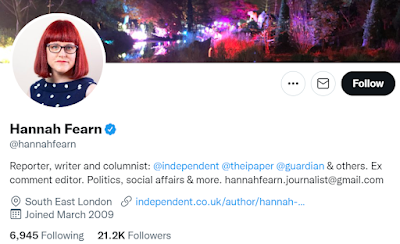
The news department has not been exempt from those cuts with an £80 million savings target to be met by this year. And that's meant job losses in areas such as political and business news. Some viewers have been detecting an effect on the output over recent months, with Hannah Fearn tweeting: 
Hannah Fearn: Well, what do you know. Turns out journalists do a really important job and can't just be slashed without impact on quality and breadth.
Well, let's talk to Fran Unsworth, who first joined the BBC in 1980, starting in local radio, but who rose to become its director of news and current affairs and she retires next week. Thank you, Fran, for coming on Newswatch. 
Fran Unsworth: It's a pleasure. 
Samira Ahmed: Would you say you're leaving BBC News in a better place than it was when you first started working here? 
Fran Unsworth: Well, it's a very different place than when I first started working here because, of course, we do so much more output. So, when I joined BBC News, it was just radio and television. And now, there is the website, there's social, there's the app, there is continuous news TV, radio continuous news, so there's a lot more of it. 
Samira Ahmed: So, is that better or worse? 
Fran Unsworth: It's better in that I think we are responding to what people want and how they live their lives and how they don't want to just kind of make an appointment to see news or to listen to news. They need it there, instantly so it's better in that respect. Is the quality of what we do worse or better? I think the quality of what we do is actually incredibly good. 
Samira Ahmed: You mentioned quality but, as you've heard, some people think there has been a loss of quality because of the cuts that you've had to make of the past few years. Recently, the BBC admitted it had been a mistake to interview the lawyer Alan Dershowitz after Ghislaine Maxwell's conviction. Do you accept that with fewer experienced journalists in the newsroom, mistakes like that are going to happen more? 
Fran Unsworth: Well, mistakes do happen - I'm not going to deny that - but I think in that particular case, it was less to do with cuts, to be honest, and more to do with Covid! It was also 28 December, it was night. I think the teams, actually, are quite thinned out, there's no doubt about it, but that's not because of cuts so much as because of where we are between Christmas and new year. 
Samira Ahmed: Really? People thought you should have just Googled Alan Dershowitz, you'd have known you shouldn't be putting him on air in that context. 
Fran Unsworth: Well, possibly - actually, I think there was - I think the teams now know that actually, they could have avoided it by doing some kind of more considered handovers to each other on it. But - and we admitted it was a mistake and dealt with it. Mistakes happen - they do - but I don't necessarily think there are any more of them now than when I joined the BBC nearly 40 years ago - or if there are, it's probably a factor of having so much more output. 
Samira Ahmed: After this week's announcement on the licence fee, BBC News is going to have to make more cuts, it's a tough time. Is it time to just cut a whole programme or a service like say, Newsnight? 
Fran Unsworth: Well, it might be something we would want to look at. but obviously we are in the early stages of what this licence fee settlement means. We have planned quite carefully over the past few years. As you've alluded, in news, part of our modernising news plan was - it wasn't just about taking money out, it was in order to us to shape news for the future so that we could have more impact with what we were doing across a greater number of platforms and also put digital at the heart of our commissioning process. Now, it's not for me to second-guess my successor's views about if there are any further cuts expected of the News division, where those might be. I'm sure that she will come in and have a look around and think about it. But where we start from is what are the audiences that we need to serve, and how do we need to serve them? 
  

Samira Ahmed: Let's pause there for a moment, Fran, because since you've been in post, you've faced as busy a news agenda as most journalists can remember. And this week was no exception with the temperature at Westminster raised to fever pitch. 
Huw Edwards: Tonight at 10:00, we are live in Downing Street after a day in which Boris Johnson faced a wave of calls for his resignation. 
Reporter: Is it all over, Prime Minister? 
Well, we mentioned on last week's programme complaints that the BBC's coverage of those Downing Street parties has been "excessive" and "biased" against the Prime Minister. And those continued this week, for instance with this phone call:
Woman: I'm ringing to complain about the amount of news on Boris Johnson. It's about time you stopped being judge, jury and executioner. I think as for the BBC being impartial, I most certainly don't think you are. 
As ever, though, others see another side to the story, and Philip Pooley agreed that: 
Philip Pooley: So called BBC impartiality is a myth.

But he went on:  

Philip Pooley: Any honest assessment of news coverage over the last few years will clearly show a bias against the Labour Party and pro-government reporting.

You have been in news for a very long time so complaints like that - one side and then the other side - won't come as a surprise, but does it feel to you like the polarisation of political views has become kind of nastier? 
Fran Unsworth: Um, it's a really interesting question, whether it's become nastier. It certainly feels more polarised, yes. And it certainly feels as though people kind of want to default a bit to their own echo chambers sometimes. And if they don't see the views that they agree with reflected then I do think they perceive us as being biased. But, you know, our job is to hold a national conversation. Our job is to show people that there is a whole range of views on every subject. I don't subscribe to the view that just because we are getting hammered by both sides - one set of the audience sees us as biased and the other from another political perspective sees us as biased too - we must be getting it right. I don't buy into that idea. But I do think that the whole nature of discourse has been quite impacted by social media, for instance. It's become pretty robust. It's become quite difficult, well, very difficult for some of our journalists, in fact, who are repeatedly subjected to online abuse of the most horrible, vicious nature, quite often. Misogynistic. And I could - Laura Kuenssberg, Marianna Spring - and I think that's what I have seen change over the course of my career. 
Samira Ahmed: It's interesting you say that, because we do get complaints from viewers that they feel BBC political journalists are often putting a personal spin on stories, and I wonder if that compromises the BBC's commitment to impartiality. 
Fran Unsworth: Yes, it would do, and that's why we brought out social media guidelines, to remind our staff that we need to be cautious in the social media space about your insertion of your own political views and political opinions. Because if we are not impartial, there is no point to us. We can't charge a licence fee off everybody in the UK if we are not impartial. And it's beholden on all of our staff to remember that and to act accordingly in that way. 
Samira Ahmed: Stay with us again, Fran. We want to talk about another of the principles behind BBC News, which is accountability. And we want to talk in fact a little bit about Newswatch itself. This programme started in 2004 after the Hutton Inquiry which strongly criticised the BBC over its coverage of the lead up to the Iraq War and the death of the government scientist David Kelly. In response, Newswatch was established as part of an initiative to make BBC News more accountable. But viewers regularly question whether it is truly fulfilling that role. Here's Howard Price:
Howard Price: Does Fran Unsworth think there is enough accountability to licence fee payers, when very often we are told that 'no one was available to come on the programme' or 'a BBC spokesperson (anonymous) has issued this statement' and then a statement is read? Isn't the attitude of the BBC management that 'we are always right' and that 99% of the time they will ignore all criticism?
How would you answer that?
Fran Unsworth: Well, we obviously don't take the view that 99% of the time we're always right. and I will admit that we don't always get everything right. We actually, I think - executives from News do appear on Newswatch quite frequently. 
Samira Ahmed: (interrupting) Hmm, not a great hit rate, I would say. We've checked, and on the big stories, you're not coming on. 
Fran Unsworth: Well, we normally would give a statement if an executive isn't available. But I would also say it's not the only bit of accountability that the BBC has in place, of course. We have Feedback on radio. And we have the most robust complaints process as well. Which means that anybody can write in a complaint and get an answer to it. 

Samira Ahmed: Under your tenure, there's been a number of controversies involving BBC News management, such as the revelations about Martin Bashir and the row over Naga Munchetty's comments on Breakfast about Donald Trump. What's your biggest regret? 
Fran Unsworth: Oh... LAUGHS. I've got quite a few, to be honest! Hindsight is a wonderful thing, isn't it? You look back and you say, "Oh, if only I'd taken a slightly different decision there." I'm not going to go into them here, but believe me there are some things I wish I had done differently over the course of my career. It would be arrogant and blind of me not to recognise that. 
Samira Ahmed: Fran Unsworth, thank you for coming on Newswatch. 
Fran Unsworth: Thank you very much. 

END OF TRANSCRIPT

*********

Update: Talking of odd things...

This bit of the programme caught my eye (see transcript above): 


I was curious and checked it on Twitter. Unless I'm missing something, rather than reacting to event in recent months, Hannah Fearn tweeted that way back in March 2020: 


This leads me to wonder: Rather than Hannah Fearn being a viewer who contacted Newswatch over this, did Newswatch simply come across her tweet on Twitter and NOT realise it was nearly two years old, and then just put it out, without checking? If so, that's very strange behaviour on Newswatch's part. 
Wednesday, 18 July 2018

The BBC in the witness box - a judge rules


It's not been a good day at the office for the BBC today after a High Court judge ruled that the BBC's coverage of the arrest of Sir Cliff Richard was an invasion of his privacy. Sir Cliff has been awarded £210,000 in damages. 

The BBC's response to the judgment has been widely characterised as "sorry, not sorry". They are even thinking of appealing. (At what cost to the licence fee payer?)

Here are BBC Director of News Fran Unsworth two major statements today. The first was sent to the world:


The second was sent to BBC staff:


Reading that and then reading the judge's opinion on his BBC witnesses, as laid out here, it seems to me that Ms. Unsworth's comments are rather tinged with wishful thinking - especially as far as the BBC journalist accuracy and honesty goes. (I've highlighted the most damning passages):  


That...

...and particularly the comments about BBC reporter Dan Johnson "twist(ing) matters in a way that could be described as dishonest" and about him "letting his enthusiasm...get the better of his complete regard for the truth on occasions"...

...pulls the rug from under Fran Unsworth's claim that "the judge...was clear that what we broadcast was accurate". 

The judge, in fact, appears to have been "clear" that what the BBC broadcast was far from being wholly accurate.

As for the senior BBC editors involved, Fran Unsworth herself came out best. The judge evidently liked her and found her to be honest, thoughtful and conscientious. But his comments that, during the trial, she'd engaged in "wishful thinking" and "ex post facto convenient rationalisation" still sounds pretty damning. 

Gary Smith - now BBC Scotland's Head of News and Current Affairs - comes off worst. The judge found him to be an unreliable witness at times. 

And Jonathan Munro, the BBC's Head of Newsgathering - a familiar 'we got it about right' BBC defender on the likes of Newswatch and Feedback -  appears to have found that his 'we got it about right' spiel fails to wash with High Court judges. Though Mr Justice Mann liked his thoughtful manner, he found him "overly guarded" (Welcome to our world Mr Justice Mann!) and said he was "almost wilfully failing to acknowledge inconsistencies and refusing to acknowledge the plain effect of some of the emails in the case". (Again, welcome to our world Mr Justice Mann!).

There's an expectation floating around that, in true BBC style, assistant heads will roll over this. 

Update: In a fine example of that internet law (Muprhy's? Skitt's?) which states that any post criticising someone else's inaccuracy of another will contain an inaccuracy itself, I don't think I was entirely factually accurate in this post.

Looking at it again (with a little prompting!), it was the section on Dan Johnson which I read as being critical of the accuracy of the reporting itself. All the other criticism of the BBC here relates to their testimony only. 

Reading that section again and then reading on, the bit about Mr Johnson "twisting" things "in a way that could be described as dishonest" relates to his behaviour in getting the report - specifically twice giving "false impressions" to South Yorkshire Police - rather than the actual content of his report. Indeed, the judgment later goes on to say:
The veracity of the published information in this case is not in issue. What the BBC published was accurate. What is more questionable is the method of obtaining the information.
So Fran Unsworth's carefully worded statement is correct when she says "the judge...was clear that what we broadcast was accurate". 

Thursday, 6 January 2022

BBC News gets a CEO


It's out with the old, in with the new at the BBC. 

Out goes Fran Unsworth as Director of BBC News, in comes Deborah Turness as CEO of BBC News - an upgraded job title with an upgraded salary, rising from £340,000 a year to £400,000 a year.

I see the Defund the BBC campaign has already given Ms Turness a warm welcome tweeting,  “The BBC have replaced Fran Unsworth with a new £400,000-a-year fat cat who’s getting an extra £60,000 on top of the role’s already monstrous salary. Stop funding big executive pay rises. Defund the BBC.”

Like Fran Unsworth, Ms Turness has worked in the broadcast media throughout her working life but unlike Fran, who's been a 'BBC lifer', Deborah has worked for several top broadcasters, rising to be President of NBC News and CEO of ITN.


Vanity Fair in 2015 described her as “a feisty, hard-charging, tabloid-loving British media figure” and claims the news programmes she supervised in an earlier period as editor at ITN “consistently humbled rivals at the BBC.” 

And if you enjoyed that bit of American purple prose, the same piece then calls her “a hip, sinewy blonde” who was “once been married to a roadie for the Clash and had competed in a Beijing-to-Paris road race” - which sounds someone different to Fran Unsworth, to whom the term “rock-chick swagger” has never been applied. As far as I know.

Another bit reminds me of Tim Davie though: “Turness’s presentations were a model of 21st-century media and corporate jargon and synergies.” Sounds fun.

Friday, 15 December 2017

Frantastic news?


Fran Unsworth 

So James Harding's replacement as the BBC's new Director of News and Current Affairs will be Francesca Unsworth. 

What do we know about Fran (besides what we can read on Wikipedia)? 

Well, she's a longstanding BBC insider and presently Director of the World Service, and, according to Guido Fawkes, has a "strong grasp of the impartiality rules". 

That latter bit sounds good, but...

She's also been the chair of the 'independent' BBC Media Action charity - and that's the charity, you may recall, which became controversial for its EU funding and its actions in apparently advancing EU priorities.

I'm not sure that anyone's ever quite got to the bottom of that yet, and it still smells bad to me.

She was (is?) also a board member (as per her BBC Declaration of Personal Interests) on the EU's world-embracing Erasmus Mundus programme.

That's seriously odd, isn't it? With all of her many BBC commitments, why on earth did she get involved at such a high level in a major EU project?

You can read about her 'very BBC' views on how to handle the issue of climate change here and here. 

Interestingly, she criticised Channel 4's Jon Snow for his impartiality-busting emotionalism over Gaza, saying "If one of our presenters had done something like that in a private capacity on YouTube, I'd have had to have said, this isn't really appropriate in terms of your public role as an impartial presenter of BBC news programmes. We take it very seriously." That's good.

Her BBC Media Action/World Service roles have involved her getting involved in public confrontations with the ayatollahs in Iran over their treatment of BBC staff and Nazanin Zaghari-Ratcliffe's involvement with BBC Media Action. (See here and here).

On her 'very BBC' dismissive reaction to the Centre for Policy Studies' review of the BBC's coverage of think tanks (the CPS found left-wing bias), see here.

She launched a new North Korean service late this year. She told (Breitbart) The Guardian, "We are reaching an incredibly febrile, dangerous atmosphere at the moment about that whole story, and isn’t it terrible for the people of North Korea that the only information that they getting about any of this is that woman who goes on North Korean television every night?".

Ri Chun-hee, North Korea's answer to Fiona Bruce

Francesca's not featured much on our little blog so far though. 

Good luck in your new job Fran! We'll be watching you.


P.S. Fans of people called 'Unsworth' might recall that wonderful ITV sitcom from the late '70s/early '80s called In Loving Memory, starring Morecambe-born megastar Thora Hird. She played Ivy Unsworth, owner of an undertakers' business. We've got a boxed set of it, and it's still funny (particularly when hilarious things go wrong at funerals with coffins). Who remembers the bassoon-heavy theme tune?


Update: Just a little more background on Francesca Unsworth, the BBC's next Director of News and Current Affairs...

Here's something intriguing from David Keighley's archive over at TCW (from 2014), concerning the BBC's much-criticised helicopter-festooned coverage of Sir Cliff Richard's arrest. It looks as if R Fran was heavily involved in that:
In what looks like a carefully organised off-the-record briefing last night, reporter John Plunkett says that it was deputy director of news Fran Unsworth who gave the go ahead for the coverage. The reason? Because the Corporation is ‘coming under increasing pressure in its news operation to beat rivals to exclusive stories’.
Hmm.

Saturday, 6 April 2019

One of them, RIGHT HERE, is on your TV every morning


Ben, looking bashful (for some reason)

Here's a transcript of a segment from this week's Newswatch, presented (in Samira Ahmed's absence) by Shaun Ley:

*******

Shaun Ley: Last Thursday's edition of Question Time picked up on the protests against lessons in diversity and equality [by mainly Muslim parents] which are being taught at some Birmingham primary schools. They include same-sex relationships and the rights of LGBT people. 
Question Time audience member: Is it morally right that five-year-old children learn about LGBT issues in school?
Fiona Bruce: Oh, I can hear all sorts of sounds coming from the audience here, so...
There was an angry response from some members of the wider TV audience to the inclusion in the programme of that question which was then posted on Twitter by the Question Time team. One of those expressing views in a forthright way on that tweet was the BBC Breakfast presenter Ben Thompson:
Ben Thompson: LGBT 'issues'? Like what? That we exist? One of them, RIGHT HERE, is on your TV every morning. I held back on this hoping it was clumsy writing, done in haste. But it's still online. Would you ask if it's 'morally right' to learn about gender/race/religion/disability 'issues'. 
Others agreed, with Jerome writing:
Jerome: The question is loaded with prejudice and the premise is incorrect. Are we back in the 1950?
And Lil Tinge asked:
Lil Tinge: Do you want to explain to your LGBT licence payers why your producers thought this was an acceptable question for debate?
Well, the BBC issued the following explanation:
BBC News: Question Time is a topical debate programme. This was a question asked by an audience member on a subject which has seen a lot of recent discussion. 
This week the corporation's Director of News Fran Unsworth sent a general reminder about the use of social media to all staff in news which found its way into the public domain [i.e. was leaked by someone at the BBC to the Guardian]. It advised:
Fran Unsworth: We all have personal views, but it is part of our role with the BBC to keep those views private. You shouldn't state your political preferences, or say anything that compromises your impartiality. Don't sound off about things in an openly partisan way. We haven't always been consistent in dealing with this issue in the past, but we cannot afford for this to continue, and will consider appropriate action in the future.
*******

So it was BBC Breakfast's Ben Thompson, it appears, who brought down The Wrath of Fran on the BBC as a whole.

Now, I must say I'm with the BBC and Ivy Unsworth of In Loving Memory's grand-daughter Francesca here. 

This was a question from a member of the QT audience. Shouldn't he be allowed to ask it because it offends the easily-offended? 

And I don't think it's a remotely objectionable question anyhow. 

Contrary to what Ben Thompson of BBC Breakfast said, the question wasn't about the morality of teaching about LBGT 'issues' - or gender/race/religion/disability 'issues' - in schools per se. It was about teaching about sexuality to five-year-old children. 

Yes, people like Ben might be justified in blowing their tops if people called for such things to be banned from being mentioned in secondary schools, but teaching such sexualised matters to five-year-old IS a question that deserves moral querying.

Ben Thompson should have THIS pointed out to him too, whether by email or in person. Over to you Fran.

Thursday, 7 May 2020

The alliance between the hard, secular left and political Islam.”

I've been keeping half an eye on the ups and downs of the Jewish Chronicle. The FT reported the situation while it was still unresolved - I can’t give you the date of publication because won’t let me back into the website now - but here’s the excerpt I managed to grab, explaining the way things stood back then:
“The Kessler Foundation, a charitable trust that has owned the Jewish Chronicle since 1984, submitted an offer to the proposed liquidators Begbies Traynor this week, which would have seen them acquire the assets of both publications and run them as a merged publication. 
But a rival bid from a consortium through lawyers Osborne Clarke has also been submitted, according to two people familiar with the matter. 
The rival consortium is being fronted by former Downing Street head of communications Robbie Gibb, biographer William Shawcross, former Labour MP John Woodcock,
Rabbi Jonathan Hughes of Radlett United Synagogue, and prominent broadcasters John Ware and Jonathan Sacerdoti.”
Most of whom have been featured in this blog - (funny that.) The consortium’s bid was successful and they reinstated Stephen Pollard as promised. 

Those of you who take the Spectator might have read an article by Charles Moore in the magazine.
“………a new consortium moved fast to intervene, and outbid the existing management in order to reinstate Pollard, see the staff right, pay off the debts and secure the future. Headed by Sir Robbie Gibb, a Gentile, the consortium is serious about reinforcing the Jewish Chronicle’s strength rather than shutting it down. Behind all this I detect a battle for leadership in the community. Those who are braver about confronting Islamist anti-Semitism have prevailed over the outdated establishment view that the greater threat to British Jews is from the far right and that Islamists should be appeased in the name of ‘interfaith dialogue’. 
The consortium’s victory is good news. It would have been a weird epilogue to the successful exposure of Labour’s anti-Semitism under Jeremy Corbyn if the most prestigious Jewish paper in Europe had then folded. As the general election result proved, the supposedly anti-Semitic white working class saw through Corbyn. The rising danger to Jews — as, though more surreptitiously, to Christians — comes from the alliance between the hard, secular left and political Islam.”
Ah, the last few words open a Pandora’s box of inconvenient and hard to answer questions.

The reason for this post is simply this. (And it’s even BBC related) 


A particularly annoying photo of the BBC’s Fran Unsworth illustrates the piece. In it, she’s looking both startled and extremely pleased with herself all at once. 

The issue concerns a knotty problem. How much does political or personal prejudice affect one’s professional credibility? We’re talking about renowned antisemites being invited onto the Beeb to opine about supposedly unconnected matters. Notably but not exclusively, as per that Panorama.

Maybe there’s an element of  ‘intersectionality’ here? To what extent does a person’s race, class, and gender prejudice create a unique mode of discrimination dent one’s entire credibility? 

Can one’s irrationality in the form of racial hatred - viz  “the cognitively dissonant alliance between the hard, secular left and political Islam” be completely divorced from other areas of one’s personality. For example, does it affect one’s expertise in a seemingly unrelated sphere? Does that make sense?

Let’s temporarily forget Professor Ashton, whom Fran Unsworth says is “eminently well qualified to speak about this subject [public health]”. Let’s examine her reasoning, by using a more extreme example like, say, the late Stephen Hawking. 

Stephen Hawking was so highly regarded as a theoretical physicist, cosmologist and author that his reputation as such is untouchable and sealed forever. But even he fell foul of pressure from the hard, secular left and political Islam in his irrational decision to  join the academic boycott of Israel by rejecting an invitation to attend a conference there (despite relying on Israeli sourced technology  to help keep him alive.)  That was just common or garden hypocrisy, but we’re not concerned with that at the moment.

The conference, called “Facing Tomorrow 2013,” is billed as a meeting place for exploring the developments shaping the future of Israel, the Jewish people and the world. Its program includes former heads of state, academics, artists and business executives. Former President Bill Clinton is to receive an award from Mr. Peres.
Also listed among the speakers is Munib al-Masri, a Palestinian tycoon from the West Bank city of Nablus who has been working to promote internal Palestinian reconciliation.
If that is indeed an accurate description of the event that Hawking boycotted, doesn't the decision to boycott it look a bit stupid and ill-conceived? It does to me. 

However, as I know quite a bit more about factually and historically illiterate antisemitism than I do about theoretical or any other kind of physics, all I can possibly ask is ‘does a specific demonstration of irrationality and prejudice dent one’s whole credibility? A little bit? Not at all?  Does stupidity, prejudice and irrationality run through one like the proverbial stick of rock?

What I do know is that Stephen Hawking’s and professor John Ashworth’s reputations are seriously flawed in the eyes of this non-expert, and as far as Fran Unsworth's reputation is concerned, wheeling out the ‘Freeze Peach’ argument certainly dents the remaining dregs of it.

The issue here is that while antisemitism under the accepted definition is not actually illegal, and we don’t want to create a bespoke version of a blasphemy law to make it so, what can most effectively be done to show disgust and disapproval where anti-Jew prejudice raises its head?

For the BBC, maybe keeping known antisemites out of the limelight would go along with the spirit of the zeitgeist. However, as we’ve been saying for the last umpteen years, the BBC is not minded to keep antisemites out of the limelight. The BBC has tacitly taken the side of the antisemites and promotes the hard, secular left and political (and particularly cultural) Islam at every opportunity. It has made antisemitism a political choice and it’s not afraid to say so.

Tuesday, 9 January 2018

Activists


'BBC Kim Ghattas' has a very large bee in her bonnet (h/t Monkey Brains).  

You may (or may not) recall that 'viral' video of the feisty Palestinian girl who repeatedly slapped and kicked a couple of Israeli soldiers late last year. The Israeli soldiers responded with admirable professionalism, taking it all on the chin and moving away to diffuse the situation. The girl was arrested later.

In such a conflict, people take sides. For some, the video showed the bravery of the Palestinian girl. For others it showed the admirable professionalism of the Israeli army. 

It's possible to see the girl, Ahed Tamimi, as both an aggressor and as a victim. She was certainly aggressive towards the Israeli soldiers and obviously considers herself to be a victim of the Israeli forces who her family accuse of invading their property. Others say that she's actually a victim of her father because her father has been exploiting her from before she was even a teenager, filming her provoking Israeli soldiers from around the age of 11 - pushing her fist in their faces, slapping them, kicking them, all on camera. (The poor lass has become something of a celebrity as a result.)

If you stand back a bit, I think the 'Others' have a point. What normal father would repeatedly put his daughter in such situations (over a six-year period), again and again? (Not that she ever came to any harm at the hand of the Israeli army.) 

His intention was obvious: either make a heroine or a martyr of his poor daughter. (Does Ramallah have social services?)

Her father, as you might have guessed, is an activist and his extended family includes convicted terrorists. 

That said, I've been following this story closely and one of the peculiar features of it is there's a hot dispute about Ahed's age. Google it for yourself and you'll see that 'prestigious' media outlets are divided over whether she's 16 or 17. 

Some pro-Israel sites contend that she's actually 18, though I think they're misreading earlier reports and that she really is actually either 16 or 17 - and most probably 16. (I've dug into the matter!). 

Only the wildest anti-Israel propagandist sites (and even next to none of them), however, claim that she's only 15....

....oh, and the BBC's Kim Ghattas, who calls her a "15 yr old Palestinian activist". 

Have you fact-checked that, 'impartial' Kim of the BBC?

As you can see from her first tweet (below), 'BBC Kim' is wholly trusting of Ahed's father and his "poignant" letter. 

The man is an activist. Mightn't she consider that he's engaging in propaganda (as he surely is)?. Why just trust his word, unless she wants to trust it? 

This wasn't an impartial tweet from 'BBC Kim Ghattas', and nor are the others. (Is she an activist too?)

Anyone who watched that video and saw the Israeli soldiers being stoical and professional towards Ahed as she slapped and kicked them again and again will think BBC Kim's depiction of what happened - "Ahed Tamimi, unarmed, slapped a gun toting Israeli soldier who was in her back yard" - somewhat lacking in terms of the full and unvarnished truth. Take "gun toting" as a choice of words. Not exactly an impartial one, is it? And Haaretz, who Kim cites, have also published pieces headlined Ahed Tamimi and Her Family Aren't the Palestinian Saints You Want Them to Be (a piece Kim Ghattis didn't link to).

And then, in the final tweet, 'BBC Kim Ghattas' goes on to express a extremely non-neutral opinion. 

Now, yes, it's all Twitter, but - as we know from Helen Boaden, Mary Hockaday and now Fran Unworth - Twitter counts. BBC reporters aren't allowed to unimpartial on Twitter and, if they are unimpartial on Twitter, according to BBC supremo Fran Unsworth, they mustn't report on that subject for the BBC.

If I hear Kim Ghattas reporting on anything to do with the Israeli-Palestinian question ever again I will write to Fran Unsworth and ask her to bring Ms Ghattas to book. 


Thursday, 4 April 2019

Déjà vu


Ms Unsworth

Every four years or so a senior BBC figure ends up sending out an email to BBC staff telling them to stop tweeting personal views. In 2010 it was Helen Boaden. In 2014 it was Mary Hockaday. And in 2019 it's Fran Unsworth. In an email to all staff leaked to the Guardian, she says:
We all have personal views, but it is part of our role with the BBC to keep those views private. Our editorial guidelines say BBC staff must not advocate any particular position on a matter of public policy, political or industrial controversy, or any other ‘controversial subject’. That applies to all comments in the public domain, including on social media. There is no real distinction between personal and official social media accounts. 
We are living in a period of highly polarised opinions on a range of subjects and the BBC frequently faces criticism for the way we report and analyse events, with our impartiality called into question. 
Many of these criticisms are unfounded and we are prepared to defend ourselves robustly where necessary. We also need to make sure our own house is in order.
According to the Guardian, Ms. Unsworth also pulled the rug out from many a BBC Tweeter by "declaring that putting “retweets aren’t endorsements” in an online biography does not absolve an individual of responsibility." 

She went on:
Ignoring these rules risks undermining the BBC’s reputation, particularly given our renewed focus on impartiality. We haven’t always been consistent in dealing with this issue in the past, but we cannot afford for this to continue and will consider appropriate action in future.
Poor old Hugh Sykes and John Simpson, and countless others at the BBC, will have to drastically tone it down or end up before the BBC beak. Fran has spoken!

*******

Talking of John Simpson, here he is, juxtaposed with his BBC colleague Andrew Neil:


John agrees with the anti-Brexit NYT piece, Andrew disagrees with it. Will Fran be having words with them?

Saturday, 1 August 2020

Once more unto the breach of the BBC's editorial guidelines, dear friends

  
Fiona Lamdin

Just over a year ago the BBC director of news Fran Unsworth sent out a strongly-worded email telling staff they could face disciplinary action if they publicly criticised colleagues. 

With the rise of the new breed of opinionated, campaigning journalists at the Corporation that warning stands even less chance of being heeded now. 

Maybe she needs to carry through with her threat and set a few examples? 

The Telegraph today has a report about a white BBC reporter - social affairs correspondent Fiona Lamdin - using the 'n-word' in a piece broadcast on the BBC News Channel and Points West. The paper says she 'told viewers “Just to warn you, you’re about to hear highly offensive language” before immediately using the term'. 

As is its hedgehog-like way, the BBC initially stood by the report by arguing that (a) the family of the victim involved had asked for the n-word to be used and (b) that a warning had been given...but the pulled the report from its catch-up service nonetheless. 

Enter the BBC’s gender and identity correspondent, Megha Mohan, publicly criticising both her colleagues and her employer: 
By not saying the N-word, you send a clear signal that you will not normalise the most violent of language. It blows my mind that this is open for interpretation or being justified - especially this of all times. 
I suspect she'll escape unscathed though. Fran Unsworth would probably provoke a damaging mutiny among the newer, 'woker' ranks if she took her to task.

Saturday, 2 October 2021

On Jonathan Munro, the petrol pump panic and Carolyn's sister-in-law


This week's 'I think we got it about right' BBC editor on Newswatch was Jonathan Munro, the BBC's Deputy Director of News.

Mr Munro is apparently a serious contender to replace Fran Unsworth in the the BBC's top news job.

You may remember him for:

[a] His role in the Cliff Richard affair, where the judge described him as “overly guarded” in his defence of the BBC. And the judge further accused him of “almost wilfully failing to acknowledge inconsistencies” and of “refusing to acknowledge the plain effect of some of the emails in the case”. 

[b] His role in the re-hiring of Martin Bashir in 2016, when he said he was attracted to the reporter’s “track record in enterprising journalism” and respect within the industry.

[c] His statement that “We don’t want all our editorial meetings to be dominated by what white people think”. 

[d] His sarcastic tweet about things going badly for Nigel Farage and UKIP...in 2015, a year before the UK voted for Brexit. 

[e] His branding of certain ex-BBC senior editors [Roger Mosey and Mark Damazer] in an internal BBC email as “male, pale and stale” sexists after they dared to criticise the BBC, despite him being male, pale and possibly stale himself. 

[f] His previous defences of the BBC on Newswatch where he's been disingenuous and/or factually wrong, or both, and never particularly fleet-footed.  

------------------

His appearance on this weekend's Newswatch was typically flat-footed. The judge in the Cliff Richard case would surely have made similar comments about his appearance here had he watched it and was asked for his opinion again. 

And Carolyn and Anna, the two viewers pitted against him, really showed him up, cutting through his flannel like hot knives through pre-melted margarine.  

And he was typically disingenuous again from his very first words, twisting Carolyn's claim about it being a 'non-story' at the very beginning [the Thursday of the week before last before the panic-buying began] into a straw-man suggestion that she was claiming the whole thing [from that Thursday to now] has been a 'non-story'. 

That's a slippery politician's way of sliding away from a difficult charge. 

He did it again at the start of his final answer.

The most striking bit comes though when Carolyn picks up on Jonathan Munro's inadvertent admission that the petrol/diesel pump story was high up in the news running order that Thursday partly because it was a slow news day. She rather nailed him there. 

This man is said to be the frontrunner to replace Fran Unsworth.


Here's a transcript:
Samira Ahmed: Hello, and welcome to watch with me Samira Ahmed. Did the BBC fuel a sense of panic at the petrol pumps this week? It was Thursday of last week when the BBC first put on air a story which was to dominate news output over the following few days. It appeared in the headlines on the News at Six:
Headlines: A shortage of lorry drivers forces BP and Esso to close some of their petrol stations. Downing Street says people should buy fuel as normal. 
Samira Ahmed: By Friday lunchtime, a sense of crisis was developing: 
Headlines: The government urges people not to panic buy fuel after some petrol stations had to close because there aren't enough tanker delivery drivers. But this afternoon there are long queues of motorists in some parts of the country trying to fill up. Petrol station owners insist there is no need to panic. 
Samira Ahmed: But that 'don't panic' message seemed to have the reverse effect as the queues lengthened and anger grew among some motorists: 
Vox pop motorist 1: The petrol is on zero. I'm not going to make it! People have half a tank and they are going in there to fill up. 
Vox pop motorist 2: Three hours is just ridiculous. You pass these two petrol stations, you cross the road and it's the same again. 
Samira Ahmed: The problem was clear, the cause of it less so. The Government insisted there was no lack of fuel, just a shortage of drivers. But hundreds of Newswatch viewers told us they put the blame squarely on the media and specifically the BBC. Two of those viewers join me now, Anna Grayson and Carolyn Issitt, as does Jonathan Munro, who is the BBC's Deputy Director of News. Carolyn, can I start with you? What did you object to about the news coverage you saw of this issue?
Carolyn Issitt: Basically, I felt that it was a bit of a non-story that was built up to the point which people started saying, 'don't panic', and if we've learned anything from Covid and the lockdown, if you say don't panic, people panic. People including my own sister-in-law rushed out to fill their cars with petrol, and that's what caused the problem. 
Samira Ahmed: Jonathan, this is a specific point. Did the BBC hype the story early on when it was only a few petrol stations? 
Jonathan Munro: I don't think so. I don't think it was a non-story. I think a lot of people were affected by, whether it's supply issues, but at the pump it was a lack of ability to get your car filled up because so many petrol stations were running out. So the question for us in dealing with stories like this is how do you solve the dilemma, which clearly exists, between reporting the story on the one hand because it's a legitimate story that lots of people are interested in, and as Carolyn says, being in danger of actually making it a self-fulfilling prophecy, that you report it and you cause people  like Carolyn's sister-in-law to change her behaviour. 
Samira Ahmed: Just so people know, it was the second headline on Thursday evening's Six and then it was the lead on the Friday morning on the news channel. Once it's that prominent, you can see why people think you are giving out a message. 
Jonathan Munro: There is a prominence debate, for sure, about all stories of this sort. But at that time I think I'm right in saying that about three quarters of petrol stations in England were having some sort of problems with deliveries and therefore supply to the consumer. And there are all sorts of layers on the story. It is a consumer behaviour story, as we just discussed in the context of Carolyn's sister-in-law,  but it was also a story about government preparedness and about resilience and about the just-in-time supply chains and the supplies to supermarkets and other retail outlets. So quite a lot of layers of complexity to go into. 
Samira Ahmed: Anna Grayson, you're a driving instructor yourself. How were you affected by the way this story and this problem developed over the days? 
Anna Grayson:  It was huge. It was instant. I had no problems with receiving, filling my car up until last Friday morning when this news story broke, and literally I had to stop work that Friday and I haven't been able to go back since because I cannot get fuel in my local area. 
Samira Ahmed: So, again, Friday morning is when the problem really kicked off which is after it had been given a lot of prominence on BBC News. Anna has given one example, but a lot of people have been really badly affected, cancelled medical and social care appointments and operations. Do you think the BBC thought enough about the consequences of the prominence it got on the Thursday evening and the Friday morning?
Jonathan Munro: We did think a lot about it, and we featured a lot of...not a driving instructor as I remember...but other workers whose livelihoods were affected, including those who were delivering essential services like nurses who visit patients in the community for example. Those sorts of people are clearly not panic-buying. It is part of their essential tools to go to work. And in the case of nurses and care deliverers that has a real knock-on to people who are vulnerable. So they are not in any sense panic-buying. And reporting the effects on businesses was part of what we tried to do. On the prominence point, whether we lead on a story or it runs lower down the running order does slightly depend on what else is happening in the world. This week, for example, we've done a lot more on Afghanistan, we've lot a lot more about the terrible events around the Sarah Everard murder. we've done the Labour Party conference, which was a big political story. Back end of last week was a little bit quieter elsewhere in the world and it did achieve a prominence in our bulletins and elsewhere which was a result of both the importance of the story and, as always, what else is happening that gets running time in our programmes. 
Samira Ahmed: Carolyn, you heard Jonathan...I can see  you're shaking your head. What is your response to the explanation he's given? 
Carolyn Issitt: It kind of bears out my thoughts which is, 'as it's a slow new day, let's make this one a bit bigger'. Quite honestly, from Friday, through to even yesterday, the BBC was still showing a variety of people on forecourts talking about not being able to get fuel. Just continuing to add to the problem. My BBC East Midlands show started its show at 6:35 yesterday with a photoshop of lots of empty pumps. Honestly. That's just irresponsible journalism in my view. You need to recognise when you're causing a problem and actually try to do something about it, not simply fuel the fire because it's something to make news. 
Samira Ahmed: Anna, you are really upset as well because this has affected your livelihood. What would you like the BBC to learn from the way this story has been covered and the fact that so many viewers have complained? 
Anna Grayson: We're not the only profession that has been hugely affected by this but we were just getting on our feet from lockdowns before. And I think the BBC need to be held to account in the way that they're funded. You have a social responsibility to report the truth. And what annoys me about this story is that you had other fuel providers, not just BP, who were jumping onto the media saying 'we are fine, absolutely fine, stop panic-buying fuel, we don't have a problem with the delivery of fuel'. So where did this story come from? To me, it was just pure and utter scaremongering and sensationalism with the purpose of gaining viewer numbers.
Samira Ahmed: You've heard what the viewers say. What lessons do you think the BBC is learning from this? 
Jonathan Munro: I think it is not our job to change the news, it's our job to report the news, and... 
Samira Ahmed: [interrupting] But they're arguing that the BBC played a role in turning it into a bigger story and there was a momentum. 
Jonathan Munro: Yes, but I think that the case that Carolyn mentioned, for example, about shots of the forecourts with no petrol available at series of pumps, that actually happened. It wasn't...we didn't make it up. And we have to balance that with the responsibility that Anna quite rightly says about the BBC's voice in the debate publicly and where we make sure that we are acting responsibly, and I completely agree with her that our responsibility is to report the whole picture. So, for example, to say, as we did several times on most of our bulletins, that there were parts of the country that weren't particularly badly affected. So rural areas were less badly affected, on the whole, than urban areas. Northern Ireland wasn't affected at all. And one of the things we did regularly was go round the country to our correspondents to make sure that we were getting an accurate picture of what was happening in their part of the UK.

Sunday, 22 August 2021

BBC management makes Lewis Goodall delete a tweet


Just to recall a comment of mine from 10 July concerning the mooted appointment of former Huff Post editor Jess Brammar to the post of the BBC's executive news editor, despite her history of left-wing tweets:
An interesting part of this story is that Robbie Gibb communicated his reservations about Jess Brammar in a message to Fran Unsworth. Someone at the BBC has obviously leaked this.

Jess Brammar is part of the old Newsnight circle of friends on Twitter that includes my old favourite Lewis Goodall. Lewis and Robbie Gibb, as you'll probably remember, had a bitter Twitter spat over impartiality after Sir Robbie laid out a long list of reasons why Lewis's reporting wasn't impartial. I suspect Robbie Gibb was aware of her being in that circle when warning Fran Unsworth about appointing her to a senior BBC news management role.

Well, there's been a development on that latter front today. The BBC has made Lewis Goodall delete a tweet about Jess Brammar, attacking the Mail on Sunday:

The deleted tweet said:

You can read the Mail on Sunday's ''unhinged, simply misogynist'' article by Glen Owen and Katie Hind here.