Showing posts with label 'Newswatch'. Show all posts

Saturday, 16 July 2022

'Complaints from both sides' time again


This week's Newswatch, minus Samira Ahmed, began with a classic example of 'complaints from both sides'.

First, entering Stage Left, came viewer Paul Morgan writing:
BBC News appears to have become campaign HQ for the leadership contest of the Conservative party [sic, for the lower case 'p' there]. Huge swathes of your bulletins and news channel handed over to the campaign and a breaking news alert from the BBC app every time one of the candidate sneezes. How much would all this free electioneering cost the Conservative party [sic, again] if they had to pay for it.
This, of course, is silly. Whoever wins this will become Prime Minister, and that matters. And the BBC always goes OTT for leadership races. I remember vividly the endless post-Gordon Brown BBC Labour leadership coverage in the opening years of David Cameron's coalition government - the one that so triumphantly results in Ed Miliband becoming leader. That, despite the BBC's lavish coverage, didn't help Ed's Labour win in 2015. And this Conservative leadership coverage won't be 'free electioneering' either if all the squabbling results in an impression of disunity and leads to electoral disaster in 2024 under someone who can't win over the public - especially if the media steers it against them.

Meanwhile, entering Stage Right, came other viewer Peter Staker, writing:
With bated breath I turned on at 6pm to see which of the candidates were progressing to the first round of voting. What did I see? The first item was about Sir Mo Farah being trafficked as a child to the UK - an advert for the BBC's programme tomorrow night. The second item was regarding possible murders committed by the SAS in Afghanistan years ago, an advert for tonight's Panorama programme. Who progresses with the opportunity of being Prime Minister IS news, hearing about forthcoming BBC documentaries isn't.

Peter's points - unlike Paul's - are perfectly sensible. The BBC's obsession with adverts for itself seriously risks getting in the way of proper news reporting.  

Saturday, 9 July 2022

The BBC bending the truth again


As I posted on Tuesday, it took 36 minutes from the news of Rishi Sunak and Sajid Javid's resignations breaking on the BBC News website for BBC One's News at Six to 'break' it too. Why? Because the BBC chose to stick with the tennis and postponed the news until 6:18pm. This week's Newswatch featured three aghast viewers. Then Samira Ahmed said:
We asked to speak to someone about the decision to postpone Tuesday's News at Six, and more widely the practice of live sports events displacing scheduled news bulletins, but our invitation was declined. Instead we were given the statement.
It's the statement itself that particularly struck me:
We understand scheduling changes can be frustrating and we don't take these decisions lightly. We always try to minimise disruption but during times of live tournament sport, like our extensive coverage of Wimbledon, we do make occasional changes. Cameron Norrie was the first British man in a Wimbledon Quarter Final since 2017 and we wanted to capture that moment live on BBC One. We switched to the News on BBC One as soon as news of the resignations broke and extended our coverage on the channel as a result. This is a balancing act and while catering to audiences with such a wide range of tastes and interests, we recognise not everyone will agree with certain changes made.
My problem with that is that it's factually untrue that the BBC switched to the News on BBC One as soon as news of the resignations broke. They did no such thing. They switched 36 minutes after news of the resignations broke - resignations that came 18 minutes before the News at Six should have started. And even then, after breaking away from the tennis - with the match still ongoing - they still put in two adverts (for the BBC) before the News finally began 18 minutes late.

As for and "we wanted to capture that moment live on BBC One", they'd been capturing it live since 4:55pm on BBC One.

Why can't they just own up when they've made a mistake, and stop lying about it too?

Saturday, 2 July 2022

“This debate feels as old as the hills”


I don't thnk this week's discussion of BBC impartiality on Newswatch did the programme great credit. Former BBC boss Mark Damazar almost entirely defended the BBC, while Samira Ahmed largely fed him questions which helped him defend the BBC. Both put the blame on 'wrong-thinking' by the BBC's critics. That's not what Newswatch should be doing. Very disappointing.

Here, for what it's worth, is a transcript:
 
Samira Ahmed: Hello, and welcome to Newswatch with me, Samira Ahmed. Coming up: Ofcom says the BBC has a problem with impartiality. Does it? 

Samira Ahmed: Those in charge of the BBC often speak about impartiality being one of the corporation's chief qualities. But the perception has grown recently that it's not fulfilling its remit in this regard. When he took up his post in 2020, Director-General Tim Davie spoke of the need to restore trust in the BBC's impartiality. Last month, Culture Secretary Nadine Dorries launched a review into the subject, and last week, the regulator Ofcom published its own review, which found that audiences rate the BBC less favourably for impartiality than they do for truth and accuracy. On Friday, the Director-General told staff it was making progress on its impartiality plan, but Newswatch viewers have expressed their own concerns with John Huw Jones writing: 
John Huw Jones: Since the 2016 referendum I have been totally dismayed by the BBC bias against supporters of Brexit. The BBC was once renowned for its impartiality, but alas no more.
Samira Ahmed: And last weekend, Janet Fillingham objected to coverage of the decision on abortion in the United States: 
Janet Fillingham: I didn't keep a stopwatch record of balance but wish I had done. Perhaps you felt the shock value of the Supreme Court ruling was self-evident and that balance wasn't needed?
Samira Ahmed: Ofcom also said too many people lacked confidence in the BBC's complaints process and that it needed improvement, and again, that's something we've also heard from members of the audience such as James Mayes: 
James Mayes: The BBC complaints system is dysfunctional, and over-bureaucratic, to discourage complaints. The BBC marks its own homework.
Samira Ahmed: We were told no-one from the BBC was available to discuss those issues this week, but I am joined by the former BBC executive, Mark Damazer, whose roles included deputy director of BBC News and controller of Radio 4. Mark, thank you so much for coming on Newswatch. This debate feels as old as the hills. Does the BBC really have a problem with impartiality? 
Mark Damazer: Well, there is if you want perfection, because I don't think the BBC, given the volume of its output on any given day, can claim to be 100% successful on impartiality even on a given date, never mind across a year. But if you take a more practical view of it, which is measure the BBC's impartiality record or the accuracy and trustworthiness of its journalism against the sheer volume of its output and then look at the size of the mistakes it makes, and the number of mistakes it makes, I would contend that, overall, the BBC does an extremely good and effective job at being a trustworthy and impartial broadcaster, and in doing that, serves British democracy extraordinarily well. 
Samira Ahmed: It's fair to say we are living in a much more polarised - politically polarised time, and the news media landscape has changed with much more commentator-led coverage on talk radio and TV, and I wonder, aren't people just wanting the BBC to represent their points of view on issues? 
Mark Damazer: So, I think that is acute and is the key point, which is the extent to which people recognise that the BBC is not there to make their own personal world view feel reinforced or better, and the BBC is not there to attack, deride or belittle your opponent, and the BBC does something completely different, which is to present a big range of views and to have them effectively both reflected and challenged by qualified journalists and presenters who know their business. And you don't end up - you're not supposed to end up with a warm, cuddly feeling inside that the BBC has endorsed your view. 
Samira Ahmed: Many people think impartiality means equal time, and we heard a viewer there complaining about needing a stopwatch to measure abortion coverage. Is that the right way to measure it? 
Mark Damazer: No, and it's an important point. The technical term for this, both through the BBC and Ofcom and other public service broadcasters in the UK, is 'due impartiality', and what due impartiality means is precisely is not equal time, and the BBC should not be giving equal time to people who believe that there is no such thing as global warming as opposed to people who believe that there is such a thing called global warming, and the reason for that is because there is a body of factual evidence which makes it clear that giving somebody equal time on that is giving equal time to a nonsense. 
Samira Ahmed: And do you think that social media has changed both the way people think about impartiality and also the way BBC polices it? 
Mark Damazer: That's absolutely right in each of the respects that you mention. And, first of all, the pressure on all broadcasters - I mean, the BBC is the biggest, and so feels the most pressure, but I don't exempt others others from feeling this pressure too. If you make a mistake or even if you don't make a mistake and you broadcast something that a social media group doesn't like, the multiplier effect of spreading that around can be corrosive. I mean, sometimes I dare say can be helpful because it corrects an error made on screen, but very often, what's generating the social media outcry is simple disagreement with something that you've heard or seen because it just doesn't correspond with your view and take on the issue. 
Samira Ahmed: Ofcom also criticised the BBC's system of handling complaints. What can be done to improve that? 
Mark Damazer: Yeah, so, I mean, I think Ofcom has a point, and some of this is going to be administrative and institutional, and it's just about the resources that you put in and the number of people you have and the training that you give them to make sure that they can handle better, more quickly and more deftly the volume of complaints - and there are a lot that come in - there are a lot because the BBC is a big beast. But some of it is psychological and anthropological. The extent to which the BBC feels inhibited, I think, too often from thinking out aloud about how it's made particular judgements, and very often - and I say this both as somebody who made these decisions and then somebody who had to judge them when I was on the governing body - there are a whole number of factors and you try to weigh up what the right answer is, and I don't think it's an embarrassment to say it's a finely balanced decision, and this is what we've decided in the way that gives the complainant and the wider public some assurance that the BBC has considered all the factors, even if you don't In agree with the conclusion. 
Samira Ahmed: Mark Damazer, thank you. 
Mark Damazer: It's a pleasure.

Saturday, 25 June 2022

'Newswatch', 24 June 2022 - Transcript of interview with Dominic Casciani


Samira Ahmed: Hello and welcome to Newswatch with me, Samira Ahmed. How should BBC journalists describe people crossing the English Channel in small boats? Asylum seekers, refugees, illegal migrants?

Samira Ahmed: When news of Thursday's two by-election results came in, Boris Johnson was in Rwanda, and hanging over his trip, there was the government's controversial plan to send asylum seekers to that country. That term 'asylum seekers', along with 'refugees', is the most common one being used around this issue on the BBC, as you can hear in these two recent reports.
BBC reporter: It's a hotel in Kigali like many others. Inside, one of the rooms made up and ready to receive their unwilling guests - refugees forcibly removed from the UK.
BBC reporter: The government's policy to remove asylum seekers to east Africa is on hold, but the Home Secretary this lunchtime insisted it will happen.
Samira Ahmed: But some Newswatch viewers aren't happy with the use of those terms. Sue Crooks wrote:
Sue Crooks: I am annoyed by your manipulation by language in news programmes. 'Refugees' are those fleeing for their lives. 'Asylum seekers' are those identified as at risk because of their views. 'Economic migrants' are those who seek to improve their lives by migration. 'Illegal immigration' is, as it states, illegal. Please don't insult the viewers by using the wrong label to influence sympathy.
Samira Ahmed: Meanwhile, Astrid Jillings had a different point to make:
Astrid Jillings: Before me knew better we referred to people with a disability as 'handicapped'. We now know better and use inclusive language. I was reminded of this in the past few days. 'Asylum seekers' and 'migrants' are temporary terms and do not reflect the whole identity of people that have left their homes behind to start a new life in a different country. It concerns me that some people don't view these people as individuals. My request to the BBC is to set an example by referring to these people as 'people' as by using more inclusive terms like 'people seeking asylum' or 'people that have migrated', etc.
Samira Ahmed: Well, someone who's been thinking about the use of language in this context is Dominic Casciani, who's the BBC's home and legal correspondent. Thank you for coming on Newswatch. How should we describe these people crossing the Channel?
Dominic Casciani: Well, Samira, this is really complicated because the law is about to change, which is going to, to be frank, completely muddy the waters here about the language. Now, the basic fact is claiming asylum when you're saying you're a refugee in need of protection is not a crime. That's slightly complicated by what's happening at the Channel at the moment where you can have a situation where somebody is crossing because they're an economic migrant - they're effectively seeking to better themselves, you know, they basically want to improve their life in some shape or form - they haven't necessarily got a claim on asylum. Now, in that context, if they haven't already got a visa or permission to enter the UK, technically speaking, you could say they're an illegal migrant because they're arriving without authorisation. To complicate matters further, you can then have an asylum seeker, someone who sourced asylum elsewhere in Europe on their way to the UK. I've spoken to people in the past who've claimed asylum in Germany, in Sweden, in places like this, and then decided to come to the UK. So they have some kind of refugee claim - or say they do - but then they've decided to come to the UK to claim asylum here. Now, in that context, are they an asylum seeker or someone who's basically, effectively, 'asylum shopping', to use language which is deployed by some, looking for a better life? That's quite a complicated mix to start getting your head around, so I can understand how the audience can be a little bit confused by some of this.
Samira Ahmed: So, given that some people, certainly viewers are saying this, who didn't claim asylum in the first safe country or did, and then have chosen to move, some viewers are saying they're illegal migrants. Does the BBC ever use that term?
Dominic Casciani: Well, not necessarily in that context. But let me talk to you about something which is about to happen. This coming Tuesday, the law changes, and technically speaking, there could be people after Tuesday who cross the Channel who could be classed as an illegal asylum seeker because they didn't already have entry clearance, to use the jargon - didn't have permission from the Home Secretary to arrive in the UK. Now, what that means is from the middle of next week, if ministers start using phrases like 'illegal asylum seeker', well, it will depend on the context, because technically, you can have people who are coming in, seeking asylum, and then they're taken to court for basically breaking the criminal law there because the accusation would be that they didn't have any good reason to come because they could have claimed asylum elsewhere or there may be some other reason. So, it's getting more and more complicated, this area of law here.
Samira Ahmed: How far, then, is it ever appropriate to use the term 'refugee' for the people we're talking about coming across the Channel?
Dominic Casciani: I think the term 'refugee' has to be used in very, very specific circumstances. Now, from my perspective, I see this as a legal definition in as much as somebody is not a refugee in my reporting until they have refugee status, and what that means is they've claimed asylum, they've been given some kind of - they've been given status by the Home Office that's recognised they have a need for protection, and, therefore, they are protected by the UK and settled in the UK with that status. At that point, in law, they are a refugee, they have a right to remain in the UK. So, when I'm reporting this issue, I will talk about asylum seekers, I will talk about migrants, but the word 'refugee', I'll try to reserve that for that very, very specific category of people who've got status. When we're interviewing people, so, for instance, you can be talking to refugee charities or, for instance, like, campaigners or people who, for instance, are working with asylum seekers and migrants along the English Channel on the French side of the coast, they will very often say in quotes to us in clips, "We're supporting "these refugees, don't criminalise these refugees." We have to accept that that's their opinion, that all these people are refugees and we have to obviously, you know, reflect what they're saying, but we have to be very, very careful to make sure that that language is their language rather than ours, so there's that difference there.
Samira Ahmed: Now, one of the viewers we heard from was saying we should use the term 'people' with an added-on description, people claiming asylum, for example. What do you think?
Dominic Casciani: Yeah, look, it's not unreasonable, but it's just that some of this is about terminology, around snappy language in news, you know. News is supposed to be digested fairly quickly, so very often we will go to shorthand. So I take the point, there is this issue about whether or not you just basically categorise people in one particular way forever. I mean, we've had this thing around the disabled. We very, very rarely see that kind of language now, 'the disabled'. We talk about people with disabilities.
Samira Ahmed: Or people using wheelchairs.
Dominic Casciani: Or people using wheelchairs. So, yeah, you've got to be careful not to dehumanise people, you know, because if you dehumanise people, then you're actually making it very - a lot harder actually for the audience to understand the motivation of the person behind it.
Samira Ahmed: Dominic Casciani, thank you so much.
Dominic Casciani: Thanks.

Saturday, 5 March 2022

The BBC and the Russian invasion of Ukraine [and an EXCLUSIVE behind-the-scenes glimpse of an ITBB discussion]


Craig: The BBC is being praised to the skies for its war coverage, and not only by itself and the usual suspects. Not that I've seen any BBC coverage, so I can't say if it's deserved or not, but lots of surprising people are singing its praises. It seems to be having a good war.

Sue: Well, I was half thinking that the BBC is ‘having a good war’, too. But with all its resources and long-standing infrastructure it would be surprising if it wasn’t. 

I haven’t watched it very much though, but sometimes the ad breaks on other channels drive one BBC-wards. I haven’t seen any of the Beeb’s opinion stuff, only the Myrie/Doucet reporting. I must say Lyse is getting more emotional than usual (and Clive is okay. A bit drained obvs.) 

I saw Konstantin Kisin's performance on Question Time (excerpts on YouTube.) It’s weird to see him on the dreaded BBC, especially when he’d only just said he’d stopped appearing on GB News because he felt he was being expected/required to opine on things he didn’t particularly know enough about. 


This unexpected invitation from the QT team must be partly to do with the new ‘impartiality’ pledges. 

Speaking of which I dread to think why they’ve let Jeremy Bowen loose on Ukraine. He will inevitably make comparisons with the M.E., (how he sees it - The bully against the oppressed, the brave Ukrainian-Pally resistance, the almighty Russian-Israeli aggressive warmongering.) 

I think I actually heard him make a reference to the M.E. in an aside on the Today prog, though I couldn’t find it when I searched. Can you imagine how the BBC’s new impartiality regulators let someone like Jez go to Ukraine with all that baggage? 

Craig: I've tracked down that Jeremy Bowen bit:
The Chinese strategist Sun Tzu talked about building your opponent a golden bridge to retreat across. In the Cuban Missile Crisis - the closest the world has come to nuclear disaster in 1961 - the deal there after the Soviets put missiles into Cuba was that the US move missiles out of Turkey. Now, of course, the things are not...you know, you can't directly transfer the idea, but the point is, there needs to be in all these crises, to finish them, a face saving deal. Otherwise, the two sides tend to fight until one side wins or both are exhausted, which is a catastrophe for the countries affected by that, as we've seen in the Middle East extensively.

BBC reporters like Lyse being more emotional than usual was one of the topic on Samira Ahmed's Newswatch this week, asking: How new is it? Does it help or hinder the viewer's understanding? 

The fact that it featured a particularly toe-curling example of heart-tugging purple prose from Fergal Keane [‘On platform 6, a father's farewell to his infant son. What cannot be held must be let go. Until another day’] shows where that kind of thing probably began at the BBC, with the likes of him and Orla Guerin - and Jezza Bowen, with his endlessly-repeated, embittered, personalised memories of a particular moment involving Israel and his unfortunate friend. 

Even John Simpson cried recently - though he told Samira Ahmed that he's not proud of doing so and it won't happen again. 

So, as you can see, I've actually watched a BBC programme now. 

Saturday, 12 February 2022

“Why is the BBC saying Boris’s Savile claims are false?”


Why is the BBC saying Boris’s Savile claims are false?” asked The Spectator this week:
Is Boris Johnson’s claim that Keir Starmer failed to prosecute Jimmy Savile ‘false’? The BBC certainly thinks so. During the Radio 6 bulletins last night, a BBC newsreader stated: “The Commons Speaker has rebuked Boris Johnson over his false claim that Sir Keir Starmer failed to prosecute Jimmy Savile after the Labour leader was targetted by protesters.”
The Spectator argues that though the BBC is correct to sat there's ‘no evidence that Sir Keir was involved at any point in the decision not to charge Savile’ that's not the point - the point concerns where responsibility should lie. Can Sir Keir be held responsible as DPP for the failures of his subordinates? This, the magazine argues, is a moral question more than a factual one.

“The dispute isn't nearly as clear cut as the BBC is making out”, says The Spectator, before describing the BBC's decision to brand the claim as ‘false’ “a technique often used by American broadcasters when covering Donald Trump” - which is a fair point. 

The BBC is morphing into CNN in that respect.

The point though, The Spectator concludes, is how the BBC chooses to present that distinction between personal and organisational responsibility:
When the Corporation reports that the statement is ‘false’, it implicitly makes a value judgement on where responsibility lies. For all its talk of objectivity, the BBC has made that moral judgement for you.

What struck me on digging into this via TV Eyes, is just how relentlessly the BBC used the term false claim or false accusation in connection to Boris's statements about Sir Keir and Sir Jimmy. 

Some senior editor/editors at the BBC must have told their journalists to shove it in every item about the story every hour, across all BBC news platforms. 

Every news presenter/reporter who appeared used the term.

There's a notorious modernist piece of classical music by Stockhausen called Klavierstück IX, which begins with the same chord repeated 139 times. Even that isn't as unrelenting as the BBC in full cry. 

Such behaviour raises questions...some of which were raised, rather admirably, by this week's Newswatch:


Samira AhmedHello and welcome to Newswatch. I'm Samira Ahmed. Has BBC News reported accurately on what the Prime Minister said about Keir Starmer's time as Director of Public Prosecutions? The temperature in Westminster has been high for a while now, and so it remains. One argument in particular has gained further traction over the past few days. Ignited by an incident on Monday involving the Labour leader Sir Keir Starmer. 

Laura KuenssbergThis is not normal rough-and-tumble. But the abuse and untrue accusations being hurled at the leader of the Opposition. One false claim that he protected the paedophile Jimmy Savile. Keir Starmer bundled to a police car. Two arrests were made. It happened outside Parliament where seven days ago the Prime Minister made a false link between the two. 

But was that link made by the PM last week incorrect? Not according to Brian Gare, who told us on Tuesday: 

Brian Gare: This small group of protestors have been outside Westminster for about a year and have harangued politicians and journalists alike. Yesterday's protest was in thee main about Julian Assange and the vaccination programme. There was only one woman who shouted out about Savile. But to listen to the BBC broadcasts, it was all about Savile.

Then there's the issue of that claim made by the Prime Minister, later clarified but not retracted that Keir Starmer had spent his time as head of the Crown Prosecution Service prosecuting journalists and failing to prosecute Jimmy Savile. That's been unambiguously described as false, not just as we heard there in Laura Kuenssberg's report, but across BBC News. 

Huw EdwardsTonight at 10pm: Boris Johnson is called upon once again to withdraw a false accusation he made against Keir Starmer. 

Chris Mason: Keir Starmer used to be Director of Public Prosecutions, but there is no evidence of the Prime Minister's original allegation that Sir Keir had failed to prosecute Savile. 

Ben BrownDowning Street has no intention of apologising for the Prime Minister's false claim that Sir Keir Starmer failed to prosecute Jimmy Savile for sex offences. 

Francis Morton was pleased to hear such clarity on truth and falsehood writing:

Francis Morton: I have been highly critical of BBC News, but now I wish to applaud you: “The Prime Minister has refused to apologise for false claims made against Sir Keir Starmer.” Factual, accurate.

But Paul Binge had a concern about the  coverage, despite the repetition that the claim was false:

Paul Binge: By continually linking Keir Starmer and those the CPS failed to prosecute, BBC News is doing the PM's grubby work. The BBC has an obligation to ensure that our politicians are supported and not slurred. 

Others thought the status of Boris Johnson's claim was not as black and white as the BBC had portrayed it, arguing that as head of the Crown Prosecution Service at the time that it failed to prosecute Jimmy Savile, Kier Starmer had some responsibility for that failure. So was the Prime Minister's claim actually false then? David Jones thought not:

David Jones: We have been hearing repeatedly from BBC News about the 'false claims' made by the PM concerning Keir Starmer and Jimmy Savile. Will BBC News please tell us which of the following statements are 'false': a) Keir Starmer was DPP and head of the CPS from 2008 to 2013; b) The CPS failed to prosecute Jimmy Savile.

We wanted to discuss all of this with someone from BBC News, but no-one was available. Instead, we were given this statement:

BBC statement: The BBC has reported on all aspects of this story - including the reaction of Boris Johnson to the treatment of Sir Keir Starmer by protesters, and criticism from some Conservative MPs and others linking what happened to remarks made by the Prime Minister in the House of Commons.


If 'I think we got it about right' is the Newswatch BBC interviewee's catchphrase, then surely 'But no-one was available. Instead, we were given this statement' is Samira's catchphrase. 

Saturday, 22 January 2022

Fran's last outing

    
This week's Newswatch is worth a transcript. 

It featured outgoing BBC director of news and current affairs Fran Unsworth and got a bit 'meta' towards the end when the usefulness (or otherwise) of Newswatch was discussed. 

And it got odder still when Fran did what many a BBC editor on Newswatch has done before: She didn't answer Samira's question about editors avoiding the programme when big stories break and then asserted "we have the most robust complaints process as well".

Anyhow, enjoy!


TRANSCRIPT

Samira Ahmed: Hello and welcome to Newswatch with me, Samira Ahmed. Not for the first time, the BBC's political coverage comes under fire for an alleged lack of balance. We asked Fran Unsworth, soon to leave the corporation after four years leading its news division, about impartiality, accountability and making the most of a shrinking budget. It's been a significant week for a BBC, with Monday's announcement from Culture Secretary Nadine Dorries that the licence fee would be frozen for the next two years. BBC chairman Richard Sharp reacted like this:
Richard Sharp: What it means for the BBC is with less money in real terms we are going to have to address how we do what we do differently. and there will have to be changes and consequences. If you diminish capital resources, there are going to be effects. Now, the BBC has already had ten years of real reduction by about 30%. 
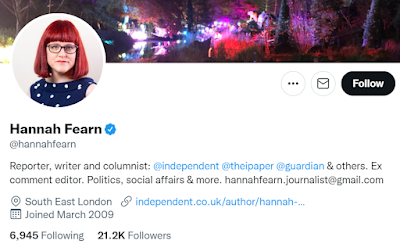
The news department has not been exempt from those cuts with an £80 million savings target to be met by this year. And that's meant job losses in areas such as political and business news. Some viewers have been detecting an effect on the output over recent months, with Hannah Fearn tweeting: 
Hannah Fearn: Well, what do you know. Turns out journalists do a really important job and can't just be slashed without impact on quality and breadth.
Well, let's talk to Fran Unsworth, who first joined the BBC in 1980, starting in local radio, but who rose to become its director of news and current affairs and she retires next week. Thank you, Fran, for coming on Newswatch
Fran Unsworth: It's a pleasure. 
Samira Ahmed: Would you say you're leaving BBC News in a better place than it was when you first started working here? 
Fran Unsworth: Well, it's a very different place than when I first started working here because, of course, we do so much more output. So, when I joined BBC News, it was just radio and television. And now, there is the website, there's social, there's the app, there is continuous news TV, radio continuous news, so there's a lot more of it. 
Samira Ahmed: So, is that better or worse? 
Fran Unsworth: It's better in that I think we are responding to what people want and how they live their lives and how they don't want to just kind of make an appointment to see news or to listen to news. They need it there, instantly so it's better in that respect. Is the quality of what we do worse or better? I think the quality of what we do is actually incredibly good. 
Samira Ahmed: You mentioned quality but, as you've heard, some people think there has been a loss of quality because of the cuts that you've had to make of the past few years. Recently, the BBC admitted it had been a mistake to interview the lawyer Alan Dershowitz after Ghislaine Maxwell's conviction. Do you accept that with fewer experienced journalists in the newsroom, mistakes like that are going to happen more? 
Fran Unsworth: Well, mistakes do happen - I'm not going to deny that - but I think in that particular case, it was less to do with cuts, to be honest, and more to do with Covid! It was also 28 December, it was night. I think the teams, actually, are quite thinned out, there's no doubt about it, but that's not because of cuts so much as because of where we are between Christmas and new year. 
Samira Ahmed: Really? People thought you should have just Googled Alan Dershowitz, you'd have known you shouldn't be putting him on air in that context. 
Fran Unsworth: Well, possibly - actually, I think there was - I think the teams now know that actually, they could have avoided it by doing some kind of more considered handovers to each other on it. But - and we admitted it was a mistake and dealt with it. Mistakes happen - they do - but I don't necessarily think there are any more of them now than when I joined the BBC nearly 40 years ago - or if there are, it's probably a factor of having so much more output. 
Samira Ahmed: After this week's announcement on the licence fee, BBC News is going to have to make more cuts, it's a tough time. Is it time to just cut a whole programme or a service like say, Newsnight
Fran Unsworth: Well, it might be something we would want to look at. but obviously we are in the early stages of what this licence fee settlement means. We have planned quite carefully over the past few years. As you've alluded, in news, part of our modernising news plan was - it wasn't just about taking money out, it was in order to us to shape news for the future so that we could have more impact with what we were doing across a greater number of platforms and also put digital at the heart of our commissioning process. Now, it's not for me to second-guess my successor's views about if there are any further cuts expected of the News division, where those might be. I'm sure that she will come in and have a look around and think about it. But where we start from is what are the audiences that we need to serve, and how do we need to serve them? 
  

Samira Ahmed: Let's pause there for a moment, Fran, because since you've been in post, you've faced as busy a news agenda as most journalists can remember. And this week was no exception with the temperature at Westminster raised to fever pitch. 
Huw Edwards: Tonight at 10:00, we are live in Downing Street after a day in which Boris Johnson faced a wave of calls for his resignation. 
Reporter: Is it all over, Prime Minister? 
Well, we mentioned on last week's programme complaints that the BBC's coverage of those Downing Street parties has been "excessive" and "biased" against the Prime Minister. And those continued this week, for instance with this phone call:
Woman: I'm ringing to complain about the amount of news on Boris Johnson. It's about time you stopped being judge, jury and executioner. I think as for the BBC being impartial, I most certainly don't think you are. 
As ever, though, others see another side to the story, and Philip Pooley agreed that: 
Philip Pooley: So called BBC impartiality is a myth.

But he went on:  

Philip Pooley: Any honest assessment of news coverage over the last few years will clearly show a bias against the Labour Party and pro-government reporting.

You have been in news for a very long time so complaints like that - one side and then the other side - won't come as a surprise, but does it feel to you like the polarisation of political views has become kind of nastier? 
Fran Unsworth: Um, it's a really interesting question, whether it's become nastier. It certainly feels more polarised, yes. And it certainly feels as though people kind of want to default a bit to their own echo chambers sometimes. And if they don't see the views that they agree with reflected then I do think they perceive us as being biased. But, you know, our job is to hold a national conversation. Our job is to show people that there is a whole range of views on every subject. I don't subscribe to the view that just because we are getting hammered by both sides - one set of the audience sees us as biased and the other from another political perspective sees us as biased too - we must be getting it right. I don't buy into that idea. But I do think that the whole nature of discourse has been quite impacted by social media, for instance. It's become pretty robust. It's become quite difficult, well, very difficult for some of our journalists, in fact, who are repeatedly subjected to online abuse of the most horrible, vicious nature, quite often. Misogynistic. And I could - Laura Kuenssberg, Marianna Spring - and I think that's what I have seen change over the course of my career. 
Samira Ahmed: It's interesting you say that, because we do get complaints from viewers that they feel BBC political journalists are often putting a personal spin on stories, and I wonder if that compromises the BBC's commitment to impartiality. 
Fran Unsworth: Yes, it would do, and that's why we brought out social media guidelines, to remind our staff that we need to be cautious in the social media space about your insertion of your own political views and political opinions. Because if we are not impartial, there is no point to us. We can't charge a licence fee off everybody in the UK if we are not impartial. And it's beholden on all of our staff to remember that and to act accordingly in that way. 
Samira Ahmed: Stay with us again, Fran. We want to talk about another of the principles behind BBC News, which is accountability. And we want to talk in fact a little bit about Newswatch itself. This programme started in 2004 after the Hutton Inquiry which strongly criticised the BBC over its coverage of the lead up to the Iraq War and the death of the government scientist David Kelly. In response, Newswatch was established as part of an initiative to make BBC News more accountable. But viewers regularly question whether it is truly fulfilling that role. Here's Howard Price:
Howard Price: Does Fran Unsworth think there is enough accountability to licence fee payers, when very often we are told that 'no one was available to come on the programme' or 'a BBC spokesperson (anonymous) has issued this statement' and then a statement is read? Isn't the attitude of the BBC management that 'we are always right' and that 99% of the time they will ignore all criticism?
How would you answer that?
Fran Unsworth: Well, we obviously don't take the view that 99% of the time we're always right. and I will admit that we don't always get everything right. We actually, I think - executives from News do appear on Newswatch quite frequently. 
Samira Ahmed: (interrupting) Hmm, not a great hit rate, I would say. We've checked, and on the big stories, you're not coming on. 
Fran Unsworth: Well, we normally would give a statement if an executive isn't available. But I would also say it's not the only bit of accountability that the BBC has in place, of course. We have Feedback on radio. And we have the most robust complaints process as well. Which means that anybody can write in a complaint and get an answer to it. 


Samira Ahmed: Under your tenure, there's been a number of controversies involving BBC News management, such as the revelations about Martin Bashir and the row over Naga Munchetty's comments on Breakfast about Donald Trump. What's your biggest regret? 
Fran Unsworth: Oh... LAUGHS. I've got quite a few, to be honest! Hindsight is a wonderful thing, isn't it? You look back and you say, "Oh, if only I'd taken a slightly different decision there." I'm not going to go into them here, but believe me there are some things I wish I had done differently over the course of my career. It would be arrogant and blind of me not to recognise that. 
Samira Ahmed: Fran Unsworth, thank you for coming on Newswatch
Fran Unsworth: Thank you very much. 

END OF TRANSCRIPT

*********

Update: Talking of odd things...

This bit of the programme caught my eye (see transcript above): 


I was curious and checked it on Twitter. Unless I'm missing something, rather than reacting to event in recent months, Hannah Fearn tweeted that way back in March 2020: 


This leads me to wonder: Rather than Hannah Fearn being a viewer who contacted Newswatch over this, did Newswatch simply come across her tweet on Twitter and NOT realise it was nearly two years old, and then just put it out, without checking? If so, that's very strange behaviour on Newswatch's part. 

Saturday, 11 December 2021

On Newswatch


Someone copied Samira Ahmed into a tweet this morning which encapsulates what many of us have said here over the years about the BBC's Newswatch:
Every week Samira Ahmed beautifully presents a whole host of individual public criticisms of BBC news programmes and, every week, the same paternalistic responses of self-justification from the BBC heads of news. Their arrogance is astounding.
This week's self-justifying BBC editor was Paul Royall, Paul Royall, editor of BBC News at Six and Ten. He even used the hallowed formulation of BBC editors on the programme. not once but twice. He said, “I think we get the balance right” and later “So I do think we get the balance right, we do take it seriously, we do take great care.”

Saturday, 27 November 2021

A rare BBC apology on 'Newswatch'. Guess what for?


Newswatch this week continued to focus on language, also discussing whether BBC News should ever call Belarus's Alexander Lukashenko 'President Lukashenko', given that our government - among many others - refuses to recognise his 're-election' last year, before moving onto the main issue of our times [it seems]: yes, inappropriate language about gender identity. 

Samira Ahmed: Closer to home, on Monday, the News at Six reported that The Brits, the biggest award ceremony in British music, was scrapping separate categories for men and women. Here's Sophie Rayworth:
Sophie Rayworth: It will no longer give out prizes for Best Male or Best Female but instead choose one Artist of the Year. The Brit Award-winning singer Sam Smith who identifies as non- binary has campaigned for the change. He says he felt unable to enter last year because of the gender-based nature of the categories.
Samira Ahmed: That use of the pronoun "he" in relation to Sam Smith who has asked to be referred to as 'they' or 'them' rather than 'he' or 'him' infuriated some members of the audience, including Grace Davies:
Grace Davies: BBC News referring to Sam Smith using he/him pronouns in the SAME SENTENCE as talking about him being non-binary has got to be the biggest eye roll of the year.
Samira Ahmed: And George Aylett wrote:.
George Aylett: It's not faux outrage, misgendering does a lot of damage o people. The BBC knew Sam Smith's pronoun and still misgendered them. 
Samira Ahmed: Well, BBC News told us:
BBC News: In a report about the BRIT award's removal of male and female categoroes, we regret that we inadvertently referred to Sam Smith using the incorrect pronouns, and will ensure we address them properly in future reports.

If you recognise the name George Aylett by the way, he/him is a Corbynista who ran for parliament in 2019. [He lost]. 

'Migrants', 'immigrant immigrants', 'people'?


This week's Newswatch discussed the issue of whether it's wrong to call the people crossing the Channel in small boats 'migrants' or whether 'less dehumanising' language, such as 'people', should be used instead. 

This is how the subsequent interview transpired. 

In it, BBC boss Richard Burgess also told us why the BBC believes it ''wouldn't be accurate'' to label such people 'illegal immigrants' [as, say, Migration Watch does]:


Samira Ahmed: And to discuss the use of language on this story I am joined now by Richard Burgess, Executive Editor for UK Content at BBC News. Richard, thank you very much for coming on Newswatch. A lot of viewers are saying why don't you just call them 'people'?
Richard Burgess: Well, I think, first of all, I should say, this was a terrible human, tragedy as you were reflecting there. And I think it's important that our coverage reflects that in a sensitive way and in a respectful way. In terms of the use of 'migrant', I think it's about being as clear and as accurate as we can be for the audience. It's a term that the audience understands, we know that from research. And, ultimately, it actually explains why those people were on the Channel. They were migrating, they were migrants, they were trying to move to another country. So I think it's about being clear and accurate. But at the same time, absolutely going on to try and tell the stories of those people as individuals.
Samira Ahmed: Some people - and including the Home Secretary, it seems - are apparently saying that the BBC's language is dehumanising.
Richard Burgess: I don't think so. And I think we need to be a little careful here. The term "migrant" is about a person on the move - and a person on the move, often, for very good reasons - to avoid war, to avoid persecution, to get a better life for themselves. And we work really hard with our reporting to humanise the story, to speak to people who who are making those perilous journeys, often. I don't know if you saw Nick Beake's report from Dunkirk on the six and ten o'clock news where he spoke to one of the people in the migrant camp there who had actually spoken to two people who were on that boat. And it was so moving. And I think that's really incumbent upon us to really work hard to tell the stories of these individuals, the journeys they've made, the pressures on them.
Samira Ahmed: I should say as well that there are some viewers who contacted us to say that they should all be called 'illegal immigrants'. What is the BBC's position?
Richard Burgess: Again, I think it's about being accurate because I don't think that is accurate. If you look at the UN's description on this, anybody has the right to claim asylum in another country. We don't know what the status of all those people who died on the boat were, but some may well have been seeking asylum, might've had refugee status. So it wouldn't be accurate to describe them as 'illegal'.
Samira Ahmed: How does the BBC decide what each word to use? You know, there's the word 'refugee', there's the term 'asylum-seeker', and then the term 'migrant'. How do you decide when to use which one?
Richard Burgess: We use 'migrants' in this case because often it's not clear the reasons why somebody is travelling. As I say, they could be seeking asylum, they may already have refugee status, they may be somebody who's on the move for a better life for themselves and their families. So I think it's about us being as accurate as we can. And as we get more information on people, we get more accurate. In this case we've talked furtherly about men, women, a pregnant woman on the boat, children. So as you get more information, you get names, you get back stories, and I think that's a really important part of a journalism.
Samira Ahmed: When a tragedy happens like in the past week with the 27 people who drowned in the Channel, it does create a huge emotional response from the public, and I wonder if it's a challenge particularly at those moments for the BBC to get the terminology right in reporting such a story.
Richard Burgess: Absolutely. And, you know, journalists within the BBC feel that emotion as well. I think it's about being accurate, as I say, but I think it's about trying to tell stories, but also trying to get to the issues that obviously relate to this matter. So whether that's political issues, diplomatic issues, issues for local communities, the bigger geopolitical issues around wars around the world. So it's important that we try to put these things into context, it's important we try and tell the human stories, and get our terminology right.
Samira Ahmed: Richard Burgess, thank you.

Saturday, 20 November 2021

Thank heaven for small mercies


Watching this week's Newswatch with Samira Ahmed was a strange experience. 

The concerns discussed included whether the BBC should have broadcast in full the racist language cricketer Azeem Rafiq experienced, and Samira danced on a pin about that with Jamie Angus, Senior Controller of News Output and Commissioning. 

Azeem's evidently still a hero for the Newswatch crowd. Samira called his parliamentary testimony 'harrowing' and didn't mention Azeem's own antisemitic/anti-black African gibes. 

And then the programme moved onto whether it was right to show repeatedly the moment of death of the Liverpool bomber. Some BBC viewers felt that showing the footage was disrespectful to the dead bomber. Yes, seriously.

But, saints be praised, a measure of reassuring normality came from the BBC boss present. Jamie Angus came very near to saying what we've joked for years that all BBC bosses on Newswatch always say [a joke with far more than a grain of truth]: 'We think we got it about right'. 

Jamie said:
I think broadly we reached the right decision.

Bless him. 🤡

Saturday, 2 October 2021

On Jonathan Munro, the petrol pump panic and Carolyn's sister-in-law


This week's 'I think we got it about right' BBC editor on Newswatch was Jonathan Munro, the BBC's Deputy Director of News.

Mr Munro is apparently a serious contender to replace Fran Unsworth in the the BBC's top news job.

You may remember him for:

[a] His role in the Cliff Richard affair, where the judge described him as “overly guarded” in his defence of the BBC. And the judge further accused him of “almost wilfully failing to acknowledge inconsistencies” and of “refusing to acknowledge the plain effect of some of the emails in the case”. 

[b] His role in the re-hiring of Martin Bashir in 2016, when he said he was attracted to the reporter’s “track record in enterprising journalism” and respect within the industry.

[c] His statement that “We don’t want all our editorial meetings to be dominated by what white people think”. 

[d] His sarcastic tweet about things going badly for Nigel Farage and UKIP...in 2015, a year before the UK voted for Brexit. 

[e] His branding of certain ex-BBC senior editors [Roger Mosey and Mark Damazer] in an internal BBC email as “male, pale and stale” sexists after they dared to criticise the BBC, despite him being male, pale and possibly stale himself. 

[f] His previous defences of the BBC on Newswatch where he's been disingenuous and/or factually wrong, or both, and never particularly fleet-footed.  

------------------

His appearance on this weekend's Newswatch was typically flat-footed. The judge in the Cliff Richard case would surely have made similar comments about his appearance here had he watched it and was asked for his opinion again. 

And Carolyn and Anna, the two viewers pitted against him, really showed him up, cutting through his flannel like hot knives through pre-melted margarine.  

And he was typically disingenuous again from his very first words, twisting Carolyn's claim about it being a 'non-story' at the very beginning [the Thursday of the week before last before the panic-buying began] into a straw-man suggestion that she was claiming the whole thing [from that Thursday to now] has been a 'non-story'. 

That's a slippery politician's way of sliding away from a difficult charge. 

He did it again at the start of his final answer.

The most striking bit comes though when Carolyn picks up on Jonathan Munro's inadvertent admission that the petrol/diesel pump story was high up in the news running order that Thursday partly because it was a slow news day. She rather nailed him there. 

This man is said to be the frontrunner to replace Fran Unsworth.


Here's a transcript:
Samira Ahmed: Hello, and welcome to watch with me Samira Ahmed. Did the BBC fuel a sense of panic at the petrol pumps this week? It was Thursday of last week when the BBC first put on air a story which was to dominate news output over the following few days. It appeared in the headlines on the News at Six:
Headlines: A shortage of lorry drivers forces BP and Esso to close some of their petrol stations. Downing Street says people should buy fuel as normal. 
Samira Ahmed: By Friday lunchtime, a sense of crisis was developing: 
Headlines: The government urges people not to panic buy fuel after some petrol stations had to close because there aren't enough tanker delivery drivers. But this afternoon there are long queues of motorists in some parts of the country trying to fill up. Petrol station owners insist there is no need to panic. 
Samira Ahmed: But that 'don't panic' message seemed to have the reverse effect as the queues lengthened and anger grew among some motorists: 
Vox pop motorist 1: The petrol is on zero. I'm not going to make it! People have half a tank and they are going in there to fill up. 
Vox pop motorist 2: Three hours is just ridiculous. You pass these two petrol stations, you cross the road and it's the same again. 
Samira Ahmed: The problem was clear, the cause of it less so. The Government insisted there was no lack of fuel, just a shortage of drivers. But hundreds of Newswatch viewers told us they put the blame squarely on the media and specifically the BBC. Two of those viewers join me now, Anna Grayson and Carolyn Issitt, as does Jonathan Munro, who is the BBC's Deputy Director of News. Carolyn, can I start with you? What did you object to about the news coverage you saw of this issue?
Carolyn Issitt: Basically, I felt that it was a bit of a non-story that was built up to the point which people started saying, 'don't panic', and if we've learned anything from Covid and the lockdown, if you say don't panic, people panic. People including my own sister-in-law rushed out to fill their cars with petrol, and that's what caused the problem. 
Samira Ahmed: Jonathan, this is a specific point. Did the BBC hype the story early on when it was only a few petrol stations? 
Jonathan Munro: I don't think so. I don't think it was a non-story. I think a lot of people were affected by, whether it's supply issues, but at the pump it was a lack of ability to get your car filled up because so many petrol stations were running out. So the question for us in dealing with stories like this is how do you solve the dilemma, which clearly exists, between reporting the story on the one hand because it's a legitimate story that lots of people are interested in, and as Carolyn says, being in danger of actually making it a self-fulfilling prophecy, that you report it and you cause people  like Carolyn's sister-in-law to change her behaviour. 
Samira Ahmed: Just so people know, it was the second headline on Thursday evening's Six and then it was the lead on the Friday morning on the news channel. Once it's that prominent, you can see why people think you are giving out a message. 
Jonathan Munro: There is a prominence debate, for sure, about all stories of this sort. But at that time I think I'm right in saying that about three quarters of petrol stations in England were having some sort of problems with deliveries and therefore supply to the consumer. And there are all sorts of layers on the story. It is a consumer behaviour story, as we just discussed in the context of Carolyn's sister-in-law,  but it was also a story about government preparedness and about resilience and about the just-in-time supply chains and the supplies to supermarkets and other retail outlets. So quite a lot of layers of complexity to go into. 
Samira Ahmed: Anna Grayson, you're a driving instructor yourself. How were you affected by the way this story and this problem developed over the days? 
Anna Grayson:  It was huge. It was instant. I had no problems with receiving, filling my car up until last Friday morning when this news story broke, and literally I had to stop work that Friday and I haven't been able to go back since because I cannot get fuel in my local area. 
Samira Ahmed: So, again, Friday morning is when the problem really kicked off which is after it had been given a lot of prominence on BBC News. Anna has given one example, but a lot of people have been really badly affected, cancelled medical and social care appointments and operations. Do you think the BBC thought enough about the consequences of the prominence it got on the Thursday evening and the Friday morning?
Jonathan Munro: We did think a lot about it, and we featured a lot of...not a driving instructor as I remember...but other workers whose livelihoods were affected, including those who were delivering essential services like nurses who visit patients in the community for example. Those sorts of people are clearly not panic-buying. It is part of their essential tools to go to work. And in the case of nurses and care deliverers that has a real knock-on to people who are vulnerable. So they are not in any sense panic-buying. And reporting the effects on businesses was part of what we tried to do. On the prominence point, whether we lead on a story or it runs lower down the running order does slightly depend on what else is happening in the world. This week, for example, we've done a lot more on Afghanistan, we've lot a lot more about the terrible events around the Sarah Everard murder. we've done the Labour Party conference, which was a big political story. Back end of last week was a little bit quieter elsewhere in the world and it did achieve a prominence in our bulletins and elsewhere which was a result of both the importance of the story and, as always, what else is happening that gets running time in our programmes. 
Samira Ahmed: Carolyn, you heard Jonathan...I can see  you're shaking your head. What is your response to the explanation he's given? 
Carolyn Issitt: It kind of bears out my thoughts which is, 'as it's a slow new day, let's make this one a bit bigger'. Quite honestly, from Friday, through to even yesterday, the BBC was still showing a variety of people on forecourts talking about not being able to get fuel. Just continuing to add to the problem. My BBC East Midlands show started its show at 6:35 yesterday with a photoshop of lots of empty pumps. Honestly. That's just irresponsible journalism in my view. You need to recognise when you're causing a problem and actually try to do something about it, not simply fuel the fire because it's something to make news. 
Samira Ahmed: Anna, you are really upset as well because this has affected your livelihood. What would you like the BBC to learn from the way this story has been covered and the fact that so many viewers have complained? 
Anna Grayson: We're not the only profession that has been hugely affected by this but we were just getting on our feet from lockdowns before. And I think the BBC need to be held to account in the way that they're funded. You have a social responsibility to report the truth. And what annoys me about this story is that you had other fuel providers, not just BP, who were jumping onto the media saying 'we are fine, absolutely fine, stop panic-buying fuel, we don't have a problem with the delivery of fuel'. So where did this story come from? To me, it was just pure and utter scaremongering and sensationalism with the purpose of gaining viewer numbers.
Samira Ahmed: You've heard what the viewers say. What lessons do you think the BBC is learning from this? 
Jonathan Munro: I think it is not our job to change the news, it's our job to report the news, and... 
Samira Ahmed: [interrupting] But they're arguing that the BBC played a role in turning it into a bigger story and there was a momentum. 
Jonathan Munro: Yes, but I think that the case that Carolyn mentioned, for example, about shots of the forecourts with no petrol available at series of pumps, that actually happened. It wasn't...we didn't make it up. And we have to balance that with the responsibility that Anna quite rightly says about the BBC's voice in the debate publicly and where we make sure that we are acting responsibly, and I completely agree with her that our responsibility is to report the whole picture. So, for example, to say, as we did several times on most of our bulletins, that there were parts of the country that weren't particularly badly affected. So rural areas were less badly affected, on the whole, than urban areas. Northern Ireland wasn't affected at all. And one of the things we did regularly was go round the country to our correspondents to make sure that we were getting an accurate picture of what was happening in their part of the UK.

Saturday, 18 September 2021

Sloppiness

 
Luxmy Gopal, not the first female newsreader

This week's Newswatch with Samira Ahmed began with viewers complaining about BBC journalistic ''sloppiness'' after the BBC News Channel's 4pm headlines on Wednesday said this:
The Prime Minister is re- shuffling his top team of government ministers. In the past few minutes, the former Trade Secretary Liz Truss has been appointed Foreign Secretary, the first woman to hold the role.
I checked that out at the time and found that the BBC corrected it within 7 minutes, noting that Labour's Margaret Beckett had got there first [in 2006]. 

It was a bit 'sloppy' but I didn't think it was worth pointing out here given the speed of the correction and the fact that such things can happen during 'breaking news'. 

I didn't realise till Newswatch though that this wasn't an isolated example. The mistake was repeated on the following morning's Today programme...
More ministerial appointments are expected to be announced today after Boris Johnson carried out an extensive cabinet reshuffle yesterday. Liz Truss became the first female Foreign Secretary after Dominic Raab was demoted to Justice Secretary.
...''and elsewhere'', as Samira put it.

Saturday, 13 February 2021

BBC watchdog programme 'parked'


Talking about Samira Ahmed...

She sent out a tweet on 8 January that read, "I am very sorry to report that BBC Newswatch has been taken off air this wk & next while BBC News management review the Covid 19 safe working situation in New Broadcasting House. Editor John Neal and I very much pressing to return as soon as possible."

I don't think she was very happy about it. Three days later she tweeted, "I was looking forward to warning you that this BBC Newswatch story contains graphic language. But sadly we're not on air this week."

That was then and this is now, five weeks later. 

There's still been no Newswatch since 18 December last year and there are "No upcoming broadcasts".


I know it's not perfect and barely gets anywhere, but at least it permits a degree of accountancy and we do get to hear viewers' criticisms of the corporation being broadcast on the BBC itself (often very sharp criticisms).

Why is the BBC still 'parking' it?

Saturday, 28 November 2020

"Do you ever feel that you are being played?"


For transcript fans, here's one featuring the BBC's economics editor Faisal Islam talking to Samira Ahmed on this week's Newswatch about the challenges of reporting government spending reviews and Budgets...

Samira Ahmed: Not everyone finds it easy to get their heads around those numbers, not only because they are large but, in the case of a Spending Review or a Budget, there are simply so many them. And as the report released by the Office of National Statistics on Wednesday found, a large proportion of people lack a basic understanding of economic statistics such as employment figures or the deficit and also mistrust official data. That is one of the challenges faced by Faisal Islam, who joins me now from our camera position upstairs in the newsroom. Welcome to Newswatch. Even if we are not in a pandemic, the spending review would be a huge task for you to process and explain, can you briefly talk us through how you go about doing that? 
Faisal Islam: In the days running up to it, we obviously try and scope out exactly what the broader parameters and exactly how much is going to be spent. You tend to get quite a lot of it pre-announced by the Treasury, a mixture of leaks, unauthorised, but also actually the announcements that are going to come on the following Wednesday happening during the course of the previous few days. We have to analyse there. There is a particular challenge there because you don't get all the information, so you might get a partial announcement, the full announcement is to come a few days later, so you have to be wary of exactly what is being communicated. 
Samira Ahmed: And, Faisal, you have already hinted at that one of the concerns that viewers have, which is how far you should be reporting government leaks and rumours put out beforehand. If you take the example of the cut in the foreign aid budget, which was definitely leaked well in advance, do you ever feel that you are being played? 
Faisal Islam: I think whenever you get a piece of information unofficially, you do have to process the motive for getting that piece of information, kick the tires on it, make sure that it isn't only being given to you in a partial way so that it will be reported in a slightly...with a lack of nuance. You have to be aware of the basis upon which information is turning up in your inbox or on your WhatsApp or your messages or occasionally by carrier pigeon. You have to be aware of why you are getting that information and how you report it. But I tend to find that actually it is worth just waiting a little bit until the official information comes out and you can fully assess the context of that government announcement. But I think it would be naïve to assume that you would never report these things in advance. These discussions and debates are happening in private. Good journalists would want to be in on that. But you are right to say that we should put a certain health warning on the quality of some of that information that comes through before it is official. 
Samira Ahmed: The Office for National Statistics this week reported that most people don't really understand very much about economic data and its terms, and I wonder if you shouldn't be doing even more to explain, to spell out the difference between say debt and deficit, some of these concepts, for viewers. 
Faisal Islam: Yes, and it think it depends on the outlet as well. But you are absolutely right. I would say that there are twin deficits, but this would run up against the problem, even in my answers, the twin challenges is probably what I should say, of complexity and controversy. And we need to be able to guide viewers, listeners, readers, through all of that. On complexity, it is true that we have to bear in mind some basic concepts for an economic audience or a political audience, such as the deficit, needs to be unpacked but I also think there is a challenge as well with brevity. If you try to explain with a sentence or a couple of sentences every single thing every time you said that, you would never actually say anything.
Samira Ahmed: The numbers that we are now talking about because of the pandemic are so huge - you know, the scale of borrowing - it can be hard for many of us to grasp. But equally, I'm wondering as an economist yourself, when you report that we're talking about the biggest debt situation for 300 years, is that actually a bit scary, even for you? 
Faisal Islam: Yes. I mean, I think you to bear in mind, it is not our job to scare anybody. It is our job to inform people. I think one was to communicate to that and give context to that is to give historical comparisons. You mentioned the borrowing as a proportion of our national income, the largest since World War II. Perhaps a better way, which is one that I tried to use to explain it, is that we have only seen this level of borrowing in world wars. So that gives you a letter idea of the scale of the crisis that the Government has dealt with. It's like a world war. You need to come up with ways of explaining things that bring alive a decimal point or a percentage and give some context to the challenge. But it is a challenge and it is not surprising that some would feel that this is daunting. It is daunting, but there are obviously ways through it. 
Samira Ahmed: Faisal Islam, thank you so much.