Showing posts with label 'BBC Breakfast'. Show all posts

Saturday, 16 July 2022

Charm Personified


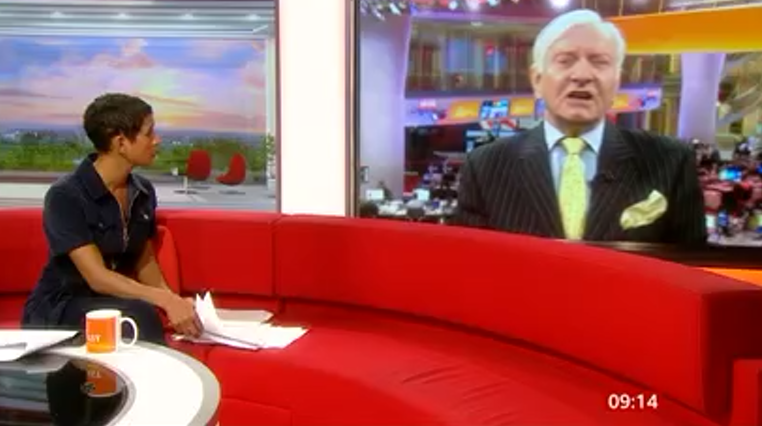
News came this week that Naga Munchetty's salary has gone up from £255,000-£259,999 to £365,000-£369,999. So she's earning an extra £110,000, which is nice for her.

Meanwhile BBC Breakfast viewers - and her BBC colleagues - continue to reap the delights of her charming personality:

Friday, 1 July 2022

“BBC delivers progress on Impartiality Plan” - a review


BBC delivers progress on Impartiality Plan, the BBC Media Centre boldly asserted today.

The BBC says it has updated its whistleblowing policy and how it handles fast-tracked complaints. Given past horrors over the treatment of whistleblowers [e.g. Mark Killick and Liz MacKean] the former needed close attention, and Ofcom has expressed dissatisfaction with the BBC about the latter. 

The BBC has appointed two External Editorial Experts. That's a step forward, given that the BBC has long been reluctant to having outsiders looking at bias, with a Tubbs and Edward-like resistance to 'non-locals' at the corporation. The two appointees in question - Caroline Daniel and Michael Prescott -  held senior rolls at the FT and Sunday Times respectively. 

The first thematic review, into BBC taxation and public spending output, led by Sir Andrew Dilnot and Michael Blastland, is still going on and due to be published this year. Will it show that the BBC thinks public spending is the solution to most of life's problems?

The content reviews remain internal and will look at editorial standards and culture including impartiality, freedom of expression, diversity of voices, accuracy, fairness and trust. The first ones will look at BBC Breakfast, Countryfile and the English language morning radio news programmes in Scotland, Wales and Northern Ireland. “These selections have not been made because of particular impartiality concerns,” the BBC insists. The Daily Telegraph, however, cites sources “acknowledging that Countryfile was a show which regularly prompted complaints,” so I'm not convinced that either that programme or BBC Breakfast [with its co-presenters who mock our country's flag] was innocently chosen.

Over 24,000 BBC people have received impartiality training, and all newcomers will complete impartiality training. I must admit I'd have thought impartiality training would have been standard at the BBC for years rather than just up-and-running since last year.

BBC staff surveys looked at impartiality for the first time. 94% of staff from across the BBC who took part said they understood why impartiality is important. You do wonder about the remaining 6% though who don't think impartiality is important. What BBC jobs are they in?

Saturday, 11 June 2022

All Biased on the Easton Front


Alastair Stewart tweeted last night that “the only voices on BBC News tonight were opponents of #Rwanda”. 

BBC One's News at Ten certainly bore that out, with [a] a campaigner against the government's policy and [b] an illegal immigrant facing deportation being the two featured voices in Mark Easton's report. And the campaigner against the government's policy was the sole voice featured in the opening headlines too. 

Mark Easton's report itself was, as Charlie notes on the open thread, typical Mark Easton, using every trick in the book to reinforce the case that Priti Patel's Rwanda policy is wrong and illegal, with the arguments of government opponents dominating and government opponents being said to have 'pointed' things 'out' while people reacting favourably to the judge's ruling went severely underreported - as did what the judge actually said. 

The structure of the report says it all. It began with a 'talking head' - the campaigner against the government. Then came what the lawyer representing those trying to stop next week's flights said in criticism of the government. Then came what a barrister for the UN said in criticism of the government. Mark then added his own point to reinforce what the critic from the UN had said. The government's legal team then got a sentence-long summary of their position from Mark before turning to thee plight of the 'asylum seekers' and 'a Syrian' saying he has family here and that his future and his kids' futures will be 'destroyed' if he's sent to Rwanda. A final sentence - a characteristic Mark Easton move - then feigned impartially with a brief, even-handed summary of the present legal situation from both the Home Office and campaigners' perspectives. 

Why didn't he quote what the judge had ruled, given that the judge had some 'helpful' things to say from the government's perspective? Why didn't he quote Priti Patel's response, already reported elsewhere by that time? Why did he pile on the critics of the policy but exclude supporters of it?

The answer is surely that he was making the case against the government under the guise of impartial reporting, as ever.

The report has been re-broadcast throughout the night and was still showing on BBC Breakfast this morning.

It's to be hoped that many viewers can see through this though. Here, for example, is a tweet from someone who obviously watched Mark Easton's report on this morning's BBC Breakfast:
BBC news this morning with a report about boat migrants. Every clip they showed was with young children being carried into the UK. Who are they kidding? Everyone can see the boats being unloaded with men only. Women and children are few and far between.... 

That's a familiar complaint. 

Saturday, 12 February 2022

I hear you're a racist now, Mr Coyle


The suspension of Labour MP Neil Coyle yesterday is receiving the kind of low-key BBC reporting we'd expect. 

The story appeared on BBC One's News at One and News at Six but not on BBC One's News at Ten. On both News at One and News at Six it was treated as a minor story, getting just 18 seconds on each bulletin.
 
The News at One version lacked detail:
The Labour MP Neil Coyle has had the party whip suspended, following allegations that he made racist comments to a journalist on the Parliamentary estate. Mr Coyle said he was "very sorry" for his "insensitive comments", which politics reporter Henry Dyer said made him feel uncomfortable in his place of work.
And the News at Six barely added much more:
The Labour MP Neil Coyle has been suspended from the party following allegations he made racially insensitive remark in a bar in the House of Commons. Mr Coyle says he's very sorry for his insensitive comments, which were reported in a formal complaint by a journalist who's of British-Chinese heritage. 
This morning's BBC Breakfast has been giving it 24 seconds:
The MP Neil Coyle has been suspended by the Labour Party after allegations he made racist comments in a House of Commons bar. The member for Bermondsey and Old Southwark has apologised for what he called his "insensitive behaviour" when talking to a political journalist of British-Chinese heritage. Mr Coyle said he wants to "re-prove" his Labour values and be readmitted to the party in due course.

Another interesting aspect of the reporting of this story is how the BBC has sensitively avoided mentioning, or even hinting at, the "racial stereotype" Mr Coyle is said to have used - Sax Romer's Chinese supervillain Dr. Fu Manchu. Other broadcasters mentioned it. 

And the BBC's online report went through 6½ hours and seven edits before finally getting the name of Mr Dyer's employer correct. 

For trivia fans, here's Wikipedia's list of who's play Fu Manchu in film. It's an intriguing list:

Harry Agar Lyons, Warner Oland, Boris Karloff, Lou Marcelle, Henry Brandon, John Carradine, Glen Gordon, Christopher Lee, Peter Sellers and Nicolas Cage.

Monday, 6 December 2021

Just a thought


The BBC News Channel's been conducting lots of interviews today about the government's new drugs policy. Even Mark Easton has been deployed. Oddly Kit Malthouse, the minister responsible for it, appeared on BBC Breakfast this morning and Sally Nugent didn't ask him a single question about that. When he finally managed to steer the conversation onto the topic all she could ask him about was drug use in the Houses of Parliament. Important as that might be, if you've got the policing minister and you're lining up lots of people to comment on and criticise his government's drugs strategy throughout the day you should surely try to spare at least a minute or two of an 11-minute interview to question him about it?

Anyhow, when BBC home editor Mark Easton discussed the matter with Victoria Derbyshire at 9:40 this morning, he began by stating that with the drugs debate ''there are two broad views''One is that we should see this as a criminal justice issue, be tough and crack down; the other is that we should see it as a public health issue and look at treatment and prevention and recovery. Guess which view Mark Easton made the case for [plus three separate mentions of funding cuts]? And there he was again later at 13:38 on the News Channel with one of his leading questions asking report author Dame Carol Black if the Government was ''preoccupied'' with the criminal justice element. 

Friday, 26 November 2021

Tone


Here are a few tweets this morning from Dan Hodges:
  • Macron cancelled a meeting about how to stop people drowning in the English Channel because he didn't like the tone of a letter he was sent. And he then accuses Boris of not acting seriously...
  • It doesn't matter what the issue is. In any argument between the UK and an EU member state the FBPE crowd will always align themselves with the EU. If this was reversed they would be screaming "Boris cancelled a meeting because of a letter!!! For God's sake, lives are at stake!".
  • And have you ever refused a meeting that could save lives because someone sent you a badly worded letter?
Hm, after watching BBC Breakfast this morning and hearing their tone I'm tempted to tweak that to:
It doesn't matter what the issue is. In any argument between the UK and an EU member state the BBC crowd will always align themselves with the EU.

Thursday, 25 November 2021

It isn't impartial broadcasting


This morning's BBC Breakfast included an interview with the French MP for Calais and a former Chief Immigration Officer for UK Border Force in light of the tragedy in the Channel yesterday.

In a very BBC moment, BBC Breakfast presenter Naga Munchetty decided to interrupt when the latter, Kevin Saunders, said something that, however factual, was clearly unpalatable to her. 

She then took umbrage with him when he reacted with bemusement to her interruption. 

And, not letting it go, she then went on to try and shame him by playing the time-honoured 'please think of the children' card. 

It was all rather aggressive from the BBC presenter. 

Here's a transcript of that section:
Kevin Saunders, Former Chief Immigration Officer for the UK Border Force: In the longer term, we have got to have offshore reception centres for these people. The draw to the UK is phenomenal. They want to come here because basically everything is free. And that's the attraction. That's why they wants to come. They are going to get housing, education, money, everything. That's why they are wanting to come...
Naga Munchetty, BBC[interrupting] Because they are seeking asylum.
Kevin Saunders: Ah, er...um...
Naga Munchetty: Sorry, what do you mean by...what does that gesture mean?
Kevin Saunders: I was in France for 16 years pulling people out of the back of lorries and such like. Most of the people that I dealt with were not asylum seekers, they were economic migrants. And I do think it's a little bit disingenuous of some of the people who've never met a migrant in their life to say that they are all asylum seekers. They are not all asylum seekers. A lot of them are just plain economic migrants.
Naga Munchetty: What about those who aren't like the child that died on that boat yesterday?
Kevin Saunders: I mean, I'm not saying that everybody is an economic migrant. But a lot of them are.

And then came a report from the BBC's Lewis Goodall which contradicted the lived testimony of Mr Saunders, former Chief Immigration Officer for the UK Border Force. 

Here are some quotes from that:  

  • Some of those have made that journey two, three, four or five times to try and make it to the UK. Why? Well for some of them at least they feel they have already risked everything coming from countries where they have been persecuted perhaps, or where their family have been imprisoned, and so it's merely the latest in a series of risks. 
  • And of course some people say, well, why don't they just stay in France? There are a few reasons for that. Sometimes it's about family connections, their last family in the world might be in the UK. Sometimes it's about language, they can speak English, they don't speak French. One of the other reasons is they feel they have been treated badly in France and I don't think people necessarily appreciate just how poor conditions are in the camps, and I call them 'camps' charitably. They are basically really just woods and roadsides where people with kids - women, men and children - are living. 
  • To understand that, we spent some time in some camps in Calais and Dunkirk and here is a sense of what we found there. When you think of Dunkirk, this almost certainly is not the escape you think of. But in 2021, this is what Dunkirk is. Thousands of people from around the world, men, women, children too, living in the woods, wondering the motorway, waiting for the call to flee at dawn across the sea from France to Britain.
  • We should remember, too, that in terms of numbers at least, compared to other European countries, or indeed elsewhere, we are not talking about that many people. It's just more visible.   
  • There's much discussion in Britain about whether these people are genuine asylum seekers. It's a fair question. But also fair to consider whether many or most would credibly take these sort of risks if they weren't.
Now, who would you trust to know whether the bulk of the people crossing the Channel are migrants or refugees: the former Chief Immigration Officer for the UK Border Force who has dealt with these people for 16 years or a BBC 'instant expert' Newsnight reporter who has just popped over to France for a couple of days and talked to a few people?

And this isn't just any old BBC journalist. Lewis has a reputation

And, as per an earlier post, both Mark Easton and Newsnight were on a concerted mission to try to defuse this as a story before yesterday's tragedy struck and Lewis Goodall was obviously despatched to help advance that mission. 'Defusing the story' is now impossible, so deflecting it seems to be the new approach. 

Watching a Lewis Goodall report is like watching a university debating society in action. Note, as ever, how Lewis uses the tricks of rhetoric to advance it further - that last quote in particular.

Lewis just can't imagine that people who have travelled so far and are trying so hard can be economic migrants. For him, 'it stands to reason' that they must be asylum seekers. Well, it doesn't for me, and I think that's an absolutely ridiculous thing to say.

Note also his 'we should remember' in the fourth quote. Should we really? Why is a BBC reporter telling us what we should think?

As for the Dunkirk references [and there were images from the war], it crossed my mind that Mark Easton was playing the 'little ships' card. Lewis Goodall, unlike the very canny Mark Easton, was less discreet about using that analogy.

And he really hammers home the 'women and children' angle - despite everything we've seen with our own eyes from video after video over the past couple of year [something the full report heavily reinforces]. 

It's a one-sided argument disguised as a report, loaded in both its content and language.

The whole report also goes out of its way to tug at the heart strings, and - in typical Lewis Goodall style - features talk of what he calls ''this political purgatory''. This gets him into familiar territory, and he negotiates the UK-French angle by putting the emphasis on the French side's criticisms of the UK government. 

Even while he's emphasising his own fears for the lives of the migrants he's spoken to he can't but advance his own position on matters of controversy, and do it with a partisan politician's way of winning an argument. 

Whatever this is, it certainly isn't impartial broadcasting.

Thursday, 26 August 2021

''Of course. I understand that. But where is safe then?''


This morning's BBC Breakfast saw Armed Forces Minister James Heappey being interviewed by Naga Munchetty. 

Twitter then caught fire, as usual.

Here's a representative selection of the early tweets from both sides, followed by a transcript of the interview, with Naga's questions in bold and underlined.


AGAINST NAGA MUNCHETTY

Ian Preston: I see that Naga Munchetty has got her stroppy face on again. Armed Forces Minister - There is a very credible threat to people's safety at Kabul airport so we are advising them to go to another place of safety.
Naga - So where would that be?
Minister quite rightly diplomatically didn't answer.
Naga - So where us this place of safety? Again, with stern face.
Minister - Well I'm not going to tell you as it will no longer be safe!
What did she expect him to say!
Come on BBC Breakfast, we can do better than this!

Les Douglass: Naga "Can you tell us what boarder crossings are safe for people to go to escape?" James "No, because the would tell the Taliban where to block their escape"! ..SUCH STUPID QUESTION...WHO WRITES HER COMEDY SCRIPT? It must so difficult for James Heappey to give informative answers from such stupid questions from NAGA. He is either correcting her false assumptions or explaining why her ideas can't work! NAGA Its not the BRITISH Army that abandoned the Afghans! It was the AFGHAN Army! The question is "did NAGA learn anything from James Heapey"? No. She did not understand a word...Thanks James, most of us did understand!

Hmmmm?: British soldiers and govt officials risking their lives to get British and Afghan vulnerable out and Naga Munchetty implies they are being abandoned "is it fair to say they've been abandoned?" What a bloody disgrace she is.

Annie_MacF: FFS. Naga M is a real nasty piece of work! Suggesting the people now in trouble due to ISIS in Kabul are being abandoned. Other Q & tone confrontational all the way through interview with James Heappey MP who was great. It was as if we had caused this.

JD: Naga, your aggressive line of questioning/interrogation isn’t clever or pleasant to watch. “Can you guarantee” seems to be one of your favourite questions in situations where clearly no guarantees would ever be possible.

Steve Weston: Despite moronic questions from Naga. Stop, stop, stop asking for specific timings, you are going to get people killed. I can't say why because I have integrity. The general UK audience does NOT need those answers. The Defence Minister's tolerance was excellent.

kirsty: [James Heappey] was doing his job by acting responsibly to protect the lives of the UK nationals, the Afghan people and our armed forces personnel by refusing to answer questions about the threat. I usually enjoy Naga’s interactions but her questions this morning were unrealistic.


FOR NAGA MUNCHETTY

BenDelaBen: Naga did her job. Being a journalist = Asking Hard Questions. The MOD Dodged half the questions with very vague answers.

Jangli Billu (Wild Cat): Love to see Naga Munchetty upsetting the natives again. Her name tending means the bigots are upset. She just needs to appear and the frothing starts.

Gwinnie: ‘Naga’ is trending so assume the gammon are out, yet again, attacking that poor woman on BBC Breakfast. She takes so much abuse every day she’s on. Wonder why?

J.-P. Janson De Couët: What it about Naga Munchetty that rattles gammon cages?

Peadar Mac Ciarraí: I love how all the Karens pretend their issue with Naga is anything other than pure racism.

Giorgio: Welcome to journalism. It's about holding people to account. Be honest what really upsets you is the colour of her skin and the fact that she confronts societal ugly truths and misconceptions. Naga is brilliant.


THE INTERVIEW

We're joined now by Armed Forces Minister, James Heappey. Good morning to you. 
Morning Naga. 
Morning. OK, so what details, if any, can you give of this imminent threat? 
I can't share with you the exact detail with you of what the threat is, that I can say that over the course of the week the credibility of the reporting has reached the stage where we believe that there is a very imminent, highly lethal attack possible within Kabul, and as a consequence we have had to change the travel advice to advise people not to come to the airport, to move away from the airport and find a place of safety and await further instructions. 
Do you have a timeline?
No.
OK. Where is safe then? If the environs of the airport is not safe, where is safe for those people who are waiting to leave the country? 
Well, as you're seeing on your TV screens I suspect already this morning, to an awful lot of people even knowing that the US, the Australians, the UK are giving the advice that we are now giving an awful lot of people still feel that the airport is the safest place. That is a concern because the crowds are still very large and that reflects I think the desperation that people have, and I suspect that people realise that by not coming to the airport with the 31st August still the deadline everybody is working to this isn't just a case of pausing, dealing with the threat and picking up where we left off. The reality is that the clock continues to tick even whilst we are having to give the advice that we are giving and asking people to stay away, but we know how desperate people's circumstances are. We would not be sharing the intelligence or the threat that we know of if we did not think it was credible, imminent and lethal. 
Of course. I understand that. But where is safe then? If there are people in Kabul who would have made their way to the airport to pass certain checkpoints in order to be able to get on transport to leave the country, if they're not supposed to do that where physically do they go now? 
Well, I can't advise them to go to any one place. In fact, you might see that to do so would simply be to advertise to Islamic State that there is another place that we are asking eligible people to go and concentrate, and that in itself becomes a target. The reality is that we are asking people to move away from the airport. You might argue that anywhere that isn't a large crowd in an obvious place that IS would target is a safer place, but the reality is - as you will see on tv - that there are still very large crowds outside the airport and that's a real concern for everybody. 
I mean, one of the processing centres - or the processing centre - is a hotel which is in the middle of the area where people are people told to avoid, so what does that mean in terms of processing people? 
It means I'm afraid exactly as it sounds, that we have processed 1,988 people or we have flown out 1,988 people in the last 24 hours. We have taken as many into the hotel as we physically could at the time when the threat reporting came as urgent as it was, but the reality is that clearly if we are asking people to move away we are effectively also saying that that reduces our capacity to process people. Now you may well see footage of people who have ignored the advice and remained in the queue that we are desperately trying to protect them by bringing them inside as quickly as we are able to, but that should not encourage people to travel to the airport because... 
So, OK...
I cannot stress the desperation of the situation enough. The threat is credible, it is imminent, it is lethal. We wouldn't be saying this if we were not genuinely concerned about offering Islamic State a target that is just unimaginable. 
If you are not in the hotel at this moment in time, will you be able to get into the hotel to be processed? If you are not in the hotel at this time, does that mean that, while this threat exists, there is no chance of being processed? 
I am not able to guarantee that if you are not in the hotel at the moment that you may have the opportunity to be processed. But I should stress that that is under constant review. We are not wanting to end the process at this point. We just have to be honest and responsible with the intelligence we have. 
Of course, of course, but it is now the 26th of August and the deadline is the 30th, at 11:59 at night, on either the 30th or on the 31st of August, that's not yet clear. So is there any indication that this threat may be over before then? 
The reality is that we have no depth in country in order to be able to go out and interdict the threat. We are effectively holding the hotel and the airport and providing security to that. And we are confident in our ability to secure that. Clearly what happens outside the immediate perimeter is to target, but when you have got so few troops on the ground, and when you have got no depth in the city beyond the airport, our ability to go out and find the threat and deal with it is very limited indeed. So I fear that this is a judgment to be made on the balance of probabilities between IS's ability to mount the attack that we have intelligence to say is imminent versus our desire to get out as many people as possible. We are not being overly cautious, I promise you. 
Of course. How many British citizens haven't been processed? Is there an estimate available? And those Afghans who are eligible to leave the country and be evacuated by the UK, how many...what numbers are we talking about who are not yet being processed or in that hotel? 
British citizens, it is very, very hard to nail down. There have been colleagues in the Foreign Office who have been trying to get hold of some people for weeks and then they get hold of them and it turns out they are already in Dubai. Our working number is we think there are around 400 eligible people, mostly British citizens, dual nationals, in country. Clearly we are working hard to find routes to safety for them, and indeed for those that remain under the ARAP scheme. But I hope you will understand that, given the threat, the last thing we would do is advertise what advice we might offer to those who have moved away to a place of safety, because in advertising it we risk making that alternative provision, if we are able to find an alternative provision, a target in itself. So it is suboptimal in terms of my ability to give you the detail what you quite understandably want, but... 
And I appreciate that, but how are they getting the information? How would they get the information? I appreciate you cannot advertise it, there is a security issue, but are they getting that information, those 400 who have not gone through the system yet? 
That is the job of work for the Foreign and Commonwealth Crisis Unit last night and today. There will be people who are absolutely desperate to have heard this news at what they know is the back end of the evacuation process. It is a concern for all of us that they are still there in the first place. The advice has been to leave for many months now, but a number of people have chosen to stay. Some of them, journalists for example, who have a... 
And some of them Afghan who love...and some of them Afghans who love their country and wouldn't want to leave because they didn't want to see it in that position. So can you guarantee...
You asked me about eligible people and I am just pointing out that there are some who do not want to leave at all. There are some who have, for various reasons, needed to stay until the very end. We are in the process of contacting them to try to discuss with them what their options might be for getting them to safety. But this is a very dynamic, very challenging situation, and I just have to be really honest with people and say that there is every possibility, as we've been saying all the way through, that we will not get everybody out. And the security situation worsening, as it has, makes that more likely. 
If you don't get them out, is it fair to say they have been abandoned? 
I don't think that would be a fair reflection of what has happened over the last ten or 11 days. 12,279 people have been brought out. We have been clear all the way through that there will inevitably be the reality that not everybody can be brought out and I think that whilst they personally might feel that, the reality is that we will have done our absolute best, militarily. Judgments will then be made I think about the political decision-making and the route to being in this situation in the first place. But I want to pay tribute to the Royal Air Force particularly for the way that they have facilitated the air lift over the last few weeks. 12,279 people is over 5,000 more than we thought we were going to need to evacuate from Kabul when this mission began. It is an extraordinary effort. But that is no consolation whatsoever to the people who are fearing that they are not going to get out. And that is why I say those numbers with no sense of triumph or accomplishment. I know that there are people who will feel desperate that they have not been one of those 12,000 who has been brought out.
The French Prime Minister has said that from tomorrow evening onwards we may no longer be able to evacuate people from Afghanistan. That is from the French Prime Minister. Is the UK in a similar position? 
I am not going to comment on the remaining time line for our evacuation flights. 
James Heappey, Armed Forces Minister, thank you very much for talking to us on Breakfast
Thank you very much indeed.

Sunday, 23 August 2020

Roll over, Jeff Randall!


Wednesday's morning BBC Breakfast featured Nina Warhurst talking about possible recovery shapes. She avoided any charge of dumbing down. An appreciative viewer posted a video, including his own reaction. Watch and learn!

Be warned though, you may have to click on the embedded tweet twice to get it to work. Nina will send you instructions, with pop-out pictures, to explain further... 

Tuesday, 4 August 2020

Another BBC clarification/correction


The BBC has issue another 'clarification'...


TV Eyes records that News at Ten began by saying:
Tonight at Ten: An emotional memorial service in Minneapolis for George Floyd, the black man killed at the hands of four white police officers.
BBC Breakfast put out a report each hour from Sean Dilley which contained the following: 
More than 4000 miles from the scene of George Floyd's death during an encounter with white police officers in Minneapolis.

Wednesday, 8 January 2020

Breezzy


Sometimes I wouldn't mind having Rebecca Long-Bailey's extraordinary eyebrows, if only to watch them in the mirror reacting to this kind of thing:


Wonder if any at the BBC are starting to worry that they might be, ever so slightly, overdoing the whole Stormzy thing?

Friday, 3 January 2020

Preaching? (2)


Further to the previous post, nothing stops the BBC's agenda-pushing juggernaut when it's cruising at top speed: 

BBC Breakfast's main story this morning concerns the Australian wildfires. After covering this they moved on to their second story, the Met Office on record temperatures over the past decade and climate change. Then five minutes into the hour came their third story, the US's killing of Gen. Qasem Soleimani, head of the Iranian Revolutionary Guards' elite Quds Force and overseer of Iran's proxy wars abroad. Clearly, even the killing of the effective No.2 in the Iranian regime wasn't going to stop the BBC putting a Met Office statement about climate change nearer the top of its news reporting on BBC Breakfast this morning.

Sunday, 17 November 2019

"‘No-nonsense Naga’! Go get ‘im!"


"Why are you relatable to families up and down the country? How can they relate to you and your family?"

That's a question Naga Munchetty put to Boris Johnson on Friday's BBC Breakfast - and one of her BBC colleagues was very impressed:


Boris appeared flummoxed and struggled for an answer, and this absolutely delighted his critics. They felt that he'd been exposed as the priveleged charlatan he is, and took to Twitter en masse to extol Naga's virtues as an interviewer.

They positively love-bombed her.

Others, however, thought that this was a ghastly attempt at a 'gotcha', and that she'd asked him a question most people would struggle to answer.  

Here's a not-so-typical sample of the Twitter discussion about it:
JJ Techilovsky I'm a Corbyn supporter but I thought it a stupid question. It's not his fault which family he was born into. But challenge him on the things he is responsible for.
Trish: It's not about the type of family he was born into it's about his values and principles, ....to me it was a simple and honest question but obviously he was stumped for an answer. God help us all.
JJ Techilovsky: She literally said "how can they relate to you and your family?" I'm not a fan of Boris but if it was about his principles she could have just said "What are your values and principles?"
Matt Byrne: Nothing to do with the family he was brought up in, that isn't his fault. More to do with his current families and children, she was basically very cleverly calling him a bollox.
And here's the Daily Telegraph's Benedict Spence, agreeing that "she was basically very cleverly calling him a bollox", albeit throughout the interview, and most definitely not admiring her for it:
Take Friday's interview between Naga Munchetty and the PM on BBC Breakfast. What was billed as cosy sofa chat — to allow the audience to get to know the candidate better — quickly became an aggressive interrogation, full of prickliness, with an air of dismissiveness from Munchetty, and punctuated by interruptions, digs, and plenty of over-laboured efforts at a ‘gotcha’ moment.  
It’s one of the things that has come to mark broadcast interviewing strategies in this country, and it isn’t edifying or constructive — not to delve into the crux of policies, say, or actually get a straight answer, but instead to try where possible to harangue the interviewee, and make them out to be beyond contempt. 
Perhaps Jeremy Paxman is responsible for this — he of the famous Michael Howard interview — but it now seems to be more important to render people immobile before verbally goring them than to actually interview them. 
It has been one of the great complaints made against Today, of late, that presenters talk and snipe too much. It ends up telling the public very little about the person, or policies, they were ostensibly tuning in to discover more of.

Saturday, 16 November 2019

Come the revolution


Meanwhile in a galaxy far, far away...

I suppose I ought to mention #wreathgate

In a thrice-shown segment on Monday morning's BBC Breakfast, the BBC mistakenly ran a 2016 clip of Boris Johnson laying a wreath at the Cenotaph, rather than video from this year. The BBC has subsequently apologised. The programme's editor said that a producer used archive video in error, which had been restored to preview Remembrance Sunday.

So it was just a cock-up.

Or was it? Well, not according to the BBC's Corbynista critics2,000 of them have already complained about it, accusing the corporation of "misrepresenting, distorting and lying" by deliberately inserting that three-year old footage into the package "to make Johnson look good".

Why would the BBC do that? Because Boris apparently laid the wreath the wrong way up this year and looked scruffier this year, whereas three years ago laid it the right way up and looked less scruffy, so the BBC were covering for him because of their pro-Tory bias.

The fuss became the usual Twitter tornado and Richard Frediani, the editor of BBC Breakfast, was even hauled onto Newswatch this week to go over it all over again, and apologise all over again.

I don't doubt that Mr Frediani's very detailed explanation was correct, but the Corbynistas are refusing to accept it.

The anger of the Corbynistas seems genuine and has, at times, taken a turn towards the downright sinister. Many a 'come a Corbyn government and you'll pay for this' tweet has been sent forth this week.

And it didn't stop there. The same crowd then got angry at the BBC for using a caption on Friday's Politics Live quoting BT's managing director Neil McRae, who'd branded Labour's broadband plans "broadband communism". The caption had a question mark at the end of those two words and quotation marks around the second word, and it was discussed with Labour's eyebrow-raising Rebecca Long-Bailey. And it alternated with a section caption that read 'Labour promise free broadband', which no Corbynista could surely object to.

Ash Sarkar's best buddy at Norovirus Media, Aaron Bastani, led the charge, accusing the BBC of smearing Labour, and one subsequent reply to their exchange - cited below - sums up a fairly widespread sentiment among the angrier Corbynista outriders:


If we do get a Corbyn government on 13 December this threat is more than likely to be realised.


P.S. ITV's Alistair Stewart paid this warm tribute to the BBC's Mr Frediani:
Honourable & characteristic of the man. I worked for Richard Frediani for many years at ITV News: he is a man of total honesty, integrity and candour. Innocent mistakes happen. Good folk say sorry and redouble their efforts to avoid such mistakes in future. That is all.

Sunday, 3 November 2019

"I’m very sorry we got this wrong" - The BBC apologises for Naga Munchetty


If you recall:
Harvey Proctor v Naga Munchetty (Transcript: BBC Breakfast, this morning)

Well, I nearly missed that there's been a development this week: 
The BBC has apologised to former Tory MP Harvey Proctor over an error made by a Breakfast TV presenter. 
Mr Proctor, who was falsely accused of multiple murder by serial liar Carl Beech, walked out of a live interview about Scotland Yard’s shambolic VIP child sex abuse inquiry. 
Naga Munchetty was quizzing him about Beech – alias ‘Nick’– who has been jailed for 18 years. 
The presenter wrongly claimed Scotland Yard chief Cressida Dick had been cleared by independent reports into the force’s handling of the case.
Wonder if Lord Hall will step in again to 'correct' the BBC's apology this time?

Saturday, 5 October 2019

Harvey Proctor v Naga Munchetty (Transcript: BBC Breakfast, this morning)


[Naga Munchetty mishandled her interview with Harvey Proctor this morning to a painful extent. Though she was right to seek to present the other side, the way she tried to talk Mr Proctor into silence - especially after he began criticising the BBC's role in the affair - was clumsy at best, especially when she then said, rather snippily, "Please let me talk and I will let you talk. That is how this works." The point was that she hadn't been letting him talk - as he himself went on to point out. Her petulant-sounding pause midway was hardly what was needed either, especially during a sensitive interview like this.]


A fraught encounter

Naga Munchetty: Former Conservative MP Harvey Proctor was among those falsely accused. He joins us now from our London newsroom. Good morning to you, Harvey Proctor. Thank you very much for talking to us on Breakfast this morning. Can you tell us about what happened when you were investigated? 
Harvey Proctor: Good morning to you, and thank you for the invitation to come on your programme. The question is a short one. The answer could take many hours. I have been under the cosh, or truncheon, of the Metropolitan Police, for nearly five years now. It is very harrowing to be investigated, or to be the centre of such an investigation for so long, and the ramifications of it. But, as people know, in shorthand what happened to me was that I lost my job, my home, and my repute as the result of a fantasist who were believed by the Metropolitan Police, and who castigated his comments as credible and true when they were neither credible nor true. They were untrue, and they were incredible. Any common sense person would realise that what he was saying was not credible. 
Naga Munchetty: Well, to pick you up on the use of the word 'credible' - that is the word the Metropolitan Police have said they found Carl Beech to be, what holes in his story do you think could have been picked up on earlier? 
Harvey Proctor: Well, quite clearly, the Metropolitan Police lied to a district judge to get search warrants to search my house and that of Lord Brammal and Lady Brittan's houses. There were numerous contradictions before the application for the search warrants and they were not deployed before the district judge. For example, they lied about who went to Mr Beech. They said he went to the police in 2014. He didn't. They went to him. They didn't look at the previous interviews he did with Wiltshire Police when he made allegations of similar, but slightly different allegations. So there were all sorts of things that the police could have done that they didn't do. Clearly, they didn't look at his mother's interviews much earlier, which cast doubt on his story. 
Naga Munchetty: And I should say, the Metropolitan Police have given as a lengthy statement but I do need to give some right of reply here. The Metropolitan Police has said, "There is no evidence or the Independent Office for Police Conduct investigation, which has concluded has said the allegations made were grave, 'Nick' made were grave, and warranted investigation. We believe those involved in applying for the search warrant acted with due diligence and in good faith at the time. There was no evidence to indicate bad faith, malice or dishonesty, no indication any of the officers may have behaved in a manner which would justify disciplinary proceedings". Erm...
Harvey Proctor: The IOPC is not an organisation fit for purpose to control and interrogate the Metropolitan Police. If you want to give the right of reply, could I suggest your programme invites Cressida Dick, the current commissioner, who lied on radio recently about these matters...
Naga Munchetty: Well...
Harvey Proctor: ...onto your programme to question her about her lies...
Naga Munchetty: And this is something...
Harvey Proctor: ...and why she has made those lies? Could I suggest that you get in touch with your home affairs correspondent for the BBC...
Naga Munchetty: OK...
Harvey Proctor: ...who messed up potentially the investigation into Mr Beech and, as Henriques said, by showing photographs to Mr Beech of children that I'm supposed to have murdered could have got in the way...
Naga Munchetty: Harvey Proctor, I'm going to interrupt you.
Harvey Proctor: ...of any criminal action against me...
Naga Munchetty: OK, I'm going to interrupt you. I'm going to interrupt you. I will...
Harvey Proctor: No, it's OK you talking across me...
Naga Munchetty: I will...I will...no, no...I will continue this conversation...
Harvey Proctor: That is because the BBC are very sensitive about any criticism...
Naga MunchettyNo, no...I will continue this conversation...
Harvey Proctor: ...whatsoever that may come your way...
Naga Munchetty: I will continue this conversation... 
Harvey Proctor: By talking across me, you're not really doing what the BBC should do, and that is to give a right to comment. And you're very sensitive about this. I understand that. I understand the BBC are sensitive in view of the criticism not just of the police but that the BBC has received in Henriques's report yesterday. 
(Pause)
Naga Munchetty: The IOPC has also found out there was no evidence regarding deliberate lying or wrongdoing by Cressida Dick, as you have just said. It also looked at the conduct...
Harvey Proctor: No, sorry! Sorry, sorry, sorry...
Naga MunchettyPlease let me talk and I will let you talk. That is how this works. 
Harvey Proctor: No, because you're now...you've just said that the IOPC have found no evidence of Cressida Dick lying. Hold on. The IOPC have not interviewed Cressida Dick. They didn't know that she was involved. In fact Sir Richard Henriques didn't know that she was involved. She wasn't interviewed by Richard Henriques. Invite Cressida Dick onto your programme, invite me onto the programme, and let's have a debate about it. She won't come. 
Naga Munchetty: Sir Richard has also...I want to get to how this has impacted you, but I need to do my job as well, and Sir Richard has...
Harvey Proctor: Well, I respect your work very much, but you must not invite people onto your programme and then not allow them to speak. 
Naga Munchetty: I am allowing you to speak, and I will allow you to speak...
Harvey Proctor: You are now, but you weren't before.
Naga Munchetty: ...but I also need to give a right of reply, rather than letting you say things that are potentially incorrect, or when people don't have a right to reply. Sir Richard...
Harvey Proctor: (Removes earpiece) Sorry, I'm  not having this. I'm sorry. (Leaves the set). 
Naga Munchetty: Harvey Proctor, thank you for your time. Harvey Proctor, former Conservative MP. And I think what's very clear there is the impact that this investigation has had on his life, as he said at the very beginning, how it has impacted on his life. Harvey Proctor talking to us this morning. Former Conservative MP. 
Charlie Stayt: Yes, clear from that it's a story that has affected him very personally. And let's have a look at the time now. 16 minutes past 9.

Sunday, 26 May 2019

More bias by labelling


Nina Warhurst

Talking of biased political labelling, and continuing with ITBB's much-loved Rorywatch series, this morning's Breakfast saw the BBC's sofa surfers discussing the Tory leadership contenders with Professor Jon Tonge of Liverpool University, one of their regular paper reviewers (and always worth watching). They went through them all, one by one, but when it came to Rory Stewart's turn, out came the biased political labelling from our BBC presenters:
Nina Warhurst, BBC: Let's move on to Rory Stewart, currently International Development Secretary, pretty moderate on Brexit.
Jon Tonge: The most moderate candidate of all.
However it's intended, the word 'moderate' is invariably a positive and always implies a contrasting negative - usually 'extreme'. Choosing to use it to describe the most hardline opponent of No Deal of all the Conservative leadership contenders (see what I did there, BBC?) betrays an opinion. It strongly suggests that Nina prefers Rory Stewart to the others because of his position on Brexit, doesn't it?

*******

Ah, and here's the BBC political correspondent Jonathan Blake on the BBC News Channel a couple of days ago:
So [Boris Johnson] is setting out his stall quite early in this campaign...and it's not quite the gung-ho, No-Deal-or-nothing message that you might have expected him to come out with. So maybe he's trying now to appeal to more moderate members of the Conservative Party, and he does need their support. 
And what about the equally loaded language of "gung-ho, No-Deal-or-nothing message"? 

Sunday, 7 April 2019

Huge news


I see that the BBC is giving The Sunday Times lead story Labour's hate files expose Corbyn's anti-semite army only the very briefest of mentions and using the 'The Sunday Times say...The Labour Party says' formula. Only one of the two paper reviews on the BBC News Channel last night featured it, and then only briefly, and this morning's BBC Breakfast only mentioned it at 6:11 am, saying "The Sunday Times accuses Labour of failing to take action against 'hundreds of members accused of anti-Semitism'. Labour says all complaints are fully investigated." And that's it so far.

In contrast Sky News featured a full-length interview with Peter Mason of the Jewish Labour Movement at just after 7:30 am and by 8:00 am had the Labour antisemitism story as its second story.

Update (11:00 am): Sky News later interviewed Baroness Chakrabarti about antisemitism, and continued to make it one of their main stories. The BBC News Channel spent over a minute on it during the post 9:30 am paper review. 

Saturday, 6 April 2019

One of them, RIGHT HERE, is on your TV every morning


Ben, looking bashful (for some reason)

Here's a transcript of a segment from this week's Newswatch, presented (in Samira Ahmed's absence) by Shaun Ley:

*******

Shaun Ley: Last Thursday's edition of Question Time picked up on the protests against lessons in diversity and equality [by mainly Muslim parents] which are being taught at some Birmingham primary schools. They include same-sex relationships and the rights of LGBT people. 
Question Time audience member: Is it morally right that five-year-old children learn about LGBT issues in school?
Fiona Bruce: Oh, I can hear all sorts of sounds coming from the audience here, so...
There was an angry response from some members of the wider TV audience to the inclusion in the programme of that question which was then posted on Twitter by the Question Time team. One of those expressing views in a forthright way on that tweet was the BBC Breakfast presenter Ben Thompson:
Ben Thompson: LGBT 'issues'? Like what? That we exist? One of them, RIGHT HERE, is on your TV every morning. I held back on this hoping it was clumsy writing, done in haste. But it's still online. Would you ask if it's 'morally right' to learn about gender/race/religion/disability 'issues'. 
Others agreed, with Jerome writing:
Jerome: The question is loaded with prejudice and the premise is incorrect. Are we back in the 1950?
And Lil Tinge asked:
Lil Tinge: Do you want to explain to your LGBT licence payers why your producers thought this was an acceptable question for debate?
Well, the BBC issued the following explanation:
BBC News: Question Time is a topical debate programme. This was a question asked by an audience member on a subject which has seen a lot of recent discussion. 
This week the corporation's Director of News Fran Unsworth sent a general reminder about the use of social media to all staff in news which found its way into the public domain [i.e. was leaked by someone at the BBC to the Guardian]. It advised:
Fran Unsworth: We all have personal views, but it is part of our role with the BBC to keep those views private. You shouldn't state your political preferences, or say anything that compromises your impartiality. Don't sound off about things in an openly partisan way. We haven't always been consistent in dealing with this issue in the past, but we cannot afford for this to continue, and will consider appropriate action in the future.
*******

So it was BBC Breakfast's Ben Thompson, it appears, who brought down The Wrath of Fran on the BBC as a whole.

Now, I must say I'm with the BBC and Ivy Unsworth of In Loving Memory's grand-daughter Francesca here. 

This was a question from a member of the QT audience. Shouldn't he be allowed to ask it because it offends the easily-offended? 

And I don't think it's a remotely objectionable question anyhow. 

Contrary to what Ben Thompson of BBC Breakfast said, the question wasn't about the morality of teaching about LBGT 'issues' - or gender/race/religion/disability 'issues' - in schools per se. It was about teaching about sexuality to five-year-old children. 

Yes, people like Ben might be justified in blowing their tops if people called for such things to be banned from being mentioned in secondary schools, but teaching such sexualised matters to five-year-old IS a question that deserves moral querying.

Ben Thompson should have THIS pointed out to him too, whether by email or in person. Over to you Fran.

Saturday, 30 March 2019

A new Ant and Dec?


A little light relief:


The lady on the right is Sherelle Jacobs of the Daily Telegraph, and she has now responded to her new-found fame:
Apparently my "intense stare" and flyaway hair (due to cameraman messing my hair trying to fix my loose earpiece at the last minute 👎) BBC Breakfast on Thurs morning has belatedly gone viral. I will try to smile more on TV in future. And pack my hairpins 😝.