Showing posts with label 'In Our Time'. Show all posts

Sunday, 3 November 2019

Happy Talk


We need to bring back ITBB's fine tradition of 'amplifying' art and music. So here's a painting by Victorian artist John Atkinson Grimshaw, much admired by the son of Whistler's mother. And it's a painting of Roundhay Lake in Leeds. Fancy that! 

(Why is that so extraordinary? Well, it isn't). 


And this weekend I've mostly been enjoying a bit of Vaughan Williams:


And, acknowledging a comment from the other day, hoping that we'll keep on posting pieces in praise of rare BBC gems, I really must recommend - somewhat belatedly - the last-but-one edition of Lord Bragg of Wigton's In Our Time on Rabbie Burns, the Gregor Fisher of British poetry and a great admirer of bonnie lassies. 

I enjoyed it a lot, especially the contributions of Robert Crawford, Professor of Modern Scottish Literature and Bishop Wardlaw Professor of Poetry at the University of St Andrews. 

Putting aside his wonderful voice and his magnificent reading of Burns's poetry, he was - like Tam O'Shanter - glorious, o'er a' the ills o' life victorious!

In the podcast version, where he added a bit of the modern afterlife of the great man, Professor Crawford was so compelling that he even got Melvyn to doff his ermine-lined cloth cap in sheer admiration. 

With no acronyms after his name just proper qualifications, Robert Crawford is my kind of expert. 

Neil Oliver's days as the BBC's Official Scotsman may be over. There's clearly a new bairn in town. 

Anyhow - also somewhat belatedly - here's the best poem for Halloween of all time (via one of my favourite YouTube videos).

Nae man can tether time or tide; the hour approaches Tam maun ride...

Wednesday, 3 October 2018

Something for the BBC to Bragg about


Melvyn in the 'In Our Time' studio just prior to going on air each week

As regular readers will probably know I'm a massive fan of Melvin Bragg's magnificent In Our Time (with or without the mumbling). 

His Lordship is quoted in The Times today (via The Radio Times) ascribing the popularity of his programme (including with the young) to our becoming "a more serious country", partly thanks to the recent huge spread of university education...

...a contention which might well call for that most traditional of university essay question closing commands: "Discuss". 

The Times goes on:


Of course, it's not "a week" from Friday to Monday, and In Our Time isn't a "Monday morning live show", being broadcast on Thursday, but otherwise The Times is (probably) spot-on. 

Long may 78-year-old Lord Bragg of Wigton continue to spend less than a week boning up on Bonhoeffer, Brunel, Bruegel, bird migration, black holes, Beowulf,  blogs about BBC bias, behavioural ecology, and the Boxer Rebellion, among other B-related topics (not yet including Billy Bragg) - and all subjects under every other letter of the alphabet too!

Sunday, 31 December 2017

In Praise of Baron Bragg


As it's New Year's Eve, here's a tweet from Tim Montgomerie:


Though I wouldn't agree that it's "on its own, just about worth the licence fee" (that would be going way too far), but it is "unparalleled in its consistent excellence" (and forget the 'almost'!). Plus Baron Bragg of Wigton FRS, FBA, FRSA, FRSL, FRTS is incomparable as its guiding light.

So well done Melvyn, and please keep up the good work in 2018!


P.S. Here's an ITBB exclusive. Lord Bragg's name actually came first on this year's Honours List - at least according to the Government's official NY18 Queens List page

And, ITBB 'has learned' (from reading the same government website) that he shares his Order of the Companion of Honour will just one other person this New Year: Lady Antonia Fraser (of history, champagne socialism and Harold Pinter fame). 

Saturday, 21 October 2017

More random thoughts


I was driving to work yesterday morning and switched on Today just at the moment where a voice I didn't instantly recognise was interviewing a BBC reporter and describing Brexit supporters in the Conservative Party as "hardliners". I thought, "A clear example of 'bias by labelling' there from a BBC presenter". Then I remembered reading about CNN's Christiane Amanpour being a guest presenter sometime and realised it must be her enjoying her moment in the Today sun. She's certainly no fan of Brexit.

Having her and Remain campaigner Stephanie Flanders as guest presenters isn't helping Sarah Sands give Today a neutral tone on Brexit (or Trump), is it? At least the consummately professional Carrie Gracie (the last of these Three Guest-Presenting Graces) should know how to conduct herself. 

*******

David Keighley's latest piece provides the kind of detailed overview that (alas) I can only dream about offering you at the moment. (So please go and read it, if you haven't already). Its main focus is the BBC's coverage of those 'hate crime' figures, and the way the BBC keeps plugging the alleged link to Brexit. The BBC stood out from most of the other reports I saw in that by not balancing those figures about rising 'hate crime' cases with other figures showing a fall in 'hate crime' prosecutions, making the BBC appear particularly biased (and irresponsible) in this respect. David (naturally) also spotted that, summarising the main BBC website article on the story in this way:
And the reaction? This BBC report emphasises in great detail the rise in number of recorded ‘crimes’, does not enumerate the fall in prosecutions, and has a long sequence about a Muslim ‘victim’ who concludes: ‘I really think it's important for us to report, no matter what.’ Of course.
Of course.
*******

I'm looking out of my window at the wet and windy weather of Storm Brian (yes, it does sometimes stop being sunny in Morecambe, as surprising as you may find that) and I'm thinking, "This doesn't look like a 'Brian' to me". It's more a 'James' I think. (It's making me think of James O'Brien for some reason).

*******

According to the Daily Mail's media editor Katherine Rushton, the BBC has fought "a furious battle" to keep to itself the number of complaints it receives each day. Unfortunately for the BBC, it's now lost that battle and been forced to admit that it gets "nearly 1,000 complaints every working day". Also:
The Corporation would not give a breakdown but last week Ofcom chief executive Sharon White said three out of ten of the complaints it receives about the BBC centre on bias and inaccuracy.
It didn't surprise me in the least that this information had to been extracted from the BBC against the BBC's wishes and with the BBC dragging its feet every single step of the way. It did surprise me a bit that it was only "nearly 1,000 complaints every working day".

*******

It is becoming impossible to keep track of BBC bias. I was reading some comments recently about all the messaging that Eastenders puts out. I haven't watched Eastenders for over twenty years (except a couple of episodes for the sake of this blog), but messaging on Eastenders has long been a given. It sounds to be getting worse though. 

I suspect that lots of BBC One drama comes with added messages (the usual BBC messages) - just like Radio 4 dramas (and The Archers) - simply because on the occasions when I have watched them I usually get the feeling of being whacked over the head with some clunking great fist of a message, as well as countless more subtly inveigled messages (though not subtle enough not to be noticed). Watching them and detailing it is something that I couldn't face doing, even if I had the time (which I don't). And then there's the transgender agenda and the feminist agenda and the race-baiting agenda...and how many more? 

It's all too much. I need to lie down. 

*******

On a brighter note, you really can't beat In Our Time with R Melvyn. This week it was the Congress of Vienna. Tim Blanning of the University of Cambridge was so infectiously enthusiastic (and darned interesting) that I feel he really ought be given a BBC programme of his own. (Watch him turn out to be a fanatic for some cause I don't like, the BBC take up my suggestion and ask him to bang on about that cause, and me repent at leisure). Next week it's 'Feathered dinosaurs'. God bless Lord Bragg, and all who sail in him!

*******

Yes, Newsnight has covered some of the big stories of the week - President Xi (all hail!), murder in Malta, Brexit, party political goings-on, etc - but it definitely does seem to be going down the celebrity interview route more and more often. We've had Mary Blige, Trevor Noah and Bruce Dickinson of Iron Maiden just this week. (The Bruce interview was the only one I didn't really inclined to run to the hills at the mere thought of). Plus, they really do like talking about race. They've been at that a lot again this week.

*******


Most sexual taboos from earlier ages have become acceptable, with the BBC's ardent blessing, but a few still remain - such as zoophilia and paedophilia. Infamously in the 1970s some socially-liberal voices, particularly on the Left, briefly flirted with pro-paedophilia campaign groups (and the BBC was then at the height of its Jimmy Savile era). Surely even the BBC won't dare to go down that route? 

*******

Terry, in an earlier comments thread, reminded me of a curious omission from Suzy Klein's otherwise excellent Tunes for Tyrants: Music and Power with Suzy Klein. As the final episode looked at the Second World War, whatever happened to the most famous WW2 symphony of all, Shostakovich's Seventh (the Leningrad) - a work with a back story of the utmost drama and relevance to the series's main theme? I was expecting it, yet it never came. Yes, I understand the relevance of Walton's glorious Spitfire Prelude and Tippett's pacifist curate's egg A Child of Our Time but to miss out the Leningrad Symphony was a very curious omission indeed. 

*******

Meanwhile back at the Today ranch...

The power struggles and back-stabbing at Today are beginning to make Games of Thrones seem like Last of the Summer WineThey just can't stop sniping at each other. I'm running out of popcorn.

*******

And as Saturday night is music night and Radio 3 has Uncle Jim Naughtie presenting Verdi's Otello, here's Placido and Katia with the love duet from the end of the first act. If you don't know it, it's very, very lovely (and the nearest Verdi got to sounding like Wagner).

Thursday, 26 January 2017

Sartorial tip

May I come in?


Here at ITBB we like Melvyn Bragg’s “In our Time”. I know Craig does, and so do I, even though much of it is over my head.

This morning's edition about parasitism was fascinating. Even I could follow it.

But here’s the thing. Do you remember this?  Click on it; (g’wan g’wan) I urge you, as I know most of us can’t be arsed to click  - but if you don’t, you won’t know what I’m talking about - but guess what. Call Anna Hughes immediately! 
Professor Steve Jones has a kind of update on the vexed question of Zebras and the reason for their distinctive markings. 
Never mind the dazzle-ship theory. Don’t trouble yourself with two types of morphogens that work together, one as an “activator,” and one as an “inhibitor.” 
It’s simple. Mosquitos avoid stripes, and if you’re ever in the jungle or a malarial swamp, wear striped trousers. 

Ideal outerwear for the malarial swamp

Saturday, 10 December 2016

Nice


This isn't a blog which hates the BBC, merely its bias.

Though being out of action for much of the past couple of weeks I've been listening, from time to time, to editions from the astonishing In Our Time archive - surely one of the BBC's recent crowning glories.

There's nothing I love more than hearing three academics either pleasing or displeasing Melvyn Bragg as they tell us about plasma, Garibaldi, John Dalton or The Fighting Temeraire (among recent editions) - and so on and so forth (to quote Melvyn's catchphrase).

Over the past couple of days I've been informing myself about the origin of the Quakers and about Foxe's Book of Martyrs (recording the crimes of Bloody Mary for Elizabethan England and beyond), both exceptionally fine editions.

May occasionally cantankerous Baron Bragg of Wigton in the County of Cumbria live for as long as the Holy Roman Empire and go on making episodes of In Our Time until the end of infinity!...

...talking of which...

Another recent absolute gem on Radio 4 has been A History of the Infinite by the philosopher Adrian Moore. My admiration for this series is boundless. Even the ancient Greeks (who liked the idea of infinity about as much as the BBC likes the idea of Donald Trump as US president) would surely have approved. 

And the other nice thing I've got to say about the BBC (resolutely ignoring my old English teacher's advice never to use the word 'nice') is that QI is doing very nicely under Sandi Toksvig. Alan Davies has (mostly) stopped pretending to be stupid for starters.

Sunday, 27 November 2016

Experts


Here's a post that might sound like 'stating the blindingly obvious' (or wrong-headed), but still...

(In for a penny, in for a pound, but no euros please.)

The Govester

I enjoyed Emily ('Lady Nugee') and Michael ('Gove') on the sofa at the end of The Andrew Marr ShowIt was surprisingly agreeable.

But during that chat, and the preceding formal interview with the Govester (as Boris used to call him), a thought crossed my mind (yes, just one!): 

Michael Gove was being polite and self-deprecating about the way that 'experts' quote ("People in this country have had enough of experts") has been used against him.

It has been used, even more egregiously, against Brexit supporters in general, who have been painted (in some quarters) as 'post-truth', expert-hating 'know-nothings' as a result of it.

Mr Gove called what he'd said "notorious", and admitted that he didn't phrase it very well. But he also claimed that he'd been cut off, taken out of context and then edited.

Like you, no doubt, I've heard this quote being cited in the papers, online and - above all - on the BBC, countless, countless times.

"People in this country have had enough of experts". That's the quote in question, and I've just accepted that that's precisely what he said because 'everybody' says that's what he said and, to be honest, I couldn't remember the original interview. 

As a huge fan of experts who has spent years engaging in happy disagreement with my 84-year-old dad on the topic of experts ('experts' being a dirty word with him), I have to say that I've never been entirely comfortable with what Michael Gove 'said' there.

I kind-of knew what he meant and specifically who he was talking (the anti-Brexit organisations like the IMF, OECD, IFS. NIESR, etc) - as did you, I don't doubt for a second - but, still, felt he'd gone too far in apparently dismissing all experts.

If you look back, however, - say to the FT's initial reporting of the story - and compare it to transcripts of what he actually said, you'll see that, yes, his quote has been edited (deliberately, I'd say) to make it sound worse than it actually was.

It's now become one of those media-backed myths that has taken over the world -  especially with BBC pushing it so relentlessly (as on Newsnight with Nick Watt and James O'Brien this past week). 

In context, as he said today, it's clear exactly who he was talking about (as he told Andrew Marr, "economists, pollsters, social scientists" from the IMF, IFS, OECD, NIESR, etc):
Michael Gove: The people who are arguing that we should get out are concerned to ensure that the working people of this country at last get a fair deal.  I think the people of this country have had enough of experts with organisations from acronyms saying that...
Faisal Islam: The people of this country have had enough of experts, what do you mean by that?
Michael Gove: ...from organisations with acronyms saying that they know what is best and getting it consistently wrong because these people …
Faisal Islam: The people of this country have had enough of experts?
Michael GoveBecause these people are the same ones who have got consistently wrong...
Faisal Islam:This is [inaudible] politics this isn’t it?  This is Oxbridge Trump.
There's been a lot of 'post-truth' MSM/BBC reporting about that over the months, hasn't there? 'Everyone' (in the media) knew what he meant - despite how Faisal Islam immediately spun it - yet 'everyone' (in the media) persisted in spinning it Faisal's way rather than making it crystal clear to their audiences that Mr. Gove only had certain types of expert (the economists, pollsters and social scientists from the 'organisations with acronyms') in mind.

An impression, a smear, was thus left hanging in the air. And that impression has been exploited, again and again, ever since.

*******

The independent, respected IFS readying itself for battle against Brexit

And talking of experts....

In Our Time continues to provide experts I, personally, can never get enough of with a huge public platform.

This week three such experts - Nora Berend, Martin Palmer and Aleks Pluskowski - talked with great fluency and depth about the Baltic Crusades (from 1147) against the pagans in north-east Europe, and very interesting it was too. 

Saturday, 24 September 2016

The Labour leadership paradox


Zeno's Paradox: Illustrating the Labour leadership contest, and why Owen Smith (left) could never beat Jeremy Corbyn (right)

In between all this ever-so-fair-minded slagging-off of the BBC, I'd just like to put in a word for the return of one of my favourite Radio 4 programmes, In Our Time. 

This week, Marcus de Sautoy & Co. gave Melvyn a fine lecture on Zeno's Paradoxes. 

This didn't tell the following Zeno-based joke though, which - for your pleasure - I'll give in two distinct versions (the first Barry Cryer's, as told to Paddy on BH; the second Jo Brand's, as told to Matt and Alex on The One Show): 
Version 1: A mathematician, a physicist and an engineer were asked to answer this question: A group of boys are at one end of a dance hall, and the same number of girls are lined up at the other end of the dance hall. Both groups then have to walk toward each other by one quarter the distance separating them every 10 seconds. In other words,  they are d apart at t = 0, they're d/2 at t = 10, d/4 at t = 20, d/8 at t = 30, and so on. When would the two groups meet in the middle of the dance hall? The mathematician said they would never really meet since the series is infinite. The physicist said they would meet when time equals infinity. The engineer said that within one minute they would be close enough for all practical purposes.
Version 2: An engineer, a mathematician, and a theoretical physicist went to a dance. Shyly they positioned themselves against a wall where they had a good view of the dance. 
  The mathematician sighed heavily and said “I wish I could go ask one of those people sitting at that table over there to dance with me, but it is impossible.”
  “Why is that?” asked the theoretical physicist.
  “If I go halfway over to the table, I will still have halfway to go” replied the Mathematician.
  “Yes” Said the engineer.
   “Then if I cover half the remaining distance I will still have a quarter of the way to go” Said the mathematician.
  “Yes” Replied the engineer.
  The mathematician continued “I can then cover half the remaining distance, but a 16th of the distance remains.”
  The theoretical physicist chimed in “Everytime you cover half the distance to the table a small but calculatable amount of distance remains.”
  “Right!” said the mathematician “So it impossible for me to go over there and ask for a dance”
  The physicist was about to commiserate with a “too bad for us” when the Engineer got up and walked over to the table.
  The physicist and the mathematician watched in amazement as the engineer asked a particularly attractive young lady to dance, proceeded to dance with her, gave her a lingering kiss, and then came back to their place on the wall.
  “How did you do that?” asked the physicist in awe.
  “Although you were correct I calculated that I would be able to get close enough for any purpose I could think of”.

Thursday, 14 April 2016

The Second Law of BBC Radio 4 science programmes


I've probably been fixating on the BBC for far too long perhaps. 

I saw that this morning's In Our Time was on the subject of 'The Neutron' and my first thought was, "I bet Frank Close will be on it". 

And, lo, it came to pass that Frank Close, Professor Emeritus of Physics at the University of Oxford, was on it! Amen.

******

That really is true. I really did think that. It's not a ex post facto thing. Therefore, as a result, I must be a prophet in my own lifetime.

Except that I'm a huge In Our Time fan and will always home in on anything to do with particle physics. 

And if In Our Time is covering particle physics then Frank Close will be on. It's a Radio 4 law of nature, as incontrovertible as the Second Law of Thermodynamics. 

Whenever intellectual energy is transformed from one form (academia) to another form (a Radio 4 discussion programme), or interesting stuff on physics moves freely, the likelihood of Frank Close appearing (on that Radio 4 discussion) increases. Hence d (the number of discussions about particle physics on In Our time) times S (Frank Close) is greater than or equal to 0 (zero).


And, as ever, Melvyn went to Frank first (there's another equation for that), and there was light.

******

So it appears as if I'm a mere conjurer rather than a prophet after all - and, worse, a conjurer who spills his trade secrets. I deserve to be chucked out of ITBB's very own Magic Circle. 

Talking of which, and in the spirit of those inveterate gossips at Hacked off......

Sue makes Dynamo and David Blaine look like amateurs (and idiots). None of her vertical walks up the outside of the Eiffel Tower have ever proved embarrassing. All have been triumphs. 

My vertical walks up the outside of Blackpool Tower aren't rated anywhere near so highly by connoisseurs of the art. 

In my defence, that's because I've got a psychological hang-up in that I think Blackpool isn't worthy of a tower and that Morecambe should have had Blackpool Tower instead. And Morecambe did have a tower. It was built in 1898 and stood some 232ft high. And this is it (and that isn't a mosque in front of it):


Isn't that something? It makes those triumphalist Islamic towers - the Burj Khalifa and the Shard - look pathetic, doesn't it? 

This awesome edifice was, I'm sorry to tell you, demolished at the beginning of the First World War and its steel was used in munitions. 

That should have happened to Blackpool Tower instead.

Oh, hang on! I must possibly be digressing here. Better get back to the point or people might start drifting away from reading the rest of this fine post. 

Can't think why though. Anyone about Morecambe is surely worth reading. There's never a justified TL;DR about any piece about Morecambe.  And it's not as if I'm like a Morecambe-obsessed Susan Calman forever banging on about my same-sex wife on every single Radio 4 comedy show.

And if you disagree, please think about Eric Morecambe, and all the laughs he gave you/ Eric...Morecambe. Morecambe. Morecambe. Bring Me Sunshine. Laughter. ITBB. This post. Joy. Stay with us. stay with us, stay with us, stay with us. stay with us...

******


Er...

Not that I'm complaining that Frank Close was on again as he's an absolutely first-rate communicator. In fact, I'm always glad he's on as I know I might have a good chance of understanding what's being talked about. I like (Ike) Frank. His books are excellent too (check out Amazon).

******

It's like when I'm listening to Sunday and hear it announced that something really esoteric and interesting-sounding is coming up. I think, "Will that be Martin Palmer?" And quite often it is Martin Palmer.

If you don't know who Martin Palmer is then you mustn't be a long-term Radio 4 listener. (He's done the odd Thought For The Day in the past.) His current role is as head of he Alliance of Religions and Conservation and, despite being something of a typical BBC religious/environmental type, he's also an absolutely first-rate communicator and a guarantee of hearing something interesting. And Martin Palmer is another of In Our Times's go-to experts - though he specialises in the religious stuff. (I love In Our Time's religious stuff, even though I'm not religious. Sod Eastenders or Newsnight, give me Melvyn Bragg and Martin Palmer on the history of concepts of the Trinity any day. Really.)

As I say, I've probably been fixating on the BBC for too long.

******

If any of that sounds a bit too gushing about both Frank Close and Martin Palmer (as I've just realised it might) I'm frankly, closely, intensely relaxed about that. 

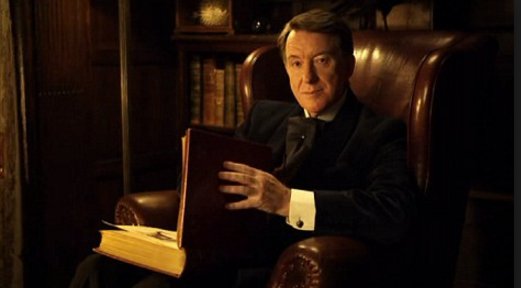
(Was the phrase 'intensely relaxed' first used by Peter Mandelson or merely made famous by him? I type that and then think, "Well, why don't you Google it and find out?" OK, all right, calm down, I will!.....Having done so, Google isn't definitively answering the point, but it's 'Peter Mandelson' all the way as far as I can see. So well done Lord Mandelson!)


******

Frank called the electrically-neutral neutron "the spark that lights the nuclear fire". and - as must happen - Melvyn immediately asked him to give listeners a sense of how big a neutron is (the first port of call of many a popular science presentation of the atom). 

Here's Frank:
Well, if you all take a deep breath. We just breathed in a million, million, million, million atoms of oxygen. And that gives you an idea of how small the atom is. Now I can imagine one of those atoms being expanded to the size of, say, Wembley Football Stadium, then the nucleus in the middle is about the size of a pea. So that is the nucleus, made of neutrons and protons. It's incredibly small.
And so on and so forth. 

Fascinating. Brilliant Radio. Not worth the licence fee in itself. Worth subscribing too if the licence fee were scrapped though.

Friday, 26 February 2016

Robert and Mary


Though this blog is mostly about (politely) slagging off the BBC, we do like to praise the BBC from time to time.

And In Our Time continues to excel. 

Last week Robert Hooke. This week Mary Magdalene.

It seems that Pope Gregory the Great did a bit of 'reading between the lines' and 'joining the dots' and linked the myrrh-bearing Mary of the Resurrection to the long-haired, tearful, penitent Mary of  the early chapters of the gospels - and Lazarus's sister Mary. And the painters followed.

Melvyn's experts were quite contrary about this version of Mary though.

And as for Dan Brown, well, don't get them started, sistah!

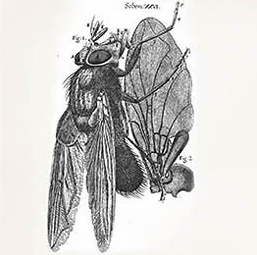
Robert Hooke, that stout Balboa, of course, with eagle eyes (assisted by a microscope), is famed for staring at the the world beyond the naked eye - a world of hitherto wild surmise/Silent, upon a floor in Oxford.

Thursday, 21 May 2015

Melvyn! Melvyn! Melvyn!


True story: I had a telephone conversation with my 82-year old dad soon after I got in from work tonight.

During it he got onto one of his hobby-horses: He thinks Melvyn Bragg's In Our Time is the most boring programme ever put out by the BBC.

I'll roughly translate what he said from broad Lancashire into 'RB' (Received Bloggerspeak), for the benefit of any soft southerners out there:
Who's that one you like? Er, the boring one, the one who comes from the Lakes? He was going on this morning about someone no-one's ever heard of, who was born in 30 AD! Who in their right mind would want to listen to that?
I rang back later to say I was looking forward to listening to it.

I mean, honestly, who wouldn't want to listen to Melvyn Bragg and three academics talking for 45 minutes about a historian from the first century AD? It's surely most normal people's idea of radio heaven. (Well, it's certainly mine.)

Even the ratings for Jeremy Kyle's eponymous TV show drop on Thursdays as viewers switch in their millions to Radio 4 for a spot of Melvyn & Co.

We all know what they're hoping for: the inevitable moment when Melvyn gets the hump with one of his academics for going off at a tangent or failing to do justice to something juicy which appears in his notes.

And then we all know what comes next: Melvyn starts throwing chairs at them, the Radio 4 audience begins chanting in unison, "Melvyn! Melvyn! Melvyn!" and Dame Jenni Murray has to rush in, with back-up from Jane Garvey, to break it all up.

Yes, it's all shameless sensationalism, of course, but that's what we In Our Time fans love about the programme.

Today's programme was about Josephus, author of The Jewish War and Antiquities of the Jews.

Josephus was apparently born to a father of priestly descent and a mother who claimed royal ancestry. Melvyn did a DNA test to try to prove or disprove the matter before bringing out a lie-detector to see which parts of The Jewish War were and weren't true. 

All four of Josephus's wives were invited onto the show. They began screaming and pulling each others' hair. Dame Jenni and Jane had to rush into the studio but, oddly, instead of breaking up the fight, they began restraining Professor Alexander and Professor Goodman (the two male academics) instead (typical bloody Woman's Hour!).

Towards the end a live bear (called Evan) was brought into the studio and ate Professor Alexander. A psychotherapist came on to console poor Professor Tessa Rajak.

Oh, I do love In Our Time

Thursday, 12 March 2015

Place cells, dark matter and BBC Radio 4


BBC Radio 4's bias towards the arts and the humanities is deeply engrained. However, there are certain exceptions: the jokey Infinite Monkey Cage and the Guardian Science-like magazine programme Inside Science. The occasional series Frontiers looks deeper, but is an infrequent part of the Radio 4 schedule. 

Still, Radio 4 does offer listeners The Life Scientific

However much it may (from time to time) infuriate those BBC bias watchers who hate the BBC's unabashed bias in favour of a belief in anthropomorphic global warming, it remains a wonderful series - and a credit to the BBC. It offers in-depth, insightful interviews with world-class scientists by a brilliantly communicative scientist (Jim Al-Khalili). 

This week's interview was with Nobel Prize-winning cognitive neuroscientist John O'Keefe - the man who described the idea of 'place cells' in the brain back in 1971. It's well worth a listen. His enthusiasm for the sound of brain cells "singing" (thanks to the minuscule electrodes that monitor their activity) was touching. He misses not hearing them. 

The other beacon of light for science lovers is Melvyn Bragg's In Our Time, which (every few weeks) boldly goes where no Radio 4 programme has gone before.

This week's edition discussed dark matter - that mysterious thing which appears to make up most of the universe. Thank to Melvyn and his guests - Carolin Crawford from Cambridge Uni, Carlos Frenk at the University of Durham and Anne Green at the University of Nottingham - I think I understand the matter now (if, somewhat, through a glass darkly). 

Besides the facts, part of the fascination of In Our Time is the excitement of hearing the academics face Melvyn Bragg. Will they be WIMPs or MACHOs? Will they do themselves justice? Will any of them make Melvyn laugh? Will Melvyn get annoyed with them?  

In the latest addition, Carolyn Crawford communicated fluently. Melvyn seemed relaxed about her contribution. He understood her (as did I). 

Carlos Frenk was, as ever, a superlative communicator. Melvyn seemed awe-struck by him (as was I), and understood him (as did I). 

Anne Green, in contrast, was magnificently scientific but seemed to lack the knack of easily speaking in a 'popular science' manner. She flummoxed Melvyn at times (and me). He struggled to understand her (as did I), but he persevered (as did I), and everyone (Anne, Melvyn and me) was a winner in the end.

Is there anything like In Our Time anywhere else in the world?

Sunday, 26 January 2014

Odds and Ends


As it's Sunday night, there are various loose threads that I've left dangling in my head over the past few days and I don't want any passing cats to start playing with them and make a mess on the carpet. Much better to make that mess on a blog. 

Bouquets and brickbats galore for the BBC follow. 

A bouquet first. 

Melvyn Bragg's In Our Time this week looked at the sources modern academics use to study early Chinese history. This was In Our Time at its best. I can't say I was exactly drooling at the subject matter beforehand but I found it absolutely fascinating. It helped having three engaging academics to talk about it, especially Roel Sterckx of Cambridge University. (My goodness, that man is fluent and interesting. Less Linda Colley, more Roel Sterckx please BBC.) 

If you were wondering (and knowing you, of course you were!) the earliest Chinese written records of historiographical value are the 'oracle bone inscriptions' of the Shang dynasty (c1600-1700 B.C.- c1050 B.C.). They date from around 1200 B.C. They are inscriptions written on the shoulder blades of oxen and turtle shells, divination records of the Shang king's consultations with his royal ancestors. On the bones a question was put (such as "Will the king become ill this month?"). A priest then cracked the bone with a hot poker and wrote down the prognostication from the cracks in the bones, seen as the answer from the ancestors. There about about 200,000 fragments of these bones around the world, some 400 in Cambridge University Library alone. They allow academics to work out the movements of the Shang royal family, and mention such things as childbirth and toothache. 


I also like the fact that Melvyn Bragg is unusually conscientious as a Radio 4 blogger. His contributions dominate the Radio 4 blog. Without him the Radio 4 blog would be semi-comatose. (Actually, I think we're a better Radio 4 blog than the Radio 4 blog!)

Now a brickbat, and I'm lobbing it straight at Jeremy Paxman

What is it with the likes of Jeremy Paxman and John Humphrys that they only ever seem to have one tone when interviewing a scientist about some matter of general scientific interest - a tone of sustained (if good-natured) bemused scepticism tinged with moments of 'gee whiz!' surprise? It's always the same question too: 'What's the point of this?', with 'Why are we wasting our money on this?' often chucked in as a bonus question. Last Monday's Newsnight saw The Great Paxo interviewing The Sky at Night's excellent Professor Chris Lintott about the comet-chasing Rosetta probe and those are the questions he put and that's the tone he struck. As to the 'waste of money' question, Chris replied:
Well, you have to think where the money's gone. The money doesn't go to the comet. The money's spent here on earth. It goes to people, it goes to technology and it goes to industries in this country and throughout Europe.


And while I'm chucking brickbats at the BBC's science coverage, I've got to say that the larkiness of programmes like Radio 4's Inside Science can be really wearing. Larky, larky, larky. If the larkiness led to laughs it would be OK, but it's almost always a laugh-free kind of larkiness. Yes, Humour and the Higgs-boson can certainly go together, but they certainly didn't during the exchanges on this week's edition. Come on, Inside Science, treat us like adults please, or do I have to send Melvyn Bragg in to sort you out? I will, you know. I will send in Melvyn Bragg to sort you out. 

There were no laughs whatsoever during this week's Four Thought. The previews of Four Thought rarely tempt me to listen, but this week's edition sounded interesting - and most unlike the sort of thing you usually hear on Radio 4. It was a talk by a former British soldier who served in Afghanistan, and made for a genuinely thought-provoking listen. 

Emile Simpson gave an account of how the strategy in Afghanistan evolved over time to become ever more subtle and sophisticated. Concrete examples were given as to how British strategy changed as the early idealistic aims of the war ran into the messy reality of Afghanistan and how growing local knowledge led to nuance and greater success in Britain's military activities. I don't think I've really done full justice to the shrewdness of Emile Simpson's arguments there, so please listen for yourselves.


Time for another brickbat. (This is like a game of bouquet-brickbat table tennis). 

Newsnight's Ethical Man, Justin Rowlatt, was back on the programme this week discussing the tax dodges of China's elite. It was just what I'd have expected from him and Newsnight. It was based on a Guardian report and the work of a left-leaning American investigative journalists' group, and featured the leftist Tax Justice Network's Richard Murphy (described, as ever, merely as a "tax expert"). It inevitably framed the Western banks and accountancy companies and ended with Justin saying, "And let's not forget who's ultimately responsible for that". 

Can you guess who? "Ultimately we should say perhaps we're responsible and we should be looking to clean up this offshore haven", said Justin. 

Yes, elements in China's elite are engaging in tax avoidance but the Chinese aren't the guilty ones, oh no. Yes, we are "ultimately" the guilty party. It says so on Richard Murphy's oracle bone inscriptions. 

Now, if ever I heard the authentic voice of the Guardianista-BBC Left, that's it, in full flow. Thanks again, Newsnight.


We're due another bouquet, I think, after that rant and I'm returning to More or Less

A reader had seen an NHS poster at his local surgery which warned, scarily, that 'Two or more large glasses of wine a day could make you three times more likely to get mouth cancer.' Is that true? Well, More or Less investigated and, to cut a long story short, no, it isn't, and it's wrong in so many ways. Mouth cancer isn't common and, by itself, the stats actually reveal that the increased risk of mouth cancer from drinking two large glasses of wine a day actually carries a 0% risk. The increased risk from tobacco, however, is 22% - and here's where it gets interesting because the increased risk for people who use tobacco and alcohol is 61%. It seems to be the combination of the risk from tobacco and alcohol where the heart of the risk really lies. Please excuse me then while I pour a third large glass of wine then. Hmm, very nice.

Finally, as someone who used to write a classical music blog, I was very interested in Who Killed Classical Music? on Radio 4 the other day. It was written and presented by a young composer named Gabriel Prokofiev. Yes, Prokofiev. He's the grandson of the great Sergei himself. 

Though pleasantly nuanced, it's general thesis was a familiar one to classical music lovers -  that the modernists and avant-gardists of the Twentieth Century (Schoenberg, Pierre Boulez, et al) had alienated Western audiences to a disastrous degree (unlike their traditionalist counterparts in the reactionary Soviet Union, such as that wonderful tunesmith Sergei Prokofiev). The post-war avant-garde in particular felt that the kind of tuneful, romantic classical music that led up to WWII was irredeemably contaminated by Nazism and that mass appeal was a dangerous thing. They denounced traditional, tonal composers and became an authoritarian, dominating presence looming over the classical music scene. Meanwhile, the hated bourgeois audience went back to their tuneful classics, ever shrinking in number as more and more people found that the only contemporary music they liked was popular music (or jazz.)

Gabriel's granddad

Now, as the programme made clear, the influence of the avant-garde has declined sharply in the last couple of decades, and tunes and audience appeal are very much back in vogue. Still, despite that - and despite Classic FM - audiences remains small and knowledge about classical music minimal. Gabriel felt hopeful things are beginning to improve though.

Here's where the BBC comes in. 

If there's one thing reading classical music magazines for 25 years of so has taught me it's that lots and lots of British classical music fans of a traditional bend - those who like tunes and dislike too much dissonance - blame a particular institution above all for that avant-garde dominance of British contemporary music in the decades after the war (especially from the late 1950s onwards). That institution is the BBC. They regarded it as having been a deeply malign influence at that time.

As Gabriel was broadcasting on the BBC at the time, he presumably felt it was impolite to mention that fact. 

The man who usually gets the blame is former Radio 3 controller Sir William Glock. He certainly did have a strong bias towards the avant-garde (among many other biases). Sir William went on to control the Proms and stamped his radical mark on that too. Rumours of a hit list of traditional, conservative contemporary composers - tunesmiths to a man - who Sir William banned in favour of anti-tonal, experimental modern music abound and seem to have some truth. Some defenders of William Glock say that Radio 3 was actually worse under his successors, Robert Ponsonby and Sir John Drummond. 


I'm banging on about all this because you may be unfamiliar with it - and because it interests me (and it's me and Sue's blog!). It's a peculiar area of BBC history, where the BBC seems very clearly to have been strongly intent on guiding and shaping public taste in classical music and conditioning them to admire a particular type of contemporary classical music. 

I'm sure some of you might draw analogies with how the present BBC seeks to guide and shape public opinion on other matters. 

Saturday, 18 January 2014

Casting the Hammer aside


I have to say that I agree with chrish about this week's In Our Time

I love In Our Time (and think Melvyn Bragg is an excellent presenter of the programme), but chrish is right to describe its account of the Battle of Tours as being a "slyly-biased" one, and his concern is exactly the same as mine:
"that the BBC will only have one side of the debate aired."
I'd read up on the Battle of Tours in the days leading up to the programme. Wikipedia was my source. (You may say 'tut tut' to that, but that's the source the In Our Time website also links to.)

Wikipedia's account makes it very clear that there is a lot of disagreement about the nature and the significance of the battle - and that the debate is far from one-sided, with large numbers of eminent living historians lining up on either side. The three guests on this edition of In Our Time, however, all came from one side of that debate.

Essentially, Side A believes that the Battle of Tours (c732 AD) was a key turning point in history when the Frankish forces of Charles Martel stopped the tide of Muslim aggression that had swept across much of the Near East and Northern Africa in the hundred years since the death of Mohammed, crossing into Europe in 711 AD via Spain and moving ever upwards. Without Charles's victory (and his run of follow-up victories), the Muslim armies would have kept trying and France may have fallen the way of Spain, and then the rest of Europe. Without the Battle of Tours, we Europeans could have been under Muslim rule for the last 1,300 years listening to Mohammed al-Bragg on In Our Time and Abu Stourton on Friday

Side B believes the Battle of Tours isn't important, that the Muslim tide had already reached its natural limit by that stage and that all that the Muslim forces were up to in southern France was merely raiding for booty. They weren't coming to conquer. 

The three guests on In Our Time were all drawn from Side B. From the programme, listeners might have assumed that they represented modern scholarship's settled take on the significance of the Battle of Tours, set against the misguided historians of bygone, benighted ages. Nothing could be further from the truth.

I can do no better than quote chrish's take on the course of the discussion:
Islam was energetic as it converted Berber....it only wanted to get more booty for itself so there was no religious imperative at all. The Franks were no better-they would have been as foreign and as mercenary as the Muslims..but with worse algebra and a lack of Greek translations, Islam being such a vector of nice things.
Bede was trashed, Gibbon scorned-why this Battle wasn`t really much at all!
Only on a couple of occasions did a chink of the other reality come through - when Melvyn Bragg bridled (in a good humoured way) at his guests' airy dismissal of Bede and when historian Hugh Kennedy felt he had to add an 'up to a point' comment (but no more than that) to Melvyn's misty-eyed listing of all the harmonious wonders of benign Muslim rule in Spain. 

Of course, it was still - as In Our Time nearly always is - an interesting discussion and a fascinating topic. If only it had been more of a debate, and more representative of the present debate about the battle.

Saturday, 16 November 2013

Possessed by the devils


Wow, for an absolute clash of cultures, it's fascinating to read Melvyn Bragg's Telegraph piece about his friend Francis Bacon and then to read the comments 'below the line' (as we say in the blogosphere).

I love Radio 4's In Our Time, and can forgive Melvyn Bragg almost everything for the sake of it. Plus (as you may have noticed), I've something of a fondness for 'purple prose' myself. 

So, I rather enjoyed His (Labour) Lordship's ultra-ripe, poetic prose style in this Telegraph article. It strikes me as being pleasingly self-conscious in its intelligence, as well as being deliciously old-fashioned:
And there, the very pope of it all, Francis Bacon. Looking around. Up for anything. For everything. The champagne flute, the cigarette, the deadly eye, that Teddy Boy quiff, and the archly falling love curl on his forehead. His slow Thirties upper-class drawl did not quite disguise the rumble of Irish violent sex in the stables of his boyhood.
(I suspect Jeanette Winterson would approve too).

Then you read the comments. So disrespectful, so vibrant, so modern, so funny. Everyone hates Melv & everyone hates Bacon. (Mmmm, bacon!)

Lord Bragg seems like a left-wing voice from the past. Those commenters are clearly part of the right-wing present.

So how to do I feel about all this? 

Well, I'm right-wing myself, but I'll admit to feeling some sympathy for poor lefty Melvyn here.

He's someone who refuses to dumb down, who loves the English language, who shows an omnivorous curiosity for all manner of subjects (scientific, historical, cultural, philosophical, religious), and who presents the finest programme on BBC Radio 4. 

So I will continue to cut him some slack - even if the commentariat at the Telegraph won't. The rapscallions!