Sunday, 10 February 2019

What fresh hell is this?


The city of Pandemonium. Hotels available through Booking.com. Guaranteed hot weather.

Is this the time and place to admit that I'm a great admirer of Dante's Inferno and Milton's Paradise Lost? Today's The World This Weekend ended with a bit of literary parallel-drawing with present day politics, including both of those timeless gems of European literature. 

I smiled at the obviously-Remain professor talking to Mark Mardell. All his parallels went one way until he made a late attempt at balance by making a quip about EU regulations. But he then suggested that Terry Pratchett's version of Hell, where people are damned to an eternity of watching other people's holiday snaps, would especially torment Leave supporters if the snaps were of holidays in "Europe". 

A wise academic he may be, but he's caught in the false belief that being anti-EU means hating Europe. I, for one, love Europe. 

Anyhow, Mark led into the feature in his usual manner, talking of "the concordance of tabloid fury reserved for Donald Tusk". 

Ah yes, "tabloid fury" for poor old Tusky! 

"Tabloid fury" is so 'not our kind of thing here at the BBC', is it Mark? 

*******

Meanwhile, Our Mark has got himself into a Rob Burley type of situation this afternoon, engaging with a persistent pro-EU Carole Cadwalladr fan on the often 'hell-is-other-people'-like Twitter - albeit in a noticeably snippier tone than Rob usually uses. Let's eavesdrop on their conversation about the value of vox pops (a subject of interest to us)....

David Colquhoun: Even the lovely Mark Mardell just said "to find out, we now got to Doncaster". All these vox pops tell you is the thought of a handful of people chosen by the producer.  Cheap and lazy journalism. I am SO tired of listening to vox pops. All you get is the opinions of the producer who chose the people. How about some proper journalism?
Mark Mardell: Yes, good idea. Let’s ignore voters and just hear from politicians - or could that refusal to hear inconvenient voices be why we’re here ?
David Colquhoun: Not at all! But some good investigative journalism would be welcome, don't you think?  It costs more of course, but would be far more informative. The problem with vox pops is that they put all the power into the hands of the anonymous person who chooses who to appear. Is that the producer? (PS thanks for responding that's great.) Why, for example, do we never hear from people like Carole Cadwalla - people who have done serious investigative work? The last thing we need is to hear from more politicians - surely that would be to misinterpret what I said? You were quick enough to slap me down for something that I didn't suggest. I'd really appreciate an answer to my question, please...Here's a question that so far has gone unanswered, Who is responsible for choosing the handful of people who are chosen for vox pops?  They have enormous responsibility but are anonymous.
Mark Mardell: Me.
David Colquhoun: 1. Thanks v much. That's very interesting.  How can you ensure balance? It surely isn't possible? 2. Have you ever thought of inviting Carole Ccadwalla? The whole question of possible foreign interference is surely interesting and important.

John Sweeney meets a white working class male


Out of the mouths of babes and star BBC Panorama/Newsnight journalists:
I met Danny. I was working on some film on Newsnight and Danny was in the green room. It was unusual to meet a white working class male in the Newsnight green room. It was so unusual that me and one of my mates went down there to have a drink with him in the way that you would do with somebody from the, you know, a cannibal from the Amazonian, erm, from Amazonia, or maybe a creature from outer space.

Please don't read this post


What do you make of this? 

Is it great craic (as some vile people say), or evidence that the BBC is being trashed by complete and utter social media morons?

The following video features the BBC's Emma Vardy, carrying on regardless as befits a true professional - though entirely against her will - whilst some pranksters pull a prank on her. (One for the cops maybe?)

What the BBC has to put up with at times is beyond disgraceful, and this video is in no way whatsoever funny. Such 'humour' simply isn't amusing. Its makers need to grow up. And anyone who laughs at it needs to grow up too. You're disgusting.

Repeatedly playing sex noises while a BBC reporter is reporting live on BBC Breakfast about Brexit is completely beyond the pale. No one in our neck of the blogosphere should ever think of condoning such disgraceful, puerile behaviour. #solidaritywithEmmaVardy.

The juveniles behind this should be completely ashamed of themselves. And I for one won't be posting their video, with all its self-promoting tweet's nasty cuss words.

A rare BBC concession on 'Newswatch'


The 'offending' headline

This week's Newswatch was one of those editions where the BBC refuses to put anyone up to answer - a case of the BBC refusing to speak to the BBC.


However, that meant more topics were covered, beginning with this:
Donald Tusk's comments about hell this week annoyed many people, but did BBC News pour oil on the flames by distorting his words in their headlines? 
What Mr Tusk had said was: 
I've been wondering what the special place in hell looks like for those who promoted Brexit without even a sketch of a plan how to carry it safely. 
And what Newswatch viewers were complaining about was this kind of thing - George Alagiah's introduction to BBC One's News at Six on Wednesday:
Less than 24 hours before Theresa May returns to Brussels for negotiations over Brexit, the President of the European Council stands accused of insulting British politicians. Earlier today, Donald Tusk said there was a "special place in hell" for Leave-supporting politicians - those were his words.
Except, as Samira Ahmed then pointed out: 
But some viewers pointed out that those weren't quite his words, or at least not all of them. Mr Tusk spoke of those who promoted Brexit without even a sketch of a plan of how to carry it out safely, but that last thought, though it featured elsewhere in the programme, was not included in George Alagiah's introduction.  
One viewer said, "This is not what he said. Not the same thing at all and highly inflammatory at this time." 

And a second (more conspiratorial-minded) viewer accused the BBC of "manipulation" in order to suggest that Mr Tusk "had used an aggressive tone". 

A third viewer said:
He spoke of those who had promoted Brexit without a sketch of a plan to carry it out safely. The essential theme of his remark, which was rarely mentioned, "Safely", he was talking of those who had promoted Brexit, not as you variously reported or implied either all Brexit supporters or Brexit voters. He was musing on a question, "I have been wondering," whereas it was repeatedly reported without reference to that pondering. Both flowing subtext on the screen and reporting oversimplified the comment. It was very difficult to understand because it was so misleading. Making things simple can be at the cost of truth. I accept absolutely that the remark was worthy of attention, but I expect better of the BBC which, by using shorthand and half quotations, spread misinformation on a sensitive subject. And it is simply poor journalism. 
Further instances were cited - from the Today progamme, the initial headline on the BBC News website, and from the BBC Politics Twitter feed. 

Unusually, the BBC statement partly conceded the point. 
It is often a challenge to summarise complex stories in our headlines within the strict word-count limits on our site. The summary of the story and the opening paragraph made clear that Mr Tusk was referring to a specific group of people - those who promoted Brexit without a plan. But our original short headline on the website and News App was misleading, so we amended it. A tweet that promoted the article was deleted, as in some formats it did not provide the full context.
Now that is unusual for Newswatch.


Unfortunately, that hasn't quite finished matters. The same sort of people have been up-in-arms again today as Andrew Marr did exactly the same thing during his interview with the Austrian foreign minister this morning: 
Let me ask you about one other thing that has caused huge offence in Britain, which is Donald Tusk's comments about Brexiteers having a special place in hell. This is a human process of course and tempers are getting frayed but it caused real distress and was very, very unhelpful perhaps to the EU side.  
What's the betting he gets a mention on next week's Newswatch?

Did these viewers have a point, or were they really just nit-picking (on the EU's behalf)? And why was the BBC so unusually candid about having 'made mistakes' here?

Eurovision (2)


And the pro-EU #FBPE brigade aren't the only ones trying to politicise the Eurovision Song Contest. Haters of Israel are at it too. 

An anti-Israel campaign group staged a stunt outside Broadcasting House in December and the usual Israel-obsessed suspects (Ken Loach et al) wrote to the Guardian (obviously) last week. 

Both groups were demanding that the BBC boycott this year's competition because it's being held in Israel. 

So far the BBC is holding firm, saying:
The competition has always supported the values of friendship, inclusion, tolerance and diversity and we do not believe it would be appropriate to use the BBC's participation for political reasons. 
"Because of this we will be taking part in this year's event. The host country is determined by the rules of the competition, not the BBC.
Toby Young has a fine piece about this in The Spectator. focusing on the sheer hypocrisy and double standards of the people involved. It ends with Toby saying:
If the BBC heeds their demand to boycott Eurovision I will cancel my licence fee.

Eurovision (1)


Now, it's only right on a blog like this to note that 'the other side' is up-in-arms at the BBC for the corporation's decision to ban audience members from waving EU flags at Eurovision: You Decide. 

Only Union Flags were allowed at the event and security measures were taken to thwart pro-EU activist groups trying to flood the event with EU flags.

A BBC spokesperson said: “As a safety precaution we check all personal belongings, including all flags, into studio security while ticket holders are in the studio audience, but do, however, supply the audience with UK flags once they are inside.” 

EU Flag Mafia, the main group that hands out EU flags ahead of these kind of televised events, called it "clear propaganda and against the Eurovision code of conduct" - though that's untrue as the Eurovision code of conduct prohibits political statements, including flags used as political statements.

The BBC were, in fact, following the Eurovision code of conduct to the letter.

What larks!

Peter v Alastair


For someone who's hardly ever off the BBC, it's surely a bit rich for Alastair Campbell to moan about someone like Peter Hitchens getting an invite to the Today studio. Yet moan he did:


As you might expect, Mr Hitchens didn't take that lying down. I hope you enjoy his replies as much as I did:

One for Rob


Wonder if Rob Burley will answer this one?

Shares


Fine blogger David Hansard appreciated this morning's Sunday special from Nigeria.

There was a bit of a sting in the tail to his compliment though. He tweeted, "Turned on BBC R4 Sunday expecting the usual identity politics fare, but was pleasantly surprised to hear an excellent programme-length special about Nigeria, with Edward Stourton. Includes interesting interview with Femi Anikulapo-Kuti". 

"Turned on BBC R4 Sunday expecting the usual identity politics fare" sums up my expectations of the usual Sunday programme too but, yes, this was very good from Ed Stourton. 

Incidentally, a couple of other tweets from David are worth quoting too. This one comes from Thursday:
A brief discussion with Peter Hitchens on the BBC's Today at 7.50 am, about free speech at universities. Good performance. Introduced by Justin Webb as having "strong opinions". Outside the BBC they're known as reasonable and commonly-held opinions.
Justin did indeed trail the feature by calling Mr Hitchens "a man of strong opinions on a variety of subjects". 


Mistakes always come in threes


Apropos of nothing, did you know that the word 'apropos' in a mid-17th Century coinage deriving from the French Ã  propos, which means ‘(with regard) to (this) purpose’? 

You did? Oh.

Anyhow, apropos of nothing, did you spot that Andrew Marr fell into the old mistake of calling the Ku Klux Klan "the Klu Klux Klan" this morning? Andrew Neil did exactly the same on this week's This Week. As did Katty Kay on Monday's Beyond 100 Days. 

Bonus fact: Katty Kay, despite her initials, is not connected to the KKK. 

Accountability, BBC-style


Computer says no. **COUGH**

Talking about John Sweeney...

From DB:
With BBC Panorama in the spotlight here's an interesting Freedom of Information request from 2012.  A BBC Panorama producer got hold of someone's mobile number. That person wanted to know how. The BBC refused to say, playing the "journalism" clause.  
https://www.whatdotheyknow.com/request/121495/response/300718/attach/html/3/RFI20120732%20Final%20Response.pdf.html 
That very long 'no' from the BBC begins:
Dear Mr Kerrigan,   
Freedom of Information request – RFI20120732  
Thank you for your request to the BBC of 09 July 2012, seeking the following information under the Freedom of Information Act 2000 (‘the Act’): 

“My name is Chris Kerrigan and I was called by Andrew Head of the BBC programme Panorama. Can you tell me how my private mobile number was acquired.”  
We can advise you that the information you have requested is excluded from the Act because it is held for the purposes of ‘journalism, art or literature.’  The BBC is therefore not obliged to provide this information to you and will not be doing so on this occasion…
In the circumstances, the job title of the BBC lady who wrote that long refusal made me laugh:
Stephanie Harris 
Head of Accountability, BBC News 
Ah yes. War is peace. Freedom is slavery. Ignorance is strength. And continually refusing FoI requests is accountability at the BBC. 

From The Sunday Times


A little light-reading from The Sunday Times, beginning with a beautifully-written bit from Roland White:
Candidates to replace John Humphrys at the Today programme and nudie revue probably shouldn’t invest in a new alarm clock quite yet. Although he announced last week that he’d definitely be retiring this year, we’ve been here before. In 2009, Humphrys told Saga magazine that he expected to be sacked “very soon” as he was struggling with “the absurd pace” of the job. 
Yet Humphrys was still at Today in 2016, when he told The Times that retirement was imminent — possibly the following year. It was “extremely unlikely”, Humphrys insisted, that he’d be covering another election. Another election passed, and last week Humphrys was still available to interview a naked economist. 
At least this shows he’s in tune with current politics: constantly insisting he’s a leaver, but somehow managing to remain. 
Also from The Sunday Times, apparently the BBC is planning to cut the News at 10 by more than ten minutes "in an attempt to stop viewers flocking to ITV and appeal to younger audiences".
“We are slicing the flagship output at a time of huge public service duty in news,” said one source. “A vacuous gesture to reach younger audiences with zero credible evidence to back it up. 
“ITV will now provide more News at 10 in a week than we do.”
And here's something about Sinn Fein and the BBC's coverage of Gaelic Athletic Association games:
There is something distinctly Trumpian about the way Sinn Fein is stirring up a false tribal grievance against the BBC. The Ulster Council of the GAA is having to defend the station from persistent Sinn Fein claims that it is not showing enough live championship matches, after party deputy leader Michelle O’Neill unfairly accused the Beeb of having “a clear bias against Irish national games”. 
As the Ulster Council explained: “The BBC don’t have the rights to show live championship games. The rights are dealt with nationally and lie with RTE.” 
In fact, the BBC is so keen to cover GAA games that it sends camera crews to four times more than RTE will let it show, and then waits to see which it is permitted to broadcast.
And, one more... Is Peter Rabbit the next rabbit-brained celebrity to appear on BBC One's Question Time? Apparently, Sony Pictures has explored a deal to buy the television production company behind the BBC’s Question Time.

Saturday, 9 February 2019

More on BBC Trending

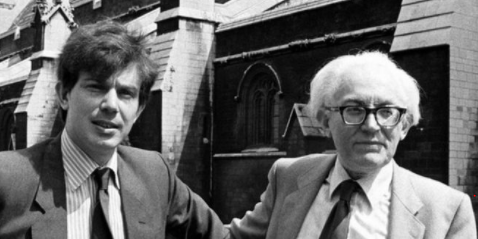
Tony Blair and Michael Foot

Memories of Labour in the 1980s and 1990s...

Various tribes existed even then. Moving leftwards you eventually reached the Tribune group. And from there it was straight on to the farthest reaches of the Labour left, the Bennite Campaign group (who now head the Labour Party). The Blairites later brought in the Progress group.

So what? Well, what to make of the permanently-'woke', identity-obsessed, left-wing crowd at BBC Trending? 

They certainly act like a campaign group, but are they the BBC's version of the Campaign group? Or are they (as I suspect) much more a hybrid of Tribune and Progress? 

One things for certain: They certainly ain't right-leaning. 

And, especially on US matters, on the Alt-Right-Antifa spectrum they're definitely on the Antifa side of the scale. (Their main guru has even written a book about the Alt-Right and heckles their supporters on Twitter). 


It reads as if it was written by a left-wing activist hostile to the right-wing British student group in question and set on grinding them into the dust. 

Everything - language, framing, structuring, putting the right-wingers on the defensive, balance of quotes, etc - militates against the right-wing student movement, despite (in true BBC fashion) actually featuring plenty of quotes from members of the right-wing student movement in question for, ahem, 'balance'. 

So is its author, Ed Main, a biased BBC left-leaning journalist who just couldn't help himself? (Does he  even realise how biased his piece reads?) 

And which editor at BBC Trending gave the go-ahead for such a blatantly biased piece?

(Answers on a postcard to Mike Wendling, BBC Trending).

The very final sentence


This, courtesy of DB, is very BBC:


Yes, the poor "Muslim man's request for an imam to be present at his death in Alabama" is the story for the BBC - another tale of poor hard-done-by Muslims in Trump's America.

And, as DB says, you do indeed have to go to the very final sentence of the BBC report to discover his crime: "He was sentenced to death in 1999 for raping and murdering a 15-year-old girl in 1995." 

Less agenda-driven media outlets would have mentioned that earlier.

Is Less More?


In which I accuse Craig’s appraisal of More or Less on the issue of Holocaust denial of being far too generous and gives the programme a pass it doesn’t deserve.

I should declare an interest - in the literal sense - meaning that the subject interests me, and not in the euphemistic sense, which suggests a financial or similar obligation that might tie one to a particular view.

I heard this programme because the subject matter caught my eye, (I suppose I should say “ear” ) which why I paid attention to a programme I haven’t properly listened to for ages. 

The treatment of the item about Holocaust denial seemed decidedly glib. To use one of More or Less’s favourite phrases, “let’s dig a little deeper” and ask who benefits from a thorough More or Less debunking of this survey’s findings. Cui bono?

Q. Why would the Holocaust Memorial Day Trust commission such a survey?

A. A survey might be useful to probe the extent of the perceived increase in antisemitic incidents, with relevance to the activities of Jeremy Corbyn and his merry men.

Q. Why would More or Less feel the need to analyse it?

A. The BBC might wish to put the survey under scrutiny for many reasons. 
        They don’t trust the findings; 
        they think they’re unreliable; 
        they don’t like the findings and wish it weren’t so.
The very idea of a massive groundswell of ignorance and racism is neither palatable nor credible to most people I’d imagine.

So here’s my take on the programme. 

The intro itself immediately brings in a kind of get-out clause, using non-committal language, which covers the whole issue: 
“As many as one in twenty adults in Britain don’t believe the Holocaust took place.”
("As many as" = "not categorically")

Then they define the word ‘Holocaust’, presumably to avoid any misunderstandings, but (problematically for me) emphasising the "even bigger" number of ‘non-Jewish’ targets, “Roma, disabled, political prisoners and many others.” This almost vindicates or diminishes Hitler’s underlying antisemitism - the specific scapegoating of Jews - that fuelled his extermination policy. It’s almost worthy of Ken Livingstone when you think about it.

Then the findings (of a 2,000 person survey) are extrapolated to a seemingly mind-boggling conclusion, which is that “as many as one in twenty”  people in the UK deny the Holocaust. 

Admittedly, the BBC is not alone in making this unlikely-sounding extrapolation from the figures. I think that’s the inherent flaw in all surveys. How do we (ever) know that any sample truly represents the entirety? I don’t know how they do that and it could explain why polls and surveys are often way off the mark.


Ruth Alexander has been trying to find out more. She proceeds to analyse the methodology and takes a look at the questions, bringing in Professor Peter Lynn, who raises an eyebrow.

'The number sounds too big.
 Other experts agreed there are some serious flaws in the study. 
The wording of the questions seems to have some serious shortcomings, which may have affected the findings.' 
Fair enough.

He explains that people may have appeared to have agreed that the Holocaust never happened when that wasn’t what they intended. Is he saying that people get easily confused by those pesky double negatives, which made them say they “think the Holocaust never happened” by accident?

The best example of this kind of confusion that comes to mind at the moment is the irritatingly frequent misunderstanding of the term “cannot be over-estimated”, which people so often mistakenly say when what they really mean is “cannot be underestimated.” 

But how confusing is it to be asked “Do you believe the Holocaust never happened? Well, do you? yes or no? And if you say 'yes, I do', do you mean it happened or it didn’t happen? 

“People taking part in a survey like this”, posits the good professor, “maybe they’re ticking boxes mindlessly, with one eye on the freebies?” 

Yes, good point. But that’s a criticism that could be applied to all surveys. In fact, it highlights the flaw in the entire notion of surveys, wouldn’t you say?

“And”, he continues, “some people may be ticking outrageous boxes just for the fun of it.”

Ruth Alexander takes that up and runs with it. “Yes,” she agrees, “look how many people follow the Jedi religion.” 

Well, in that case, we’re all finished. We’re all trolls, wind-up merchants or too bloody stupid to know what we’re doing. Survey, shmurvey, oy veh.

Another flaw in this survey they're claiming is that the term ‘Holocaust’ wasn’t explained. People may have thought they were answering questions about Hollywood, or holograms or holey socks.

This is looking more like a thorough debunking of surveys-as-a concept as opposed to this particular survey with its unpalatable findings. 

I must admit question No.1 was a bit tricky. It was about numbers. It resembled one of those multiple choice questions you get on The Chase or Who Wants 2 B a Millionaire. 
“How many people were murdered?
Was it: a) zero, b) 1000, c) one Zillion.  
The answer’s bound to be a guess, really.

The next question was in a similar vein, but it concerned the dates the Holocaust took place. The choices given were something like: 
Was it:  a) between100 BCE and 100 AD?
or b) between the Roman invasion and next week?
and c) it hasn’t happened yet. 
You could guess, but you could always answer “don’t know.” 

The next analysis concerned a consecutive list of questions containing confusing double negatives, in which the crucial question “The Holocaust never happened” was cunningly concealed. Further trickery involved the deliberate complexity of having to tick one box from a wide range of answers graded from ‘strongly agree’ to strongly disagree. 

Why am I calling it trickery? you ask. Well, the implication seems to be that the HMDT might have engineered the survey so that the findings would exaggerate the extent of Holocaust denial. Now, why would they do such a thing? To “smear” the whole of the UK, perhaps? 

I’m afraid both Ruth Alexander and Professor Lynn can’t really continue to debunk this survey without recognising that the points they're making will inevitably debunk most other surveys as well. Not to mention referendums. ‘We weren’t given enough information. We didn’t know what we were doing. We were misled.’ 

I wonder how Ruth Alexander’s inability to handle a double negative without getting the meaning completely wrong could be extrapolated?
“Does it seem possible or does it seem impossible to you that the Nazi extermination of the Jews never happened” 
Is that too difficult for you? It was for Ruth Alexander. She couldn’t figure out what the right answer was. What if this problem with basic comprehension were to be extrapolated and applied to the number of people working on More or Less? Would it be 20 per cent? 50 per cent? Hmm. 

In case you too are as confused by the double negative as she was, she gives the answer, slowly and clearly for those of us who have difficulty grasping the principle. 
"Listen up! If you said “possible” You.. Are.. A.. Holocaust Denier.”  
Doh!

Open Thread


Slight spring clean at the blog, look-wise, in early mid-winter. I believe it's what's known as a 'whiteout'. But everything else remains the same. And thank you, as ever, for sticking with us and continuing to comment. 

Priorities


Last night's News at Ten on ITV devoted two minutes and 19 seconds to the Luciana Berger/Labour antisemitism story. The BBC's News at Ten gave it all of 25 seconds. And to add insult to injury, Clive Myrie stumbled over her surname. 

Sport the difference


As Laurel and Hardy might have sung: "In the Blackface Mountains of Virginia/On the trail of the lonesome BBC label..."


He adds, "Note also that 'blackface scandal' is a few steps up the outrage ladder from 'admits wearing blackface'".

"A 'fake news' scandal that will shock the nation"


The leader of UKIP, Gerard Batten, is tweeting about his policy advisor Tommy Robinson (aka Stephen Yaxley-Lennon - h/t the BBC). Apparently the latter is going to expose Panorama: 


Here's a clip of what's apparently coming - and is that John Sweeney I see looking like a rabbit caught in the headlights at the end? (I do believe it is!)

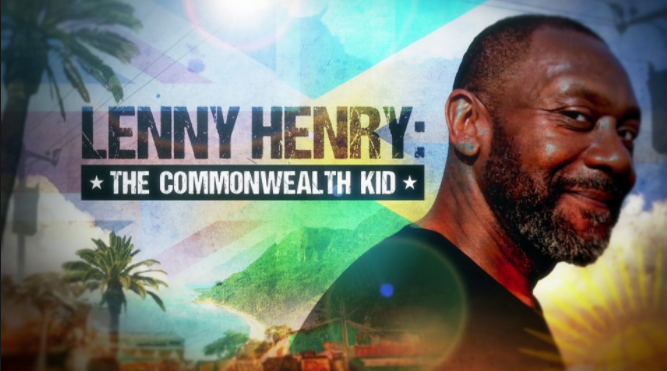
The BBC criticises Sir Lenny Henry


Breaking news....

The BBC's Executive Complaints Unit has partially upheld a complaint against Sir Lenny Henry, ruling that Sir Lenny was "inaccurate" twice during his personal documentary for BBC One:

Lenny Henry: The Commonwealth Kid, BBC One, 2 April 2018 

Complaint
The programme contained a number of references to Jamaica and its citizens, and their historic relationships with the United Kingdom and the Commonwealth. A viewer complained that these gave an inaccurate and misleading impression of why the author’s parents had been able to emigrate to Britain, and of Jamaica’s status at the time.  The complainant also objected to the use of the phrase “Commonwealth Kid” as being based on the same false premise. 
Outcome
The programme was a personal account reflecting the author’s own perception of his background and identity while growing up.  As such it was reasonable for him to describe himself as a Commonwealth kid.  It was inaccurate however to claim that membership of the Commonwealth had enabled his parents to come to Britain, as that was not a relevant factor. It was also inaccurate to suggest or imply at various points that Jamaica was part of the Commonwealth in the 1950s, when in fact Jamaica only joined the organisation in 1962.
Partly upheld 

Further action
The programme will be amended before any future repeats.
********

Of course, it's not often that the BBC upholds a complaint. The latest fortnightly report on Complaints to the BBC records 19 ECU rulings - all of them 'Not upheld'!

Incidentally, the two most complained-about programmes were Question Time on 17/01/2019 for being "biased against Diane Abbot" (whose name the BBC complaints report spells incorrectly!) - "470 (after invitations to complain were posted on social media)" - and Today on 26/01/2019 (161 complaints) over John Humphrys's interview with Ireland’s Minister for European Affairs, Helen McEntee, for "being biased in favour of Brexit".

Where credit's due


Tim, of 'More of Less' fame, smiling and sporting a leather jacket

Over the years I've given mixed reviews to Radio 4's statistics show More or Less, especially as regards bias. 

For me though, the latest series is proving (pleasingly) to be much stronger on the pluses than the minuses.

And I'm particularly enjoying the programme's increasing focus on whistle-blowing rubbish BBC reporting.

Episode 1 used Radio 4's Today to illustrate silly "apocalyptic" media headlines and hyped-up 'nanny state' reporting about 'rising' child sugar consumption, suggesting that it was largely fake news.

It then moved on to media misreporting of the rising train fares story, ruling that, in the specific instance of BBC reporting cited, "the fault lies not with the rail industry but with the BBC, which misquoted the industry body The Rail Delivery Group".

Ouch!


Episode 2 then investigated the BBC website for a short documentary on 'intersex surgeries' for saying that that the UN believes as high at 1.7% of the world's population has 'intersex' traits, "roughly the same as people with red hair" [a comparison the programme judged deeply misguided and unhelpful].

The BBC reporter behind it was Megha Mohan, the BBC's BBC Gender & Identity Correspondent.

She cited a UN website, which guestimated that the figure could be as high as 1.7%,

But, as More or Less pointed out, "if you dig a little bit further", that website also says it could be as low as 0.05%.

That's a massive difference. It's the difference between 1 person in 60 [Mogha's version] and 1 person in 2000.

Megha Mohan, leader in global breaking news

And More or Less, on digging further, found that that 1.7% guestimate came from an ideological academic - namely the author of Sexing the Body: Gender Politics and the Construction of Sexuality.

More or Less also criticised Megha Mohan's piece for focusing on situations where surgeries are debated, which the programme judged "rare". And, on looking into the surgery figures, More or Less presenter Tim Harford said, "So not 1.7%, but 0.017%". So rare indeed.

Alas, Megha herself had been so proud of this documentary:


Oh dear!

Episode 3, in contrast, showed the BBC News Channel's Carrie Gracie actually doing the right thing and expressing shock at a wild statistic from the charity Refuge's Sandra Horley claiming that domestic violence costs the UK public £66 billion a year, a story the BBC had made a headline story on 21st January. The stats don't add up - as per the BBC's head of statistics - and it's pretty much nonsense..At best Refuge trebled the costs. Carrie - the BBC's most famous wage equality campaigner - clearly knows her stats, even if others in the BBC newsroom don't.

Episode 4 made BBC reporting of the '1/20 UK people are Holocaust deniers' story the starting point for its main story. More or Less cast serious doubt on this figure, for many, many, many reasons - all of which (perhaps hopefully thinking) sounded plausible to me - including a potentially deeply confusing question in the survey. It appears, the programme concluded, as if we're in the still grim but significantly less scary 1-2% territory when it comes to the actual number of Holocaust deniers.

And this week's edition, Episode 5, went a good deal further than I ever expected it too in debunking the BBC's Brexit coverage, specifically the BBC's headline claim (across many platforms) that one-third of the UK's businesses are considering moving operations abroad because of Brexit. Tim Harford described those claims as "bizarre", "not so much Project Fear as Project Wrong", and "not worth taking seriously", and duly outlined why. It's well worth listening to. 

“We are investigating this issue”


Billy the SNP Slayer

Further to Sue's post, and Stew's comment...

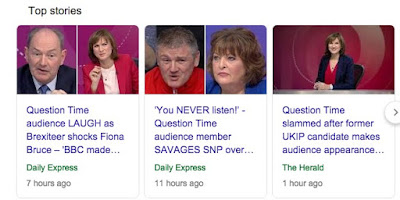
Spot the Activist has long been a popular game among hardcore Question Time watchers - anyone remember Amy Rutland? - and as hardcore Question Time watchers get ever more hardline you can probably expect more headlines like this in today's Times:


Yes, “a former UKIP candidate has appeared for the third time as an audience member on Question Time, evading supposedly stringent checks on applications”. Inevitably, he was spotted. (He always wears an orange jacket, which probably didn't help!). In response to the fuss, a BBC spokesman said, “We are investigating this issue.”

********

On a possibly unrelated note, there's another headline in The Times today:


The Times says:
BBC Radio Scotland has lost more than 200,000 listeners in two years. 
Its audience reach was 749,000 in the final three months of last year, down from 839,000 in the same quarter the previous year, and 952,000 in 2016. 
The figures were disclosed after it emerged that BBC Radio 4 had lost 750,000 listeners in the past year and BBC 5 Live’s audience had shrunk by about 10 per cent.

Stand By Your Men


Some more BBC complaints responses for your reading pleasure....


Complaint
We have received complaints from people who felt Owen Jones was treated in a disrespectful manner while appearing as a guest on the programme. 
Response
Following the verbal abuse which he and others had sustained from protesters outside Parliament, Owen Jones, journalist, left wing commentator and activist, used his “Take of the Week” section to give his personal take on the current state of political discourse, the rise of the far right and, as he deemed, the reasons for this. 
This is a prominent section of the programme in which the author gives their views unchallenged.  During his video and the studio discussion which followed, Mr Jones made allegations about the Conservative Party and right wing media which some would consider contentious.  As our audience would expect, Andrew scrutinised what Mr Jones said.  Michael Portillo, who disagreed with Mr Jones, also gave his opinion. Mr Jones was given ample time to express his views and respond to points made to him. 
When Mr Jones made allegations about The Spectator magazine and Andrew’s role with the publication.  Andrew legitimately pointed out that this was nothing to do with the BBC and it wasn’t right for Mr Jones to use the programme to make personal accusations against him.


Complaint
We received a range of complaints following the interview of Helen McEntee. Some listeners felt the tone and content were not appropriate, suggesting a personal bias from the interviewer.

Response
We raised the main concerns with the programme team, who respond to the issues as follows:

“Thank you for getting in touch. We are sorry to hear you objected to John’s interview with Helen McEntee on Saturday. However we do not agree that John’s questioning was unfair. 
Our job is to put arguments to interviewees to test their opinions and to see how firmly held they are. We’ve done this with guests responsible for the UK’s role in these affairs too. We take the same firm but fair approach to each interview. 
It can be useful to approach an issue from an alternative point of view - the question about Ireland ‘throwing its lot in’ with the UK was an attempt to do just that. We think it is a legitimate question to ask, as a different way to discuss the importance of the trading relationship between the nations. 
John also queried the position of the Irish Government, as stated by Leo Varadkar at Davos. This wasn’t a challenge to Minister McEntee personally. At Davos, the Taoiseach said: “I think we’d end up in a situation whereby the EU and Ireland and the U.K. would have to come together and in order to honour our commitment to the people of Ireland that there would be no hard border, we would have to agree on full alignment on customs and regulations.” 
Perhaps at some point Ireland may choose to prioritise its desire to avoid a hard border over its obligations as an EU member. We have to ask to find out. A question like this doesn’t reflect a presenter’s own personal view. Part of their job is putting other people's views forward. Presenters have to be impartial and it is their job to play devil’s advocate.John put it to Ms McEntee that even though the UK voted to leave the EU, and thereby its rules and regulations, the Taoiseach’s position suggested that the UK was expected to abide by those rules after all. His remark, ‘and it sounds a bit arrogant to a lot of people on this side of the Irish Sea’, reflected the argument that the Irish and the EU are not acknowledging this.  
Minister McEntee made the point that the Irish want to avoid a hard border with Northern Ireland, that the UK’s red lines include leaving the Single Market and the Customs Union and that the backstop is there to protect the peace process after two years of negotiations. 
Today is required by the BBC’s Editorial Guidelines to be duly impartial and accurate, and we believe we achieved that here. We think this kind of robust questioning is well within the bounds of what our listeners expect."

Friday, 8 February 2019

How could I have not realised?

I suppose one of us ought to gather together a word or two about Question Time. Fiona Bruce has had time to settle in. 
At first, I thought her interventions were pretty un-chairmanlike. She seemed to want to be a participant, rather than ringmaster. Perhaps it’s that she sees her role as a one-man adversary - as if she has to vanquish all five guests all by herself, like a black-clad Clint Eastwood strolling manfully into a bar and felling the whole bar-full, single-handedly.

Then again, some of her interventions were okay. I don’t think the chair should allow any of the guests to ramble on interminably or say something outrageous without being properly challenged. 

Last night’s edition didn’t seem at all promising. I wouldn’t have bothered to stay up for it, but I happened to be awake, and I did watch it, even though I knew it would be about Brexit, and worse still, Scottish Independence.  There was no-one on the panel to spark up much in the way of anticipation - mainly because none of them were household names, exactly. 

The audience were the ones who brought some excitement to it, and I have to say that Fiona’s schtick is to bring the audience in from the get-go, so that they’re full participants, so to speak. They certainly livened things up as far as critiquing the SNP is concerned. 

I Googled Q.T. this morning just to see what impression it had made on the blogosphere. Up came the Daily Express. Who reads the Daily Express? As far as I could see it’s mainly celebrity gossip about nothing and considerably dumber than the Daily Mail. But the Daily Express went to town on last night’s QT.


 Anyway, this caught my eye; the bit when Fiona got shirty.
Tory peer Baron Forsyth told the BBC audience in Motherwell in Scotland that the Irish border was not an issue due to there being no desire for a hard border by both the UK and the Republic of Ireland. BBC host Fiona Bruce asked why the Irish border was not mentioned during the Vote Leave campaign, to which Baron Forsyth replied and insisted it was not an issue. Lord Forsyth added: “It’s an issue by those people who are trying to reverse the result of the referendum.” 
“The BBC audience laughed at the Brexiteer’s claim as the BBC host added: “But what do you think about the response you get from the audience when you say that? People are laughing.” 
Baron Forsyth fired back: “I think it’s because they have been listening to the BBC who has made this an issue when it is not an issue.” 
Ms Bruce responded: “Oh, it’s our fault. How could I have not realised it is the BBC’s fault?” 
The Tory peer responded and said: “I can help you.” 
But in response, the BBC host chuckled and said: “I might pass on that if you don’t mind.”

The bit where she said:
“Oh, it’s our fault. How could I have not realised it is the BBC’s fault?” 
was indicative of the BBC’s arrogant attitude to criticism. Fiona kind of ‘acted it out’ in the way she does. Just the way she said it was priceless. Someone should make it into a gif, for posterity. 

Thursday, 7 February 2019

Run! Hide!


Blogger and humanist Margaret Nelson had an early call from ‘plod’ after some trannies who were accidentally exposed to the awful biological truth about sex swooned and dialled 999. 

However, plod realised 74-year-old Margaret Nelson hadn’t committed an actual crime so they said ‘we are sorry for phoning you at the crack of 9am.’ Too late though; no good being sorry now.

Just wondering why one needs to be 74 before one can legitimately cease to give a f*ck? 
It’s not your actual age, though, is it, that frees you up? It’s being in a position of not having to worry that your ugly thoughts will finish off your career or your social life or whatevs. Or put you behind bars. Is it a real crime now? Have Anna Soubry and Stella Creasy made it one yet? 
Can they pick up those troublesome intrusive thoughts? I think they have ways.

The BBC has made a ridiculous mountain out of this. 'Actor with a voice like a foghorn, hoist by his own publicity stunt.' Race/hate/fantasy/thought crime. Beware!  Liam Neeson is still at large!  Career down the pan, vilified and ostracised but still free to think bad thoughts should he have the temerity to do so.
Be sensible, like me; if the phone rings, don’t answer. If there’s a knock at the door, hide. 

Wednesday, 6 February 2019

For the many not the you-know-who

I just experienced a few brief moments of schadenfreude after reading an article headed: Amnesty International has toxic working culture, report finds.


It wasn’t only from learning about the “widespread bullying, public humiliation, discrimination and other abuses of power”, or the sad fact that “two staff members killed themselves last year.” Nor was it merely the ”evidence of nepotism and hypocrisy “ or that “multiple reports of managers belittling staff in meetings, deliberately excluding certain staff from reporting, or making demeaning, menacing comments like: ‘You’re shit!’ or: ‘You should quit! If you stay in this position, your life will be a misery,’”

Neither was my brief moment of satisfaction derived from the news that “Staff reported multiple accounts of discrimination on the basis of race and gender and which women, staff of colour and LGBTQI employees were targeted or treated unfairly.”

No. I kind of suspected much of that already. The little frisson of pleasure I experienced from seeing all this set out in black and white was purely from the fact that I was reading it in THE GUARDIAN.


The Guardian has provided a platform for anti-Israel and antisemitic opinion for decades.

Amnesty International (Am Nasty) singles out Jews and Israel in the guise of human rights advocacy, their slogan: “We campaign for a world where human rights are enjoyed by all” 

For the many, not the Jew.

Examples below, from the beginning of this year alone. (And it's only 6th Feb)

https://www.ngo-monitor.org/amnesty-international-singling-out-jews-in-2019/

http://elderofziyon.blogspot.com/2019/02/amnestys-obsession-with-jews-continues.html

https://www.ngo-monitor.org/episode-11-amnesty-internationals-campaign-denying-jewish-history/

https://www.jpost.com/Middle-East/Amnesty-Israels-using-antisemitism-to-whitewash-its-war-crimes-579226

http://elderofziyon.blogspot.com/2019/01/absurd-amnesty-doesnt-just-hate-israel.html

http://elderofziyon.blogspot.com/2019/01/frankfurt-mayor-says-amnesty-is.html