Thursday, 17 September 2020

Sky News learns


If you're even remotely interested in geology, or have seen programmes like Walking With Dinosaurs, or various edition of Horizon over the years, or listened to Radio 4's In Our Time, you'll surely know about the Permian-Triassic mass extinction. It happened some 233 million years ago, wiped out most of life on earth and left the field open for the dinosaurs to rise in the Triassic era. Out went Gorgonopsid, in came Coelophysis. 


Sky News has some breaking news for us this morning however:

Now that's what I call 'old news'!

Getting to know him


Well, here's a turn-up for the books. 

People on blogs like this - including this very blog - complained for years about the BBC's penchant for cricketer-turned-politician Imran Khan, the eternal would-be leader of Pakistan.

People hereabouts warned that he was a dangerous Islamist, but he was the BBC's darling. 

And now he's the Pakistani PM and, we learn today, favours the death penalty, and castration for rapists - neither of which are very BBC, though the latter is probably considered 'progressive' in Pakistan. 

The BBC actually reported something bad about him earlier this year, which I missed at the time and only found accidentally today:

"I will never forget how we Pakistanis were embarrassed when the Americans came into Abbottabad and killed Osama Bin Laden, martyred him," Khan said.

Khan used the word "shaheed" - a reverential Arabic term for a martyr of Islam.

Looking back on old BBC interviews with him, I found a 2011 transcript of one with Andrew Marr. Mr Khan was on to plug his book. This question pretty much sums up the tone of the entire BBC towards Imran Khan back then:

Now you famously created a cancer hospital, a free cancer hospital. You've done a lot of that kind of philanthropic work. And you hope that your political party's time might have come, but you're starting from a very small base, if I can put it politely, and you're up against people with huge amounts of money and a kind of old system of sort of barons parcelling out party seats.

Just look at the language there: It pits Imran Khan, the David-like "cancer hospital...free cancer hospital" guy, who's "done a lot of that kind of philanthropic work" and whose party starts from a David-like "very small base", against a Goliath-like system of the rich and powerful. 

At least Andrew went on later to ask the real question - though this was the only question of that kind he put:
Your critics say that you know you come across very well and all the rest of it, but you've become quite a tough Islamist yourself.

Imran Khan is a tough Islamist. He has, of course, also ruled out Pakistan recognising the State of Israel.  

Wednesday, 16 September 2020

KillWhiteygate (continued)


As far as KillWhiteygate goes, comedian Konstantin Kisin lays the blame nearer to where I think I think it should lie

I am a huge fan of the BBC (or at least what it could be) and I will never criticise a comedian for trying an edgy joke but how is anyone supposed to defend the producer who thought this should go out? Insane.

If you look at the programme's credits though, it lists three Executive Producers: Ruth Phillips, Peter Holmes and Christopher Barbour.

It also names the production company behind the programme: Zeppotron

I smell degrees of separation.

Are Ruth, Peter and Christopher independent of the BBC? 

If they're not independent of the BBC, this is their responsibility. 

If they merely work for Zeppotron and are independent of the BBC, who at the BBC ultimately signs these Zeppotron programme off? 

And who in particular signed signed this edition of the programme off? 

The answer should, of course, be clear and obvious. And if I'm missing something and you know what it is please let me know.

Frankie?

*******

For fact fans, Zeppotron is also responsible for providing Nish Kumar's The Mash Report to the BBC

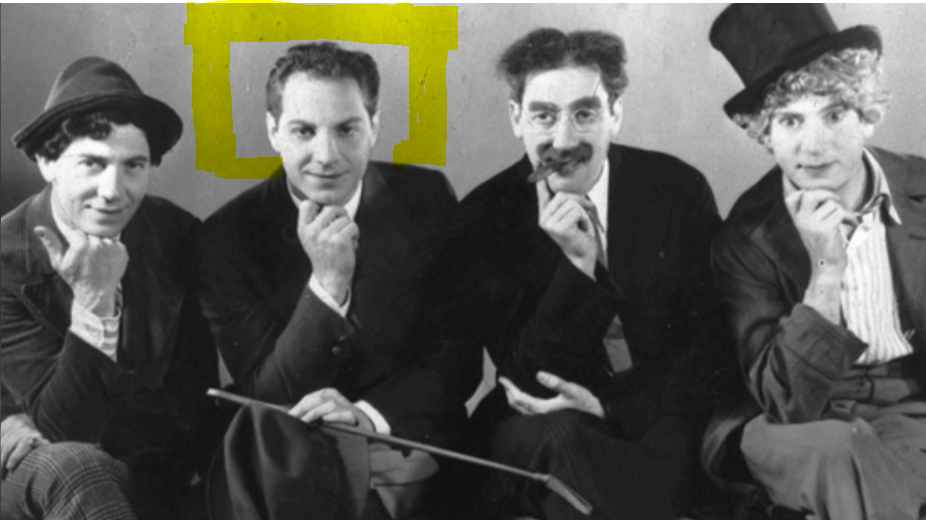
Which prompt the obvious question: Is Zeppotron named after the unfunny Marx brother?

In fairness to Gummotron though, I see that another programme they provide the BBC with is Would I Lie To You?, which has been pretty funny over the years. And they also do Charlie Brooker's Screen Wipe and Channel 4's 8 Out of 10 Cats (and its Does Countdown sibling). Cue Jimmy Carr laughing.

BBC Comedy Strikes Again (The 'Kill Whitey' Edition)


Sophie 'Kill Whitey' Duker
 

If you missed what Andrew Lawrence was referring to there, it was this week's Frankie Boyle's New World Order

This rib-ticking section, where comedian Sophie Duker talked a load of jargon-filled, sub-Marxist, factually-false drivel and everyone else nodded along like nodding dogs with necks made out of spring, has provoked a mass of adverse criticism: 

Frankie Boyle: Do you ever read James Baldwin, Sophie? 
Sophie Duker: I have read some James Baldwin and what I find striking every time that I sort of interact with that idea of white power and black power is that those myths you were talking about, those capitalist myths, are so prevalent today, they're so real today, like the myths we have about black power, like black power, there is still a world where Africa was never colonised, was never pillaged for its resources, like white power is Trump Tower, like these things are put against each other, but when we say we want to kill Whitey, we don't really mean we can to kill Whitey really...We do...[laughter]...but when we say we want to kill Whitey it's a capitalist...
Jamali Maddix: Not today! 
Sophie Duker: Not today! 
Jamali Maddix: We've got to finish the show.
Sophie Duker: But when people react to people saying well white privilege, whiteness is a capitalist structure, it benefits itself...
Dane Baptiste: Absolutely!
Sarah Pascoe: (nodding in apparent agreement) Hmm.
Sophie Duker: It hurts white people, it hurts non-black people, it hurts black people, but still this kind of fear of a black alternative and its these sort of rhetorics battled against each other, these extreme capitalist rhetorics of supremacy. 
Ah, BBC comedy! 

Here's a very small flavour of the reaction:
  • The absolute state of BBC comedy.
  • This is from BBC Comedy's New World Order. I’m not sure how this is ‘comedy’. I’m not sure why our cash is paying for it. I’m not sure why the BBC isn’t challenging those determined to do all that they can to divide us with this hateful wordsoup of divisive dross.
  • This is horrible. It's not just unfunny, it's incoherent nonsensical Marxist gobbledegook. The white contributors nodding along supportively as this woman jokes about killing people who look like them is just plain sick.
  • Go tell your jokes about killing whitey to the young mother and her partner who had her jaw shot off guarding a transit station in Compton a few days ago. The BBC must have a no tolerance policy on ALL forms of racism.
  • The BBC is obliged by the terms of its Charter to encourage social cohesion. Instead they use licence fee payers’ money to make this.

"Totally impartial BBC2 Late night satirical chat show, don't forget to tune in"


Here's the brilliant and funny Andrew Lawrence channelling Frankie Boyle:

(Warning: Contains the odd swear word, or two).

When Tony Met James and Katty


I was just going to post the questions here, but why not post the whole interview? (I can guess an answer to that, it's Tony Blair!)

The questions are very BBC. 

There's James Reynolds going straight for the negative and suggesting that Israel's agreements with Arab nations might be putting the region "on the road to open conflict", then pursuing the "sidelining" of the Palestinians angle, and then interrupting to point out that "many" more than just the Palestinians don't want peace with Israel yet. 

And there's Katty Kay (naturally) going for the Trumps - as she did even more emphatically in her follow-up question about Trump and climate change. 

Enjoy!

*******

James Reynolds: Let's look at the reasons for this alliance coming about. The Iraq War, which you co-led, got rid of Saddam Hussein but it also gave much freer rein to Iran to expand as a regional power. In order to counter that Israel and some of the Gulf States are getting together potentially putting the region on the road to open conflict. How is the Middle East a safer place after this deal?

Tony Blair: James, I think you can tell the history a little bit differently. The fact is, this is now just about security and about Iran. It's about the belief in the Middle East that if you want to establish a peaceful Middle East, then you have got to establish relationships between the State of Israel and the Arab nations. That is entirely sensible, not just for reasons of security, Yes, it's true, Israel and the Arab nations are very worried about what Iran does to destabilise the region, but they're also worried about the various extreme groups on the Sunni side who also want to destabilise the region. And what these agreements symbolise are people coming together in pursuit of a different Middle East, one that is based on religiously tolerant societies and modern economies. And that's what is really behind this. And I think what you will find with the agreement signed today is that this is not going to be a cold peace, and it's not going to be about security. It will be about a warm peace and it will be about actual engagement in the economy, in culture and, of course, in  the resolution of the Palestinian issue. 

James Reynolds: When you visited Israel and also the Palestinians as prime minister after 9/11...I remember those visits. I was a Jerusalem correspondent at the time...here was a common belief that you couldn't solve any of the problems until you had tackled and solved the Israeli-Palestinian conflict. But doesn't this 2020 agreement show something completely different, that you can solve parts of the Israeli-Arab conflict by sidelining the Palestinians instead of resolving their fate? 

Tony Blair: You're not sidelining the Palestinians. Look, you're not going to get a...I've studied this now for the best part of 20 years, I was heavily involved as Prime Minister. I was involved afterwards as the quartet envoy, I've spent the last five or six  years working on the Arab-Israeli relationship. You're not going to solve it unless two things happen. You've got to get a Palestinian politics that is unified and in favour of peace, and you've got to bring the Arab nations alongside the Palestinians in that peace effort. And so, when people say - and there are, of course, people on the Palestinian side who say - no, you should have nothing to do with Israel....

James Reynolds(interupting) Many are saying that.

Tony Blair: ...until the Palestinian issue has been resolved. They do say that. but the strategy they've had up to now has not worked, and it won't work in the future. The right strategy is to encourage the relationship between Israel and the Arab nations and then say to the Arab nations. 'We need your support. A unified Palestinian politics in favour of peace needs your support. That is a strategy that can succeed. If we carry on doing what we have been doing for the last half-century, we'll carry on with the same result'. 

Katty Kay; You've just came from the White House, Mr Blair. I remember speaking to Jared Kushner at the beginning of this administration, and he said that Donald Trump was the person to bring about the Palestinians and the Israelis, nobody else could do it, but he was the guy that's going to do it, but effectively they've given up on that, haven't they? I mean, they're now saying, well, if the Palestinians want to come along but I'm not seeing much outreach from the White House to the Palestinians to get that agreement between the Israelis and the Palestinians.

Tony Blair: Katty, the White House, to be fair, have been reaching out the entire time. It's the Palestinians that won't engage with the Americans at the moment. Now, I understand all the reasons for that, moving the embassy to Jerusalem and so on. But the fact of the matter is, the intervention of the UAE was what prevented the annexation plans going ahead, and if the Jordan valley were to be annexed that would make a Palestinian state very difficult. So that intervention has actually preserved the possibility of a future Palestinian state. And, you know, the best thing for the Palestinians to do would be to engage with the Americans, engage with them by the way not saying that we agree with your plan, but saying let us sit down and discuss the detail of it. Because otherwise, and this is why...I understand completely why...people like me, when we encourage this relationship between the Israelis and the Arabs, they say. oh, you're an Israeli stooge, you don't care about the Palestinians. If the Palestinians don't get a different political strategy they will never get a state. What they've got at the moment is a strategy for sympathy. They need a strategy for statehood, and a strategy for statehood has to begin with making sure you engage with the Americans because they are powerful, making sure you bring the Arab nations on side because they can help, and making sure the Israelis feel secure with a Palestinian state because at the present time they don't. So if you want the strategy to succeed, that's how to do it. 

Keeping up appearances


Here's another bit of Lewis Goodall Twitter action to brighten up your Wednesday morning. 

One minute up pops a tweet:


The next minute it's been deleted and replaced by: 

The difference? "...of which I was not aware..." got dropped!

Tuesday, 15 September 2020

A five year plan for Gary Lineker


So Gary Lineker has signed a new five year deal with the BBC. 

But, as well as taking a pay cut, he will have to adhere to BBC impartiality rules as part of that deal.

Tim Davie clearly realised that he had to do something about Gary Lineker. Leaving him out of his declared crackdown on social media use drew a lot of flak and risked making him look weak, especially after Gary seemed to be mocking him over it. So he appears to have closed that loophole. 

Mr Davie has now said that that Gary "knows he has a responsibility to the BBC in terms of social media". 

The question is, will Gary stick to his side of the deal, and what will happen if he doesn't?

I'm already seeing some scepticism. BBC home affairs correspondent Daniel Sandford, for example, tweeted this in response:

So Gary Lineker has taken a pay cut. And is supposed to more careful about his social media use. Still managed to mention grouse shooting today though!

That came after Gary tweeted this earlier this morning:

Lovely day to mingle and murder some grouses.

Sorry Tim, but I think it's going to be a long and winding road with Gary. He loves his Twitter.

😕

Update: So much for that then, apparently! 

Replying to a tweet from the Guardian saying that he'd agreed to tweet more carefully, Gary Lineker has now tweeted:
Not true, but hey-ho. BBC recognise that I tweet carefully and will continue to do so.

So, why are all these media outlets reporting otherwise? Have they got the story wrong? Is it to be business as usual with Gary Lineker and Twitter?

In the money


Good grief! 

Emily Maitlis, the lead Newsnight presenter, earned £370,000 in 2019-20, up from £260,000 the year before.

A Twitter troll at the BBC (An Update)


Do you remember the "senior BBC World News journalist" Nimesh Thaker who the Jewish Chronicle found using a 'sock puppet' account to troll his Jewish colleague Emma Barnett, slam Israel, bash Tim Davie and re-tweet various Corbynistas? 

Well, the Campaign Against Antisemitism has found more of his tweets, this time (they report) sent more bravely under his own name on a now-deleted account. 

Again, he attacks a BBC colleague along the way:


Business as usual with the BBC's illegal immigration reporting


Yasminara Khan in Dover


I see that Newsnight tackled the issue of illegal migrant Channel crossings last night - the issue highlighted by Nigel Farage earlier this year.

It did so. of course, in the usual BBC way...by focusing mainly on the problem of the far-right. 

The language used throughout was fascinating. For example, there's a huge divide between those who prefer to use them term 'asylum seeker' and those who prefer the terms 'illegal' and 'migrant' - and Newsnight placed themselves emphatically in the former camp.

Also look out for the way reporter Yasminara Khan introduced Conservative MP Adam Holloway who wants to tighten the rules for asylum seeks: 

We have seen social media posts across far-right networks in which the names and addresses of hotels housing asylum seekers are being widely shared. They are calling for the boycott of some of the hotel chains. Fake anti-Muslim conspiracies have been shared. But some go even further...

Cue Mr Holloway talking about tightening asylum rules, which makes it sound as if Adam Holloway was "going even further" than the far-right (with their sharing of hotel names and addresses and their spreading fake anti-Muslim conspiracies). 

Either that was very clumsily-worded by Ms Khan, or it was a deliberate smear against Mr Holloway. Either way it should have been picked up by a Newsnight editor, re-edited or removed.

Here's a transcript:


Emily Maitlis: Throughout the summer, the footage of asylum seekers arriving on British shores in dinghies and small boats prompted much concern. Some were concerned about the welfare of those arriving and what they were fleeing, accusing the Government of not showing enough compassion. Others worried that the numbers were reaching peaks not seen since the Brexit referendum, and this concern has brought protest onto the streets. Britain First - a pro-repatriation group - leading the way. Yasminara Khan brings us this report on an issue that may have been buried by Covid, but has not gone away. 

Yasminara Khan: Covid-19 means 2020 will be remembered for one thing. But alongside the pandemic there have been culture clashes. And rumbling debates about identity. And with the summer heat and people landing on British beaches in dinghies, a perennial issue that slipped out of public consciousness has, among all the turbulence, come back. Asylum and immigration. 

Protestor: Boris, you're not listening. Priti Patel, you're not listening. Now is the call-out to the patriots of this country. If our Border Force and our government can't protect this border then the people must. 

Professor Matthew Goodwin: At the moment it is not seen as a top three issue. Immigration is way down the list. But if it moves up the list and voters are saying the government is managing it badly, that's that potent cocktail. 

David Moreland, UKIP: The public have been treated like idiots. Oh, well, we'll just ignore it, let it carry on, let it carry on. But it's getting worse and worse and worse and I really do fear, going forward, this is going to cause some major civil uprising. I wouldn't be the least bit surprised. 

For many, Dover is a visual symbol. Not just of our borders but of Englishness itself. Of Empire and of wars fought to protect the country from invasion. And it's here in Dover that, for some, the battle to protect English borders and identity still goes on today. Anti-immigration protesters gathered in Dover earlier this month. A massive police presence and a turn-out nowhere near the thousands promised by the organisers. But real anger. Varied views here, too. In the shadow of cliffs that in World War II were the last glimpse of home for pilots leaving to take on Nazi Germany, among the crowd, one woman wears a T-shirt emblazoned with a swastika. There is a clear and visceral backlash to the summer's Black Lives Matter demonstrations, too. 

Protestor: Take the knee! Take the knee - go on! There's a black man over there. Bend the knee! That's all you're good for. Bending down and BEEP. 

On the demo, we met David Moreland, a former UK Parliamentary candidate and party spokesman. He has got long expressed anti-Muslim and anti-immigration views. 

David Moreland: I'm here representing a large number of the country standing up against what I consider to be illegal migration in mass formation into the UK. The political elites at the moment are doing absolutely nothing to stop our country being... And it is an invasion. We are being invaded. There are some people here who should be entitled to come over and I fully agree with that. But the bulk of them have got no right to be here and we're doing nothing to remove them or stop them. 

Anger at a perceived loss of national identity, at immigration, are nothing new. But this summer has seen a huge rise in the number of people arriving on this by dinghy. In the last three months, 4600 people made the crossing. In the whole of 29, that number was 1800. Asylum seekers, once processed by officials, are placed in hotels and hostels temporarily. The system that is supposed to disperse those seeking refuge around the country has been disrupted due to Covid. Some asylum seekers have had to stay in temporary accommodation longer. And with that has come negative attention, protests and even vigilante action from groups such as Britain First - an anti-migrant, anti-Muslim, pro-repatriation group. 

Matthew Collins, Hope Not Hate: Britain First are knocking on the hotel doors, declaring themselves spokespersons for the Great British taxpayer. And they are portraying what are potentially very vulnerable people, portraying them as some kind of thieves. Or that they are there stealing from the Great British taxpayer. And I think that's not just sinister, it's really quite cruel as well. 

The Home Office has condemned the violence and abuse directed at asylum seekers as completely unacceptable. 

Matthew Collins, Hope Not Hate: No matter what the Home Secretary says, she hasn't got a grip on this at all. And her statements and the Government statements about this issue have become harsher and harsher and harsher. And I think that is, of course, to the detriment of us as a country and also, I think, puts these people coming to this country at greater risk because the public sympathy, or the empathy the public should have with these people, whether it's up for debate or not, has evaporated. 

We have seen social media posts across far-right networks in which the names and addresses of hotels housing asylum seekers are being widely shared. They are calling for the boycott of some of the hotel chains. Fake anti-Muslim conspiracies have been shared. But some go even further. 

Adam Holloway, MP (Conservative): I don't care what the far-right are doing. That's for them and if they want to wander into hotels and intimidate young illegal immigrantsasylum seekers, then that just tells you about them. What I'm more interested in is, until we can change the rules so that is very difficult for you to claim asylum if you come in illegally in this way, then sadly this will go on and on. And also, frankly, we'll have more drownings, like that poor boy the other day. 

The logjam caused by coronavirus is causing another set of problems. We understand that just last week, Coventry Council won an injunction against the Home Office to prevent a third hotel in the city being used to house asylum seekers after police, health services and even charities supporting migrants said they were too stretched. Newsnight has seen a letter from six council leaders in the West Midlands - Labour and Tory - to the Home Secretary, Priti Patel. 

"We can no longer accept a situation in which less than half of councils house asylum seekers in their areas and in which just 20 of the UK's 343 local authorities are home to as many as 50% of all dispersed asylum seekers." 

The Labour leader of Coventry Council, George Duggins, was one of those who signed the letter. I asked him, when are the council told that asylum seekers will be arriving in the city? 

George Duggins, Labour: Well, sometimes when they arrive. It is often as late as that, when they arrive. And it's often after the fact. So this is all part and parcel of what needs to be a realignment of the relationship between the Home Office and local authorities. There needs to be a complete revision as to how the Home Office deal with this going forward. 

Despite the publicity given to the rise in Channel crossings, overall numbers of asylum applications are down. There were 4850 claims between April and June this year. Down from 7657 in the same period last year. And on the wider question of immigration - not asylum - away from the far right extremes, many voters remain concerned about the scale of immigration. Taking back control was, of course, the Leave slogan. And Leave won the Brexit referendum. 

Professor Matthew Goodwin: For many voters that put Boris Johnson into office, they were expecting to have what they would call control over immigration and lower numbers overall. And what we have seen with the latest data on net migration is that we are running at a net migration level of around 312,000 per year, which is actually not far off the peak of around 330,000 before the referendum. And I think probably over time, some Leave voters, some Boris Johnson voters, some Conservative voters will start to say, actually, does this government have a grip of immigration? 

However you define "grip", no one would suggest it's an easy thing to achieve. Those shouting loudest and angriest will always be there. Massing on Dover is nothing new for the far-right. The question for the Government is, if worries about control and numbers become a mainstream concern again, what then? 

Emily Maitlis: We did ask the Home Office for an interview, but nobody was available. In a statement, the Home Office said: The UK has a statutory obligation to provide destitute asylum seekers with accommodation and support whilst their asylum application is considered. Asylum seekers are housed where appropriate accommodation is available and we are encouraging more local authorities to help. We take the well-being of asylum seekers extremely seriously and any abuse is completely unacceptable. 

Emily Watch


Emily, eyes firmly on her prey


Emily Maitlis marked her return to Newsnight last week by conducting a joint interview where she interrupted anti-Government, pro-EU former Conservative MP David Gauke 1 time but interrupted former Brexit Party MEP Ben Habib 11 times, giving the former a free ride and the latter a very hard time. 

This is her modus operandi these days.

When I saw she was going to interview Sir Roger Gale and Lord Lilley last night and that Sir Roger voted with Labour against the Government I assumed she'd go after Lord Lilley and leave Sir Roger alone, and that's exactly what she did. She interrupted Sir Roger Gale 0 times and interrupted Lord Lilley 10 times. 

Lord Lilley also got the usual 'laugh in the voice' treatment from Emily and got told one of his arguments was "quite specious". At least he resisted somewhat, saying "That was a statement not a question" and "Hang on, I let you ask a question as long as my answer!".  

And Emily did interrupt German MEP Katarina Barley 4 times and, at least as the beginning, put some challenging questions to her, but the later stages of the four-way interview ended with her saying "Let Katarina finish" and "Let her answer" to Lord Lilley. (O irony of ironies!)

Unsurprising news


Golda Schultz, singing that new version of 'Jerusalem' which everyone so enjoyed


Under a classic tabloid headline, Land of Nope and Glory!, The Daily Mail reports today that the Last Night of the Proms lost 40% of its TV viewers "as 1.4 million Britons switch off after row over 'imperialist' Rule, Britannia! lyrics". It averaged 2.1 million viewers, down from 3.5 million in recent years. 

Not all publicity is good publicity then. 

Unhappy bunnies


So Jeremy Bowen has said something about the Bahrain-Israel peace deal after all, and it's characteristically negative. 

He quoted a tweet from Aaron David Miller:

27 years ago today, I sat on White House South Lawn watching Clinton, Rabin, Arafat famous handshake - foolishly thinking we had reached an irreversible moment in peacemaking. Memo to current/ future peacemakers: don’t hype and over claim. It’s never as good as you think it is.

And then added his own take:

Two years later in 1995 when I left the Bosnian war to become a correspondent based in Jerusalem one eminent colleague said to me “are you crazy? The story’s over in the Middle East. They’re making peace...

But I think even Eeyore-like Jeremy is outdone by Barbara Plett Usher, who doesn't sound at all happy with the latest turn of events in the Middle East. 

  • The Bahrain-Israel agreement is the second case of an Arab state breaking ranks with the longstanding consensus to hold off on peace with Israel until it makes peace with the Palestinians.
  • Bahrain & UAE are tiny Arab monarchies w/o the clout of regional heavyweight Saudi Arabia. Riyadh has held the line on Palestinian statehood deal before it normalizes relations w/ Israel. Nevertheless, it has tacitly accepted the moves of its Arab neighbours.
  • The Bahrain-Israel agreement is another setback for the Palestinians. The Arab commitment to refuse normalization with Israel until the end of occupation was one of the few cards the Palestinians held in negotiations for an independent state. 
  • The Arab League did not back the Palestinian request to condemn Arab states ready to normalize with Israel. The League was ready to condemn the Trump peace plan as too pro-Israel. But not other Arab states.  
  • The Bahrain-Israel agreement is a diplomatic win for Trump and Kushner, who’ve been pressing to integrate Israel into the region regardless of a Palestinian settlement. And for Israel, which has always preferred to deal separately with Arab states. 
  • White House talking points suggest how Trump will be framing his intl deal maker credentials for the election campaign: as a harbinger of MidEast peace & prosperity, w/ more Arab & Muslim countries coming on board to normalize relations w/ Israel.
  • The Bahrain-Israel deal (& UAE) will allow Trump to deflect attention from the “Deal of the Century” that he didn’t achieve: Israeli Palestinian peace. That project was widely criticized as heavily slanted in Israel’s favour and rejected by the Palestinians.
  • Focusing outward is the Trump administration’s way of telling the Palestinians they can no longer dictate the region’s relations with Israel.
  • Amn Jewish Peace group: Normalizing relations with distant Arab states that have never fought wars with Israel is fine, but should not be used as a tool to normalize the occupation of Palestinians in Israel’s backyard.

Money talks


It's BBC 'rich list' day today, so it will be all about 'gender disparity' today no doubt.

The Times begins their report on the story by reporting that "more than 700 female staff have been awarded salary increases after lodging complaints": 

The number of women given pay rises after bringing formal or informal complaints since the gender pay scandal erupted in 2017 has now passed 700, according to Freedom of Information figures obtained by The Guardian, highlighting how widespread the problems had been. The BBC rushed to settle outstanding cases this summer as the departing director-general Lord Hall of Birkenhead wanted pay equality as one of his legacies.

That's a heck of a lot of women who'd been 'short-changed'! 

All the highest-rated comments beneath the Times article are unsympathetic and complain instead about how the BBC "so arrogantly and wastefully uses licence payers’ money". The highest-rated of all says:

This article singularly fails to address the far more important issue, namely the sheer extravagance in awarding so many employees salaries in the hundreds of thousands, paid for by way of a compulsory tax on the British public, many of very limited means and many who have no interest in the BBC and its so called "talent".

This is because, as the Daily Mail headlines it: 

Bill for BBC stars' pay soars by £1m: Bosses admit 76 presenters earn more than the Prime Minister

Annual report reveals 76 BBC presenters earn more than PM’s wage of £150,000. 

*******

Update: That said, the Telegraph has a different take: 

BBC to cut number of senior managers earning £150,000 or more

Director-general Tim Davie believes the corporation has too many highly-paid executives

The paper quotes "a source" at the BBC:

The organisation needs to be leaner and more efficient and we want to achieve that in a much more radical way than in the past. We will move at a greater pace.

The figures on the £150,000 list haven’t moved much from the previous year and we need to go in a clear southerly direction. Our public service headcount needs to be smaller and that includes senior leadership. Those figures must come down.

Monday, 14 September 2020

"Symbolically lowered"


A Grade II listed statue was illegally pulled down earlier this year by a far-left mob, then dragged through the streets and chucked into the Bristol Channel. 

The local, democratically-elected council, despite years of debate, had never voted for it to be removed and opinion polls had shown majority public support for its retention.

Well, that's one way of putting it. This BBC News website report, however, puts it rather differently: 

Campaigners spent decades calling for the statue to be removed and protesters at the Black Lives Matter rally took matters into their own hands and pulled it down in June. They symbolically lowered the statue into Bristol harbour.

It certainly sounds to me, from the language used there, that the BBC journalist who wrote this piece sympathised with that illegal act. 

I'm guessing he/she/whatever is one of those BBC activist types we've heard so much about. 

More of the same


Newsnight's policy editor Lewis Goodall has been busy on Twitter this afternoon relentlessly heckling Boris Johnson, trying to find holes in everything the PM's saying, passing on every criticism of the PM he can find, finding no holes in anything the PM's critics are saying, interpreting the PM's body language against him, editorialising against the PM, etc. 

And he's spinning like a stuck record for Ed Miliband too. [Update: And he's even 'liking' praise for him now]. 

He's so one-sided it's a wonder he doesn't capsize.

He'll be on Newsnight tonight no doubt, having polished his criticisms further.

Update: And he's now gone on (and on and on) to back up the SNP's criticisms of the UK government. 

An SNP MP has, in Lewis's words, "neatly" summed his case up and highlighted "the irony" of the UK government's position. 

This is meant to be an impartial BBC journalist, not an opinionated commentator. He shouldn't be saying such things.

I suspect Lewis is neither pro-SNP nor pro-Scottish independence, but any 'any port in a storm' and 'my enemies enemy is my friend' spring to mind, and they'll probably appear in his Newsnight report tonight in support of his latest 'prosecution case' against the UK government.

We'll see. I'm in the mood for transcribing things...

Update 15/9: Lewis didn't appear on Newsnight after all. It was quite funny watching how the life went out of his Twitter feed for a while when the large margin on the Government's win came through. He soon picked himself up though and was off highlighting the one Conservative MP who voted against the Government and his "quite extraordinary criticism" of the PM, adding "This isn’t over 👇". He then retweeted another Conservative critic. 

If this is an impartial BBC policy editor's impartial behaviour then I'm Lewis Goodall's banana.

Ripped, hench and buff!


 "Check out the 'ceps on young Dougie" is the general consensus. But the conversation is worth a listen as well.

Andrew Neil has his say again


And here he is again

Andrew Neil: When it comes to the EU the British media’s general default position is to treat anything UK government does as a deceit/lie/obfuscation/matter for ridicule, while treating anything out of Brussels as gospel. When did you last see a Barnier-type given a tough interview? 

What a good question! 

Andrew Neil has his say


And talking of Andrew Neil, here he is:

Andrew Neil: Now that Bahrain has joined the UAE in recognising Israel, Saudi Arabia cannot be far behind. A sea-change in the geopolitics of the Middle East is underway, leaving the Palestinian leadership isolated.

İyad el-Baghdadi: When Israel's "diplomatic progress" depends upon normalizing relationships with Arab dictators, it follows that democracy in the Arab region would be a severe diplomatic setback for Israel. Israel's regional ally is dictatorship. 

Andrew Neil: If Israel was to limit its dealings to Arab countries not run by dictators, it would very quickly run out of Arab countries to talk to. Indeed it would soon be talking to itself.

Charles Moore v the BBC (Part 182)


Charles Moore is probably off John Simpson's Christmas card list. 

His latest Spectator column has the online headline The BBC has given up properly reporting on China. In it Mr Moore castigates the Corporation for having failed to replace Carrie Gracie as BBC China editor, for only having one correspondent there, and for preferring to safely report on Trump rather than report on China. 

The BBC is not happy. 

Here's the BBCs Robin Brant (intriguingly copying in Andrew Neil too)

This Spectator piece is inaccurate, wrong and a misrepresentation. BBC News has THREE correspondents in China, not one. I am one of them, my brilliant and committed colleagues  John Sudworth and  Stephen McDonell  are the others. Fraser Nelson, Andrew Neil, please correct. 

And here's the aforementioned John Simpson (not copying in Andrew Neil)

Charles Moore claims in the Spectator that the BBC has timidly 'given up anything like full reporting of China'.  Absolute rubbish. We have 3 full-time correspondents there, & the BBC has led the way in reporting the treatment of the Uighurs. Fraser Nelson: an apology, please.

The Spectator has added an update in response: 

Update: The BBC has been in touch to say that it has a grand total of three reporters in this country of 1.3 billion. But still, more than two years after Gracie’s departure, no China Editor. 

It would be interesting to know exactly how many reporters the BBC has in the US at the moment. 

*******

Update: John Simpson isn't giving up:

The Spectator has now ‘updated’ Charles Moore’s piece on the BBC in China.  Not enough, but it’s a bit less of an insult now to the team who revealed to the world what was being done to the Uighurs.  Let’s hope the Speccie checks its facts next time it attacks the BBC.

******* 

Much later update: John's still harping on about it, but is (charmingly) softening:

I confess I've got a soft spot for Charles Moore.  In 1989 I returned from Kabul with a strong story.  The Independent & the Guardian wouldn't run it: an Indie exec explained to me that in his experience TV people couldn't write. Charles printed it in the Speccie & was charming.

Now, that's an interesting anecdote it its own right. 

(How typical that he went to to Independent and the Guardian first! Very John Simpson!). 

Wonder what the story was and why left-leaning newspapers were reluctant to run it? I'm doubting even the internet will solve that mystery from 1989, but you never know....

Yet another update: And within seconds of |Googling, the answer popped straight up as the main answer to a search for 'john simpson 1989 spectator'

It's an impeccably BBC piece, even down to calling the strongest US critics of the Soviet Union's actions in Afghanistan "far-right".

So what went wrong for John Simpson with the left-leaning papers back in 1989? 

Well, he half-criticised a liberal US media icon Dan Rather, and even that was evidently too much for the faint-hearted Independent and the Guardian, even back then.

That Charles Moore published JS's article - even though it's what we might now call a 'left-liberal piece' to the letter, and went after Mr Rather's (right-wing) critics with no sympathy whatsoever for either them or their views - truly is a testimony to Charles Moore's and the Spectator's enduring willingness to grant a platform to people who aren't the kind of people Spectator readers usually agree with, or probably even want to hear from. 

And I'll keep on subscribing to it with added enthusiasm as a result.

Transcript of David Attenborough's 'Extinction: The Facts', BBC One (13/9/2020)


The body of this transcript consists of David Attenborough's narration from Extinction: The Facts. Everything behind bullet points comes from the experts who appeared in the programme. 

*******

Our planet is home to a seemingly infinite variety of species. From ocean giants to the tiniest insects. We call this abundance of life biodiversity. But today, it's vanishing at rates never seen before in human history. 

  • News report - "The UN panel of experts has found that one million animal and plant species face extinction". 
  • It is worse than expected. This is happening much faster than we've ever seen before. 
  • Today, we are the asteroid that's causing many, many species to go extinct simultaneously. 

The evidence is that unless immediate action is taken, this crisis has grave impacts for us all. 

  • We're not just losing nice things to look at. We're losing critical parts of Earth's system. 
  • And it's threatening our food, our water, our climate. 
  • This year has shown us we've gone one step too far. 

Scientists have even linked our destructive relationship with nature to the emergence of Covid-19. 

  • We are encroaching further and further every day into wildlife habitat, and that drives emerging diseases. 
  • If we carry on like this, we will see more epidemics as bad as this, and some of them could even be worse. 

The decisions made as we rebuild our economies are critical. 

  • Get it wrong and we will be in deeply dangerous territory. 
  • Get it right and we still have the ability to pull back and rein in the collapse of biodiversity. 
  • We have a moment when we can change our world and make it better. This is that moment. 

Over the course of my life, I've encountered some of the world's most remarkable species of animals. Only now do I realise just how lucky I've been. Many of these wonders seem set to disappear forever. We're facing a crisis, and one that has consequences for us all. It threatens our ability to feed ourselves, to control our climate. It even puts us at greater risk of pandemic diseases such as Covid-19. It's never been more important for us to understand the effects of biodiversity loss, of how it is that we ourselves are responsible for it. Only if we do that will we have any hope of averting disaster. 

Last year, the United Nations asked over 500 scientists to investigate the current state of the natural world. 

  • This is the first time there's been a global assessment where all the evidence has been pulled together, thousands and thousands of papers. 
  • We're losing biodiversity at a rate that is truly unprecedented in human history. 
  • All groups in the natural world are in decline, which means their populations are getting smaller, day by day. 
  • Since 1970, vertebrate animals - things like birds, mammals, amphibians and reptiles - have declined by 60% in total. Large mammals have on average disappeared from three quarters of the range where they were historically found. 
  • What's different is that it's happening simultaneously in the Amazon, in Africa, in the Arctic. It's happening not at one place and not with one group of organisms, but with all biodiversity everywhere on the planet. 
  • It means that one million species out of eight million species on Earth are now threatened with extinction. 500,000 plants and animals and 500,000 insects. 
  • Extinction is a natural process. Things come, they grow, their populations get huge and then they decline. But it's the rate of extinction. That's the problem. So when you look at previous groups in the fossil records, then it's over millions of years they go extinct. Here we're looking at tens of years. 

Since 1500, 570 plant species and 700 animal species have gone extinct. Studies suggest that extinction is now happening 100 times faster than the natural evolutionary rate, and it's accelerating. 

  • Globally, there was a shock. Because you hadn't pulled all that data together, people hadn't realised that we have a very serious crisis on our hands. 
  • Many people think of extinction being this imaginary tale told by conservationists, but I have lived it. I know what it is. I am caretaker of the northern white rhinos. We only have two left on the planet. They are mother and daughter. This is Najin, the mother, who is 30 years old. She is very quiet. And her daughter is Fatu. This is Fatu. Hey, come on. Hey, Fatu. Fatu, no, come on. She's 19 years old. She's pretty much like a human teenager. She's a little bit unpredictable and can be feisty sometimes, especially when she wants something.

Northern white rhinos were once found in their thousands in central Africa, but were pushed to the brink of extinction by habitat loss and hunting. By 1990, just seven known individuals survived. 

  • I've seen these beautiful rhinos count from seven down to two. They're here because we've betrayed them. And I think they feel it, this threatening tide of extinction that is pushing on them. They feel their world is collapsing. Unless science saves them, when Najin passes away, she'll leave the daughter Fatu alone forever. The last northern white rhino. And their plight awaits one million more species. 
  • Once we lose these species, we do not have hope of accumulating them back on a timescale that we exist on. 

Unique animals with complex and varied lives disappearing from our planet forever isn't just disturbing. It's deeply tragic. But this is about more than losing the wonders of nature. The consequences of these losses for us as a species are far-reaching and profound. 

  • What we now know about the natural world is that everything is joined up. From a single pond to a whole tropical rainforest. All of biodiversity is interlocked on a global scale and all parts of that system are required to make it function. We tend to think that we're somehow outside of that system, but we are part of it and we are totally reliant upon it. 
  • The problem is we're now changing those ecological systems on a massive scale, right across the globe. And it's threatening food and water security. We're losing many of the things that nature provides us. One of the big threats is the loss of insects. We've estimated 10% are at risk of extinction. Other scientists believe the number could be much larger. 
  • Driving around, we don't have moths, butterflies, bees, all sorts of insects on our windshield any more. And that is scary. Because they form the food chain for hundreds of thousands of other species. And they are extremely important for pollination. 

Three quarters of the world's food crops rely partly on pollination by insects to produce the food that we need. 

  • Another threat is the loss of diversity below ground. Soil should be teeming with life. But reports have suggested that up to 30% of the land's surface globally has been degraded and has soils of low biodiversity. One of the most important things that animals in the soil do is break down organic matter which can then be used for plant growth. So if we lose the diversity of the soil, the consequences of that can be catastrophic. 
  • We're seeing already that due to soil degradation and changes in the Earth's climate, food production in some parts of the world is going down. Unfortunately, the most affected would be poor people in developing countries. But there's no question everybody in the world, one way or another, is being affected by the loss of biodiversity. 
  • One of the really big problems is what's happening to plants. The picture is grim. 25% of the plant species that have been assessed are threatened with extinction. One in four plants. I find that terrifying. Plants underpin almost every single thing that we require. Think about the air we breathe, concentration of CO2 in the air, clean water. Trees regulate water flow across landscapes. Intercept the rainfall and the roots hold the soil in place. So you chop all those trees down, there's nothing doing that, you end up with a landslide. We've learnt that many, many times, and yet we carry on making the same mistake. 
  • Even in the UK, we've converted many areas that have been natural wetlands, which would absorb the water. What we're now seeing is major floods. 

The impacts of biodiversity loss are no longer a threat for future generations to face. We ourselves must do so. It's never been more critical for us to understand what is driving this crisis. Scientists have identified the key ways in which we humans are destroying the ecosystems on which we depend. 

  • There are many ways to remove pieces of the puzzle. The most obvious way is to kill something, and we do a lot of that. 

Over the last 20 years, the illegal wildlife trade has become a multi-billion dollar global industry. 

  • News reports - "One of the biggest ever hauls, worth more than #4 million"... "326 pieces were seized"... "was found in a shipping container"... 
  • Poaching is still sort of like a war, a constant battle that we have to fight. Every day, we lose between two or three rhinos in Africa. And it is not just rhinos. 
  • We're talking about millions of animals being snatched from the wild, from thousands of species. 
  • Illegal wildlife trafficking ranks fourth of transnational crimes after human trafficking, arms and drugs. 
  • One of the drivers for increasing demand is increased income in China, Vietnam or elsewhere. If you have money, if you have internet, you can literally order anything that you want. It could be a status symbol or it could be for medicinal purposes. But it's all made up. People claim these are cultures and traditions, but a lot is really just a marketing scheme by traders looking for the next animal to exploit.
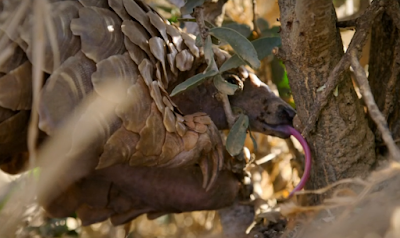
     

Today, the most trafficked animal in the world is one few people have ever seen and many have never even heard of. Pangolins are nocturnal animals found throughout Asia and Africa. They are natural pest controllers. Each one can consume 70 million ants a year. Pangolins are the only mammal covered in scales, and this is their downfall. 

  • The massive demand in Asia for pangolin scales is driving the decimation of pangolins. 
  • Traders claim that they have medicinal purposes, but, you know, pangolin scales are made of keratin. It's like our fingernails. So they have no medicinal properties. 
  • The numbers of African pangolin scales that have been intercepted going into Asia has dramatically increased over the last few years. Last year, 2019, it was just over 100 tonnes of scales. That's 175,000 pangolins that have been killed for the scale trade. We work closely with law enforcement officials. This little pangolin came in off the trade, and they're usually dehydrated and emaciated. This pangolin's still got the little white tips at the end of each scale which shows his use. And this is a particularly pretty little pangolin. Poaching is a brutally cruel business. I have seen video footage of them being boiled alive. It's extremely distressing to see how these animals are killed. 
  • Last year, when Covid-19 first emerged, pangolins were pointed to as a potential source of the virus. And everybody hoped that this would cut down the trade straight away, but unfortunately, that's not happened. The trade is highly profitable and it's unlikely to stop. 
  • There are four Asian pangolin species and four African. And all eight species are threatened with extinction. 

There is another huge trade that is driving the loss of biodiversity, and this one happens in plain sight. 

  • We have created a database that has world fisheries statistics, and we were the first ones to study fisheries on a global basis, and this global view shows that we have massive and widespread overfishing. 

In the last 40 years, the scale of global fishing has dramatically increased. At any one time, there could be as many as 100,000 trawlers operating in our seas. 

  • Modern fishing is an industrial operation run by huge corporations, boats, factories, ships. Some sweep up the ground with a net that might be as big as this house. And you can put four jumbo jets in the mouth of a big trawl. And everything that is in the path goes in. 
  • The problem is, as you remove more and more of the adult fish, particularly the larger sized fish, you end up with fewer and fewer of the eggs and the fry, and there's simply not enough for the population to recover. There are ways of sustainably managing fish stocks. Reducing fishing in an area can get a population back to sustainable levels. 
  • But you have to choose whether you want to extract a sustainable, modest catch or have a big catch for a short term. And we have always opted for the big catch for a short term. 
  • Even where fish quotas are put in place, often they're not being implemented. And in some parts of the world, there's not even good regulations to limit the catches. 
  • The waters around the edge of fishing countries are being emptied. We found that in China, we have about 16% left of what we had 120 years ago. And studies suggest that some British waters, where industrial fishing begun, have been decimated. There is now about 5% of trawler cod fish left before the turn of the 20th century. 
  • This is a really big problem for the species of fish that prey upon the fish that we're harvesting, and this has huge impact for marine ecosystems. 
  • We have completely destroyed the natural balance of fish in the world's oceans. 

Across the globe, the pressures faced by the natural world are becoming ever harder to solve because of our growing demand for nature's resources. 

  • When I was a kid in the 1960s, there were three billion people in the world. So I watched it go to six billion around 2000 or so, and I'm now probably going to see it actually reach, you know, nine billion in my lifetime, which is pretty startling.
  • Population growth is much, much higher in the developing world than in the developed. 
  • But it's problematic to just talk about population because there are two things which are going on. It's population, but it's also consumption. 
  • And in terms of impact on the planet, what's much more important is the growth in consumption levels, and these are far higher in the developed economies. 
  • That's why I call it a taboo topic, because who's at fault? Is it the very large number of people, or the small number of people with very few children who are actually driving negative impacts? 

The average person in the UK consumes nearly four times the resources of the average person in India, and in the United States it's about seven times as much. One of the problems is that many of the products we use are manufactured in ways that pollute our air, land and water, making pollution another of the drivers of biodiversity loss. 

  • While in a country like the United Kingdom, where some very strong laws on how to reduce pollution, we do have to realise we're no longer a major industrial country. Most of the things that we actually use are produced abroad in countries where the laws can be non-existent or not implemented. So we are simply moving our footprint on destroying nature to another country. 

Pollutants can have a lasting impact on species - an impact that may take time for us to fully understand. 

  • PCB stand for polychlorinated biphenyls. They're used in the electrical industry. We invented them in the '20s and then we began to ban them from the '80s onwards because we realised they had quite a serious and toxic effect on life. They affect the immune system and they also cause reproductive impairment. If PCBs are not disposed of appropriately, then you can get leaching out from the landfill site, into river courses, river beds and back out to sea. Animals at the base of the food chain might absorb very small amounts. But then as animals above them eat more and more of the small animals, they'll concentrate up the food chain. In the UK, we have one really striking example of that. The last remaining pod of in-shore killer whales up in north-west Scotland, where they only have eight individuals left. That population has been studied for about 30 years. In all that time, they've never had a calf. Lulu was a part of that pod. She died due to entanglement in fishing gear. When we had her blubber levels analysed for PCBs, they were quite shocking. One of the highest levels ever recorded in any killer whale on the planet. And when we looked at her ovaries, we found they were non-functional. In my lifetime, we're looking potentially at the complete loss of that population. And then we'll have no more killer whales left around the coast of the UK. 

In addition to these threats, many ecosystems are increasingly feeling the impact of another driver of biodiversity loss. Climate change. Our world is getting hotter. 

  • At this moment, we do have the Paris Agreement that says all governments should try and limit climate change to no more than two degrees Celsius. All of the calculations show we're on track for a three to four degree world. And the more the Earth warms, the worse the problem is. 
  • There are lots of ways that climate change will impact on species - changing food sources, how they breed and whole patterns of migration and movement. 

Increasing temperatures mean some species are unable to survive in their normal habitat. They're forced to move higher and higher where it's cooler, and eventually there's nowhere left to go. 

  • It's been called the escalator to extinction, and we see it all around the globe. 
  • In the Australian Wet Tropics, we're already seeing that with possums and birds that just can't handle the heatwaves. About 50% of the endemic species that live in these mountaintops are on that escalator to extinction. These are no longer predictions. We are seeing it happen. 

Scientists predict that in the future, as temperatures continue to rise, climate change will become the greatest threat faced by species. But right now, the single biggest driver of biodiversity loss is the destruction of habitats. 

  • Many people imagine there's this untouched wilderness because they see it on their TV screens. But the reality is there's really not a lot of wild left out there. 
  • We've already lost nearly 90% of the wetlands around the world. We've transformed the forests and grasslands, we've converted 75% of the land that is not covered by ice. 
  • Three quarters of the terrestrial surface has been changed, a lot of it just to feed one species. 
  • Obviously, if you clear a rainforest or natural savanna and you replace it with a monoculture agriculture, of course it's unsurprising you're going to lose most of the species that evolved to survive there. The critical thing is that there is now enough land that's already been cleared to sustain the levels of production that we need. But new land is still being cleared because often it's quicker and cheaper to do so. 

It's estimated that every year around 3.8 million hectares of forest are cleared. 

  • A lot of that clearance is driven by demand on the other side of the world. We want cheap food and we want to have choice on offer all year round. 

These commodities often provide the mainstay of countries' economies, but many are produced in ways that are not sustainable. 

  • So a consumer walking into a supermarket may unwittingly be contributing towards loss of biodiversity. What we're doing is taking customs data, shipping data, and for the first time we connect them all together and ask who is buying from the hot spots where we're really losing biodiversity. We now have enough data to be able to identify the main drivers of biodiversity loss. Soy, cocoa, coffee, palm oil and beef. 

Conversion of land for cattle is probably the greatest single cause of habitat loss. Of the total mass of mammals on Earth, livestock has been found to account for 60%, humans for 36%, and wild animals just 4%. 

  • Brazil has one of the world's largest cattle herds, more than 200 million animals. About 12% of Brazil's beef exports comes to the EU, but China is the main buyer. 

The UK doesn't import much beef, but we do import another product from Brazil which is driving the destruction of habitat. Soy. 

  • Soy is a bean. It's a very productive form of plant protein that's widely used. The majority goes into animal feed. 

Since 2006, efforts have been made to reduce deforestation for soy in the Brazilian Amazon, so production has moved to another part of the country. 

  • The Cerrado is very special and in many ways it's a forgotten landscape. At first glance, it may not seem attractive. It's basically scrub grasslands, scrub forests. Yet the Cerrado has many unique species. Giant anteaters have been around for millions of years, but they have gone extinct from many areas. They only have one pup at a time, so this one pup is very precious. So the mothers carry their pups on their backs, but their habitat is being lost in front of our very eyes. Over 50% has now been transformed into agricultural landscapes. 
  • The greatest expansion of agriculture, the destruction of habitat in the Cerrado, is in this northern area. And here we can see the exports of soy from this area are predominantly going to China. But some of it is actually imported into the UK. We're buying as much as half a million tonnes produced in the Cerrado per year. 

The majority of this is used to make feed for chickens that are sold by many British supermarkets. 

  • Some supermarkets and some manufacturers are starting to shift, but what our data show is that the consumption of soy in the UK, even though it's a small amount of the total exports, because of where we're buying it from, is having a disproportionate impact on certain species. 
  • Anteaters have to be able to move freely throughout its environment. This is important for males to find mates or when young will go find new territories. If there are barriers to movement, this can cause very serious consequences. 

As the Cerrado is being cleared, anteaters can be driven into isolated islands of habitat. And the surrounding areas become lethal territory. 

  • The land is being crossed by highways. Sometimes when a female giant anteater dies on the road, her pup will survive. But we have found roadkill decreases the population growth rate of anteaters by half. 

The unprecedented impact we are having on the planet is not only putting the ecosystems we rely on at risk. Scientists believe that our destructive relationship with nature is actually putting us at greater risk of pandemic diseases. 

  • We've seen an increasing rate of pandemic emergence. We've had swine flu, SARS, Ebola, and we've actually looked back over every emerging disease and said, where did it originate on the planet? And what are the things going on there that could have caused it? And we've found we're behind every single pandemic and it's human impact on the environment that drives emerging diseases. 
  • Animals have lots of different viruses that circulate inside their bodies, just like we do. And so one of the most obvious ways that we're making it more likely that a virus would jump is that we're having lots of contacts with animals. 
  • The wildlife trade is at unprecedented levels. We have huge markets with tens of thousands of live animals, shedding their viruses through faeces and urine, being killed in front of you. These are incredible places for viruses to spread. And we're connected to that trade through things like the fashion industry. We've seen this huge increase in the use of fur trims for winter jackets. And that means hundreds of thousands of animals are bred in fur farms. 
  • You have large densities of animals put in a situation with a lot of people. To make things worse, those animals are very stressed, and we know that animals that are stressed shed viruses at higher rates. 
  • What also drives emerging diseases is that we are encroaching further and further every day into wildlife habitat. 31% of all emerging diseases have originated through the process of land use change. Forests around the world, where there's a lot of biodiversity, have thousands of viruses that we've never come into contact with yet. The minute we build a road in there, we start getting exposed. The first people into those logging camps go out and hunt bushmeat and pick up the viruses. That's how HIV emerged. Then we bring our livestock in. Viruses move from wildlife into livestock, into people. At every step of the process, we're bringing people closer in contact with wildlife and their viruses. It's easy to imagine that we're so far away from these diseases' origins that it's nothing to do with us. But we drive it, actually. Our consumption of beef drives this, our consumption of poultry, and the products that are used in poultry, drives this. 
  • My research is showing that when humans convert habitat, there's also something else at play. It's not all species that are likely to make us sick. Often the best reservoirs for the pathogens that can jump to humans are smaller bodied species, like rats and mice and certain kinds of bats. When we have intact natural systems with high biodiversity, these species are kept in check. But when humans destroy habitat, the large predators and herbivores disappear first. Which means the smaller bodied species are the big winners. They proliferate wildly. They live at super high density and are the ones far more likely to make us sick. 
  • So we've been saying for 20-plus years that this exploitation of our environment is driving pandemics. But what we didn't think was it was going to happen so quickly and so devastatingly. 

Since the first cases of Covid-19 were identified in China and linked to a wet market in Wuhan, scientists around the world have been piecing together where and how the virus emerged. 

  • It was figured out quickly that it was a coronavirus. Those are known to reside in various kinds of animals, and so people started looking for the animal from which that coronavirus would have jumped into people. 
  • We found the closest relative to the virus in bats, in rural south China, in Yunnan Province. It's really well known for its biodiversity of plants and of animals, including bats, and they live in these incredibly complex colonies. One part of the colony's a nursery where all the kids live and the parents fly out every night to get food. But Yunnan has been under incredible change for the past few decades. High-speed rail links have gone in there, roads have been built into remote areas. And so we think Covid-19 maybe even started there. And either somebody got infected and travelled to Wuhan themselves or sent animals that they were shipping into the wildlife trade into those wet markets and then the virus exploded from there. We don't know exactly what happened yet, but it's my view that it's our relationship with nature and the way we interact with it that drove the emergence of Covid. 
  • We've been changing biodiversity in really critical ways that made this more likely to happen. 

If we continue on our current pathway, then what we've experienced this year might not be a one-off event. 

  • We estimate there are going to be five new emerging diseases affecting people every year. We cannot live with that. And the rate at which they're increasing and crushing our economies, if we have one of these every decade, we cannot persist with that level. 

We face a frightening future. So how has it come to this? Why haven't we acted sooner to address these issues and stem the loss of biodiversity? 

  • Many scientists, including myself, have been saying for the last 25 to 30 years that biodiversity is being lost due to human action. 
  • News reports - Thousands arrive for the largest UN meeting ever held in an effort to prevent drastic and irreversible changes"... "I'm here to speak for the countless animals dying across this planet. We're a group of 12- and 13-year-olds come to tell you adults, you must change your ways." 
  • In 1992 at the Earth Summit, a convention was signed to protect biodiversity. It was recognised to be of critical importance to the future of Earth. 
  • News report - The bleak warning from scientists at a major UN conference in Japan. 
  • In 2010, governments came up with 20 targets to protect biodiversity. While we're making some progress, to be quite candid, we probably will not meet any of the targets. 
  • Part of the problem is that we don't have really good environmental laws that are global. 
  • Also, unfortunately, many in the private sector make a huge profit at the expense of our natural world. They want the status quo to exist. 
  • The reality is our world is based on economic growth, grabbing more and more. 
  • News report - "Thank you for joining us to examine the extinction crisis"... "The evidence is unequivocal"...
  • Even today, there are people that will do anything in their power to make sure that the politicians do not act. 
  • News report - "I'm here to tell you that the three lead authors here from the UN are part of this con that the United Nations presents itself as the world's expert on science"... 
  • At a recent Congressional testimony, two of the Republican witnesses argued that the loss of biodiversity was nowhere near as serious as what we were saying in the report. 
  • News report - "As with the manufactured climate crisis, they are using the spectre of mass extinction to scare the public into compliance"... 
  • We've wasted 20 to 30 years when the governments of the world, working with the private sector, could have done a much better job conserving biodiversity. If we had acted more seriously, many species could have been saved and we would not be facing such serious threats as we're seeing today. 

This year has shown the vulnerability of our societies. Will we take the opportunity, finally, to change our course? What can governments, industries and we as individuals do to slow this decline of the natural world? 

  • The world has been on pause during the pandemic, and as we begin to move forward, we have a moment, we can change the way we're running our world and make it better. This is that moment. 
  • The first thing that we have to do is to reset the way we run our economies. 
  • News report - "The massive hit to the economy is no surprise. The UK economy has lost a quarter of its value. The world is in a recession". 
  • Governments are recognising that they have to invest to drive out of it. And I've been involved in a study with the finance ministries and the central bank governors of the world in thinking through what the best ways out of this crisis are. And we've found that those investments which are good for the environment are very powerful ways out of the depression that we find ourselves in. So, for example, we could begin work on restoring degraded land. We can plant trees, we can start retrofitting buildings so they're much more efficient, make our cities much cleaner. All those examples can be done quickly, they are labour intensive and are strong economic multipliers. So exactly the kind of things you need for a strong recovery. There are all these things we know we have to do for biodiversity and for the climate, so let's bring them forward to this period of unemployment. And then, going forwards, we need to dramatically change the damage that we do from producing and consuming. That's the big prize. 
  • At the moment, nature is coming as a free good. We use rivers and estuaries as sinks for the pollution we create from industry. Who's paying for that? Large chunks of the rainforests have been converted at prices which are astonishingly low given the cost to the rest of the world. As an economist, I think it's right that people who extract from nature pay the due price. 
  • We have to recognise that nature has true value that is taken into consideration in national accounts. We also need to start producing affordable food without expanding any further into the forest. This is indeed quite possible. One of the biggest problems is incredible - we actually waste about 40% of the food that is produced. 
  • If a farmer can't produce stuff in exactly the right form, he has to throw it away. And of course, we throw it away from the plate. 
  • If we could reduce that food waste, it would go a long, long way to making a more sustainable agricultural system. And also, we need to reduce the amount of chemicals, we've got to make sure we're not degrading our soils. We need the best of the private sector to show the others they can make a profit and still conserve nature. 
  • Another possible solution is to make more rules. There does have to be some standard. 
  • We can't simply depend upon people and institutions of goodwill to do what is needed to be done. 
  • If governments imposed legislation that says we will not be allowing the imports of products that are produced in an unsustainable way, then it levels the playing field. 
  • Lots of people don't like government regulation, but there are some tremendous success stories of international legal cooperation. Back in the 1980s, scientists figured out chemicals used in aerosol spray or used in refrigerants were actually eating the ozone layer. 
  • News report - "About a million tonnes of CFCs are produced every year"... 
  • The nations of the world got together and they banned these chemicals, and the problem was solved because once the manufacturing companies started looking for alternatives, they found them quite quickly. So we shouldn't be demoralised, because we know how to do this stuff. It's a question of finding the political will to do it. 
  • We shape the future of the planet irretrievably by the decisions we take in this next few years. And indeed, in the months now, as we come out of the Covid crisis. 
  • For those of us who care about the future of our planet, you know, we have to look at our lifestyles and we can't look away from our own behaviours. 
  • 40 years ago, people consumed a good deal less in the United Kingdom, but there is no evidence that we were unhappier then than we are now. 
  • We can be more diligent about thinking about what we're consuming and when. 
  • It's really digging down, saying, what's going on here? Where does that come from? We need to think about meat and dairy consumption. 
  • That's not to say that none of us should ever eat meat or should cut all dairy out of our diets. But we have to demand that they are produced sustainably. 
  • Increasingly, I feel it's not just about our current lifestyle, but about the education of our children on the way nature works.
  • There's a wave of revolution going around, especially with young people. We are waking up, we are realising that the planet is an integral part of our existence. 
  • If we don't act now, the youth of today and the youth of tomorrow are going to look back on this generation with absolute horror. "What were you thinking?!" 
  • I want to tell our youth we have taken the lessons, that we will not allow any other species to walk this tragic road of extinction. 

One thing we do know is that if nature is given the chance, it can bounce back. 40 years ago, I had one of the most memorable experiences of my life. I was in the Virunga Mountains, which straddle the borders of Uganda, the Democratic Republic of Congo and Rwanda. And there I met some of the few remaining mountain gorillas, including a mischievous youngster called Poppy. 

  • Footage - "As I sit here, there's more meaning and mutual understanding in exchanging a glance with a gorilla than any other animal I know". 

As I was preparing to talk to camera, Poppy was at my feet, trying to take off my shoes. It was an experience that has stayed with me, but it was tinged with sadness as I thought I might be seeing some of the last of their kind. 

  • In the 1970s, this population of mountain gorillas was estimated to be around 250 individuals in this area. They were on the brink of extinction. Their habitat was under very rapid conversion from forest to agricultural fields. 

This part of Rwanda was one of the poorest and most densely populated in the country. And the expansion of agriculture was the only way for most people to survive. 

  • There were tensions between the park and communities. We had many poachers coming, setting snares, cutting bamboo.
  • Coexistence of humans and mountain gorillas really wasn't a reality that many people saw. But over the next few decades, the situation would start to change. Government in all three countries, conservation organisations and local communities started to work together with an emphasis not just on the gorillas, but on the people that live with them. 
  • We have over 200 rangers, and their jobs is to see every gorilla and check on the habitat. And since 2005, the government set up a tourism revenue sharing scheme. 
  • A portion of the price that a tourist pays is actually reserved for those communities adjacent. The result is that the conversion of habitat for agricultural production actually ceased. And the population has recovered. 
  • 30 babies were born in this park last year, and we know that these gorillas are going to grow. No-one will be a victim of poachers. So, things have changed. 
  • Their numbers have just reached and exceeded 1,000. This change has not happened overnight, but if it can be achieved here, where human population pressure is so high, where the politics can be very complicated, especially among different states, I believe it can be achieved elsewhere as well. Poppy grew up and actually was a very long-lived mountain gorilla and had many offspring. 
  • Ururabyo is actually the daughter of Poppy. Ururabyo means flower. She is shining flower in this park. 
  • Ururabyo also has a daughter. 
  • Prosperity. 

To see Poppy's daughter and granddaughter thriving is thrilling. It just shows what we can achieve when we put our minds to it. I do truly believe that together we can create a better future. I might not be here to see it, but if we make the right decisions at this critical moment, we can safeguard our planet's ecosystems, its extraordinary biodiversity and all its inhabitants. What happens next is up to every one of us.