Showing posts sorted by relevance for query asians. Sort by date Show all posts

Sunday, 4 November 2012

Asians


A common bugbear of commenters across sites and threads critical of the BBC is the way the BBC uses the word 'Asians' when reporting crimes, misdemeanours and other kinds of anti-social behaviour perpetrated by members of the Islamic community in the United Kingdom. 

Reading around the internet suggests that this is an issue which some Sikhs, among others, also feel strongly about. 

A detailed complaint to the BBC was posted on the Sikh internet forum Sikhsangat.com in 2009, and remains topical. It covered many concerns, among them this very issue, and makes for very interesting reading. Here's the relevant extract: 
http://news.bbc.co.u...nds/8191833.stm [last accessed 29th October 2009] The link above refers to arrests made at the anti Islamic protest. The following is a quote from the article: 

“I thought they were just football fans, but then a larger group of black and Asian people turned up and it all kicked off.”

Notice the term black and ‘Asian’ is used to refer to predominantly Islamic youth. There are a number of images and video footage taken at this event [widely available on the internet and YouTube] all showing the vast majority of heated youth were in fact Muslim. The BBC news article went on to quote:

“You had people burning the Union flag. People were being kicked - some of them weren't anything to do with the protests”

Here, ‘Blacks’ and ‘Asians’ are further reported to have attacked white shoppers at the Bullring shopping complex in Birmingham. It is unfair and against the favour of all Asians (and the Black community) to camouflage a significantly Muslim issue as an Asian issue.
Further supporting the argument of loose reporting from the BBC: http://news.bbc.co.u.../uk/8328743.stm [last accessed 26th October 2009]

Is a BBC news article in reference to the Gaza protests in January stating:

“A branch of Starbucks coffee shop was looted and items including coffee mugs thrown at police."

Again it is evident to note there is numerous video footage available on news websites and YouTube covering this incident. It is abundantly clear that Starbucks windows were getting smashed in by Muslim youth wearing traditional Saudi Arabian attire, some with Islamic/Arabic themed bandanas on their heads and others wrapped in Pakistan’s Islamic flags. In some videos you can hear Muslim youth shouting:
“Allah hu Akbar”.

Saturday, 6 December 2014

Knowing the Matthew Price of everything and the value of nothing


For those paying attention at the back, a post earlier this week presented evidence of strong pro-immigration bias from Today's newly-appointed 'chief correspondent' Matthew Price. Doing my duty as a conscientious blogger, it's only right to follow it up as another report was broadcast later in the week which slightly qualifies my earlier criticism.

The earlier reports focused on heart-tugging personal stories from immigrants, on the downsides of the government's moves to cap benefits for immigrants, and on the pro-immigration views of various influential parties and experts. Friday's report, however, focused on the views of ordinary people in Dudley, many of whom expressed concerns about/opposition to immigration (including a Pakistani gentleman who said that immigration is good but that the government should cut down on immigrants from the EU and outside of the Commonwealth (i.e. keep immigration from countries like Pakistan flowing!))

This is good, and didn't try to hide what people really think.

However, being the BBC, it also had an undercurrent of pro-immigration bias.

Why Dudley? Well, check out how the Today website described the story:
How British is Britain? And is immigration, which has always been a part of life on these isles, making the country less British? Large numbers of people across the country believe the answer to that is 'yes', even if they are living in areas where there are relatively few foreign born residents.
Dudley is one of those areas. Checking out the demographics, it remains predominantly 'white', with a lower than average infusion of immigrants. So, the programme seemed to be asking, why on earth are they moaning about immigration when they have so few immigrants in their area?

Matthew Price restated that point later:
Looking around you can see this is overwhelmingly a white British town. Fewer foreigners are moving here than to other parts of the West Midlands. But that's not how it feels to many of the traders.
This smacks of the old BBC 'feelings over facts' point about immigration, I think - the idea that the public are uninformed and irrational.

Matthew Price began in a boxing club where 'British Asians' and Poles mingle with the natives. He said it's the EU migrants "that are getting people talking". Someone at Biased BBC from the area, however (whose comment I can't find), said that it's actually a planned local mosque that's really getting up people's noses there (and Googling around seems to confirm that), but resentment at the effects of Muslim immigration clearly wasn't on Matthew Price's agenda. [Those demographics show that 'British Asians' are the local ethnic minority (5.6%) and that Muslims form 4.1% of the population there, with Jews having a 0.0% presence there]. 

Still, at least we got what to hear some of what the locals really think and UKIP will have found some of the comments very encouraging.

Matthew, however, kept challenging his vox pops on their facts (again suggesting that he thinks they're being wrong-headed)...
- Dudley doesn't actually have that many people coming in from outside. Statistically it's lower than a lot of places actually.
- Even here? 
- Well, you could go to Eastern Europe.
...and, unlike his other reports from around the country, there were no various influential parties and experts, so no immigration-sceptical influential people/experts have appeared in any of Matthew Price's immigration reports so far.

The following studio interview, however, was with Labour MP Frank Field. Mr Field, always the free-thinker on matters of political controversy, is a rare Labour sceptic on mass immigration. He's no opponent, but at least he provided a little counterbalance to the intense pro-immigration guest (Prof Ian Goldin) from earlier in the week. 

Today's edition of Today attempted an end-of-the-week round up - an interview with Professor Paul Ward, author of “Call Yourself British? National identity in the United Kingdom in the Twentieth Century” and Trevor Phillips, former chairman of the Equality and Human Rights Commission - and neither of those are anti-immigration either. Its angle - immigrants' contrasting feelings of Britishness - was at a tangent to the rest of the week's coverage. 

Tuesday, 6 October 2015

Racism, true or false

“What’s that?” I cried, pointing to a suspicious black dot at the apex of the room. Nestling up there in the the corner was a false widow. You know, one of those small venomous spiders that have a face-like marking on their lower anatomy. Steatoda nobilis.
Anyway, it was promptly removed (not by me) and put outside, from where it would undoubtedly soon make its way back in.  
Later I saw another, dangling on a short thread from a gap behind a cupboard. Realising it had been spotted, it beat a speedy retreat up into the gap.

Getting dressed, I now have to check my clothes in case I put on a spider. This is terrorism. This is exactly how terrorism operates.

Obviously I don’t like those false widows because I know they have a nasty bite, but I’m not sure why I don’t like great big house spiders that bob along the floor like lightening, specially when they disappear under furniture before you can find a receptacle to trap them under till your non-arachnophobic partner shows up.

There are spiders that I don’t mind at all. Little tiny ones and those spindly ones with tiny bodies and long, long legs, thinner than a human hair. They make huge webs, which come back bigger and better, almost straight after you’ve knocked them down.

So. Have I got arachnophobia? “extreme or irrational fear of spiders” Kind of yes and no.
You can probably tell what this is leading up to, or is that too Rolph Harris.

Well it’s because I have been mostly reading about racism, and in particular Islamophobia.
There’s an article about Islamophobia on Harry’s Place, in which someone on a btl comment made the following comparison.
“You don't get criticised if you are arachnaphobic so you shouldn't worry if you are Islamaphobic.”

Nice one. That’s a defence of the irrational part of the condition, the phobic part, the part you can’t help because it’s a medical matter; a mental health issue. You can’t be blamed so you shouldn’t be ashamed. So as far as Islamophobia is concerned, if you suffer from it, why not admit it? “Poor me. I’m ill.”

But wait. What about the rational part? What about the fear of Islam generated purely because of its nasty bite?
Maybe it’s irrational to fear harmless individuals (spiders and Muslims) because of a justifiable fear of the harmful ones - but the fact is that when you can’t immediately tell which is which, perhaps it’s best to err on the side of caution.

On the H.P. thread, there is an interesting but slightly digressive discussion about Islamic dress. 
A liberal friend of mine says the dislike of headscarves and burkas is illiberal and bigoted. She probably wouldn’t like it if people went round in jackboots or wearing  pointy white shrouds, but she would probably still argue ‘different strokes for different folks’.

Not me. I see Islamic dress as a badge symbolising, among other things, antisemitism; if antisemitism is not something espoused by the individual beneath the burkha, at least it proclaims allegiance to those who do espouse it. Is that irrational? Maybe.
Anyway the difference between antisemitism and Islamophobia is clear to me, but not, apparently, to others.

And with that, I’ll return to the BBC. I watched (in the line of duty) the BBC 3 programme about racist Britain. 
It was called “Is Britain Racist?” a question to which, somehow, one already knew the answer because this was BBC3. Britain would be racist, but not necessarily in an obvious way. 


On the iPlayer there’s a warning. “Contains some strong language and some upsetting scenes”
I must have missed those. The presenter Mona Chalabi was portraying herself as an assimilated, tolerant and thoughtful British Muslim. Arguably, not very typical. She had the biggest hair I’ve ever seen. It reminded me of those sheep that have just emerged from years of unshorn isolation, weighed down by giant, life threatening fleece. It was almost an act of defiance. “I will not cover my hair  - and even if I wanted to I probably couldn’t.” 

The first thing that struck me was that this programme is based on the premise that Islam is a race. Mona went to an EDL meeting and felt uncomfortable. It was a scary mob, and there was a palpable atmosphere of aggression, but it was, very visibly and openly a demo against “Islamization”.
  
Is Britain Racist? “Three people are going undercover to find out” 
Hanna the headscarved, sweet and innocent Muslim girl said: 
“The common perception of Muslims at the moment is that they’re all terrorists”
No, Hanna. Sorry.  Straw man. Your opening statement is neither true, nor  pertinent.

Later, having experienced some unpleasant drive-by ‘Islamophobic’ abuse - “Fuck off back to your own country” - whilst walking along a street dressed in the full-on top-to-tail Islamic burkha, she got back to the car.
“It was just quite scary that someone could be fearless, as if nothing stops them from scaring you. I felt quite powerless and intimidated. It makes me feel quite sad” 
she said, throwing back her face covering  
”you know, it’s not like these men were children, - that they are just young children who don’t know much; they, they’re adults, the fact that they’ve chosen to hurl abuse at some random stranger just makes you feel quite hopeless. I mean, what can you do about that?”

It simply didn’t cross her mind that the highly conspicuous uniform she was wearing made a statement. It’s not as if it was even an unobtrusive statement, like a cross or a Star of David. It was a full, black, head-to-toe shroud, with a slit to look through.  No visible facial or other recognisable distinguishing feature was on show. One has to ask, whom has chosen what? Not that I condone drive-by insults. It was just the way she saw things in such narrow terms.

Not a terrorist

Deji, the Black man, and Richard the Jew proved to be more interesting and more subtle cases. The black man in Somerset got on well. There was no hostility. The Jew in Bradford had a few problems, from both white and Asian Bradfordians. 
The presenter introduced Richard’s experimental ‘walk amongst the natives’ by telling us that recent conflicts in the Middle East were the source of any expressions of anti-Jewish sentiment by Asians. So, not very accurate there. But it did offer a ‘good excuse’ for antisemitism expressed by ‘Asians’.

The shopping experiment showed that there was more suspicion “Can I search your bag, sir?” shown towards the black man than the Muslim, and none at all towards the Jew. 

This, like the police’s much criticised stop-and-search policy, is allegedly a strategy based on ‘profiling‘ - i.e., crime statistics.  Targeted interventions are undoubtedly more cost-effective than time consuming non-discriminatory interventions, but they come at the cost of ‘not helping’ social cohesion. The cost of one thing at the expense of another. One might say it’s racist, but rational.

I was confused by the allegation that there was a recorded 50% rise in antisemitism and a 70% rise in Islamophobia. Funny. I thought it was the other way round. Say, 93% and 70% respectively. 

The presenter, Mona Chalabi was quite an angry person. She was possibly the most racist of anyone in the programme, if one interprets ‘racism’ as prejudice. Hers was a prejudice against Britain’s concerns about enforced multiculturalism. 
The ‘psychological’ experiments that she saw as a guilt-inducing, universally inherent fear of black faces that had to be overcome, was a wrong interpretation on her part.  It simply showed that people have an inherent preference for people who look like themselves. She couldn’t see it. 

She was allowed a lengthy, self indulgent rant at the end, which actually made this viewer warm to the defiant chant from those football hooligans on the tube that were featured in a clip at the beginning of the programme: “We’re racist .......and that’s the way we like it.”

Just to be clear. It was only the chant I warmed to, not the thuggish, imbecilic, shove that pushed an unfortunate black man off the carriage and back onto the platform. Now, that really was racism in its purest form.   With a bite.

Thursday, 1 August 2019

PLAY UP! PLAY UP! AND PLAY THE GAME! - The BBC’s World View of Cricket


A guest post by Arthur T...


There's a breathless hush in the Close to-night—
Ten to make and the match to win—
A bumping pitch and a blinding light, 
An hour to play and the last man in. 
And it's not for the sake of a ribboned coat,
Or the selfish hope of a season's fame,
But his captain's hand on his shoulder smote
"Play up! play up! and play the game!"

Opening verse of  "Vitae Lampada” by Sir Henry John Newbolt (1862-1938)

Two recent BBC broadcasts have reopened the discussion over Norman, now Lord Tebbit’s cricketing litmus test: as to whether a British Pakistani from Bradford and elsewhere in the UK  would (or rather would not) support England in a match against Pakistan. In light of the recent Cricket World Cup which was successfully staged in England, the BBC have sought to give the matter an airing - importantly in  pieces written with a ‘world view’ in preference to an English one.

How far have we come in this country if the Tebbit Test is itself considered racist as appears to be the case from a world view? England’s cricket team for the world cup was in fact one of the most diverse of any taking part - with players of Irish, Muslim and Barbadian descent as well as the English.

‘Testing The Tebbit Test’ - Presented by Rajan Datar 

Radio 4,  Part recorded on 30th June 2019 at the Birmingham Fan Zone during the England v India World Cup match. BBC ‘Sounds’ doesn’t always give the date of the original broadcast. 

‘Twenty nine years on from Norman Tebbit’s coining of a so-called 'cricket test' to measure people’s loyalty and level of integration to their adopted country, Rajan Datar conducts a highly personal investigation into whether the test - and the sentiment behind it - still has any traction today. He’ll also examine, through cricket, the complex issues of national identity that face second- and thirdgeneration BAME immigrants’. 

Rajan Datar is described as a World Service presenter - ‘Studied at Oxford University and the London School of Economics; He reported for BBC radio and was a writer for The Guardian before joining the BBC’. The ‘highly personal’ investigation comprised a series of Vox-Pop truncated interviews, suitably edited  in order to convey predetermined findings. 

Datar claimed that as a British born Asian of Indian descent, a part of the reason that he supported India, and wouldn’t ‘pass the Tebbit test’ was because of the hostility and discrimination he had faced as a youngster growing up in England. There are snippets of what was probably a much longer recent interview with Tebbit in which he [NT] comments along the lines of: “What if there was a war? Who would they support?" Datar made light of such a suggestion so that Tebbit’s seriously made point was dismissed with a shrug and a smile. In my opinion, Datar was overfamiliar with Lord Tebbit, calling him Norman. I detected more than a hint of ‘Oh, he’s a pale, male, stale Tory - a dinosaur’.


Tebbit, in an interview with the Los Angeles Times, said: "A large proportion of Britain's Asian population fail to pass the cricket test. Which side do they cheer for? It's an interesting test. Are you still harking back to where you came from or where you are?” 

Tebbit told Woodrow Wyatt in 1991 that he did not think certain immigrant communities would assimilate "because some of them insist on sticking to their own culture, like the Muslims in Bradford and so forth, and they are extremely dangerous.” 

The quest for the truth over the Tebbit Test became blurred in Datar’s ‘cut and paste’ interviews with (in the main) Indian supporters in Birmingham. The Fan Zone seemed filled with Indian supporters - there to enjoy what turned out to be a thrilling high-scoring game. In a noisy party-time atmosphere, British born Indian supporters revelled in the experience, swept along by the euphoria of the partisan crowd. Crucially, in this broadcast Rajan Datar concentrated mainly on Indian descendants -  leaving their Pakistani Muslim and West Indian and other counterparts to one side. He did interview a Pakistan supporter in the Birmingham crowd, who said that she was supporting India because if India won, that would improve Pakistan’s chances of progressing in the competition. He played recordings of the fans’ muted reactions to Bairstow’s century (DT: Jonny Bairstow scored a match-winning century on a do-or-[die] day for England against World Cup rivals India at Edgbaston), and again the loud cheering as his innings came to an end. 

Datar pointedly made no reference to Lords, the MCC, or England as the ‘home of cricket’. In fact he asserted that India was now the centre of world cricket having the greatest financial clout and the best players. Cricket is their national sport. At that stage, he probably believed that India would go on to win the World Cup. Datar insisted that in sport generally, (it was only in cricket that he supported India), he was a fervent fan of English football and supported the English team. (Question: Might this be because Asian countries by and large do not have a strong football culture?). He doesn’t say how he reconciles the conflicting reasons for supporting India at cricket “because of the way he was treated as he grew up in a hostile racist environment in England” with his strong unstinting support for English football. 

The latter part of the programme jumped to a section relating to the BBC Asian Network. Noreen Kahn described listener reaction to her BBC Sounds podcasts. She supports Pakistan, making much of her namesake Imran Kahn, and the influence he had upon her and her siblings as they grew up. There was no mention of security issues surrounding non-Muslim touring teams during their visits to the country. The most balanced part of Datar’s programme came during the interview with her. 

… ‘In Bats Bails & Biriyani, super fan Noreen Khan goes around the wicket as the Cricket World Cup 2019 arrives in England and Wales.’ … 

She said: “Some say “why don’t you support the Asian teams of your homeland?” - remember your heritage, your family etc etc, while others say “why don’t you support England?” - remember who gave you your place to live, your education, your job etc etc”. Also from the BBC Asian Network a while back is: 

… ’Bails, Beards and Boundaries’… There was some coverage of the launch of this in 2017: 

… ‘Beards, Bails and Boundaries: England's Muslim Cricketers Moeen Ali and others discuss being Asian, Muslim and playing for England. As the Ashes starts, the so-called “beard that’s feared” discusses being made a poster boy for Islam.’ … 

The BBC pushed this topic for a while leading us to believe that there was a history of ‘street cricket’ in the UK.

**********

Part of ‘Play Up, Play Up and Play the Game’ Sculpture by Gilbert Bayes (1872-1953)

The second recent BBC airing was: ’Adil Rashid: England's World Cup winner on faith, heart, unity & celebration’  by BBC Sports Reporter Shamoon Hafez on the BBC News website Sport pages from 26th July 2019. 


The 'Tebbit Test’: It’s 29 years since he [Tebbit] made that remark, which was intended as a question of how much the Muslim community in Bradford have moved to become England supporters in lieu of support for their country of origin. Their support has always been overwhelmingly for Pakistan. From the Hafez article, it is clear that the answer to that question is not at all. 

The article concerns Adil Rashid, who is a leg-spin bowler, and his welcome home to Bradford in the wake of England’s cricket world cup victory. 

The most difficult passages to understand in Hafez’s article were: 

… 'Imam Sajid congratulates Rashid on his achievements and tells the captivated crowd to "aspire to be the best" in whatever field they choose. He gets a good laugh when he jokes: "We were all supporting England...as soon as Pakistan were knocked out.” 

… '"That was something I [Rashid] was stuck into because I did not have a strong belief in Islam. The religion gave me a sense of a way of life around my actions, my etiquettes and how to interact with people. I'm very thankful to Allah that that happened to me.”’ ... 

… '"People will see that anything is possible. There is a lot of negativity around at the moment, and the uncertainty with Brexit, but hopefully this can turn things to a positive. … … ”This World Cup win will do wonders for the country. Inshallah.”’ …   

Inshallah is translated from the RoP as ‘God willing’.  

A Google search for comments about ‘The Tebbit Test’ reveals what might be judged to be the prevailing RoP opinion. This, below, is not sourced from the BBC, though I believe that these sentiments are not strangers to them: 

… ‘ The Tebbit test is racist’ … … 'In the recent World Cup my heart says Pakistan for some reason. I was feeling somewhat traitorous and disloyal because of the infamous Tebbit test as to whether a British Pakistan would (or rather would not) support England in a match against Pakistan….

… As I grow older and wiser I realise now this is simply coded racism. The concept of British nationality is the Union of the 4 Nations (Ireland sort of broke away but no matter) and [sic] 3 Kingdoms….

…. We don’t have team Britain in the Cricket but Team England. I don’t feel English and Asians have never been asked to be English. If an Asian came up to me and told me they were English; I would look down on him as a coconut*…. 

(*the term “coconut Muslims,” which is now very popular among Islamic State supporters in the West. [W]hat people [Muslims in the West] do today is, they say we hate ….. but we love.… How
does that work out? This man [is a] coconut Muslim. This man doesn’t know what kind of religion he’s following. The use of the word coconut is also racial, suggesting that these deviant Muslims are “brown on the outside but white on the inside.”)

…. This is different to Scotland, where a civic nationalist has arisen. The largeish Pakistani community there feels both Scottish and Pakistani whereas Englishness is linked to blood and soil (there are exceptions for mixed race individuals and the Black community since there are almost an extension of the working class).’ ….

      **********
How does this all play into the BBC narrative, biased as it seems to be upon their perceived world view of cricket? Is it true to say that the BBC see the Asian Network listeners as an imperatival  special case, different from traditional rivalries between for example England and Australia - thus requiring a sympathetic narrative? Does the tail of the BBC world view wag the dog? 

It’s probably true to say that British Asian antagonism towards the English cricketers has two strands - Muslim and non-Muslim. Lord Tebbit was referring to Muslim Bradford Pakistanis with his test. The BBC finds it convenient to lump the two together in order to present the anti English hostility as down to heritage and not religious ideology. The latter is a more potent form - hidden in the euphoria of cricket support.

This is a recurring theme used as a tactic by British Asians to counter the discrimination they feel is directed towards them: ‘shout racism’ - as a result, to ask a question or make an enquiry is judged to be racist in itself, because in a leading question such as this, the possibility of giving an unwelcome outcome to the ‘victim’ must be stamped upon.

The BBC understands most forms of nationalism in cricket, for instance from players and supporters of the West Indies, ROI, Scotland, India or Pakistan - but not the English. Just how important is the ‘World View’? Through certain channels, The BBC openly endorse this anti-English cricket narrative.

Tuesday, 3 November 2015

Citizen Khan


I really haven't watched BBC One's Citizen Khan very much - though I used to enjoy the character of Mr Khan on Bellamy's People (and on Radio 4's Down the Line), from which the show sprang. 

Though I have laughed at some of its jokes (especially after having downed a fair amount of non-halal wine to celebrate the end of {Friday prayers} the working week), I've unfortunately never quite found it funny enough to watch regularly.

(Give me Bellamy's People, Down the Line or From Our Own Correspondent any day for guaranteed belly laughs. That Lyse Doucet has me in stitches all the time). 

Oddly, whenever I think of the programme I tend to think above all about its repeated use of the phrase 'dingly dangley' or 'dingly danglies' to describe a man's dingly danglies. That could just be me though. Happy memories of the sitcoms of my youth in the 1970s.

For those who are unfamiliar with it, here's a typical sample of Citizen Khan's humour, taken from probably its most famous episode:
Citizen Khan: I'm going to the mobile men's clinic at the mosque.
Alia: What?
Citizen Khan: They're doing the testing for heart disease. It's very common with us Pakistanis. Did you know we're in the top three groups most affected? Top Three! Good, eh?!!
Alia: Is something wrong with you?
Citizen Khan: No, it's not for me. I'm fit as a fiddler. They're testing the young peoples, so I'm taking future son in law.
Alia: Has Amjad got a heart problem?
Citizen Khan: No, unfortunately not. 
And if that's not got you screaming hysterically with laughter, then try this from the same episode:
Citizen Khan: This project is very high profile. Lots of press coverage. Famous Asian member of parliament coming down to support it.
Alia: Which one?
Citizen Khan: There's only one famous Asian MP darling.
Alia (brightly): Keith Vaz?
Citizen Khan: No, the other one.
Alas, it's not all howlingly funny laughs like this it seems.

As per the Radio Times, via the Daily Mail and Breitbart (if no one else yet)...

Citizen Khan, namely actor Adil Ray, has received abuse and death threats from aggrieved British Muslims accusing the programme of mocking Islam and being racist in its 'peddling' of 'stereotypes' about "Asians".

That's no laughing matter.

The odd thing about this is that this programme was, of course, very obviously intended by the BBC to present a warm, positive, normalising portrait of a British Muslim family and to win the British public's heart. 

Yes, the main character is a classic BBC sitcom male lead - a foolish, self-deluded man - but most classic comedies have such characters at their heart, and that doesn't detract from the overall message.

And the programme was, quite clearly, prominently placed on primetime BBC One in order to further promote that warm, positive, normalising message to as widespread (and mainstream) a BBC audience as humanly possible. 

And yet still the abuse and death threats from Muslims came.

Hopefully, the BBC will go beyond the confines of its former satellite, the Radio Times, and follow the Mail and Breitbart's example in order to make a major fuss about this.

It may not be as funny as Down the Line or Fawlty Towers or Only Fools and Horses or From Our Own Correspondent but Citizen Khan and its likeable-sounding star need to be very robustly defended by the BBC. 

They owe him.

Monday, 6 January 2014

Immigration’ and ‘The Truth’


The BBC trailer gives us a quick impression of what we’re going to see.
 “BBC Political Editor Nick Robinson reveals the full impact of the extraordinary demographic change Britain has undergone.” 
He’s going to talk to some politicians, Labour and Conservative, and:
 “untangle the truth about immigration from the political rhetoric.”
So you see, the BBC plays down Nick’s criticism of the corporation and their trailer concentrates on the demographics and the politics he’s about to highlight in his documentary.
“In Southampton, Nick visits a school where 42 languages are spoken – including two Zulu dialects. In Kent, he meets not just a handful of Bulgarian and Romanian footballers, but discovers an entire league of them”.
Oddly enough, the pieces I’ve been reading in the Telegraph, the D.M. and others, have concentrated on a different angle. They are going with:
“BBC accused of bias on immigration...by its own political editor. Nick Robinson says Corporation made ‘terrible mistakes’ by not reflecting public’s concerns.” 
(Daily Mail) and 
“Nick Robinson: BBC made a 'terrible mistake' over immigration debate” 

It’s not surprising that the BBC didn’t take that particular angle, but the Telegraph and Daily Mail articles are extremely interested in Nick’s attack on the BBC for making a terrible mistake. More, even, than they seem to be about his findings about the demographic changes and the politics that engineered them. 

He says the BBC did not reflect public opinion and they feared having a conversation about immigration - they feared the consequences - ”that it would unleash some terrible side of the British public.”

The Telegraph is typically restrained, but the Daily Mail is Daily Mailish and tabloidy and has gone for a robust approach. “stoke racism”

Mr Robinson said: ‘The same people who said you couldn’t have [British National Party leader] Nick Griffin on Question Time said: “Don’t talk about this. Do you know what you’re going to unleash? Do you know the horrors that are going to come?”
‘There was huge argument within the BBC about that.’

Anyway, Yasmin Alibhai Brown has weighed in with a cross-sounding piece in the Independent.  Her take on this is that the BBC has a duty to “moderate our national conversation”. That’s a weird concept. I assume she hopes they moderate it in a convenient manner and not some manner she doesn’t agree with. Perhaps she would like to be on the board deciding which way the BBC should manipulate their reporting? I suppose in a way she already is, and that, in a way, is what people are slowly waking up to.
Anyway, Yasmin wants Nick Robinson to look her in the eye and tell her it was a big mistake to let her people - the Ugandan Asians - into this country. I think she is confident that no-one, including Nick, would entertain the idea of doing any such a thing as that would entail depriving the country of her colossal charm and wit. 
She accuses Robinson of “once” being an “ardent chairman of the Young Conservatives,” and adds: “If that feels like a slur, forgive me.” 
Oh dear. 

Let’s pause for one second. I’m an immigrant - third generation - so I wouldn’t like to align myself with the anti-immigration brigade. A trickle of new blood is fantastic. By all means encourage limited immigration as long as it doesn’t overwhelm the host society. People will assimilate if there’s a will. But my understanding of the issue is entirely different from Nick’s, Yasmin’s, the politicians’ and the BBC’s. 

When the BBC issued a tacit moratorium on discussing immigration, real people were quietly beginning to worry about the BBC’s sanitising of Islam. They were obviously doing their utmost to ‘normalise’ it. People who found it unsettling would talk about it apologetically for fear of being thought (or actually being) racist. Somehow they got it into their heads that criticising Islam was racist, and they felt guilty for thinking racist thoughts.

Then we had Bigotgate, and Gordon Brown’s high-profile embarrassing moment in front of the cameras. It was a small blessing because people began to discuss immigration. But only in terms that couldn’t possibly be interpreted as racist. The BBC had to acknowledge the public’s dissatisfaction, but on certain terms only. It’s the ‘taking our jobs’ objection, the 'taking our benefits', our housing, our hospitals, our schools objection. You couldn’t be racist about Poles, could you? 

No-one could openly admit that they were really concerned with the demographic elephant in the room, the ever increasing demands by Muslims and Muslim organisations, and the disturbing signs that Britain bends to the will of the Muslims. That would be racist. So instead we say “At last we can talk honestly about immigration” but of course we can’t.

Everyone, the government, the opposition, the BBC are all terrified of saying out loud that the sort of immigration we are afraid of is the sort that is itself unleashing some terrible side, not of the British, but of the third world, and the racism that is being stoked, which is is the racism of the Muslim against the non Muslim.


There you are, call me Enoch. Someone had to say it.

Update.


Further to this (and Craig’s updated) post below - Nick Robinson has been all over the place today, talking to his BBC colleagues. He was chatting with Humph on Today, and again on News 24, explaining, as Craig has noted, that: “We got it wrong before, but now we’re getting it about right.”

Poles, Europeans, so-called ‘white’ immigrants and the upcoming hoards from Romania and Bulgaria, i.e., the imminent mass invasion of people who might be more industrious than we are, who would be more draining on our resources, whose presence may or may not be of net economic benefit to the country, these are the concerns that are now being aired, openly, as part of the reformed transparent BBC. All in the name of liberty, freedom of speech and apple pie, with a smattering of scaremongering.

There’s still the question of a type of immigrant whose identity can only be whispered between consenting adults in a soundproofed room. Where’s the scaremongering about that threat when you need it? Oh yes; they do their own 'scaremongering'.

A bizarre item, brought to you by way of Newsnight. 
An ongoing filmed report, designed to reassure anxious viewers that the forthcoming invasion of Romanians is nothing to worry about. Newsnight is going to follow some prospective Romanians who are about to invade the UK. 
Contrary to rumours circulating within the underbelly of right wingers and Daily Mail readers, Romanians are not  pick-pocketing Romany-type beggars, blaggards and thieves, but charming professional ladies whose English accents are more cultured than your average Brit's. They plan to come over and work, shoot and leave. 


Nick Robinson’s mea culpa looks just like a cloak, a veritable burka, thrown in a panic, over the real problem. 

Friday, 26 May 2017

Easy Meat


I've been meaning to tackle the tree Girls trilogy, its ramifications and the publicity surrounding it. Fortunately for you and me Melanie Phillips has done it for me. (£)

The media were almost universal in their praise for the BBC’s courage in tackling such a delicate topic. Did they mean the courage in the sense of daring to defy the culture of political correctness (much of which was of the BBC’s own making) that led to the suppression of the truth for years?


Or perhaps they meant the courage of possibly inciting multiple backlashes. Threats from angry Muslims or threats against Muslims from the ‘far right’, or threats to that fragile construct, social cohesion.

Of course the film included the obligatory moral equivalence in the shape of scenes of a BNP (or an EDL) demonstration outside the court, but the script didn’t shy away from mentioning the ethnicity of the perpetrators; they were explicitly named as ‘of Pakistani heritage’ or ‘Asian’, but conspicuous by its absence was the theory that Islam itself regards the unbeliever as of little or no value, and sees immoral white girls as easy meat.


Last week’s Sunday Programme included an interview with Nazir Afzal, the Muslim prosecutor who finally allowed the CPS to accept the testimony of the girl victims and bring the case, belatedly, before the law.


Afzal said he had received abuse from the far right ‘because he had damaged their narrative’ due to the fact that he was himself a Muslim. The interview then veered away from the very crux of the Three Girls drama into a vehicle of damage limitation on behalf of the Muslim community. 'More white men are guilty of underage and child sexual abuse than Asians, and by the way, Asian girls are abused too.' That’s the Sunday Programme for you.  
Nazir Afzal popped up again on the Question Time panel. Not sure if he strikes me as the sharpest tool in the box.


Melanie Phillips’s article (linked to above) outlines the Three Girls programme and raises some vital issues.
“The second insight is scarcely less disturbing. In the dock, the leader of the pimping gang exclaims: “Where are your white people? They train them [the girls] in sex. They train them in drinking from very young age [sic]. And when they come to us, by that time they’re fully trained. Look at yourself first! Look at your community!” 
His words are disgustingly self-serving, but the sting is that they can’t be denied. There’s an unspeakable symbiosis between these predators and the society that fashions children into their potential victims.”
‘Society’ is not something that arises out of a vacuum. The BBC has a part to play in the dumbing down of culture and the sexualisation of pre-teenagers by  pandering to the ‘get-famous-quick’ fantasies of the lazy and poorly educated viewer. I think the BBC performs a type of grooming without the help of Pakistani gangs. Some of the superficial crap they air in their pointless ratings war with the commercial broadcasters is a contributory factor. In my humble opinion.
Religiously obsessed, sexually repressed Muslims who stay within their own enclaves don’t understand what is meant by British Values. If they see Western society as corrupting and evil, it’s hardly surprising, is it?


Sunday, 3 July 2022

Camilla's nightmares


I do hope next week's Radio 4 Appeal will be on behalf of a charity that helps newspaper critics recover from watching BBC TV programmes. I for one would donate, especially after reading Camilla Long's deeply moving column in today's The Sunday Times:
There’s no shortage of programmes about race on television — turn on any channel and you will see Samuel L Jackson flying to Gabon or someone in a slavery drama having their skin flayed off. This month alone there has been Lenny Henry on the Caribbean [BBC Two] and a decent new iteration of the reality show Back in Time for Birmingham, about Asians [also BBC Two]. Our televisions are host to a dizzying range of what producers believe are provocative takes on race and diversity, except none of them is surprising, curious or even new.
None of these programmes says anything different; none of them deviates from the blunt narrative that, for a minority, life is appalling and must be turned into a fetishised form of entertainment. No one white is ever seen as anything except cynical or ill-educated, even though the vast majority of these programmes are produced by concerned white people for concerned white people. Frankly, it’s a nightmare to review them.

I'm so glad I'm not a newspaper critic.  

Sunday, 19 September 2021

🤣


It also wouldn't be Radio 4's Sunday without what I used to call "the usual airing of Muslim grievances". This week's programme plugged a book by two Muslim sisters. William Crawley described it as "very funny". The funny thing for me was that the passage they read out was "the usual airing of Muslim grievances":
Tariq: Sufya, there's enough bad press about Muslims without us joining in as well.
Me: I wasn't singling out Muslims.
Tariq: Look, it was OK when we were young, right. We could pretend it didn't matter then. We were just harmless Asians. But things have changed. I go into those meetings with the Home Secretary and all those excellent liberals that advise the big man. To them we are book burners, wife abusers, terrorists. That's how they see us. Most of them don't count me on their team, even though I'm sitting right in the middle of them.
Me: But I can't be on a team with all the fundis.
Tariq: They won't have you in the Islamophobes.

Did you🤣?

Thursday, 6 February 2014

Thinking Aloud


It's a curious thing, but right-leaning blogs about BBC bias tend to pass over Laurie Taylor's longstanding Thinking Allowed on Radio 4. 

From time to time, on blogs like Biased BBC, you might see the occasional comment about it (usually from ChrisH), but these are rare events, and I myself have never written about the programme before. (I've thought about it but never done it.)

Given that on any objective analysis Thinking Allowed has just about the strongest left-wing bias of any Radio 4 programme you might expect it to be a much more regular target for criticism - a low-hanging fruit, particularly ripe for plucking by the BBC's right-leaning critics. 

Perhaps the absence of criticism on forums like this can be accounted for by the likely 'fact' that right-leaning people just don't listen to Thinking Allowed.

They've probably heard it once or twice before, perhaps many years ago, and decided (almost unconsciously) to give it a miss thereafter, having come to the quick conclusion that it's not for them.

Well, that's my experience anyhow.

But why wouldn't it be for them? The subjects are certainly interesting and wide-ranging. 

Well, all I can say is that the treatment of those subjects tends to come from a particular, staunchly left-inclined standpoint which seems so remote and wrong-headed to many right-wingers that they can hardly help but feel alienated from it. 

The reason for that, surely, is that Thinking Allowed's subject area is Sociology - and Sociology itself has a strong left-wing bias - often a strong very-left-wing bias.

Academics in the field are overwhelmingly left-wing too and some of them even have highly left-loaded (and spoof-sounding) job titles like "Lecturer in Race and Resistance Studies". (Peter Simple fans will appreciate that).

That's a problem for Sociology - as some sociologists themselves admit - and it's also a problem for Thinking Allowed perhaps.

But also perhaps not. 

After all, everyone knows that's just the way it is with Sociology.

Similarly, everyone knows that that's just the way it's also going to be with a Radio 4 series which projects Sociology to the world. 

Thus, if there's an edition of the programme which discusses the sociology of music, you would hardly be surprised if the academic being interviewed suddenly attacked the austerity programme of the present UK government (out of nowhere), or if the presenter (a Sociology professor himself) grilled that self-same academic over his failure to focus on what really matters - left-wing protest songs. Nor would anyone bat much of an eyelid if a "US lecturer in Race and Resistance Studies" (yes, really) used her opportunity to talk about British Asian pop music to denounce British racism towards "Asians".

That's just the way thing are, isn't it, in the world of Sociology? And Thinking Allowed?

That music edition was broadcast a couple of weeks ago. A week later, that genuine job title - "lecturer in Race and Resistance Studies" - was echoed by a UK scholar. She's written a book about prostitution called Prostitution in the Community: Attitudes, Action and Resistances. 

The use of 'resistances' there was meant in a different way to the use of 'Resistance' cited above but, still, that that's the way Sociology is: Full of tenured academics talking about 'Resistance' or 'resistances'.

And that's the way Thinking Allowed is too. 

If Laurie Taylor uses his Radio 4 platform to criticise private education, then we just accept it. If he enthuses over sociology students putting their subject into practice by opposing 'the cuts', then we accept that too. It's just the way things are. BBC Editorial Guidelines? They don't apply here, it seems.

Plus Laurie is so genial, so confiding, so personal. He could be blogging for us - which is disarming.

Plus his guests often tell us about research which is genuinely interesting: The music-studying, cuts-attacking, protest-song-downplaying academic said some interesting things about how we relate to pop music: the 'resistances'-obsessed prostitution academic said some interesting things about how we relate to prostitution; and even the "US lecturer in Race and Resistance Studies" introduced us to an interesting pop music phenomenon about which we might know nothing. 

They may all have misunderstood what they were describing and projected a wrong-headed interpretation onto it, but they weren't entirely not worth listening to.

Plus it really is refreshing to have a programme which is so openly intellectual, so un-dumbed down. 

Still, it's not really the programme for me.

All the jargon, all the old mutton tropes dressed up as academic lamb, the perverse-seeming angles, the lack of resonance with what seems to be how most people actually think - all the sociology - puts up a largely impenetrable partition between their reality and my reality.

To my way of thinking, anyhow.

And they are not necessarily right. Nor me necessarily wrong.

Monday, 11 January 2016

Beyond belief!


After all those brickbats, a couple of bouquets.

First, this afternoon's Beyond Belief on Radio 4 on French secularism. It is well worth a listen. 

Its three guests were: Kay Chadwick, Reader in French Historical Studies at Liverpool University; Mona Siddiqui, professor of Islamic and Inter-religious Studies at the University of Edinburgh; and Natasha Lehrer, writer and literary editor of the Jewish Quarterly.

The first part looked at the history of French secularism; the second part look at how French secularism stands now; and dividing the two parts was an interview with a Muslim gentleman from a French "organisation against Islamophobia" who blamed the French state for pretty much everything, whose contribution was then discussed.

I found it all very interesting, and I suspect the discussion about the tensions between French secularism and French Islam didn't pan out quite how listeners would have expected. (It certainly didn't pan out how I expected - to put it mildly!).

The three guests were well contrasted. 

Mona Siddiqui gave a defence of French secularism and the way it "puts the citizen before the religion." She criticised the "mantra" of Muslims across Europe - whether they be Turks in Germany or South Asians in the UK - that the state is to blame. She said she didn't agree with them. She also said there are lots of issues that are "endemic" to these communities that aren't being looked at by those communities - and that those communities are the ones that need to "do some soul-searching". She said that the "visibility" of French Muslims is a "problem" - and meant that their hijab-wearing (etc) causing that problem. 

Natasha Lehrer espoused what might be called 'the left-liberal line', that it's understandable if French Muslims find French secularism problematic and that they blame the French state. They feel as if they have "no hope" because they face long-term, increasing mass unemployment and systematic discrimination, she said (which, of course, is uncannily close to 'the BBC line' in report after report from the banlieues).

Kay Chadwick rejected the 'anti-Islamophobia' guy's claim that "Islamophobia is the acceptable face of racism in France", and rejected the term 'Islamophobia'. She agreed with Mona, saying that French secularism discards ethnicity in favour of 'being French' first and foremost. 

Natasha countered that the French state is failing to bring ethnic minorities "into the fold" and that discrimination is rife.

Mona Siddiqui

Mona replied that the big issue facing Europe is "about values", and that we would welcome immigrants if they bought into our values of liberal European democracy. However, we are now seeing that no matter what we do with these communities "their values are essentially different from European liberal values" - and some of those people's values are essentially different because they choose to keep them different, and a lot of these communities "do fail" on those values.   

Natasha disagreed saying that allowing and valuing diversity is what a tolerant multicultural society demands, but Mona interrupted her to say "But that's only if it's positive", and a lot of the "demands" aren't a positive contribution to liberal democracy. It's all very well talking about diversity, Mona went on, but when different "diversities" rub up against each other that can be a problem. You've got to buy into liberal democracy. 

Natasha persisted in her point that the state is failing and there's discrimination. (50% of people in French jails are Muslim, she said - obviously blaming the French state for that). 

Mona said that shouldn't "eclipse the other problems", and it's a chicken and egg situation anyhow. Problems like low educational standards could be the result of problems within these communities or within society as a whole. It's hard to measure.  

Kay said many do live integrated lives; others don't. Everyone should respect each other. 

Mona said that a lack of integration and extremism don't necessarily tie up and Natasha surprisingly agreed with her, saying that many of the people who have gone off to fight in Syria (etc) come from fairly comfortable backgrounds and that "to simplify it to being a question of deprivation or exclusion is fairly inaccurate" - though that is what she herself appeared to have been arguing all along up till that point! 

As for their concluding comments? Well, Mona said she loved France when she lived there and would be happy to live there again; Natasha said that being Jewish in France isn't a problem and that French secularism is being used by politicians - and damagingly so for "cohesiveness"; and Kay said that we should hold on to cross-cultural unity but that France is a place where you can be many things, thanks to French secularism.

As for presenter Ernie Rea, he let it all flow and gave the 'anti-Islamophobia' guy a fair hearing but raised sceptical point about the man's incessant blaming of the French state both during the interview and after it.

As I say, well worth a listen - though I probably should have put something about 'spoilers' at the top of the post first!


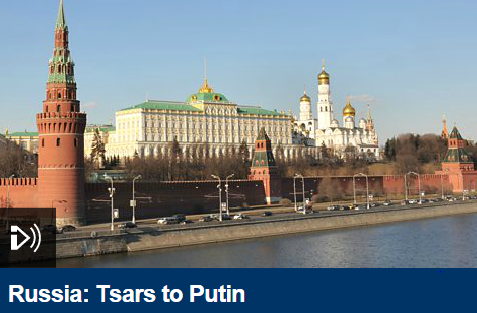
As for my second bouquet, that must go to Andrew Marr and this morning's Start the Week on Russian from the Tsars to Putin - and not forgetting the commissars. 

It had Simon Sebag Montefiore on the Romanovs, presenting a highly juicy take on their wickedness (which suggests that his blockbuster on them probably isn't written 'in the academic style'); plus Amanda Vickery on the Siege of Leningrad and that Shostokovich symphony; Arkady Ostrovsky on the fall of the Soviet Union, very interestingly putting the case for Boris Yeltsin (among other things); and David Aaronovitch engagingly discussing his communist parents' cult-like ties to The Party.

Also well worth a listen. 

Sunday, 17 August 2014

Bishops attacking Cameron, Iraq, Muslims responses to Iraq, female Muslim boxers, the Pope in South Korea and Vicky Beeching coming out as a lesbian


A couple of Sundays ago, Radio 4's Sunday featured an interview with the Bishop of Manchester, David Walker, based on a letter he'd written to the Observer condemning the West's neglect of Christians in Iraq and calling for Britain to take some of them in, just as we did with the Ugandan Asians. He said that the anti-immigration mood in this country needed challenging. 

Last week's edition of Sunday amplified that call by interviewing both Cardinal Nichols and Archbishop Welby on the subject in the wake of their endorsement of David Walker's views. 

This week's edition of Sunday began by citing "a scathing attack" on David Cameron's handling of the Iraq crisis in a letter to the Observer by Sunday favourite, Nick Baines, the Bishop of Leeds. Bishop Nick condemned "the silence of the UK government" and its "failure to offer sanctuary". 

As Nick Baines himself was unavailable, William Crawley interviewed David Walker, Bishop of Manchester again, making no mention of the fact that he'd been on two week's earlier.

"And you agree with him?" asked William, innocently. David Walker said, yes, he did agree with Nick Baines. He'd written his own letter to the Observer two weeks ago, he recalled. He wants the "resettling [of] a fair proportion of those displaced", saying they would be "assets to our society".

William Crawley said they'd asked Downing Street but there was no comment as yet (which, given that this was 7.15 on a Sunday morning, might not be entirely surprising). 

This is the third week in a row now that Sunday has promoted this campaign by the Churches, with no opposing voices. This is beginning to look suspiciously like campaigning by Sunday itself. 

Maybe they're right on this issue. Perhaps the United Kingdom should give a safe home to thousands (possibly many thousands) of Iraqi Christians (and Yazidis) in peril and they doubtless they would be a great asset to our society, but the majority of British people are uncomfortable with the very high levels of immigration we've undergone in the past decade-and-a-half and might have reasonable concerns about this, especially given the potential numbers. It's time for Sunday to make much more of an effort to reflect this fact.

 *********


That feature was a late edition to this week's Sunday running order which then proceeded as follows:

1. The UN has declared its highest level of emergency in Iraq as a humanitarian crisis follows the rapid advance by ISIS militants in the north of the country. Correspondent Caroline Wyatt reports on the situation facing tens of thousands of Christians taking refuge in Irbil.

2. We also hear the British Muslim response to the crisis....

This was an interview with Mustafa Field MBE of Faiths Forum for London following this past Friday's declaration by British Muslim leaders denouncing Islamic State. 

[British Muslim have been accused on many forums of having helped a very low profile on the anti-Christian, anti-Yazidi, anti-any-other-religious-minority massacred in recent weeks - something William chose not to mention here]. 

Mr Field accused the group of "trying to hijack and misinterpret Islam". He said the denunciation had "unanimous support" and came about because some imams "felt they had to do something" to disassociate themselves from "an evil and brutal action done in the name of Islam". He talked about the many imams who've lost their lives in Iraq. 

William Crawley then invited him to tell a personal story. He said that, back inn 1991-92, his parents took in a Yazidi woman who had come to the UK for cancer treatment. "Some family friends...felt uncomfortable" about having "a devil worshipper" living with them, he said. Unlike, say, Christians, Yazidis are still a bit of "a taboo".

And talking about Muslims...


3. A new theatre show set in the world of women's boxing is being staged at the Edinburgh Festival. 'No Guts, No Heart, No Glory' is based on the experiences of female Muslim boxers. We hear from the young women taking part and speak to the show's writer and producer Aisha Zia.

I spotted this story in the Guardian the other day and Woman's Hour has already covered it. 

In the end this segment merely consisted of an interview with producer Aisha Zia. The show was sparked, she said, by meeting an hijab-wearing Muslim woman with eleven children from Bradford who started boxing to keep fit. She agreed with William Crawley that "it's always a negative story" about Muslims that we hear but this was an attempt to show something "positive" instead [the theatre show rather than this Sunday segment...though come to think of it...] 

William Crawley asked her if female boxers faced opposition from Muslim men. She said that she'd spoken to three or four imams and they were all fine with it.


4. Pope Francis has made it clear that the Vatican regards Asia as a priority, as it seeks to offset dwindling Catholic numbers in Europe. David Willey reports from South Korea as the Pontiff continues his five day visit to the country.

As outlined in last week's post, Catholicism is growing faster in South Korea than anywhere in Asia, leaping from 2% in the 1970s to 11% now. Unusually, Korean intellectuals first established it there without the help of European missionaries back in the 18th Century.

David Willey's report began at an anti-government protest and his first interviewee was with a peace activist concerned about the "marginalised" and the poor. He also discussed the issue of Korean "comfort women", used as sex slaves by the Japanese during the war. Few survivors are still alive but there are demos every week in front of the Japanese embassy on their behalf.


5. ...as well as assessing the impact of the displacement of ancient religious groups in the region with Gerard Russell, former British and United Nations diplomat.

This was a very interesting interview. 

Mr Russell spoke from Irbil and yesterday went to see the Yazidis with Rory Stewart MP, finding it "a deeply distressing experience". The Yazidis had endured a 25-mile early morning march from their village where the remaining women had been raped and taken away and the men murdered. He compared the plight of the Yazidis to to the Jews in World War Two, saying that it wasn't just Islamic State who were massacring them but that their own neighbours who took part in the atrocities too. 

The Yazidi religion has deep roots in Iraq, having Babylonian, pre-Christian, pre-Islamic origins. Many other small religions exist, unknown to the Western world. The Yazidis have been massacred many times before - on 72 previous occasions, Mr Russell said, and in 2007 they were the victims of the second-worst terrorist attack attack ever when over a thousand were killed in a single atrocity. 

What makes now different, he said, is that it has never before seemed reasonable to believe that these religions may actually cease to exist. 

Mr Russell doesn't think IS are open to diplomacy. His Arab friends think the West has been slow to confront them. He believes the answer "must be military confrontation" and says that, as IS are also engaged in a lot of physcological warfare, Western airstrikes are "giving courage and confidence to oppressed groups" in Iraq.

And finally...


6. The Christian musician and religious commentator Vicky Beeching joins William Crawley to discuss her decision to declare her sexuality. Susie Leafe, director of the Anglican evangelical campaigning network Reform, joins the discussion to debate the church's pastoral responsibility for people who decide to 'come out'.

Vicky, a Christian singer-songwriter know for her 'worship songs' (such as "Glory to God forever") and, recently, as a Thought for the Day presenter, has just come out as a lesbian, aged 35. William Crawley interviewed her sympathetically. Her decision to come out was made after the vote to allow women bishops in the Church of England. After "gender equality", the focus switches to "sexuality", she said. 

She described how she grew up in "conservative Christian home" and from the age of 13 to 30 struggled to reconcile the Bible with her liking for girls. She found it difficult. At the age of 16 she was told that she was possessed by a demon and an attempt at exorcism was made on her. She said that scarred her. 

As for the reaction to her coming out? "Wonderfully positive on Twitter", she said, but she'd had some negative emails and "quite a lot" of hate mail. 

William asked her about her close friendship with Catherine Welby, daughter of Archbishop Justin. She said Catherine had been very supportive. William tried to draw her on the Archbishop's reaction but she said she didn't want to go that to avoid causing him trouble). 

Susie Leafe then joined the interview. Susie is a Christian social conservative and regularly finds herself being invited onto BBC programmes to speak for  that point of view. She often gets a hard time from BBC interviewers, and this time was no exception. William Crawley sounded unsympathetic, pressed her on several points and interrupted her repeatedly. [Such is the seemingly inevitable fate of Christian social conservatives on the BBC, it seems, even from so experienced an interviewer as William Crawley]. Susie said that "God' love is extraordinary" but that He doesn't think that "everything we do is right". 

She did say, when Vicky protested that having a 'straight' woman (like Susie) discussing lesbian feelings wasn't a good thing, that she'd asked Sunday to invite someone other than her to debate the matter with Vicky as she herself felt she wasn't the right woman to do so. Yet, evidently, Sunday chose to do no such thing and here she was being given the full BBC treatment. I'm guessing that the BBC's list of go-to Christian social conservatives is a very short one and that they couldn't think of anyone else (which would be revealing in and of itself).