Saturday, 21 September 2019

Deeply Dipping


Sometimes I wish I didn't have a life because having a life makes blogging so bloody difficult (as John Simpson might put it).

I might, for example, want to watch a month's worth of Newsnights to track Emily Maitlis's interruption stats but, alas, I really don't have the time these days.

So what to do? 

Well, I randomly clicked on a Newsnight episode this evening and landed up on Tuesday's edition, starring Emily Maitlis. 

I knew that Newsnight had rebranded itself and had read complimentary things about it from BBC fans on Twitter, but those crossed Ns look startlingly like a 1940s/2010s Eastern European fascist logo to me.

I'm guessing that wasn't Newsnight's intention (unless they wanted to win over some BBC-hating, Jew-hating Corbynistas). 

Anyhow, I rather enjoyed the programme.

The Brexit discussion was varied in terms of voices. I remember MB's comments about ex-BBC political editor John Sergeant's anti-Boris mouth-frothing (truly something to behold!), but I didn't mind the overall mix of panellists. 

All I'd say on the bias front is that Emily let us, the BBC and, most of all, herself down (and let her bias slip) by asking arch-Boris-basher Lord Charlie Falconer a question about Boris couched in loaded anti-Boris language which, inevitably, resulted in His Lordship happily agreeing with her that Big Bad Boris is a wrong' un:
Emily Maitlis: This man from right inside the Establishment can make him seem like an outsider, when he takes on Parliament, he takes on the judiciary, he takes on anything that sounds lofty and abstract, as James said, [Craig - somewhat twisting the point of what James said] and he wins those fights. Or he loses those fights. He loses against Luxembourg and it's still written up as somehow, you know, two fingers up.
Lord Falconer: Em, I fear you're right about that. It doesn't matter whether he's right or whether he's wrong. It doesn't matter if he pushes it too far or breaks the law or breaks the Constitution or smashes up the institution. The only thing that matters is the point that James is making. [Craig - It wasn't actually the point James was making.] It's the people who have no interest in the detail of the Constitution who will see him taking on the Establishment. 
Ah yes, those stupid Leave-voting oiks, eh, Lord F?

And there was also a piece on Bibi Netanyahu, in the light of the latest Israeli election (cue Brenda from Beersheba saying, "You're joking? Not another one!"), by Newsnight's Everywhere correspondent Gabriel Gatehouse - a man whose carbon footprint must make poor Greta absolutely sob her heart out. 

Now Gabriel is an interesting reporter, but here there were three 'talking heads', all introduced with neutral-sounding taglines featuring posts and dates. 

Not one of them was sympathetic towards Bibi - or Donald (who got strongly tagged into the report). 

Obeying my blogging instincts, I googled and quickly found that Tal Schneider is from the centrist Globes newspaper, Anshel Pfeffer is from the left-leaning Haaretz (though I already knew that), and Hady Amr, the critical US envoy, served under Democrat President Obama.

Not a right-winger in sight.

No wonder, then, that they sang from pretty much the same hymn sheet.

Seriously, wouldn't it have been better for Newsnight to provide their audience with a broader range of voices? And is it simply because they don't like Mr Netanyahu (and everything he represents) that they failed to do so?

*******

Minutiae? Or evidence of BBC bias? You decide!

Some things new under the sun


In fairness to John Humphrys, he hasn't been entirely silent in the past.

We've reported (with some glee) both his earlier major swipes at the BBC. 

So - in that sense - you could say that you heard it here first! (Go on, say it!)

You may recall him upsetting Feedback's Roger Bolton in 2014 by criticising the BBC in The Radio Times for underplaying concerns over immigration and the EU because of a "liberal mindset", then telling the affronted Roger that "analysis" of the BBC's coverage would give him that impression too. "There was a mindset that thought that the right approach to Europe should be supportive", he told  Roger and his Radio 4 listeners. Unfortunately, he then rather spoiled it by suggesting that the problem was rooted more in the recent past than the present. 

But, also via The Radio Times, back in 2017, in a joint interview with all four other Today presenters, he then said "there's a disconnect between the people who run the BBC and a large chunk of the population", saying the people in charge at the BBC "tend to come with a set of liberal values that permeate their thinking, and therefore the thinking of the BBC". (His colleague Nick Robinson was having none of it).

And in that interview, he also gave us a sneak-preview of the anecdote I quoted from this weekend's piece in the Daily Mail, suggesting that a pro-EU mindset was still absolutely rampant at the BBC (like we ever doubted it!). Here's what he said in 2017:
I noted on the morning of the referendum that in the BBC almost everybody who came in, above all, all the bosses, looked absolutely stunned. And I suspect if you walked into a cafe round the corner frequented by a rather wider mix of the population, there wouldn't have been that same sense of being utterly stunned. They'd have been maybe a bit surprised, but perhaps not even that. I think we sometimes do lose touch with the population.
I gave him a "Well said John!" for that. 

So some of the views he's expressing now aren't new.

He's said them before, publicly.

But others are,...

...such as his direct criticism of Ben Hunte, the BBC's LGBT Correspondent, for wanting to be an activist-journalist and Breakfast presenter Ben Thompson for wanting to censor social conservatives (as well as his missile strikes on Eddie Mair), plus his sharp and unquestionably true comments about the BBC's strong and overpowering temptation to act as social engineers aiming to reshape society in their own image (something we see all the time). 

To conclude: If I liked popcorn, I'd be getting fat on it today.

Free at last!


"For much of my career, I’ve felt rather like the junior butler trying to blag a seat at His Lordship’s dining table in Downton Abbey"

(John Humphrys, on being a working class, non-arts graduate at the BBC)


Just two short days after departing the Today programme, in mourning weeds, with tears in eyes, John Humphrys has seriously let rip at the BBC in (OMG) The Daily Mail...

Feedback will be appalled, and doubtless John's choice of publication and what he has to say there will only confirm to his many left-wing haters on Twitter that he's the right-wing fossil they've been so vociferously asserting he is over recent years. 

Many of his criticism of the BBC will be very familiar, and we've made them ourselves...over many, many years. But it's always good to get it from the horse's mouth, even if the horse felt the need to bolt from the stable first. 

It's a long piece, so I'll try to summarise it:

1. He says he's now free to speak and no longer has to "submit to the BBC Thought Police" his "subversive musings". 

2. The BBC is "a tremendous and irreplaceable force for good" and "this country is the stronger for its existence". "Our democracy needs it" and he's "convinced that it occupies a special place in the nation's heart" and that "we would be poorer without it".

3. The BBC has a "great fear... of the politically correct brigade and the most fashionable pressure groups — usually from the liberal Left, the spiritual home of most bosses and staff".

4. BBC bosses didn't even try to disguise their horror at the result of the EU referendum. It wasn't what they expected or what they wanted. They saw it as "a disaster".
The Brexit crisis had exposed a fundamental flaw in the culture of the BBC. Its bosses, almost to a man and woman, could simply not grasp how anyone could have put a cross in the Leave box on the referendum ballot paper.
Here's a lengthier extract with a telling anecdote:
We note how much time the typical boss spends in meetings — usually with other bosses — and how little in the various news rooms. It’s true that they tend to appear on the mornings after, say, General Elections — offering a few nods and smiles and the odd encouraging remark to the poor bloody infantry who have been slaving away all night. 
The morning of the EU Referendum was different. Leave had won — and this was not what the BBC had expected. Nor what it wanted. 
No nods and smiles when the big bosses appeared. No attempt to pretend that this was anything other than a disaster. 
Their expressions were as grim as the look on the face of a football supporter when his team’s star player misses the penalty that would have won them the cup.
5. The BBC has an "institutional liberal bias". The main reasons for this are (a) its recruitment process, which overwhelmingly hauls in middle-class, university-educated, often private school-educated arts graduates ("and it’s a racing certainty that there won’t be more than a handful of Tories among them") and (b) groupthink:
There is, I believe, a groupthink mentality, an implicit BBC attitude to what makes news. Decisions are influenced, if only subconsciously, by what the organisation has done in the past. So it can too often be willing to settle for the status quo, settling into the same lines of thought.
6. Because of that groupthink, immigration and euroscepticism became two important areas where the BBC "failed so badly to spot a change in the nation's mood".

7. He himself voted Remain in the EU referendum. He's voted for most political parties over the years (though not the far-Right or the far-Left) and considers himself "pitifully middle-of-the-road".

8. The BBC finds it "hard to resist" the temptation to engage in social engineering. It sometimes tries "to create society in its own image" and "places its powerful finger on one side of the scale of social justice":
Which is why I raised my eyebrows when the BBC announced it had created the new post of LGBT correspondent — and the man appointed said: ‘I’m looking forward to being the mouthpiece for some marginalised groups . . .’ It was the use of the word ‘mouthpiece’ that jarred. Obviously, the BBC must give a voice to minorities, but it must not act as anyone’s mouthpiece. That’s what lobbyists and public relations people do. To confuse the two is to undermine the job of a journalist.
9. More and more people at the BBC "conflate and, perhaps. confuse their own interests with those of the wider world...The logic seems to be that if they feel strongly about a given issue, the BBC should not only listen to them but modify its output to reflect their own world view." He cites the example of members of the BBC's LGBT group, including a business presenter, demanding on Twitter that a question on Question Time asking if it was morally inappropriate to teach five-year-olds about LGBT issues shouldn't have been allowed. It's not a good look for people at the BBC to engage in censorship.

10. The BBC's handling of the Carrie Gracie affair and his leaked off-air banter with Jon Sopel about it "made the Kremlin circa 1950 look sophisticated". He doesn't believe he did anything wrong.
I was disappointed by the BBC’s reaction. They might have made the point that my 50 years’ service at the BBC showed that to accuse me of misogyny on the basis of one bit of private banter was risible. Fat chance. Instead, they came up with the typically pompous comment: ‘This was an ill-advised off-air conversation which the presenter regrets.’ And a ‘source’ told the Guardian that ‘management are deeply unimpressed’.
And he's particularly angry at how then-PM presenter Eddie Mair - the real "boss" of PM - handled the story (or, as JH sees it, non-story), going on to complain:
Mair was not a team player. When he joined PM in 2003, it was a straightforward news-based programme. By the time he left, it had become — in my view — a vehicle for his ego.
11. Yes, he enjoys arguing and approaches people in power "with a pretty strong dose of scepticism", but he's come to realise that the "gladiator sport" style of interviewing is far from ideal. What does it actually achieve? "Too many interviewers (present company included)", he says, "are too often more concerned with making headlines than with helping the audience understand the issues at stake." He admits he got "a little heated, too heated" in the past, did "a lot of interrupting" and, to his "great shame", lost his temper at times, but "calmed down" over the years. 

12. Punchline: After 33 years on Today, he "can't deny that he's rather looking forward to tomorrow".

John Simpson - the best bits


All the views it's fit to print

And to end, here's a selection from the transcripts below containing John's most quotable quotes from his latest podcast:


"And, so, when Trump says in those ineffable tweets...I mean, you know, I use the word 'ineffable' because it sounds, you know, like the f-word...that he does, apparently at two o'clock in the morning, propped up in his lonely bedroom with nothing to do except tweet..."

"And he claims to stand up for the little man...I mean, you know, a multimillionaire - how much money he has is in question - who's never been bothered about any little man in his life before and has, in fact, screwed plenty of little people over the decades."

"And, of course, America in the past has made us feel rather superior and inclined to pat ourself on the back. That, I have to say, I think is over now. I don't think Britain has anything much to pat itself on the back for at present."

"I find myself, against my will really but, thinking and arguing in favour of the old ways where an elite is responsible for putting out the news."

"And all of that sense that an elite is telling you what it is its interests to tell you, all of that is now very much on the back foot, and it indeed may be disappearing, and, well, you know, I'm a child, a product of that kind of elite. It's not a social elite. It's a sort of intellectual elite. And we're losing it. We're losing it everywhere. And I'm not sure things are any better."

"Just the general thing about 'the BBC bias' and so on - and, God, you see it everywhere and it's so bloody boring - but the fact is that there isn't an editorial line that the BBC takes. The heads of every programme, the presenters of every programme, are given complete freedom to do and say what they think ought to be said. So you get different versions of these things from different programmes, both on radio and on television and online as well. And there are things, you know, that I think go too far in one direction or go too far in another."

"But what I am really not happy with is a kind of timidity that I feel the BBC in particular has shown at times. And there is, I think, an institutional timidity and I think the BBC has really has got to understand that and fight against it."

John Simpson on BBC bias, the EU referendum and 'institutional BBC timidity'


"We're out!" (thanks to the BBC, apparently)

Transcript - 
John Simpson's World, What's Really Happening in the US?

I got into big trouble in the BBC for saying publicly, after someone came and interviewed me, saying that during the referendum we seemed to feel that balancing the arguments was all that we need to do and that we were very much responsible, among others, for what happened.

I don't think it was just the BBC. I think it was all the broadcasters.

And the only defence I can make really for the BBC is that it was something really entirely new. It was kind of a binary question. It was only 'yes' or 'no' in the referendum, and we hadn't been in that position before. If it's a general election you put up the different spokespeople and you set them against one another, and it's kind of like bear-baiting or something like that, you know, it's just a conflict in front of your eyes. And this wasn't like that. There were people who were telling outright lies and they were being allowed to broadcast them openly. And because it was about the effects of something rather than an actual experience that people could see for themselves it was all about what would happen in the future. And so there was far less control over what they were saying than there should have been.

Now, the BBC in particular has changed that. And we're not the only outfits that do it, but we subject everything to a fact-checking process. And I'm very proud of that and I think it's very impressive, but if it had happened in 2016 I think we would have had a different approach to the whole debate.

Just the general thing about 'the BBC bias' and so on - and, God, you see it everywhere and it's so bloody boring - but the fact is that there isn't an editorial line that the BBC takes. The heads of every programme, the presenters of every programme, are given complete freedom to do and say what they think ought to be said. So you get different versions of these things from different programmes, both on radio and on television and online as well. And there are things, you know, that I think go too far in one direction or go too far in another.

But what I am really not happy with is a kind of timidity that I feel the BBC in particular has shown at times. And there is, I think, an institutional timidity and I think the BBC has really has got to understand that and fight against it. 

John Simpson on the media and elites


The old gatekeepers 

Transcript - 
John Simpson's World, What's Really Happening in the US?

I find myself, against my will really but, thinking and arguing in favour of the old ways where an elite is responsible for putting out the news. 

And, I mean, I used to work alongside NBC and CBS and ABC and I knew some of the top characters there very well. And I know how seriously they took the job of telling people what they believed they needed to know.

You know, the masthead on The New York Times, 'All the news that's fit to print'. I mean, it irritates me very much to read it, but, you know what they mean. They meant, 'We will be the gatekeepers but you can rely on us to tell you honestly what's going on'.

The BBC and British broadcasters are in very much the same position.

And all of that sense that an elite is telling you what it is its interests to tell you, all of that is now very much on the back foot, and it indeed may be disappearing, and, well, you know, I'm a child, a product of that kind of elite. It's not a social elite. It's a sort of intellectual elite. And we're losing it. We're losing it everywhere. And I'm not sure things are any better.

When I read what's on the web I often think, 'Surely things weren't as bad as this in the 1950s and the 1960s and the 1970s. Wouldn't some kind of control be better?'

I wouldn't care to go back to those days actually personally, but you can see that they represented a stability and a certainty which we've now lost, and that the loss is very strong I think.

John Simpson on Donald Trump


How John Simpson sees President Trump

Transcript - 
John Simpson's World, What's Really Happening in the US?

I think we're seeing a small revolution. Perhaps it's a big revolution. I think we're seeing in America, but it's not only in America, that sense that people who've felt that they've been put down and kept quiet and ignored - their views have been ignored - for decades, all their lives maybe, are given a voice by essentially one man and a smallish group around him. 

A man who didn't actually, of course, even win the 2016 presidential election in the terms of voting. I mean, several million fewer votes than Hillary Clinton got. So you can't say this is 'the will of the people'. It was the will of the weird US constitution. 

Well, that's fine. He won on that basis. 

But there's a kind of vengeance about the Trump administration which is quite disturbing to a great many Americans. 

I've been covering American politics since 1963, since the days of President Kennedy. My first reporting was done there when Kennedy was still alive. And always America, a little bit like Britain actually, America was run by a section of society. It was more open than the British society was then but, nevertheless, there was a sense in which everybody knew the direction that America should take and they silenced the people that thought differently. 

The first US election that I covered was in 1964 when President Johnson faced Barry Goldwater, the Republican candidate, and Barry Goldwater was a man of the far-Right. Nowadays he would be a Trump supporter. And the Republican Party allowed him to go forward as their nominee because in the wake of the assassination of Kennedy they knew that they couldn't possibly beat Kennedy's successor, who was Johnson. They knew that there was a sympathy vote there which they couldn't possibly cope with. And so the grandees, the liberal-conservatives, the Rockefellers, all of those kind of people, came up with the notion, I think really, that it would be a good idea to let Barry Goldwater go forward, be the candidate, be absolutely smashed at the election, and that would sort out the right-wing fringe for good and all. 

Well, he was smashed at the election. I don't think by that stage there'd ever been a presidential election in the US where the winner won so conclusively. But it didn't smash the kind of Goldwater feeling. 

And then it came up again with Ronald Reagan, with that notion that if you allow the rich to pay fewer taxes to get richer then there'll be a trickle-down effect, everybody in society will benefit. And that, something that was introduced in the 1980s, has clearly not had that effect. On the contrary the divisions between rich and poor are far, far higher now than they were in the 1980s. 

And one of the side effects of that is a kind of bitterness in American society which has latched on to the message that Donald Trump has presented to them. They want to get back at somebody. They want things to be sorted out on their terms. 

And, so, when Trump says in those ineffable tweets...I mean, you know, I use the word 'ineffable' because it sounds, you know, like the f-word...that he does, apparently at two o'clock in the morning, propped up in his lonely bedroom with nothing to do except tweet. And he says, for instance, that Democratic politicians who were born in the US should go back to the countries that they came from, and so on, these kind of things have a real resonance. You know, Democrats in America may be deeply offended by it. A lot of people in Britain are deeply offended by it, and all around the world. But not the kind of people that Trump knows that he represents. 

And he claims to stand up for the little man...I mean, you know, a multimillionaire - how much money he has is in question - who's never been bothered about any little man in his life before and has, in fact, screwed plenty of little people over the decades...but they still feel somebody is saying these kind of things that they've always been saying. And it's a kind of relief and excitement to them to see their president saying the kind of things that they say in bars and their private houses that nobody's ever been able to say in public before. 

*****

People want to be convinced.

I mean, the best example of that is Trump is a man who has been recorded...you can hear it, it's all over the internet still...taking about grabbing women by the pussy and yet you find the the religious Right are among his strongest supporters. Why? Well, I suppose because they're prepared to ignore the things that they would otherwise be deeply offended by in the interests of the direction that Trump seems to be taking them in.

But you just feel there's a kind of disconnect between who he really is and who he presents himself as.

And, you know, America is the land of...and I love it very dearly...but it is the home of the snake-oil salesman, and people want to be convinced. They're a very positive country and they want positive things usually, and if you can present these deeply, deeply negative approaches as being something positive and helpful - 'Make America Great Again!' - then you've uncovered a rather disturbing secret about the way American politics runs.

*****

And, of course, America in the past has made us feel rather superior and inclined to pat ourself on the back. That, I have to say, I think is over now. I don't think Britain has anything much to pat itself on the back for at present. But there's a kind of wild freedom to say and do things in the US which I think has resulted in all these things.

I mean, I look at my own industry - the news industry.  President Reagan, when he was in power, decided to scrap the law that broadcasting, both radio and television, had to be balanced in news terms and we saw the rise of these appalling shock-jocks and characters who wanted to force a views of America down the throats of their listeners and viewers. And it's got worse and worse and worse.

And I think what we're seeing with Donald Trump is the result of two things that the Reagan administration did. First of all, the feeling that you can uncouple taxation from the way a society should be run and you can just allow wealthy people to keep all of their wealth instead of sharing it for the good of the nation. That's one thing that we've seen in Trump's America. And the other thing is this outpouring of wild and completely unregulated opinions which, you know, have resulted in Trump and Steve Bannon and all these characters.

Of course, it could all come to an end. Quite soon. I mean, next November, November 2020, there'll be another presidential election and it's perfectly possible on the basis of today's opinion polls that Trump will just be a one-term president cast into other darkness. I think that must be about 50-50 that that might happen, but only 50-50.

I don't think any constitutional setup like that [the electoral college system] or any element of the US constitution is open for change any more really than our own constitution here is. The amount of fighting that you'd have to go through, it's just an impossibility. So I think most political scientists in the US would say it doesn't actually necessarily reflect the popular will but there's no changing it because once it's in place it's there for good.

John Simpson's World


Which one is bow-legged, according to John Simpson?

John Simpson, the BBC's well-known and widely-admired World Affairs Editor, at the age of 75 has put in over fifty years of BBC service, has reported from dangerous places and witnessed countless moments of history, appears charming, famously liberated Kabul single-handed while dressed as Cherie Blair's sister, often gets confused in people's mind with Sir David Attenborough (who he informs us in one of his podcasts has bow-legs) and presently occupies one of the most highly prestigious of the BBC journalistic offices.

But what if he, great man as he is, also regularly disproves the idea of BBC impartiality? Is it disrespectful (or unpleasant), or "bloody boring" even, for us to point it out?

He, of course, maintains that criticisms of BBC impartiality are all complete bunkum - though he himself joined the elite pro-Remain battalions complaining that the BBC could have changed the outcome of the 2016 EU referendum by the BBC giving the benighted public "the facts". 

And now, as regular readers will know, he has a podcast of his own called John Simpson's World, where he and his ex-BBC producer chew the cud on various matters. 

The latest episode is called What's really happening in the US?

It's fascinating, and his ex-BBC producer will have you gasping. She's not shy of an opinion herself (and I bet you can guess what they are!).

Over the next few posts, you'll find my transcripts of choice extracts from his latest podcast. Enjoy!

You'll find his take on BBC bias especially interesting in the light of John Humphrys's criticisms of the BBC. They may be good friends, but their views could hardly be more sharply contrasted on the question. 

Friday, 20 September 2019

Go Gentle

This is a thing now. Elderly (no-longer-young) people are thanking their lucky stars that they’ll soon be able to opt-out of Madness gawn Absolutely Mad. Enough already. Please, may we be excused?

Brendan O’Neill and Douglas Murray are not alone. Lots of us are exasperated by gender-non-specific individuals requiring plural pronouns and butchering language and grammar.  Then they add insult to injury by carelessly calling them/selves “I” rather than ‘we’. Even Afua Hirsch, an earnest supporter of the plural pronoun malarkey caught herself out by accidentally using the explicitly masculine terms “he” and “him” in the course of arguing the case for ‘them’ and ‘their’ We/I  am/are are not amused. None of us are. Including me.

Genuine question: What do they do about languages where inanimate objects have genders? Animals? What about, say, “La France”?  Must they be plural now? Are France plural?

*******

What about that virtue-signalling investigation into Islamophobia that the Conservative Party was bumped into announcing, live on TV? In particular, what about Boris “calling Muslim women ‘letter-boxes and gangsters’?“ Didn’t the lady from Vice UK (As per Craig’s piece about today’s Daily Politics) comprehend that  - for some serendipitous reason known only to him - Boris was arguing against the wretched Burka ban, and when he likened the appearance of the Muslim uniform to a letterbox (which, with its slits-for-eyeholes, it kind of is) he wasn’t actually calling Muslim women  letterboxes or bank robbers? 


Are people so terrified of causing offence that they’re actually arguing for a blasphemy law these days? No bloody wonder we see our hastening demise as a blessed release. 

*******

Here in Cornwall, there’s a tradition called “Darkie Day”. I haven’t witnessed it personally, but I heard that it was tagged ‘controversial’ some time ago and (to avoid being racist) was re-titled “Mummer’s Day” and granted a reprieve. (Not banned) 
“In spite of the fact that the police were brought in twice to film the events, and both times declared that there was no evidence of offensive behaviour, the spectacle of an entire town taking to the streets with blackened faces and singing about 'niggers' was understandably deemed by some to be inappropriate. In response, the festival organisers agreed to change the name of the event to Mummers Day (which brings it into alignment with England) and to try to change the songs back to the original Cornish ones.
We don’t know if the event is/was/will be currently permitted to go ahead, or if blacked-up revellers risk being convicted of hate crime.   
*******

Quick, Dial 999! I’ve had a racist /Islamophobic/transphobic/homophobic/politically incorrect thought and I want to turn myself in and maybe go gentle into that good night.

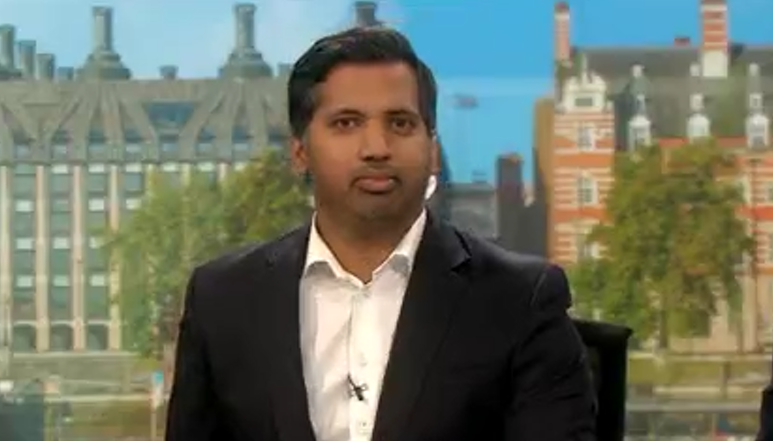
Er...starring Faisal Islam


Faisal Islam

Talking of Twitter exchanges, here's another between two people I 'follow' - one the BBC's editor of live political programmes, the other a not unfriendly critic of the BBC - rounded off by a comment from someone I most certainly don't 'follow' (my loss?):
Rob Burley: Coming up at 1215 on BBC2 it's Faisal Islam with Politics Live and guests Trevor Phillips, Sherelle Jacobs, Zing Tsjeng, Liam Halligan, Ann Pettifor and Matthew Syed.
BBC Waste: Can't you find anyone better than Faisal Islam? You have great talent in the ranks. Wouldn't be in my top 25 choices.
Rob Burley: I think he's an excellent presenter. Unnecessary unpleasantness.
Raymond Bennett #RevokeA50 and #MakeItStop: He is. Good choice, credit where it's due.
Now, in fairness to Mr Waste, he's long been a critic of Faisal Islam. He thinks the former Sky man isn't very good and that he has an especially strong anti-Brexit bias - a bias that he, BBC Waste, feels repeatedly gushed out of Faisal's reports on Sky like tell-tale blood strains in fifty Edgar Allan Poe short stories. 

(I've seen too many images of Boris's decapitated head today. It's informing my choice of contrived similes). 

And in fairness to Rob, I thoroughly enjoyed his programme today - a good spread of interesting guests with diverse opinions often strongly disagreeing but in such a way as to generate light as well as heat. And fun too. 

But, while trying not to be unnecessarily unpleasant myself, I must say that Faisal erred on the side of er-ing far too much - meaning that he said 'er' a heck of a lot, especially when stumbling through reading the autocue, as he did throughout. 

He really doesn't seem to have got the hang of reading the autocue. (Not an autocutie, our Faisal - at least not yet). At one point he moved beyond nervous/confused hesitancy and came perillously close to collapsing into 'dead air'. 

I worried for him. 

Still, we've all got to start somewhere. He obviously needs to practise more. Hopefully he'll soon get beyond making viewers feel tense on his behalf soon and flourish (if he isn't biased, that is, of course).  

Trevor and Sherelle

But, talking about tension...

The central discussion on 'Islamophobia' in the Conservative Party got somewhat heated, especially between Trevor Phillips and Faisal Islam.

The BBC had been gifted some 'Islamophobic' Twitter stuff embarrassing to possible Conservative members by someone who is very interested in such stuff - i.e. an activist (wonder who? an Islamist? a Corbynite?) - and was making headline news of it. 

Faisal was - as is the BBC's way - quick to shoehorn in Boris's letterbox quip about niqab-wearing Muslim women in that article in favour of NOT banning the niqab/burka. 

Trevor demanded to know what was 'Islamophobic' about the comparison and asked whether Faisal's question reflected the BBC's point of view. 

Faisal tried the old, tried-and-trusted 'Ve are arsking ze questeeonns' line...

(...actually, I meant 'tired-and-trusted' there...)

...which never really cuts the ice, does it?

Hmm. I'm not too familiar with Faisal Islam (unlike his critic BBC Waste), but I'll be nice and wish him good luck in getting to grips with reading the autocue and handling criticism better. 

And, Faisal, please don't be too biased!

Curiously, it's still (nearly four hours later) not available to view again on the famous BBC Sounds. Is something up? Are there technical problems? Has some interest group complained? (The Muslim Council of Britain perchance?)

A small stushie


In which Andrew Neil rides to the defence of Laura Kuenssberg, a kind-hearted Scots nationalist objects and Andrew parries gracefully. Or something like that:
Andrew Neil (BBC)Total defence. Total solidarity with Briltain’s top political editor. Stakhanovite, relentless, fair, balanced, informed. Always proud when she comes on my show (even though she went to Edinburgh University!)  
Kev R (dad, internationalist, humanist): Middle class privately educated Scotsman in BBC rallies to middle class privately educated Scotswoman who works for the BBC. Both of whom have highly suspect views. In Mr Neil’s case, a strike breaker, a man who controls the right wing Spectator too. Poor wee ‘victim’ Laura. 
Andrew Neil (BBC)I was born into a working class family, brought up in a council house and went to a state school. The rest of your tweet is also drivel. Get your facts right. Better, do us all a favour and give up Twitter.

If


Maybe I'm wrong, but I can't helping thinking that if, say, Morrissey went on stage at an awards ceremony and brandished a dummy of the severed head of Jeremy Corbyn or Jo Swinson, that the tone of the BBC's reporting of the story would be a good deal more critically than it's been for the rapper, Slowthai, who went on stage at the Mercury Prize awards last night brandishing a dummy of the severed head of Boris Johnson. I also suspect that BBC studio after BBC studio, from Radio 5 Live to Today, from Newsnight to Woman's Hour (if it was Jo Swinson's head), would be discussing the issue of violent imagery and respect and recalling the memory of Jo Cox. The BBC News website, for instance, reports Slowthai's stunt 20 paragraphs into its main Mercury Prize piece. Under a photo and a caption saying Slowthai brought a sense of anarchy to proceedings comes this (with a link to a BBC video that begins with a shout of 'f*** Boris!' - with several more coming later - as the rapper walks on stage wielding Boris's begored bonce):
But Northampton-based rapper Slowthai caused the biggest stir by performing with a dummy of Boris Johnson's severed head, which he held aloft as he performed Doorman, a track about wealth disparity in modern Britain. 
Speaking to the BBC, he explained the song, like the rest of his album, aimed to give a voice to "the people from small communities that have been forgotten about". 
"It's time to let people in," he said. "Everyone, the lower class, the middle class, and even the ones in the upper who feel their life is hard."

Champion Ash


Nigel Farage has been on Question Time once in 2019. Far-left scribbler Ash Sarkar has been on three times. 

What larks!


He's not always a jolly 'un, is he, our Jolyon? 

The barrister and anti-Brexit campaigner is presently particularly annoyed at the BBC (and Rob Burley):


He went on to reply to his own tweet and say:
Even those who do not need to pretend to hold a neutral position on Brexit - such as The Sun - are happy to acknowledge the contribution I have made. But not Rob Burley's BBC Politics, which rewrites history before your very eyes. 
Yes, the BBC cameraman shifting his camera during a live broadcast to focus on the SNP's Joanna Cherry as she was speaking, leaving only the top-right flank of Jolyon Maugham QC's body in view,  and BBC Politics then only tweeting a clip of one of Joanna Cherry's many contributions and not including the wise words of our Jolyon, surely is "an abuse of power" by the BBC, and Jolyon isn't overreacting in the slightest - despite what any sensible person might think.

The non-caped crusader went on:
This is - which Rob Burl and the BBC Press Office ignore - why their dominance of news matters. It creates fiefdoms of immense power that can be abused for improper ends.
Note to Rob

(a) Always personally stop BBC Politics twitter feeds from issuing short clips by watching them 24 hours a day and not sleeping and only broadcasting the whole eight minutes (or eighty minutes) of such things.

(b) Always instruct BBC camerapersons to keep Jolyon in shot when he's not speaking - or, even better, edit in a halo around Jolyon's head when he does speak.

Failure to follow either of these steps will mean that Jolyon's faithful #FBPE legions will pile on in and accuse you of "censorship" and "blacklisting" and being "very spiteful" and "the weirdest person ever" (and worse).

********

Incidentally, I checked back on TV Eyes to the very moment on the BBC News Channel that this scene of BBC perfidy originally occurred (rather than the wicked later tweet).

The BBC interrupted its own broadcast to go live to Ms Cherry and Mr Maugham QC and carried the whole thing (some eight minutes of it), broadcasting their every word. 

Mr Maugham spoke first and was fully in view alongside Ms Cherry. Ms Cherry spoke next and the camera shifted to her. Then it was back to Jolyon, in full view alongside Ms Cherry. And then Ms Cherry again, in full view alongside Jolyon (with no special focus). The press, including the BBC's Ben Brown, then asked questions of both of them, mainly showing both of them, though occasionally zooming in on Ms Cherry. And then it showed them leaving, with Mr Maugham's back end blocking our view of Ms Cherry (who led the way). 

Anyhow, there's one thing that can be said with confidence here: Jolyon Maugham QC certainly adds to the gaiety (and the misery) of the nation!

Red face


BBC headline overnight:
Canada's PM Justin Trudeau admits he can't remember how often he wore blackface, as row deepens ahead of election


In my half century of life I've never once put on 'brownface' or 'blackface' - unlike ultra-woke Justin Trudeau, Canada's Liberal PM, who's accidentally done it at least three times now. 

Confession time, I did once -  albeit aged ten, and abetted by my teachers - put on 'goldface' to play the scary Ghost of Christmas Future in my primary school's production of 'Scrooge'.

I had a black cowl and a black cloak. I glided. I held both arms in front of me, like a sleepwalking Frankenstein's monster. I pointed. I was silent. I was ominous. And then I tripped over the end of Scrooge's bed. 

Thus ended my acting career.

I suspect Justin Trudeau ('a virtue-signal made flesh') is feeling even more embarrassed today than I did back in 1979, especially as he was a 29-year-old teacher when he last painted his face brown, just 18 short years ago.

Oh well, you live and learn. I doubt he'll do it again now.

Though you never know. Maybe, like Father Ted in that episode where he inadvertently keeps offending Craggy Island's Chinese community ('I hear you're a racist now, Father!), poor Justin will just have to accept the fact that he's fated to be the kind of man who accidentally ends up having 'blackface' on his face from time to time. Maybe it's a curse?

I did wonder what all the BBC's hyperactive Tweeters - from Jon Sopel to John Sweeney, from John Simpson to Hugh Sykes, from Katty Kay to Anthony Zurcher, etc - had to say about this. What fun they must be having mocking  and tut-tutting at the liberals' pin-up boy! But they haven't posted a single tweet about this. Not one. Fancy!

I bet if images emerge of The Donald in 'brownface' and 'blackface', even as a 10-year-old, they'll be tweeting about it till their fingers bleed - and beyond.

********


Anyhow, here (for your interest) is how Nick Bryant reported the story at 10:19 pm on last night's BBC One News at Ten:

Question: Given that Mr Trudeau is now 47 (six years older than Emmanuel Macron, eight years older than Jacinda Adern and twelve years older than Kim Jong-un), is it still right to call him "the young Prime Minister"?
Nick Bryant: In this age of celebrity politicians, Justin Trudeau is a politician who became a celebrity. Youthful, telegenic - a leader who seemed to embody the values of modern-day progressiveness, a model of political correctness. But this photo presents a very different picture, showing him wearing blackface make-up at a private-school gala in 2001. An Arabian Nights costume party where, as a 29-year-old teacher, he was dressed as a charater from Aladdin. His message today - "Forgive me, I've changed." 
Justin Trudeau: Darkening your face, regardless of the circumstances, is always unacceptable because of the racist history of blackface. Should have understood that then, and I never should have done it. 
More blackface photos have emerged, and a video has surfaced from the early '90s showing a young Justin Trudeau sticking his tongue out and making faces. All this in the midst of an election campaign in which Mr Trudeau had already been reeling from a corruption scandal. Blackface is now recognised as a racist caricature, and his opponents are piling in. 
Jagmeet Singh, NDP leader: Any time we hear examples of brownface or blackfacing, it's making a mockery of someone for what they live, and what their lived experiences are. I think he needs to answer for it. 
The young Prime Minister has always sought to portray Canada as one of the world's most successfully multicultural countries. Here, he greeted Syrian refugees at the airport. This damages his political brand. But in the capital, Ottawa, today, most people we spoke to were forgiving. 
Vox Pop 1 (elderly Sikh man): It is nothing, because he was very young at the time. Vox Pop 2 (elderly white lady): And it was Canada, it's not the US, we don't have the same history here that they have in the US. Nick Bryant to Vox Pop 3: Do you find it offensive? Vox Pop 3 (young Native Amercian lady): I do. 
He's positioned himself as a liberal counterpoint to Donald Trump, but his golden boy image has been tarnished. Nick Bryant, BBC News, Ottawa.  
Nick Bryant (continuing): Now, Justin Trudeau couldn't even remember today how many times he had worn blackface make-up, which raises the possibility, of course, that more damaging pictures may emerge. Now, he thinks he can weather this political storm, and we will find out this time next month, when Canada goes to the polls. 

Thursday, 19 September 2019

Forgive and forget

I think I am handicapped by my long and unforgiving memory. So I can hardly complain about the media attaching all those ‘long-lost’ labels to Tommy Robinson. Nevertheless, I do complain.

Take the Lib Dems. I can’t get my head around Luciana Berger joining the Lib-Dems after they (as a Party) tolerated those two arch antisemites, Jenny Tonge and David Ward. Former Brent Central MP, Sarah Teather, obsessed with defending her radical Muslim ‘constituents’ wasn’t much better. Admittedly, the Lib Dems sacked Tonge under Clegg and Tim "Ward is unfit to represent the party"  Farron. Yes, the party eventually got rid, but it took them forever and a day. I suppose the Lib-Dems held seats in many predominantly Muslim constituencies at the time, but what if they regain them in future?

Here’s another example of me as ‘hostage’ to my lengthy, unforgiving memory. It concerns Sarah Champion. I can’t forget her appearance at that Muslim-heavy council meeting where she was filmed obsequiously pandering to some full-on, undiluted, Israel-bashing. (See vid below)

When she is held up for her ‘bravery’ in publicly identifying the grooming-gang phenomenon as being perpetrated by “mainly Pakistani men’  and getting herself demoted by Corbyn into the bargain, she meekly toed the line thereafter. Where’s the bravery in that? She should have kicked up a fuss. I think it’s high time to resurrect one of my abandoned (gone but not forgotten) posts. It’s no longer topical, but what the hell.  Here goes:

"Covering your arse". (Working title)

"I caught part of the select committee debate on LGBT education with Sarah Champion MP speaking passionately in favour of  LGBT education. Brendan O’Neill has written a curate’s egg of a piece about Pakistani grooming gangs. It’s mostly critical but he sneaks in a jarring note to distance himself from nasty ‘right-wingers’, like so:
“it plays into the hands of hard-right elements who politicise the issue of Muslim grooming gangs. It actually empowers these troublesome political groups who will say: ‘Only we are brave enough to talk about this problem.’ And of course they talk about it for very cynical reasons — in order to promote a view of all Muslim men as predatory, and all Muslims as a problem.
However, he receives plenty of flak below the line for that arse-covering paragraph. He praises Sarah Champion for her ‘bravery’ in specifically mentioning ‘Pakistani’ men in a famous article she wrote for the Sun; the one for which she lost her shadow cabinet role. (Sacked by Jeremy Corbyn.)
“Look what happened to the Labour MP for Rotherham, Sarah Champion, when she wrote about the problem of largely Pakistani gangs abusing white girls. She was demonised by Corbynistas. She was forced out of Jeremy Corbyn’s shadow cabinet. The message was clear: talk about this issue and you will be punished
says O’Neill, admiringly. What did she do then, though? Did she make a fuss about being sacked? No, she did not. She toed the line and she’s still in the antisemitic Labour Party backing Jeremy Corbyn for PM. 

Now she’s taking another risk. She’s risking the ire of the Pakistani councillors (her constituents) by defending LGBT education. Brave again? Mixed messages from opportunist Champion? - she was, after all, MP for Rotherham during the period when the Pakistani men were happily a-groomin’. 

Brendan O’Neil again:
“Strikingly, the judge didn’t only condemn the men – he also criticised the authorities in Rotherham. He said they had at best been ‘totally ineffectual’ and at worst ‘wholly indifferent’ to the abuse of girls by Muslim gangs. He said he was ‘quite satisfied’ that the ‘relevant authorities’ in Rotherham knew girls were being targeted for sexual exploitation. And their failure to do anything about it is a ‘lamentable state of affairs’.”

Surely she must have had a little inkling about what was going on under her nose? She never said a word until the whole thing was out in the open. Her ‘bravery’ entirely consisted of using the words “largely Pakistani men”, rather than obfuscating like everyone else did, by using the misleading term “Asian”; to me her belated outrage looked more like covering her arse for (at best) ‘not noticing’ what was going on, than *bravery*.

Am I just being bitchy, or is all this criticism fundamentally because she was filmed chairing a meeting of the Pakistani councillors that represent her constituency.  She was ingratiating herself with these men by enthusiastically castigating Israel for retaliating after a heightened spate of rocket attacks fired from Gaza.


We spotted her appearance on a BBC documentary about the HoC.  “I don’t understand how you can have negotiations when you only talk to one party,” said Sarah Champion. Of course, she’s not talking about Corbyn.
 I blogged it at the time and have referenced it whenever the opportunity arose because I don’t think of her as ‘consistent and certainly not ‘brave’. Rather, she comes across as an opportunist with no principles.

Perhaps she's changed. Should I forgive and forget?  I might be able to 'forgive', but it's oh so hard to 'forget'.

Fathead


Douglas Murray illustrated his article about James O’Brien with a maliciously delicious picture. O’Brien is the only person I can think of who’s got cellulite on his forehead.
The fact that someone at the BBC saw fit to hire him as a presenter boggles belief. A mixed metaphor, but it’ll do.

Why did anyone at the Beeb think he was suitable for Newsnight? (Literally un-suitable, as in unable to wear a suit in the normal manner.) He's more at home in manky old T-shirts in keeping with his demeanour; rude, uncouth and obnoxious.

John Humphrys signs off


Plenty of plaudits for Humph this morning during his farewell appearance on the Toady. 
A big article by Giles Fraser on Unherd, too. Who will miss John Humphrys? 

The Today Programme seems to be getting less and less listenable under Sarah Sands’s headmistress- ship. "She introduced the puzzle", someone announced, as if that was a good thing.

He sounds ok, but when you see him Humphrys has the pallor of a man who’s been living underground for years. For his sake, now that he can have a lie-in and a bit of a relax, I advise him to get some fresh air (for the vitamin D) 

Bye John, and good luck. 

Boris Heckled

The BBC is weirdly fascinated by ‘Boris Being Heckled’. 6th Sept, 5th Sept, 13th Sept, 9th Sept, 13th Sept (again) 9th Aug,  10th Aug, 5th Sept. 22nd May 2017 (?) 24th June 2016 (!)

When Boris Johnson was heckled in West Yorkshire, “the Heckle” was the BBC’s headline all day. To be honest, I’m not sure if the other channels followed suit, but someone observed:
“The Prime Minister gave a speech in the north of England during which a man heckled him (surely not an unusual occurrence for any politician) yet what made the headlines and was the focus of the news story? The heckling.

So what I’m saying is, um, the media’s focus seems a bit suspect. Never mind. I won’t go into that today. The hooha around that peculiar hospital corridor confrontation by ‘a concerned father’ had particularly nasty repercussions. Social media, the mainstream press and the online world were fizzing with vitriol.

Remember all those theatrical political interventions on Question Time that were frequently presented as ‘random’, but which “Turned Out” to be more or less orchestrated party political stunts? Hard-left activists seem keen on that sort of attention-seeking, but I suppose it’s kinda legitimate in a direct-action kinda way.

Anyway, what I’m saying is, did you see the vitriolic avalanches that befell poor Laura Kuenssberg when she Tweeted her….. let’s call it ‘reality check’ Tweet.  “Turns out” etc Look on Twitter. It’s horrendous. 


Incidentally, the Indy has the man’s daughter at “7 months” whereas Twitter mostly has her at “7 days” and one paper (I forget which) had her at “7 years”. Seven somethings, probably. Oh well, that’s reporting for you.


I think Laura Kuenssberg has had a rough deal here. I think she had to mention that the good Omar Salem was a Labour activist, otherwise the BBC would have been heavily criticised by the likes of me.

Whether she was wise in using the term “turns out” is another thing, because, if you think about it, there is a hint of cynicism in that two-word opener because the implication could definitely be that the whole thing was primarily (or 'nothing but') a stunt.

The professional Tory-haters contend (Tweet) that a baby nearly died through government underfunding, and many tweeters believe the man done good to confront the heartless, opportunistic PM., whose 'electioneering' hospital visit was also a publicity stunt. They say the Tories have to be held to account for  “wrecking the NHS”, and conclude that Laura K is a Tory and that the BBC is a government mouthpiece.

Wednesday, 18 September 2019

Well, well


3 hours ago on Twitter:


2 hours ago: