Saturday, 7 September 2013

The Story of the Jews


The reviews for Simon Schama's new landmark BBC series, The Story of the Jewshave been favourable so far - and rightly so, in my opinion. 

Eschewing all talk of hand gestures, background music and suits, what follows will be an extended paraphrase of Part One - and what I think is the essential element of the The Story of the Jews, namely the story of the Jews. 

It may have nothing to do with the topic of BBC bias (though I'm sure some anti-Semites will think otherwise), but hopefully you will find it interesting, even if you've already watched the programme. (Plus writing it up means I can remind myself of what it said for years to come, without having to buy the book. Ain't I a cheapskate?) 


********

The Story of the Jews began by posing the question, 'What, if anything, do all Jews have in common?' It's not skin colour, or language, or food, or music, or opinions, nor is it the way they pray (if they pray at all). No, it's a story, the story kept in their heads and hearts, "a story of suffering and resilience, endurance, creativity" - a story they've "told to survive" for over 3,000 years. "We are our story," said Simon Schama.

He began with Sigmund Freud who, having fled Nazi-occupied Vienna, settled in London and, in reaction to the anti-Semitic horrors beginning to unfold around him, and whilst dying from cancer, reflected on the story of the Jews, and on the very question Simon himself had just asked, and also on the question of why Jews have been persecuted so often. 

Freud's most treasured possession was an ancient Hanukkah lamp, a menorah, symbol of the temple light that kept burning. "The menorah is the most ancient and enduring symbol of Jewish identity, even for someone who called himself a 'godless Jew'", said Simon Schama. 

Freud applied his theories to the Jews, especially the story of Moses - the dominating father figure of psychoanalysis. Freud's "outrageous" theory was that the Jews had rebelled against Moses, and murdered him, but then adopted his laws out of guilt and remorse with "an obsessive devotion" that endured through millennia of suffering. A scandal ensued, but Simon said that the important point had been lost in the scandal: Freud's conviction that by preserving their religion, consciously or unconsciously, the Jews had given themselves the opportunity to endure not just as a faith but as a people when everything else had been lost. 

That was the meaning of Freud's travelling menorah and why he valued it. 


In that light, a Passover feast held by Simon for friends and family gave him the opportunity to express what Passover - the celebration of the deliverance of the Israelites from slavery in Egypt - means to him. The Seder table, the Seder plates, the symbolic food, and the sacred text, the Haggadah, provide a chance to relive that "story of stories", by discussing it and applying it to the here and now - which is what we saw them doing. One reflection that stood out for me was one of Simon's guests saying, "The Jewish imagination is paranoia confirmed by history". 

The sacred landscape of Israel, which Moses never quite reached, prompted the thought that something remarkable happened there over 3,000 years ago, continued Simon. The first archaeologists to explore the area weren't Jewish though. They were Victorian evangelical Christians, determined to find the roots of their own faith through its roots in Judaism. Survey maps were drawn to try to pin down exactly where the events told of in the Bible actually occurred, but objectivity was swept away by romanticism amidst the awesome scenery of Sinai, and it was the Bible and its names which guided their work and their technology. Archaeologists since have been much more sober, said Simon, and no concrete historical evidence to prove the exodus has been discovered. 

The earliest extant solid Jewish artefacts come from the Iron Age and were found in Elah Valley, where Goliath is supposed to have been brought low by David, on the border between the ancient hill-dwelling Judeans and the coastal-dwelling Philistines. 

Simon talked to Yossi Garfinkel, the archaeologist who excavated the fortress there. He describes it as "a Biblical Pompeii". Carbon dating has placed the site at around 3,000 years old - the time traditionally associated with King David and, thus, a highly dramatic find. Yossi takes a less dismissive view of the Bible's relevance than many other archaeologists, because David and Goliath may never actually have fought but they nonetheless represent the conflict between the Philistines and the Judeans that was going on at that time. It's metaphors rather than literalism, the Bible as an echo of some sort of reality, said Simon. One find - a little altar and two model shrines ('arks') - was especially significant. Both shrines are empty, prefiguring the Holy of Holies in the High Temple, dwelling place on earth of "that extraordinary religious innovation - the faceless, formless god of Jewish monotheism."

That God was slow to emerge from the crowd of other gods in the region. It took centuries, Simon said, for the Jews to accept that their god was the only God. A god of many names. 

The early Jews used animal sacrifices, with smoke rising to heaven and nothing in between, but they also had the Hebrew bible, the Torah, the scrolls of The Law, the first five books of the Bible. These are still central to Judaism. The sacred book is still venerated, whether in Reform or Orthodox services. That reverence is common to all strains of Judaism. Simon Schama called it "the definition of worship through the sanctification of words" and finds it deeply beautiful. The words are read out loud and not directly touched. "And it is and was those words - read, remembered, perpetuated - that would ensure the survival of Jews and Judaism through the generations". 


The Bible began to be written down around 2,700 years ago. It contains so many great stories, Simon enthused, but these stories aren't museum pieces. They still mean something, here and now - such as to an Ethiopian Jew name Aviva Rahamim, who Simon talked to. She made her own gruelling exodus to Israel three decades ago, showing that relevance through her own experiences. She feels at one with her ancestors - those "who came up with Moses". 

That inspiring story, however, prompts Simon to say that many Bible stories are much more tragic. The Bible never "soft pedals" on the terrible fate of that "puny" little state crushed between imperial superpowers - Egypt, Assyria, Babylon - he said. 

The Babylonians destroyed Jerusalem - the first of the great disasters -, tearing down the great temple and exiling the Jewish elite. 

Still, the Jewish identity did not disappear - even in Babylon. Far from it. There, in exile, God's laws became tougher, fiercer, in response. When the Persians conquered Babylon and released the Jews, the exiles returned to a ruined Jerusalem with a Bible that "bound Jews ever more closely to its rules and commands". They began rebuilding, under Nehemiah, but the rebuilding of Jewish identity in those who had stayed behind was at least as urgent a priority. Torah, Law, was to be the heart of that identity. 

Ezra called the people together and told them to leave behind their non-Jewish and half-Jewish wives, husbands and children. "This is brutal - a hardline purge that elevates religious and ethnic purity at the expense of social reality", said Simon. 

That social reality, said Simon, was shown by exiles in Aswan, living at the same time as Ezra. He visited Elephantine in Upper Egypt, where many had lived in harmony with non-Jews since the Babylonian invasion. These Jews worshipped the Jewish god, but also his wife, the Queen of Heaven. They intermarried and their wives and husbands converted to Judaism. "They are ordinary, everyday Judeans", said Simon. "The documents [found in Elephantine] really are the first complete portrait we have of an entire community of Jews". They built a temple there too - breaking (or not knowing) the rule about the temple in Jerusalem being the only one where animal sacrifices were permitted. Unfortunately for the Elephantine Jews, the rams they sacrificed at that temple were sacred to the Egyptians who sacrificed at the temple next door. Guess what happened? The Egyptians got some Persian guards to destroy their temple. A petition to Jerusalem granted them the funds and the permission to rebuild, but on the strict condition that no animal sacrifices were to be carried out. "Hard Jerusalem rules had definitely won."

A new danger then emerged - the Greeks, led by Alexander the Great. With them came the threat of "annihilation through assimilation", thanks to the wave of Greek culture that followed. "The soft power of Hellenism" threatened to "submerge" Jewish identity "beneath its welcoming waters". A spectacular 2nd century palace for a rich Jewish family was used to show that seduction in action - some so much that they went through the "eye-watering" process of reverse circumcision (to look the part in Greek gymnasiums). Plus the Bible was translated into Greek. 

Jewish identity, however, could not be translated. No absolute fusion was possible. 


Loyalty to the "God of words" saved Judaism from being swallowed by Hellenism. Stubborn, orthodox resistance began and exploded when a Greek ruler [Antiochus IV Epiphanes] desecrated the temple and banned circumcision. The Maccabees (a family) led the rebellion and established an independent Israel run by priest-kings (the Hasmonean dynasty) which lasted for almost a century, until they were succeed by "the decidedly unpriestly Herod the Great", who owed his throne to the Romans, the new superpower on the block. Herod was a lavish builder, massively extending the High Temple, which became a "conveyor belt of continual sacrifice", presided over by (what some saw as) a "swaggering aristocracy", a clear expression (to many) "of what Judaism was about"...

...except that not everyone accepted that. 

Some pious Jews thought that the smoke of sacrifice was obscuring the word, the Law. They hurried away to safe places, reading their texts, awaiting the messiah. 

One such place was Qumran, birth place of the Dead Sea Scrolls, where pious mystics living "around the same time as the birth and death of a Jew known as Jesus of Nazareth" poured over the sacred texts, building a library of 850 separate manuscripts, including wisdom books and all sorts of "whacky", apocalyptic stuff alongside the Bible. Simon Schama visited a laboratory helping to preserve and investigate them.  

The big battle they envisioned because a "grim, bloody reality" soon after, in 66 AD. An immense anti-Roman rebellion began, requiring three Roman legions, under Vespasian and his son Titus, to crush it. [They became the Flavian emperors, along with Vespasian's other son, Domitian. As a wildly off-topic aside, I once fancied writing a Robert Graves-style play about mad, bad and dangerous-to-know Domitian.]

Only one written source remains, ' The Jewish War' by the Hellenistic Jew Josephus. Josephus was Vespasian's "in-house historian", someone who first took up arms against Rome, then surrendered and finally became an advisor to the soon-to-be Roman emperor, his "cheerleader and pet Jew". A turncoat to be despised? 

Simon is not so sure and attempted a rehabilitation.

Josephus was there outside Jerusalem as the zealots inside instigated a reign of terror to stop any talk of surrender, whilst the population (including his own mother) slowly and painfully starved to death. Josephus himself said his only concern was to spare his own people suffering, that he saw the Roman's as a punishment from God, and that the Jewish defenders had turned on each other like wild beasts. His point: "What was the point of going on?" The city walls finally fell, and a great disaster ensued, which Josephus (presumably aghast?) witnessed. The temple went up in smoke in flames, and the Romans pulled down what remained. 


The destruction of Jerusalem made the Flavians' fortune and Jewish loot and slaves paid for their Colosseum. Josephus was part of the "loot", and the Romans, who despised the Jews, made him despair of them. He wrote a book about Judaism - a defence of Judaism. Just like Sigmund Freud, he turned to Moses and stressed the Law. He "stands tall", said Simon Schama. "We have become the teachers of men in the greatest of things," says Josephus.

How are the Jews still here, after all those hammer blows? Words. Words beat swords, Simon says. The Roman Empire has come and gone but go into a synagogue any Saturday and you'll still hear those words. 

The dramatic final image was that of a postcard sent by Sigmund Freud in 1913. It was a picture of the Arch of Titus in Rome, that glorification of the conquest of Jerusalem. On it Freud wrote, "The Jew survives it".

I can't wait for Part Two.

BBC Breakfast paper reviews


Nick Cohen's view that the BBC's liberal, conformist tendencies tend to stifle insightful reporting from people with non-conformist opinions (whether on the Left or the Right) can be generalised and then swung round to tackle the question of why, say, BBC Breakfast's paper reviews are so much more predictable than those on, say, Sky News. 

Whenever I see paper reviews on Sky News they tend to feature a variety of people, many with strong opinions, some from the Right and some from the Left (and some from the passionate Centre). Not so on BBC Breakfast

Whenever I tune in it always seems to be the same people - Simon Fanshawe (on again this very morning), David Davies, Olly Mann or Bishop Stephen Lowe usually -, all on the BBC's merry-go-round. 

Those four people - a Labour-supporting writer and broadcaster, a former FA boss accused of being too close to New Labour, a self-confessed 'liberal' writer and a left-wing bishop - may indeed suggest a comfortable left-liberal bias. 

Are they typical though? Have I just tuned in at the wrong times?

I monitored the programme closely for a few weeks back in 2011, when Mr Fanshawe, Mr Davies and Mr Mann were already regulars. Other regulars, during this snapshot, firmly on the Left, were Mehdi Hasan of the New Statesman and Kevin Maguire of the Daily Mirror. 

I did find, however, that BBC Breakfast does try to introduce the occasional counter-balancing right-leaning guest reviewer, usually the Telegraph's Tim Walker or the Daily Mail's Andrew Pierce - though neither of them anywhere near as partisan politically as, say, Mehdi Hasan or Kevin Maguire - and some of the other guests were what you might call 'unpassionate centrists' (if you could attach any specific label to them at all) or uncontroversy-seeking journalists from the broadsheets...oh, or Camila Batmanghelidjh.


Please see what you make of the list (all relating to 2011):

11 June - David Davies, former FA boss
12 June - Jonathan Oliver, Sunday Times
18 June - Mehdi Hasan, New Statesman
19 June - Chris Adams, FT
25 June - Simon Fanshawe, writer
26 June - Camila Batmanghelidjh, charity leader
2 July - Margaret Doyle, Reuters
3 July - Kevin Maguire, Daily Mirror
9 July - Phil Hall, PR consultant
10 July - Kevin Maguire, Daily Mirror & Vincent Graff, freelance journalist
16 July - Tim Walker, Daily Telegraph 
17 July - Andew Pierce, Daily Mail
23 July - no paper review (because of coverage of the Breivik massacre in Norway)
24 July - Olly Mann, writer
30 July - Simon Fanshawe, writer
31 July - Camila Batmanghelidjh, charity leader
6 August - Margaret Doyle, Reuters
7 August - Kevin Maguire, Daily Mirror 
13 August - Olly Mann, writer
14 August - Vincent Graff, freelance journalist
20 August - Tim Walker, Daily Telegraph 
21 August - Andew Pierce, Daily Mail
27 August - Peter Bradshaw, Guardian 
28 August - David Davies, former FA boss
3 September - Margaret Doyle, Reuters
4 September - Kevin Maguire, Daily Mirror 
10 September - Simon Fanshawe, writer
11 September - Stryker Mcguire, US journalist
17 September - Olly Mann, writer
18 September - Jonathan Oliver, Sunday Times 
25 September - David Davies, former FA boss
1 October - Vincent Graff, freelance journalist
2 October - Mehdi Hasan, New Statesman
8 October - Simon Fanshawe, writer
9 October - Olly Mann, writer
15 October - Tim Walker, Daily Telegraph
16 October - Michael White, Guardian


[Simon Fanshawe began this morning with a dig at the Daily Mail and the Daily Express over their headlines - one dealing with immigration, the other with Princess Diana -, then chose to kick off with the Independent, criticised criticism of benefit claimants, expressed his shock at big companies' tax avoidance, discussed a story about an OAP trapped in a car, expressed his enthusiasm for Scottish country dancing, talked about high earners eating fewer calories in snacks and fast food than poorer people and about how a quarter of the population of the UK is now classed as clinically obese (from the Times), and noted that two scientist (in the Guardian) say that smoothies aren't good for you. Other scientists (in the Mail) say that letting your emotions out reduces the risk of premature death and that being angry can be good for you. So there. Simon advised: "Don't suppress it, express it!"]

Buy popcorn!


QPR defender Richard Dunne is known for being a record-breaking Premier League goal scorer. Unfortunately, the record he holds is for scoring the most own goals, currently standing at an impressive ten. 

When it comes to scoring own goals though, the BBC is fast catching him up. 

From the 'fake footage' scandal at Panorama, the fake 'dog being stoned to death in Israel' story, the various rows over excessive pay for top stars and the widely-panned Golden Jubilee coverage right through to the self-inflicted disasters of Savilegate and the false accusations against Lord McAlpine on Newsnight, the corporation has certainly been giving Mr Dunne a good run for his money and, indeed, with the latest farrago over executive payoffs (following a damning report from the National Audit Office), may actually have overtaken him.

Former DG Mark Thompson (now ensconced at the New York Times) accuses Lord Patten and fellow BBC trustee Anthony Fry of lying to parliament over the issue. Lord Patten strongly denies that with that, but this morning other former BBC bigwigs - Lord Patten's predecessor Sir Michael Lyons and Marcus Agius, a former member of the BBC executive - have given credence to Mr Thompson's claims. It's an ugly row.

On Monday, parliament will haul the warring BBC bigwigs, past and present, before a select committee and it could be brutal. By the end of Monday, important heads could be on guillotines and ready to roll. 

Plenty of people have already cracked open the popcorn. Others are getting their knitting needles out.

Public trust in the BBC has been falling for some time, largely thanks to the BBC's capacity for self-harm. These kind of governance scandals seem to wound trust in the corporation more than anything else (especially if pay is the issue at hand). The BBC's reputation is likely to take another tumble over this.

Who needs anti-BBC campaigners when the BBC can do so much damage to itself by itself?

"Well, George..."


And talking of the BBC News at Six...

The Radio Times 'Feedback' page has been discussing the programme's comparative merits, prompted by a 'Letter of the Week' from a couple of weeks ago (with which I strongly agree):
I would like to raise a banner for ITV News. After comparing "the Six" with the ITV 6.30pm news over many months, I am consistently staggered at how very poor the BBC news service is, and what an extremely high standard ITN offers me nightly. 
ITV News usually has more stories, much better covered, with a very high-quality team of reporters, whereas the BBC News too often comprises BBC people interviewing (or speculating with) other studio-based BBC pundits, and far fewer real newshounds filing reports, with interesting pictures, from all over the planet. Sky News and Channel 4 News - which tends to cover fewer stories, but in greater depth - are are hugely better than the BBC. (Jonathan Hewat, Wiltshire)
Gone are the days when the Radio Times 'Letters' page was a largely tepid affair, consisting of praise for BBC programmes and only the mildest of criticism (often instantly rebutted). Since the magazine became completely independent of  the BBC in 2011 sharper strains of criticism have been allowed and even courted. 

The Radio Times asked its readers what they made of Mr Hewat's comments and this week they published some of the responses - and they won't make Paul Royall's day. Though some people, in passing, said nice things about George Aligiah, Huw Edwards and BBC4's World News Today, the answer the Radio Times received could basically be summed up as 'Anyone But the BBC'.

Here's a flavour:
I've switched to ITV News. The BBC, especially at lunchtime, uses a soft, conversational delivery but I prefer a factual reading. And I don't like all the BBC's interviewing of their own colleagues. Give the top reporters time to report stories in detail, please. We're not five. (Neil Gough, Anglesey)
The excellent Sky News has much wider, deeper coverage, more professional presentation and is less parochial than the BBC, providing me with more news beyond the UK. (Chris Heane, Northumberland)
I prefer Sky News's foreign coverage. As an example of precision: the Sky News reporter from the Bo Xilai trial told us that information was coming out of the court on a Chinese feed similiar to Twitter, and named it. The BBC reporter merely said it was coming out as tweets. (Georgina Baldoun, Milton Keynes

Friday, 6 September 2013

Tabloid headlines?


t

This week's Newswatch focused on complaints from BBC viewers about the BBC News at Six's decision to lead last Monday with the story of the sale of footballer Gareth Bale to Real Madrid for a record transfer fee - and not only to lead with this sports story but to devote more than seven minutes to it. 

"In a world packed with important national and international stories, is it right to kick off the main news bulletin of the day with a story about a sickeningly exorbitant transfer fee for one man?", one viewer protested.

It was certainly a striking decision. That evening's ITV News led with Syria (and Britain's response), devoting seven minutes to that instead. The Gareth Bale story only appeared in the second half of the bulletin (and ranked 6th overall in its running order). ITV devoted three minutes to it. 

Paul Royall, editor of BBC News at Six, was in the hot spot on Newswatch.

He said there were two reasons for spotlighting the story: (a) "the remarkable personal story of Gareth Bale" (a young British player who's now become the world's most expensive footballer) and (b) "the broader context of the story as well - the economic and business context of football, and the huge sums of money that seem to circulate around football in challenging economic times at home and around Europe."

Samira Ahmed pointed out that "most of the facts of this story were widely trailed - the name of the player, where he was going and, indeed, the transfer fee." So, she asked, "compared to other stories, did it really deserve that much airtime?"

He replied that Monday was the "unveiling" of Gareth Bale to the world (at Real Madrid), and it was also the final day of the football transfer window. So that's why they covered it...

...though that didn't really answer the question as to why it was the lead story, or why over seven minutes was devoted to it. 

Except that Paul Royall clearly thought it did answer that question. The two reasons he stated at the start of the interview were his answer to that question and when Samira asked him the question again he simply re-stated his two reasons and said that that's why it was the top story that day for the BBC.

Personally, I'm with the critics here. Syria was a much bigger story and the Gareth Bale story deserved the 6th place ranking given to it by ITV News, as befits a major sports story. 

However, there are lots of football fans out there and I suspect that the popular pull of the Gareth Bale story was far, far stronger than that of the Syria story. Most people aren't the political animals some of us are and aren't that interested in foreign news - even when there's an apparent war in the offing that could possibly lead to increased chaos, regional conflict, WWIII, Armageddon.... 

The BBC were, I think, being canny and making a conscious grab for ratings in their choice here, even if they jumped off the journalistic moral high ground (from the Guardian to the Daily Mirror, so to speak) in the process. 

And why shouldn't they?

Paul Mason gets a beating...at 'The Guardian'


Talking of Paul Mason and his EU-critical reports, Newsnight's soon-to-be-departing "furrow-browed theorist from the Marxisant Left" reported from Morocco on Wednesday night's programme. 

His subject was the plight facing the mass of sub-Saharan Africans seeking entry to Spain (and the EU more generally) via the North African kingdom. 'The Spanish aren't willing to let the poor migrants in and the Moroccans aren't being very nice to them either' is the basic gist of his report.

You can view the report here (for a few more days) or read Paul's online article about it here

What fascinated me though was reading Paul Mason's other article about it - at the Guardian (naturally) - and the remarkably unfavourable response it got from the Guardian's commentariat. It has been well and truly fisked (or should that now be 'masoned'?). I doubt Paul Mason was expecting that. (I certainly wasn't!)

The points - and they are many and various - range from severe doubts about the credibility of the stories Paul Mason's migrants are telling (which they claim he's swallowed uncritically) as well as swipes at the apparent inconsistencies in Paul's own narrative right through to disdain for what many a commentator there feels to be his inability to see that the EU's unwillingness to allow in huge numbers of (im)migrants might not necessarily be a bad thing. Others say he's not getting the 'illegal' part of the phrase 'illegal immigrant'. 

A brief flavour:
Spare me your crocodile tears, Paul.
Mr Mason doesn't appear to have done much research. 
More nonsense from the maudlin, overly-sentimental school of journalism. Stories to warm the heart and make the writer look compassionate, but without a hint of reality or the repercussions associated with allowing large numbers of unskilled people into Europe. 
While part of your taxes, via the EU, is being used to keep the African illegal immigrant tide partially at bay, another part, via the BBC licence fee, is being used to denigrate this effort and solicit sympathy for the lawbreakers. Swings and roundabouts ain't in it.
The BBC's article was never open for comments and, of course, on Newsnight Paul's report went completely unchallenged. 

More's the pity.

A (genuinely) Modest Proposal


Nick Cohen has, characteristically, written a thought-provoking piece for Standpoint entitled The Beeb Needs its Mavericks - provoked by the exit from an etiolated Newsnight to an invigorated Channel 4 News of Newsnight's economics editor Paul Mason (a "furrow-browed theorist from the Marxisant Left," in Nick's words.)

Nick Cohen regrets the departure of Paul Mason. 

He notes Paul's stated reason - that he wants the freedom to write books "without submitting them to the BBC's censors" - and sees this as Paul Mason being forced out by the BBC. 

Nick cites in Paul's favour the furrow-browed one's slating of the EU for its treatment of Southern Europe during the Euro Crisis, which he says "stood out precisely because he was left-wing and had no time for the EU platitudes too many from the BBC swallowed without complaint."

For Nick Cohen, this  supports the general point that "outsiders from the Right or the Left often make the most perceptive journalists".  

I have my doubts (to put it mildly) about Paul Mason's perceptiveness, but Nick's contention that the liberal, conformist attitude of the BBC stifles the best in journalism rings true. 

The BBC seeks to be seen as impartial. It has a pronounced liberal, conformist tendency of its own, however, which suffocates the spirit of mavericks - mavericks (from either side of the political spectrum) who might see things more clearly than the liberal mainstream BBC.

The BBC, Nick says, is over-cautious. But over-cautious for what reason?

Well, because of people like me and those who blog at Biased BBC, and at the Telegraph, Mail, Commentator and Spectator:
Before you get carried away with happy-clappy enthusiasm for the liberation new technology brings, consider that if everyone can be a journalist everyone can be a spy. The web is searchable and the BBC managers who worry about what their staff write when they're off duty are not quite the little Hitlers they seem. Tweets and Facebook posts are taken down and used in evidence by the corporation's enemies, and not just by the Telegraph but, potentially by everyone with a political or commercial interest. You can ban people from going against company policy online, as many organisations do. But what happens when someone else tweets their opinions or, soon, captures an off-the-cuff remark in a bar or at a party from a supposedly impartial journalist or judge on Google Glass and broadcasts it?  
Well, guilty as charged m'lud, but so long as the BBC cleaves to its charter and its charter-bound commitments to impartiality, as formalised by parliament, and so long as each and every one of us (who owns a TV) is legally bound to pay the licence fee then I'm not prepared to have partisan reporters spouting off at my expense whilst claiming to be impartial....

I'd much prefer those partisan voices to be open about their partiality and for the BBC to spread them out in an even-handed way. 

Give me a fair cross-section of partisan voices - including right-wing and left-wing mavericks - on a regular basis and I'd be very happy to pay the licence fee - and to stop blogging about BBC bias. 

And maybe that's the way the BBC should go: Let their own reporters honestly and openly report from their own standpoints, but ensure that that a full range of opinion is provided. 

The snag there, I think, is that the BBC at present is vastly over-staffed with people who inhabit that liberal, conformist standpoint. How could you re-balance a publicly-funded corporation like that? 

With great difficulty, obviously.

So why not set the BBC loose from its impartiality obligations and let it openly rejoice in being a sort of left-leaning Guardian-on-air but share the present licence fee fund with a second public service broadcaster with a right-leaning Telegraph-on-air tendency. 

That would be fair, wouldn't it?

Wednesday, 4 September 2013

Update


Further to the last-but-one post, A New Year's Resolution for the BBC?, I see that the BBC article was amended (soon after I'd posted this morning) to add the words "left-of-centre" to describe the Resolution Foundation. 

You can track the changes to the article at the estimate News Sniffer site. 

This is progress. 

Is this a sign that the BBC is becoming more conscious of their use of labels in light of that Centre for Policy Studies report? 

Rum goings-on in Iran


Some strange things are going on in Iran which are being largely unreported but which you might be interested in reading about [though, as happens in the blogosphere, having just finished lovingly crafting this 'scoop', Sue spotted that Gene at Harry's Place had beaten us to it!]...

The granddaughter of Ayatollah Khomenei, the founder of the Islamic Republic, has posted some quotes on Facebook (fancy that!) from former president Rafsanjani denouncing the Syrian regime for its (alleged) use of chemical weapons:
"A government which bombards its own population with chemical weapons must face the harsh consequences of it, just like Saddam who brought eternal shame upon himself by bombing Halabja and begot a horrific destiny."
Official denials that Rafsanjani had said this were then confounded by Rafsanjani himself, addressing a provincial crowd and saying:
"On the one hand, the people [of Syria] are being bombarded with chemical weapons by their own government, and on the other hand they must await American bombardments."
Former president Rafsanjani is said to be close to the new president, Hassan Rouhani. 

Now President Rouhani himself has gone one better and send jaws dropping around the world by tweeting (yes 'tweeting'!) a 'Happy New Year' to "all Jews" on his official Twitter feed. After the outright anti-Semitism of Ahmadinejad and much official Iranian pronouncement, this is - to say the least - unexpected. 


 As the sun is about to set here in I wish all Jews, especially Iranian Jews, a blessed Rosh Hashanah.
  

A New Year's Resolution for the BBC?


The third-placed story on the home page of the BBC website this morning is: 
4.8m Britons 'earn below living wage'
The number of UK workers earning less than the so-called living wage has risen to 4.8 million, a report by the Resolution Foundation think tank suggests.
It's one of those stories which only the BBC rates as being that important. 

The BBC report outlines the think tank's findings and quotes its lead author, economist Matthew Whittaker, but also gives a lot of space to Labour's attack on the government on the issue, with the government's response being buried away (briefly) at the very bottom of the piece. 

It doesn't, however, directly tie the the Resolution Foundation's report to Labour's response. When the article says "In a speech on Tuesday, Labour frontbencher Rachel Reeves..."  it fails to say who she was giving that speech to and BBC website readers would easily be forgiven for assuming the two things were coincidental rather than directly connected.

The Guardian, however, reported yesterday that there was nothing coincidental about it: "Reeves, in a speech to the Resolution Foundation, will announce plans to generate living wages..."

The BBC's tendency to give the Resolution Foundation's reports a heavy boost is something we've noted here before (such as here), and the corporation's habit of presenting the think tank as if it were merely 'independent' is also an ongoing issue. 

The Resolution Foundation think tank's findings on 'the squeezed middle' (so helpful to the Labour Party and widely reported by the BBC), might benefit from context being given as to the centre-left nature of that particular think tank - plus the links of many of its senior figures to the last Labour government. 
Indeed, it might be time to resurrect a comment I posted on Biased BBC nearly two years ago:
January 24, 2012 at 9:52 pm
How ‘independent’ are they? Who are ‘the team’ behind the independent Resolution Foundation think tank? 
Well, there’s chief executive Gavin Kelly, former advisor to prime minister Gordon Brown, for starters. 
Then there’s Vidhya Alakeson, research and strategy director, who has worked for several left-leaning think tanks (some with links to Labour, such as Policy Network and the Social Market Foundation) and, like Mr Kelly. also worked in the prime minister’s policy unit under Labour. 
There’s also James Plunkett, Secretary to the Commission on Living Standards, who has written for the Guardian attacking Michael Gove’s education policies as “tired old Tory ideology” and elsewhere attacking the “malevolence” of “the Nasty Party”. He worked in Gordon Brown’s strategy unit from 2008-09. 
Then there’s senior economist Matthew Whittaker, who also serves as a “wise man” on the Labour-aligned IPPR’s New Era Economics panel
Also Felicity Dennistoun, external affair assistant, who was a parliamentary assistant to Labour’s Emily Thornberry, and Joe Coward, research and communications assistant, who came from the centre-left Demos think tank.
Guido got the main piece of the jigsaw quite some time back. The man who founded the Resolution Foundation, insurance tycoon Clive Cowdery, is a Labour Party donor. 
The Resolution Foundation looks set to join the IPPR and Demos as a favoured think tank of the BBC. Given the links so many of its key figures have to the last Labour government and their ties to other left-of-centre think tanks, would it be too much to ask BBC presenters/reporters to say things like, “A report today from the left-leaning think tank, the Resolution Foundation, found that….” or “Former advisor to Gordon Brown, Gavin Kelly/James Plunkett of the Resolution Foundation, said….”?
The author of the think tank's latest report, cited by the BBC in their article today, Matthew Whittaker, gets a mention there.

Shouldn't the BBC be clearer about the connections between the Resolution Foundation and the Labour Party?...Or else the Centre for Policy Studies will be after them again!

So, there are several charges here:

(1) That the BBC is reporting this story much more prominently than anyone else - and more than the story merits.
(2) That the BBC tends to report the Resolution Foundation's findings more widely than most other think thanks.
(3) That the BBC article is weighted in favour of the opinions of the Labour Party and against the government.
(4) That the BBC fails to make clear the links between the report and Rachel Reeves's speech to the Resolution Foundation.
(5) More generally, that the BBC fails to make clear the links between Labour and the Resolution Foundation. 

Tuesday, 3 September 2013

Nice but dim

The BBC has presented Middle Eastern issues from a predominantly Arabist perspective for several decades, but when people observe the religiously fuelled turmoil that's erupting throughout the Arab world, the idea that the troubles behind the “Israel Palestine conflict” may somehow be related must surely occur to them sooner or later.  

The appointment of Raffi Berg as Tarik Kafala’s replacement as head of the BBC News website’s Middle East desk set off a reflexive response from the usual pro-Palestinian organisations. Events have shown that ‘pro Palestinian’ advocacy is actually ‘anti-Israel’ advocacy. The plight of the Palestinians is all but forgotten in the rush to hurt Israel with boycotts and bannings.

I imagine someone Googled “Raffi Berg” to see what dirt the wonderful worldwide web could unearth the moment the appointment was announced  

Lo and behold; up came a passing reference on this humble blog to two comments that had been posted on the Biased-BBC blog, apparently by Raffi himself, but with the handle ‘Soothsayer’. They concerned the phrasing and wording the BBC was using at the time of Operation Pillar of Cloud and dated November 22nd 2012

Why, one might have asked, use a moniker while at the same time signing off with full contact details? But such is the interweb. People do strange things there.

The comments in question appeared to be strangely and uncharacteristically sympathetic to the detractors of the BBC that inhabit the Biased-BBC blog. Mr. Berg actually appeared to be seeking the views of ‘Biased-BBC’s’ commentariat . Whatever next!
 “Can we please use the following form of words.....?” Mr B appears to ask. 

As the BBC reputedly regards  Biased-BBC as a hate site, and accordingly dismisses the commentariat as mouth frothing bigots and racists, this turn of events seemed most peculiar. One was bound to wonder about the credibility of those comments, but the fact that BBC employees had indeed engaged with the site in the distant past combined with my own stupidity and my natural generosity of spirit made me give them the benefit of the doubt. 
 However, if the whole thing was in fact a kind of whistle-blowing act on the part of some sneaky third party who had decided to post a couple of the BBC’s internal e-mails on a forum belonging to the opposition, (using the handle ‘soothsayer’) the whole thing would actually make sense. 

“Ah, I see” said the blind man, having missed the blindingly obvious. ” Now it all falls into place.” 

Some unidentified BBC persona, perhaps resentful at being advised to report Operation Pillar of Cloud in a fair and impartial manner rather than with the usual partisan anti-Israel  twist, “leaked” the e-mails by posting them verbatim on Biased-BBC, confusingly and mischievously omitting to clarify that they were in fact BBC internal memos.

So it’s likely that the posting wasn’t after all, Raffi Berg reaching out to the mouth-frothers, or in fact anything much to do with Raffi Berg - more’s the pity; instead it was either......: 

a) an anonymous attempt to reassure we Zionists that our concerns were being taken seriously, or 

b)  an anonymous attempt to insinuate that Zionist tentacles had reached the innards of the BBC, and reveal to the world at large what the wicked Zionist lobby had been up to.

If a) surely Soothsayer would have included a brief explanatory introduction such as: “See? we really do care what you think, here’s an internal memo to prove it.....”
So the more likely speculation is b) the tentacles.

Whatever it was, my somewhat obscure reference must have popped up on Google, and thus a molehill become a small mountain. One thing their hysterical reaction to Raffi Berg’s appointment shows clearly and unequivocally; some people get carried away with their own zeal. 

Tarik Rafala did make some attempt to appear impartial, and I daresay Raffi Berg will do likewise. We’ll just have to wait and see whether there’s any discernible  difference in tone on the BBC’s website 'going forward.'
 I can now sit back and marvel at my own stupidity for believing the unbelievable.

P.S. The author of the piece about Raffi Berg’s alleged pro-Israel bias that has been so widely disseminated on the internet is Amena Saleem.  The antisemitic comments it has attracted are staggeringly vicious and racist.
Amena is described as ‘a journalist and activist’ working closely with the Palestinian Solidarity Campaign in the UK.


Amena Saleem; sour and sad


In the picture she looks sour,  yet rather sad.  What a shame that people like this devote themselves to such a soul-destroying cause as the destruction of the Jewish state.
She sees Israel as an abomination, and Jews as inherently evil, instead of accepting that the Palestinians are the architects of their own misfortune and that Israeli Jews could easily be their salvation.

If people like Amena started appreciating Israel for the opportunities and prosperity its creativity and dynamism could bring to all the inhabitants of the region there would be no need for that sour face or all that bitter resentment. 

At the very least, by simply recognising  Israel’s right to exist and renouncing all violence against it, she and her co-PSCers could pack up their troubles in their old kit bags and smile smile smile.

Sunday, 1 September 2013

There Must Be a BBC Reporter (Playing with My Heart)


Of course, it's not just the BBC's Phil Mercer who's engaged in what seem like full-blown campaigning against the 'hardline' immigration policies of Australia's politicians. His newly-arrived BBC colleague Jon Donnison is, inevitably, singing from exactly the same biased hymn-sheet in his latest From Our Own Correspondent piece, Australia election: Asylum debate cooks up anger and uncertainty

Please allow me to paraphrase this emotionally-charged tosh...

There's cheerful Syrian refugee Kobra and her nice friend Xanthe, a journalist who welcomed poor Kobra with open arms. They live together, they smile together, they cook together. Who wouldn't like them?

Alas "not all Australians are so welcoming" as nice Xanthe. 

Australia's politicians are pledging "hard line" policies on immigration, though they deny their policies are "inhumane". 

Yeah right, cos "there's also a nasty edge to the debate", says Jon. There are "overtly racist views" out there, and the politicians are reaching out to the "anti asylum seeker vote". Jon can even quote a nasty man he met in the pub saying something nasty about asylum seekers - just the sort of thing nasty racists say in Britain about immigrants.  

Nice Xanthe accuses the party leaders of "playing politics with desperate people." She points something out to prove that. 

Poor Kobra though has "little chance of seeing her family here soon." That makes her cry, but she still loves Australia. Both Xanthe and Kobra are "worried".

Jon Donnison, already tugging manically at our heart-strings, ends by bringing in the whole violin section of the Sydney Symphony Orchestra (metaphorically-speaking) to break our hearts with his closing words...
Her 13-year-old daughter Betoul wants to be a lawyer. Kobra says if she could one day join her here, Betoul would be able to work hard and repay Australia for the generosity and kindness the country has shown to her mother.
If this piece is an example of impartial BBC reporting I'll eat a kangaroo's testicle. 

You can take the biased BBC reporter out of Gaza but, clearly, you can't take the bias out of Jon Donnison's reporting.

The BBC's Australia correspondents are proving themselves to be absolutely relentless here. 

Thank you for your comment, Satan


Ah, coincidences! 

That's all they tend to be but (as Eddie Mair's hero Glenn Greenwald might put it)...

...the wonderful Seamus Heaney died this week aged 74 and the towering UK media figure that was Sir David Frost also passed through the keyhole of mortality this week aged 74. Hardly a coincidence, eh?

Plus we here at Is the BBC biased? got 666 visitors from the pro-Palestinian website Electronic Intifada yesterday - the number of The Beast. A complaint from Satan himself at us being "a pro-Israeli blog" perhaps?

Surely. 

[For all passing visitors from Electronic Intifada - and please feel free to pass us by completely - this is a sarcastic post.]

True or false?


I'm seeing a lot of comments appearing below the line on websites and blogs stating that it has now been proved that the apparent chemical attack on a suburb of Damascus was caused by the rebels, not the Assad regime - a startling claim. Oddly, few links seem to be appearing alongside those comments to back them up.

After scouring the internet, this looks to be what people are talking about. It’s a report from a newish U.S. online news organisation called Mint Press News:

It hasn’t been reported much elsewhere – except by the Russian and Iranian press, who are reporting it quite extensively, and by websites like Daily Kos and Anti-War. The rest of the world’s media appears to be ignoring it, maybe with good reason.

The lead reporter, however, is Dale Gavlak, who also reports for the BBC (mainly about Jordan). So it’s from a mainstream reporter, who also reports for AP and NPR.

It looks credible – but whether it is or not, who knows?

If true, it’s dynamite. But if it is, why are no mainstream media organisations beyond Russia and Iran reporting it, as far as I can see. Presumably, they think it’s complete rubbish.


Update: A shaft of light into this foggy affair comes from Adi at Biased BBC - though it doesn't entirely dispel the fog.

U.S. conservative website PJ Media dismisses the story and describes Mint Press News as a Shia-advocacy site - anti-American, anti-Saudi, anti-Israel, with a distinct #Occupy-style tinge. The Anti-Defamation League are on their case, PJ Media says.
Correspondents and staff writers include writers and analysts with experience contributing to Iran’s Press TV, J Street, Russia Today, Al-Jazeera, Occupy Wall Street, AlterNet, TruthOut and Electronic Intifada. The site promises to run stories through a “social justice” lens.
Yahya Ababneh, who shared a byline on the story with Gavlak, is a contributor to Al-Quds Al-Arabi [Abdel Bari Atwan's old paper], an anti-U.S., anti-Saudi pan-Arab newspaper that praised the 9/11 attacks as “the end of the U.S. empire” and called Osama bin Laden just “half a terrorist.”
If so, that still leaves me wondering about Dale Gavlak, a reporter BBC website articles frequently describe as "the BBC's Dale Gavlak" - such as here (from June this year), here (from April this year), here (from March this year), here (from January this year) - to cite only examples from this year.

If Mint Press News is as bad as PJ Media say, why's an experienced freelance/BBC reporter (whose work has also appeared in places like The Times of Israel) writing for such an outfit?

Not-So-Militant Birds


This has absolutely nothing to do with BBC bias but a blog is a blog is a blog...and I'm bursting to pass on the news that some scientists now suspect that the massive flightless Terror Birds - which (or so we've previously thought) stood atop the food chain (long) after the demise of the dinosaurs, chasing down and devouring mammals with their vicious curved beaks (you may have seen them starring in an episode of the BBC's Walking with Beasts, scaring the bejesus out of watching children) - may have been...and sorry to break the news to you...vegetarian. 

Scientists assessing the composition of their fossils have found that they contain a calcium composition comparable to that of plant-munching mammals and dinosaurs. Carnivores have a different calcium composition. 

This follows news that the Terror bird's footprints lacked the expected sharp claws of a butcher, and the concerns of other scientists that the bird's size would have made it a slow sprinter, thus allowing its prey to see it coming and run off at their leisure, sticking their tongues out and blowing raspberries at it as they went. (The Terror Bird would probably have eaten raspberries, if they'd evolved by then!)

So maybe the Terror Bird needs re-branding as the Grass-Scaring Bird.

Yes Director General


This is interesting, and seems a little reminiscent of Yes Minister (and comes courtesy of Alan at Biased BBC and The Sunday Times, behind its paywall)...

Godric Smith CBE worked at Downing Street from 1996-2006, acting as Tony Blair's Official Spokesman between 2000 and 2004. He worked on London 2012 for seven years as Director of Communications for the Olympic Delivery Authority and as Director of Government Communications for London 2012. He was appointed a Non-Executive Director of HS2 in June 2012, and is also a Non Executive Director at The Cambridge Junction art centre. In September 2012 Francis Maude made him interim Executive Director of Government Communications at Cabinet Office, a position he held for three months. 

According to Brand Republic, the BBC's Panorama revealed him to be one of the highest earning public sector communications people. 

Brand Republic also says, "He is credited with steering Number 10 through the Hutton Inquiry." 

Now, apparently, the BBC [update - specifically the corporation's Head of Strategy, former Labour minister James Purnell], has asked Godric Smith's PR company,  Inc (Incorporated London Ltd) - a company he co-founded in April this year along with former Eurostar Marketing Director Greg Nugent -, to 'help rebuild its reputation in the wake of the Savile scandal'. According to The Sunday Times, the BBC has done so without tender.

Sir Humphrey Appleby and Sir Desmond Glazebrook would doubtless have approved.

I'm not sure that either Antony Jay or Jonathan Lynn could have written so deliciously ironic a storyline as this one seems to be though. Having the BBC hire a key player in the Blair government's PR team at the time of the BBC-blaming Hutton Inquiry in order to help the BBC try to repair its reputation in the wake of the Savile scandal - and, if the Sunday Times is correct, doing so without tender - might have struck audiences at the time as being a bit too far-fetched. 

Still, maybe Mr Smith is the right man for the job and the criticism of him undeserved. 

That's certainly the view of Alp Mehmet of Migration Watch, who has tweeted this in response to criticism of Mr Smith's appointment:
Criticism of Godric Smith's Beeb appt is misplaced. He worked for Blair but as a civil servant - a competent, experienced and honest one.
My point is that criticism of GS for simply having worked for Blair is nonsense. I know him to be honest and highly competent.
Changing the subject completely then, there's a wonderful episode of Yes Minister called Jobs for the Boys which contains the following priceless lines:
Sir Desmond: "So it all boils down to the Industry Co-partnership Committee. Still, I find that quite acceptable."
Sir Humphrey: "Well, it is within the gift of my Minister, and you would only put in appearances once or twice a month."
Sir Desmond: "Are there lots of papers?"
Sir Humphrey: "Yes, but it wouldn't be awfully necessary to read them."
Sir Desmond: "Then I wouldn't have anything to say at the monthly meetings."
Sir Humphrey: "Splendid, I can see you're just the chap I'm looking for."
Sir Humphrey: "It takes two to quango, Minister."
Sir Humphrey: "Bernard, Ministers should never know more than they need to know. Then they can't tell anyone. Like secret agents, they could be captured and tortured."
Bernard: "You mean by terrorists?"
Sir Humphrey: "By the BBC, Bernard."

The first 'Sunday' of September


As it's Sunday morning, it's Sunday review time. ('Oh goodie!' I hear you cry.)

7.10 Introduction, by William Crawley


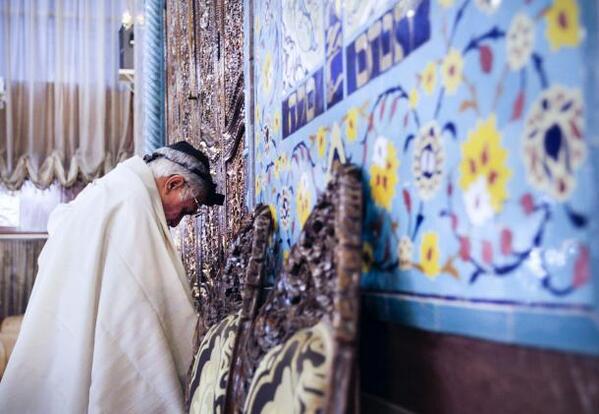
7.11 New chief rabbi installed today. The installation of Ephraim Mirvis (above) at the new chief rabbi of the UK brought invites to the Sunday studio for Justin Cohen of The Jewish News, and Labour's Lord Glasman.

William asked Justin what people expected from Rabbi Mirvis. Justin said that his pastoral work is what people talk about, that he's "very much a people's person". He won't be a "revolutionary "though on issues such as gay marriage. He will continue Lord Sacks's emphasis on the importance of Jewish schools, and seek to halt the decline in general orthodoxy's membership. William asked him if there's pressure on him to involve more women. Yes, said Justin, and he's being leading the way on this already.

Lord Glasman wants him to follow in Lord Sacks's footsteps, admiring Lord Sacks as being (like himself) "a public intellectual". Specifically he wants him to get involved with the condition of the poor, denounce usury and support an interest rate cap - as well as to find creative ways to enhance Jewish unity.


7.18 Australian election. This was the report from Phil Mercer which I anticipated in a post yesterday. (Scroll down and you'll see it!) I was expecting bias, and wasn't disappointed. It outlined the religious views of Kevin Rudd and Tony Abbott, but spend far longer on Tony Abbott than on Kevin Rudd - not to Mr Abbott's advantage.

It began at an anti-Abbott rally for gay rights. Phil talked of his "deeply conservative views" and called in one of his critics, author David Marr, to confirm that Mr Abbott is a staunch Catholic - a "pretty much unreconstructed" 1950s Catholic in fact. For the left he's a "dangerous social reactionary", said Phil. Cue Jim Jackson of Sydney University and his concerns about Mr Abbott's views on abortion. A clip of Tony Abbott being mocked over his 'sex appeal' gaffe followed, then Phil says that he was being lampooned for his "rigid ideology". After this onslaught came the sop to the other side - a former classmate praising his loyalty and compassion and saying that he'll be a humble leader.

Tony Abbott: Family values

It was Kevin Rudd's turn next, but all we got here was a clip of his public apology to Australia's aborigines, Phil calling him a "devout Christian" and talking of his "deep faith", and then an uncritical Roy Williams, author of God Actually, saying he has a "complex set of beliefs". And that was it. No negative labels from anyone, no criticism.

Ah but...there was criticism to follow, of both Mr Rudd and Mr Abbott - and it was back to Phil Mercer's pro-immigration campaign. We heard from Fr Rod Bower who worries both are behaving badly over the issue of asylum seekers, talking of Australia's "affluenza" which has made the country "very self-centred".  "We are so lucky, let's share our luck", he concluded - and the report concluded.


7.24 Seamus Heaney. William talked of the late poet's "ability to disclose the otherness of ordinary things" and then interviewed former Irish president Mary McAleese, a friend, who found his poetry "electrifying".

Seamus Heaney may have lost his faith but transcendence mattered to him and, she said, he came out of a strong metaphysical tradition. Inevitably, especially with the choice of a politician to discuss the poet, political aspects were discussed - but at not too great a length.


7.30 A new Secretary of State is appointed at the Vatican. The BBC's David Willey told us about the new man appointed by Pope Francis. Archbishop Pietro Parolin (below) - a "veteran Vatican diplomat" who "has a very solid knowledge of the inner working of the Vatican". He will want to "distance himself" from his predecessor, Cardinal Bertone.


This is part, David Willey said, of the pope's "rather ambitious reform programme" after the "drift" under Benedict [the usual tone of disdain entered DW's voice as he mentioned that name] and the last years of John Paul II. There'll be a "greater sense of collegiality". Big issues facing Archbishop Parolin? The Vatican Bank, said David Willey.


7.34 Hare Krishna Movement. Trevor Barnes reported on what William Crawley described as their move from "hippy outsiders to part of the Hindu mainstream". Trevor tracked this trajectory from being "a weird and wonderful sect", backed by the Beatles, to the kind of movement that can bring "the great and good of the British establishment" to Bhaktivedanta Manor to celebrate an important anniversary. 

Dr John Zavos of Manchester University said that they now have a sophisticated organisation structure which is proving an inspiration to other Hindu organisations. We heard from various adherents, including two ladies who supported the tenor of Trevor's report - that the early "counter-cultural edge" has left the movement and that it now appeals to professionals more than to disaffected youth. 


7.40 Jim Wallis. Jim Wallis (below, with friends), spiritual advisor to Barack Obama. has a new book out called 'On God's Side' and Sunday duly helped him plug it. Mr Wallis last appeared on Sunday when the programme was obsessing about the Occupy protests in late 2011. Mr Wallis supported the protests.  He says his new book is "a gospel for the common good". His main practical example was immigration reform - admiring his president's action to allow undocumented immigrants to become citizens. Equality "for the poor and vulnerable" is what Jim Wallis is after.


William Crawley brought up George W Bush as the kind of politician who thinks he can know God's mind, but Mr Wallis didn't rise to that invitation to make an anti-Bush point. William then said that Jim Wallis's wish to have the churches concentrate on the poor and vulnerable wasn't helped by the fact that "many churches are obsessed with sex and sexuality these days, aren't they?" [a rather loaded way of putting it]. Mr Wallis tended to agree, attacking "homophobia" and backing same-sex marriage, wanting to "re-covenant" marriage. 

William then asked him about Syria. He said he is "very, very suspicious" about military strikes on Syria and wants to focus on the plight of refugees and isolate Assad diplomatically instead. William Crawley asked him, with his admiration for President Obama, whether he wasn't disappointed over the president's willingness to use military force. We will advise him, replied Mr Wallis. President Obama cares about the Syrian people, he said.


7.47 Syria and the aid agencies. William discussed Syria again with Janet Symes, Head of Middle East at Christian Aid and Jehangir Malik, UK Director of Islamic Relief. [I wrote last week that they were a favourite Sunday charity and, lo and behold, here they were again]. Both talked of the "deplorable situation" there, inside Syria as much as across its border. Both (like Jim Wallis) oppose military strikes on Syria. Both hope for peace, and a political, negotiated solution to the conflict.