Friday, 26 October 2018

Extraordinary


Nick Bryant

The arrest of a 56-year-old registered Republican voter for the series of parcel bombs sent to prominent critics of President Trump led BBC One's News at Six tonight. Nick Bryant's report was notable for way it lurched midway from straight reporting into editorialising:
The initial response from the White House this morning was extraordinary - the President not condemning the attacks but raising questions about their timing, with vital congressional elections just eleven days away. 
That was a senior BBC reporter passing judgment on the present US president.

Reality Recheck


Further to yesterday's post about the BBC's Reality Check being giving its own reality check by Tom Slater of spiked, Tom has now written a piece about it for The Spectator headlined The BBC is wrong: university censorship is definitely not a myth. He describes the BBC's report as "incredibly partial" and ends by saying:
And it’s also ironic that on Wednesday, 24 hours after the BBC ‘Fact Check’ was published, students at Oxford voted to ban a controversial Christian group from Lady Margaret Hall. If campus censorship is a myth, someone should probably tell them.

Thursday, 25 October 2018

Is free speech under threat?


The BBC's Reality Check has a piece by Rachel Schraer and Ben Butcher headlined Universities: Is free speech under threat?, and the answer they give is a pretty emphatic 'No'. 

Indeed, it's clearly an attempted debunking of the kind of fears you find expressed by the likes of Brendan O'Neill and spiked, and also by many on the political Right.  

Naturally, the good folk at spiked have responded, and I have to say that I found their reality checking of the BBC's Reality Check rather convincing - especially as they give large numbers of links which back up their claims (which I've added to this post).

*******


CAMPUS CENSORSHIP THREAD: This BBC piece is being enthusiastically shared by lecturers and students' union officers who want to pretend Free Speech isn't under attack on campus. It is. And here's why this BBC research is so shoddy 1/10

spiked's Free Speech University Rankings has for four years assessed policies that limit speech as well as bans on speakers, events and materials by both unis and students’ unions (SUs). In 2018, we found 55% placed explicit restrictions on speech 2/10

The BBC focuses on different (and very limited) metrics, and breezes over the role played by policies -- policies that, for eg, ban 'transphobic' material outright, as some unis do. Hey ho. But putting those huge oversights aside, its claims still don't stack up 3/10

It claims only six universities have banned speakers since 2010. This is incredibly misleading. The majority of speaker bans are imposed by SUs. Everyone knows this. But it seems because SUs aren't subject to freedom of information requests, they haven't been included. 4/10

We at spiked actually bother to check. We analyse news reports, contact SUs directly and pore over publicly published SU documents. But frankly, an hour on Google would make clear that six speaker bans since 2010 is a big underestimate 5/10

Only 6 speakers banned since 2010? Here's 6 to start with (Unis & SUs):

Here's 6 more (Unis & SUs):

I could go on
8/10

The BBC also pretty much dodges No Platform, despite the fact No Platform policies (held by 37% of SUs) are blanket, pre-emptive bans on speakers/groups. Events featuring speakers from those groups don't have to be cancelled because they're never approved in the first place 9/10

Measuring campus censorship is tricky. So much of it is cultural, rather than institutional. Events are disrupted by protests. People self-censor. But even if you're just looking at black-and-white policies and bans, the 'it's barely a thing' conclusion is just plain wrong 10/10

*******

A BBC Reality Check that is just plain wrong? Well, blow me down with a feather!

*******

Incidentally, it's only a very few years since BBC Online journalist Rachel Schraer, who co-wrote this piece, was writing pieces for The New Statesman - such as this during the 2015 general election, subsequently reposted at her own blog
The Conservatives want you to think that their programme is nasty but necessary. They’re half right.
I’ve spent a lot of time over the last few weeks shouting at middle-aged white men. They are very keen to reassure me I’ll come round to their side once I grow up a bit, get a fatter pay packet and stop being so young, naïve and female.
Because, this much we know to be true – the left-leaning among us might have the bleeding hearts, but it’s the centre-right, cynical but pragmatic, who make the necessary hard decisions to fix the economy – because they used to be like you, you know, until they got real. You can accuse the Nasty party of a lot of things, but naïve idealism is not usually one them.
There’s a persistent narrative here that needs interrogating, not least so I can stop getting into arguments with old Tories. It’s become so ingrained that even people who stand against Conservative policies have internalised the belief they are based in hard-nosed, sensible economics.
I presume she wasn't a BBC journalist three years ago, but fresh out of uni maybe? Where, as a "left-leaning" student, she'd have been regularly "shouting at middle-aged white men" perchance? Was she the very kind of student union activist that she's defending here?

Different views


From Journalism.co.uk:
When did you last talk to someone with different views than yours?
Three international journalists share their experience of interviewing people with views fundamentally opposed to their own
Interestingly, they journalists don't discuss how they handle the far-left or Islamists. They focus only on the far-right as having views "fundamentally opposed to their own". 

Anyhow, here's one of those three journalists (the BBC one) with his answer:

Yet again


No badge for Majd


After the Kingdom of Jordan announced a downscaling of parts of its peace treaty with Israel, Majd Yousef - Online Editor at BBC World Services and a YouTube Editor at BBC Arabic - tweeted her "Happiness". 

The offending journalist's Twitter feed has now been deleted.

According to many people


Oh dear, it looks as if John Humphrys is about to be the target of yet another Feedback campaign.

(Roger Bolton will probably be rubbing his hands in anticipation at this very moment).

So, therefore, what would your question be? Let's assume that it doesn't get through Parliament. Let's assume that we have what is called, ludicrously according to many people, 'a people's vote'... 


Ah, Chuka, just try that with the BBC Complaints Department! What they'll say is: John didn't call the term 'people's vote' "ludicrous". He said that "many people" thought it is "ludicrous"'. So he wasn't expressing his own view, merely citing the views of others. 

Whether Chuka will believe that or not is another matter.

Sunday, 21 October 2018

Fresh Open Thread


Thank you for keeping the open threads so lively and interesting.

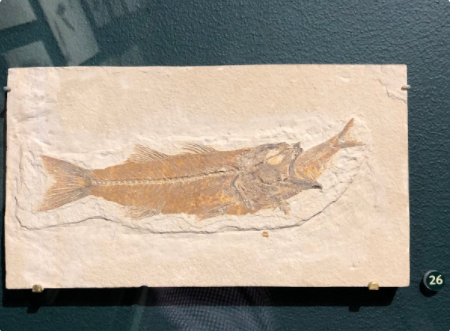
Here's a fossil of a fish dying doing what it loved best... (Anyone who can turn it into a metaphor about the BBC will get a special imaginary prize).

Variety is the spice of life


I've said it before so you probably won't be surprised if I say it again...

...(especially given that I may sometimes repeat myself, and that sometimes I do repeat myself as well)...

....but...:


The newspaper reviews on Sky News are vastly superior in terms of balance and impartiality than those on the BBC - and usually a good deal more enjoyable too.

And there are certainly more Brexit supporters on Sky's paper reviews than there are on the BBC's.

(I intend to quantify that in an old-fashioned ITBB study - to be presented shortly).

I was reminded of this yet again after watching this morning's BBC News Channel paper review, which was an absolute joke in terms of impartiality.

[By 'absolute joke', incidentally, I don't mean something like this: 
I went into the cake shop earlier, bloke said, "All cakes £1." I said, "Can I get that one?" "£2" , he replied. "£2?", I asked. He said, "Aye, that's Madeira cake."]
Yes, on the BBC this morning viewers were given two almost-identical-minded Brexit-unfriendly journalists (one from The Independent, one from The Sunday Times) who agreed on the need for a second referendum, and on much else besides.

(Apparently The Independent co-sponsored it with The People's Vote campaign I learned from the Indy guy).

It was such a 'safe', 'BBC' discussion, with presenter Carole Walker dutifully adding the odd mild 'balancing' question for impartiality's sake.

Frankly, it was dull.

Meanwhile Sky this morning gave its viewers something far more intellectually bracing - and fun: namely Liz Kershaw and Julie Bindel, with their polar opposite views on Brexit.

Neither were po-faced, and their discussion ranged far and wide and was, at times, anything but 'safe' and 'BBC' (e.g. over transgender matters).

They were both marvellous, even when I didn't agree with them.

Incidentally, Liz - the second longest-serving female DJ in the UK (after Annie Nightingale) - is often deliciously trenchant in her views of BBC reporting. Here, for example, is her take on Mark Easton's reporting of the Huddersfield Pakistani paedophile grooming gang story this week:

Moving on


Here are some statistics that I think are very revealing, which I've found courtesy of the search function on TV Eyes

The question: Since the break of day yesterday (Saturday) morning, starting at 6 o'clock, how many times has the word 'Huddersfield' been mentioned respectively on the BBC News Channel and the Sky News Channel in connection to predominantly Muslim grooming gangs? 

(All results mentioning Huddersfield Football Club are ignored).

Well, the results for the BBC News Channel are just 1 mention - at 7:13 am on Saturday morning, and nothing since. 

And the results for Sky News are 33 mentions, all across Saturday and continuing today. 

So the obvious conclusion here is that one UK broadcaster's rolling news channel - the BBC's - has dropped the story like a stone while the other - Sky - has continued to focus on it. 

(And digging into the TV Eyes results, that's exactly the case.)

There's no way that's not a very clear example of editorial decision making on the part of the two broadcasters. The BBC has evidently decided to very, very firmly - and quickly -  'move on'. 

James v Jamie


I'm with Demos's Jamie rather than LBC's James over this:


The BBC News website report in question can be found here

And, as Jamie says, yes, it features 5 times as many pro-People's Vote voices than pro-Brexit voices. (#bbcbias!)

And if James O'Brien doesn't think that's anywhere near as biased against pro-Brexit voices as it ought to be, well, that says a good deal more about him and his biases than it does about the BBC.

The Great BBC Survey


Readers of Is the BBC biased?, Biased BBC and the like may already know of David Sedgwick. 

He's currently writing a book about the BBC (which sounds very much like the kind of book for us!) and would appreciate a little help with a survey he's carrying out about the BBC.

So if you have a spare five minutes, please could you click here and complete it: 

The Great BBC Survey

Thank you, and Helen Boaden sends her hugs. 

Saturday, 20 October 2018

"I believe passionately in free speech but...."


'Complaints from both sides' fans will love this. Scottish First Minister Nicola Sturgeon has pulled out of a BBC-co-hosted event in Edinburgh in November because the BBC has invited Steve Bannon to participate. And 'passionate' Nicola has subsequently been twittering her displeasure about it all:
I believe passionately in free speech but as Scottish First Minister I have to make balanced judgments - and I will not be part of any process that risks legitimising or normalising far right, racist views. I regret that the BBC has put me and others in this position. The email the BBC sent to my office justifying Bannon’s inclusion described him as a ‘powerful and influential figure...promoting an anti-elite movement.’ This kind of language to describe views that many would describe as fascist does seem to me to run the risk of normalisation.
As it's Saturday night and we all love to let our hair down, Neil Oliver-style naturally, I bring you, live from Killiecrankie in fair Perth and Kinross, some splendid Twitter comments on the subject. Enjoy!
  • The BBC, continually scared of being accused of any left-leaning bias, has now gone as far as inviting Steve Bannon to events. Expecting to see white supremacists on Question Time and ultranationalist militias invited onto Newsnight any day now.
  • The BBC aren’t even trying to hide their right wing bias anymore. I guess this is what happens when you top load the executive with Conservatives. They are complicit in the rise of facism (sic) and they can whistle for their fee now #boycottthebbc.
  • I used to think the BBC was unfairly accused of bias, but I am mystified by ubiquity of Farage (repeatedly rejected parliamentary candidate), Bannon & Gorka (too extreme even for the Trump administration), among others. Would Goebbels ever be off the BBC if this were the 1930s?
  • A win-win for the BBC Bias propaganda machine, normalising racism and branding Nicola Sturgeon as against free speech. If she attended the headline would be Nat's and the far right! How low has msm gone.
  • The BBC have finally gone full fascist. 
  • Absolute disgust for BBC Scotland inviting this right wing fascist to beamed (sic) into our homes. Scotland has no need to hear the garbage this guy spews out. Whats (sic) the political reasoning behind this rubbish (sic). Is is the BBC Bias supported by your political masters the Toxic Tories (sic). 
Ain't Twitter great?

Something or other


I'm only guessing (given that I'm not watching the BBC News Channel today -  except for Dateline London) that The Lordly Adonis, Carole Catweazle and Alice de Campbell will only be pretending to be disappointed by the BBC as I'd place a very heavy bet that the BBC is presently giving the Second People's Vote march acres of coverage. 

My view (if you're interested) remains that unless 17.5 million people take part (i.e. more people than the 17.4 million who voted to leave the EU in 2016) such a march is worth diddly-squat (as someone at work says), other than as a lovely day out for a few hundred thousand people (the police say 120,000; the organisers claim 670,000).

At least this time no one at Woman's Hour has (so far) tweeted and then had to delete their support.

Blessings counted


Today's Dateline London was presented by that nice Shaun Ley, and various voices from a tightly-chosen spectrum of opinion from the centre to the centre-left (the soggy left) discussed Saudi Arabia and Brexit.

They largely agreed about everything but, whilst being as like-minded as a murmuration of Brexit-loathing starlings in their negativity about Brexit, they unexpectedly disagreed over the effectiveness of a Second People's Vote about leaving the EU.

Thank Heaven for small mercies then! Shall I hire some celebratory trumpets?

Inside the Papers


Kirsty, YAB and Katy

For those keeping an eye on Newsnight's 'Inside the Papers' feature, where a journalist (or, occasionally, a panel including journalists) discusses the next day's newspapers, here's a list of all the contributers so far.

One interesting thing to note (after six weeks) is that the early guests did suggest that Newsnight was at least trying to achieve some measure of balance when it comes to Brexit in terms of supporters and opponents, but that attempt only lasted two weeks. Thereafter, over the remaining four weeks, there's been a quite staggering lack of pro-Brexit voices.

(And, yes, most days Brexit has been discussed).

This is turning out to be increasingly damning.

*******

19/10 Yasmin Alibhai Brown, journalist & author & Katy Balls, The Spectator
18/10 Sebastian Payne, FT
17/10 Sonia Stolper, Liberation
16/10 Alice Thomson, The Times
15/10 Stephen Bush, New Statesman
12/10 Nina Schick, Rasmussen Global
11/10 Afua Hirsch, author
10/10 Asa Bennett, Daily Telegraph
9/10 Aditya Chakrabortty, Guardian
8/10 Tom Newton Dunn, The Sun
5/10 Juliet Samuel, Daily Telegraph
4/10 John Prideaux, The Economist
3/10 Matthew Parris, The Times & Zoe Williams, Guardian
2/10 Daniel Finkelstein, The Times & Anna Mikhailova, Daily Telegraph
1/10 Rachel Sylvester, The Times & Marc Reeves, Birmingham Post
28/9 Katy Balls, Spectator
27/9 Henry Mance, FT
26/9 Polly Toynbee, Guardian
25/9 Ian Birrell, Mail/Mail on Sunday
24/9 Stephen Bush, New Statesman
21/9 Paul Mason, journalist & Iain Martin, The Times & Stefanie Bolzen, Die Welt
20/9 Rachel Cunliffe, CityAM
19/9 Jenni Russell, The Times
18/9 Alice Thomson, The Times
17/9 Tim Stanley, Daily Telegraph
14/9 Rachel Johnson, columnist
13/9 Fraser Nelson, Daily Telegraph
12/9 Owen Jones, Guardian
11/9 Peter Hitchens, Mail on Sunday
10/9 Rachel Sylvester, The Times

Tristan and Jenny


Jenny Hill, neither portly nor rotund

Jenny Hill was on this morning's From Our Own Correspondent. She'd been to see her first Wagner opera, Tristan and Isolde, and was using the experience to draw parallels with the present German political situation (as you do).

She found herself having to "suppress a giggle" at the sight of "the two rather portly lead singers", especially as "the rotund figure of Tristan prepared to fling an equally substantial Isolde onto a rather flimsy table".

In the spirit of the age, I was frankly outraged by that. That's fat-shaming, body-shaming, and I was tempted to kick up a Twitterstorm and ruin her life, but thought better of it. (Anyhow, the painfully thin-looking Jenny appears to have weight issues of her own.)

Nonetheless, here she was, still preferring to say "refugees" rather than "migrants" and talking of the "open xenophobia" of AfD, and sounding chirpy about the protests in favour of an "open" Germany and the rise of the Greens.

She seems to have liked the opera though. 

Missing anyone, John?


Not the Deputy First Minister of Scotland

Talking of John Sweeney (who Kirsty Wark introduced last night as 'John Swinney', confusing him with the SNP Deputy First Minister of Scotland!), his Newsnight report on Jamal Khashoggi contained a classic partisan BBC moment. It began:
The House of Saud is built on a sea of oil. Whoever holds the Crown has the key to unimaginable wealth and that has brought the ruling houses of the United States to Riyadh's door time and time again. First, the House of Bush, and now, the House of Trump. 
"First, the House of Bush, and now, the House of Trump"? What about the House of Clinton and the House of Obama?

What possible reason could they be for John Sweeney of the BBC to say that and show those two Republican presidents in the company of the Saudi monarchy and not show, say, Barack Obama bowing to the Saudi king? Or footage of Bill and Hillary Clinton's highlighting their close ties to the Saudis?


The only explanation I can think of why John Sweeney failed to mention Democratic presidents like Bill Clinton and Barack Obama is that he was engaging in a spot of pure partisan hackery.

Time to be afraid


John Sweeney's piece on today's From Our Own Correspondent was ostensibly about the murdered Maltese journalist Daphne Caruana Galizia but its focus soon shifted to other murdered journalists - from Viktoria Marinova to Jamal Khashoggi. At its conclusion JS pointed the finger of blame firmly at,...yes, Donald Trump:
In the summer of 2016 I visited the home of one of New York's great reporters, Wayne Barrett, who was dying of cancer. In his pomp, working for the Village Voice in the '80s, Wayne used to report on Donald Trump and his links with the mob - the Gambinos, the Genovese, how 'Fat Tony' Salerno had sold the concrete to Trump for his Tower. "What if Trump gets elected?", I asked. Wayne replied", I'm afraid.I'm very afraid". 
My old hero was right. The leader of the Free World has demonised journalists time and again, and now, the world over, the butcher's bill is being paid. If you're a troublemaking reporter it's time to be afraid. 

Not quite in the Premier League


Toby Castle (Admission: Adults £8.00, Child & Students £6.50, Family £20.00)

The main theme on this week's Newswatch though was the BBC's royal coverage (in the week of Princess Eugenie's wedding, Harry and Meghan's baby news and Pippa Middleton giving birth).

There have been complaints from both sides  - complaints that the BBC has been too sycophantic and complaints the the BBC was too rude about the Royals - thus allowing Samira to say: 
Clearly, this is one of those topics where it is impossible for the BBC to please all of the people all of the time. 
She then talked to the Deputy News Editor of BBC News, Toby Castle, and I had to smile at Toby's reply to her first question. 
Samira Ahmed: Let's start with the last issue. It's a charge often laid against the BBC that when it comes to the Royal Family you seem to throw editorial values out of the window and proportion.
Toby Castle: I would reject that. But I expect that you would expect me to say that. 
Well, you're not wrong there, Toby!

Monkey Brains on the Open Thread compared Jonny Dymond's commenting on the Royal Wedding to the annoying experience of "hearing a bored woman on the BBC pretending to be interested in sport because that's what pays the bills". Jonny's official title (BBC Royal Correspondent) comes despite "this guy clearly having no interest in the idea of monarchy, in the royal family or in the clothes they wear for special occasions. That's not my interpretation - he made it abundantly clear himself with various sarky comments."


Well, Newswatch featured a clip of Prince Charles's least favourite BBC royal reporter Nicholas Witchell commenting on Princess Eugenie's wedding. And there were sarky comments galore from him too:
Hold onto your hats, it's another royal wedding. Though this one, not quite in the Premier League, despite the sharp ambitions of the bride's father and mother. The Duchess of Cornwall evidently had a pressing engagement and couldn't make it. And then stand by for the arrival of the mother of the bride, Sarah Ferguson, also known as the Duchess of York. She's not been an entirely welcome figure within royal circles for a good many years. She's had an unfortunate habit of embarrassing them. And then as man and wife together, a carriage ride, it's been seen as an attempt to emulate the ride is taken by Harry and Meghan after their wedding and concerns have been expressed about the cost of providing security. 
I don't think that could be called 'sycophantic', do you?

Issues


Doctor Who

Peter Hitchens tuned into the first episode of the latest series of Doctor Who - the one where "a large clove of garlic from another galaxy was trying to take over the world by stealing people’s teeth" - and found it:
...a heavy-handed expression of equality and diversity propaganda, a comprehensive school, post-Christian, multicultural mish-mash, so full of pious messages that it left no room for a decent plot...
So I'm guessing he'll not be pursuing Jodie Whittaker's new Doctor much further. 

I have to say that I am watching and enjoying it, but it looks as if the "equality and diversity propaganda" is going to get even more heavy-handed. This week's episode will apparently see the Doctor travel to Alabama in 1955 where she'll witness Rosa Parks refuse to give up her bus seat for a white passenger before "Jodie's sidekicks then discuss the problems of racism today". And a future episode will explore sidekick Yaz Khan's family history during the partition of India and Pakistan in 1947. Sounds fun!

Huddersfield


Just watched BBC Look North reporting of Huddersfield grooming gangs sentencing. 
As a grandmother who saved two granddaughters from this evil trade in children, am heartbroken that 'community cohesion' is still the main emphasis in BBC reporting... 
Not the safety of our girls.
 ...led me to watch BBC Look North

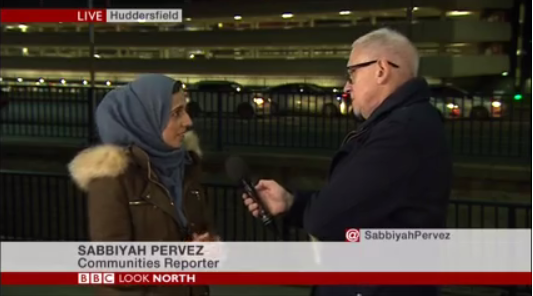
The programme's coverage didn't hide the fact that the grooming gang phenomenon is overwhelmingly associated with "south Asian"/"Pakistani" individuals and it reported that 13 out of the 15 victims were "white girls", but:

  • (a) It did have a strong focus on how "the [Pakistani] community" was coping,
  • (b) It featured a BBC communities reporter in a headscarf telling us that the community says these criminals "are in no way representative of the Pakistani community". and 
  • (c) It featured a range of experts/commentators who shifted the focus squarely onto generalised male sexism and misogyny -

- the exception being the local Labour MP Barry Sheerman, who began by making a point about the BBC's role in the matter:
Barry Sheerman MP: After I gave the media coverage by having a debate in Parliament in January 2009, the BBC, a lot of you media people, it was too hot for you as well. You didn't want to cover it. It was very poorly covered. So no one, let's be honest about this, local authority leadership, police, many of the people that should have been taking this more seriously earlier did not. 
Harry Gration, BBC: You've got a community now that you look after that is very seriously bruised and battered. Do you think some people might exploit this to divide the community of Huddersfield? 
Barry Sheerman MP: Yes. We're talking about a minority of evil people, evil men, mainly from one community in this case, but remember, the attention will now be on Kirklees, on Huddersfield and Dewsbury and Bradford. The first I heard of these cases was of course in Oxford.Up and down the country, in city after city, Newcastle, Rochdale... This was going on and we didn't wake up to it fast enough or positively enough or early enough. 
A reporter for the programme did, however, say that the mother she'd interviewed today was the same mother the programme had interviewed "ten years ago" where she expressed concerns about the council's treatment of her daughter. Wonder what that report was like?

Leaping in


From the BBC's Home Affairs Correspondent yesterday:


Note though how, if some people don't want to talk about the Sikh ringleader of the Huddersfield paedophile gang and want to keep the focus on Muslims, other people (with just as much of an agenda) just can't wait to make a point about it not quite being an all-Muslim gang:


...though it may be that Dominic Casciani has leaped too soon there (see link).

Update: Comments could be going better for Dom:

Crash Norman


Norman

Talking of Norman Smith, here's something from this weeks' Newswatch:
Samira Ahmed: First, the B-word has again dominated the news this week with much discussion of the likelihood of leaving the European Union without a deal in place. That was one of two possible outcomes laid out recently by the BBC assistant political editor Norman Smith: 
Norman Smith: One, another referendum on Brexit itself, or two, crashing out of the EU without any deal. 
A number of viewers have taken exception to the phrase used at the end there with Ian Frost asking:
Ian Frost: Why does the BBC use the emotive term 'crashing out of the EU'? 'Crashing out'? It could be a soft, gentle and fluffy occurrence - no one knows. Come on it - the water's lovely!  
Indeed.

Chinese Whispers


Xi Jinping being whispered to

Links hereherehere and here will give you the whole story, but here's a summary... 

A rumour began spreading on social media, concerning the UK's future migration policy. It said that the Government and Migration Advisory Committee have recommended that the bar for 'high-skilled' immigrant workers will be raised to £50,000 per annum post-Brexit. This is false - the actual proposal is that the bar should be £30,000 per annum - but lots of pro-immigration people and organisations (from the Welsh government to the Wirral Chambers of Commerce, from the Guardian to Glasgow University, from The New Statesman to UCL) took to Twitter and print to wax furious about it. 

Sunder Katwala of British Future set out get to the bottom of why so many people were tweeting this piece of fake news ("Chinese whispers") and, with help from others, seems to have finally pinned it down as beginning with a piece of muddled BBC reporting. 

The culprit? Norman Smith on the Today programme (at 2:01:28). 

Professor Alan Manning of the MAC said it's "completely without foundation, the £50,000", that's it not from the MAC or the Government, and it's a mistake by the BBC on Today, tweeted by a FT journalist. It was "widely believed", he said, "because the BBC & FT are trusted, then amplified". 

So the BBC (Today programme), by being thought safe to trust and repeat without checking by so many, appears to have caused a whole heap of confusion here. 

The moral of the story? Probably: Don't trust and repeat BBC claims without checking!

I am highly aware that its very difficult to "myth-bust" untrue things that people want to believe. 
However, I think its reasonable to ask broadsheet, broadcast media and professionals concerned about "post-truth" problems to try to avoid our version of it too.

Thursday, 18 October 2018

Views their own


Not content with being famous for snarking at the present US president, not a lot of people know that Jon Sopel, the BBC's North America Editor, is just as happy to snark at pro-Brexit celebs too...


Wonder which way Jon voted on 23 June 2016?

Tuesday, 16 October 2018

Picking Sides

I watched episode two of Simon Reeve’s journey through the Med. I don’t often watch Simon Reeve’s programmes, but I don’t particularly avoid them either. The raggedy kaffiyeh he drapes around his neck is a bit of a turn-off; but on the other hand, he does seem like a well-meaning kinda guy.

Well, like a programme that’s typical of a kaffiyeh-wearing but well-meaning guy, it brimmed with well-meaning and probably unconscious bias. The bias seemed so embedded - almost subliminal - that the thought of unpicking it all seemed wearisome and not really worth the trouble.

Then I spotted James Delingpole’s review tagged onto the end of Jodie Whittaker’s Doctor Who. (I don’t watch that either)
“Let us move swiftly on to Simon Reeve’s Mediterranean. Even though Reeve is the BBC’s go-to adventurous young travel presenter I’ve never sat through one of his documentaries before. Probably, what with his youth, stubble, cheeky-chappy grin and warmth, I just knew I was going to hate him.”

Ah, there’s a man after my own heart.

“Damn, he’s watchable though. He’s brave, curious, empathetic and tender but never sickmakingly mawkish — a complete TV natural. “

Yep. Still agree. But then I realised Dellers was actually reviewing the previous episode, some of which I saw - when a tearful farmer in Puglia was mourning the loss of his olive groves, which were being ravaged by a disease called Xylella, and Reeve put a consoling hand on his arm. It was sad.

I have no idea what James Delingpole would say about the episode I watched, the following one, and the section about Israel and Gaza in particular.

I don’t want to go into a tediously long and dull transcription of the programme However, I fear I might have to do bits of it, otherwise you won’t know what I’m talking about. And even then, possibly not. It all depends how reliant on the BBC you are for your Middle East ‘education’.

The section about Lebanon wasn’t all hang-gliding and hiking - it did include Hezbollah in the form of a disturbing visit to a weird tourist attraction - a Hezbollah museum with relics from “their victory over Israel”.

Now, Simon is in Israel with the Ashdod Naval Fleet, “patrolling your patch of the Mediterranean”. Very military. Very serious. He narrates the military patrol scenario in a matter-of-fact voice, carefully inserting the obligatory caveat “Israel says” before putting out anything that appears to justify Israel’s militarised activities. 

Simon’s voice-over:
“Israel was founded in the aftermath of the Holocaust. Its early years and often the decades since were marked by conflict and the threat of annihilation. In response, Israel invested heavily in the  military and innovation.”

The simplistic, Corbynesque implication in those few opening words “founded in the aftermath of the Holocaust” didn’t augur well for what we were about to receive, but may the Lord make us truly thankful for the fact that he threw in “the threat of annihilation” to the mix; a nod towards reality.

Suddenly we’re in Tel Aviv, beachside. Two guys on a motorbike give the peace sign.

“Here, this is party town” Simon declares, surprised. He’d been brought up to believe to expect wall-to-wall conflict within Israel.

Then, a section about Israel’s huge desalination plant. The biggest in the world. “Israel has discovered how to make drinking water out of seawater.” 
Energy efficient and almost entirely chemical free, 2 billion litres of fresh water a day. And almost entirely automated.
“Two people operate this place at night. One is drinking coffee, and one is making coffee. Then they change” jokes Dr Boris Liberman who is showing us around.

“This is an example of Israeli innovation, which is something very special about the country,” says Simon cheerfully.

“Israeli is made from the brain. It is technology. How you save money, from the brain” says Dr Liberman in heavily accented English. 

Next, we’re off to Gaza.
“ Over two million people live there. It was the most dangerous part of the journey” intones Simon ominously yet mysteriously.

And now a monologue; superficial, unsubtle, emotive, and very BBC.
“I cross one of the world’s most heavily fortified borders. This is a long walk through a cage. A caged passageway that takes us from the very modern, pretty wealthy, state of Israel to the much poorer and densely packed Gaza Strip. I’ve never been through a border crossing quite like this. It is extraordinary in every possible sense. 
My God! Look across here. Look at the barrier that encircles Gaza; a very forbidding, foreboding place to walk towards, quite frankly. There’s a dehumanisation of the people who live here. The whole process makes you feel like you’re entering the cage of the wild animals. 
Westerners are at risk of kidnap and shooting in Gaza, but also from being caught up in an Israeli military strike. Our crew vehicle had some special modifications.
Footage of a heavily armoured vehicle, in which they can be safe.

Are Westerners really in danger of being caught up in an Israeli military strike? That sounds as if the Israelis are prone to making random, unprovoked airstrikes. I suppose inserting that odd idea into it is the BBC’s idea of even-handedness. And, as for “dehumanising" -  who’s dehumanising whom? Has Simon never taken a peek at Hamas’s school curriculum? 
“Now this is Rushdi here. Rushdi’s going to be our guide in Gaza.”
We’ve met Rushdi Abualouf before. He’s one of the BBC’s reporters 'on the ground' in Gaza, and very well on it he looks too, if I may say so. 


“It’s the most bizarre thing, crossing” remarks Simon.

“Of course. I mean they keep calling Gaza the biggest open-air prison, which is true because it’s closed from (?) sight. Israel is calling this strip of land is like a hostile ….(?)” replies Rushdi, (if I caught, at least the gist of it, correctly)
“Gaza has been controlled by Hamas, a militant Islamic group considered terrorists by Israel and many Western governments. It’s not the only militant group here” 
intones Simon’s voice-over, as an accompaniment to bleak scenes shot from the moving car -  piles of rubbish and derelict-looking buildings.

In the car, he turns to Rushdi.
“That’s the black flag flying there. Is that Hamas, or…?”
“Islamic Jihad” 
murmurs Rushdi

“We’ve just gone past an Islamic Jihad checkpoint.”
“It’s not a checkpoint, it’s like military compound.”
“Bloody hell! Is this a safe..? This isn’t a safe place”


“They operate in this area because it’s not far from the border so they always try to be ready for any Israeli escalation, or..”
“Checkpoint ahead!”
“Put the cameras down.”
“They’ve taken our cameras!”
“They want to see what you’ve been filming. They are Hamas …border police”
“Hamas border force. I’m actually slightly relieved…being stopped by Hamas - phew.” 

Voice-over again:
Since 2006 Gaza has endured one Palestinian war, three wars between Hamas and Israel, ten years of strict rule by Hamas and blockade by Israel and Egypt. This has all crippled the economy”


Aaannndd…back in the room car Rushdi speaks:

“How long you can struggle? How long you have to find a way to produce power and to buy clean water? This is basic. In any part of the world, you have to worry about electricity or water for the safety of your people.” 

Then, Simon’s narrative once again; pure BBC copybook, complete with context-free factoids and statistics regurgitated, direct from Hamas headquarters.

“Israelis and Palestinians have endured endless cycles of violence. Here, militants can fire rockets into Israel. Israel can attack with overwhelming force. Weeks of conflict here in 2014 between Israel and Palestinians left 2000 civilians dead, including an estimated 500 children. 18,000 homes were destroyed. Israel restricts the supply of many building materials like cement into Gaza. Israel says to prevent Hamas building tunnels for attacks. But (a hijab-wearing female) engineering graduate Majid Maserawi (phonetic) has invented an ingenious way to help rebuild in Gaza.

“We call it green cake,” she says, and “Welcome to “our factory” where they’re making breeze-blocks out of what appears to be cinders. 
The demo didn’t go too well; the first samples crumbled to dust when touched. But the next attempt was better, to much amusement. Bake-off cum builders’ merchant and, to a cynic like me, this edit was the BBC’s attempt at pathos. Juxtaposing Israel’s ‘mighty’ innovation - turning water into wine - with Gaza’s plucky response in the face of adversity all wrapped up in a heartwarming, comical and humanising bit of film. So typical of the BBC.

The lady engineer had come back to Gaza, voluntarily ‘To help my people” “Hope! We will achieve our dream one day”.  
“The blockade here has devastated Gaza’s economy. Gaza now has among the highest unemployment rate in the world……..” says Simon. An unsuccessful fishing trip rounds off his visit to Gaza as an Israeli drone buzzes overhead.  

“It’s intimidating and frightening really” he remarks.

“Look, for young people in Gaza, the only thing know about the Israelis is that they are the occupier”
 reflects Rushdi.

“You don’t sound very hopeful for the future”
“The economic situation is hard and people are losing hope. They don’t have job. they don’t have money. The poverty is very high, the unemployment is more than 60 %.
There’s gonna be an exeblution. (!) (Explosion?) I think. But where I don’t know. When, I don’t know. But the possible of war? I don’t know. I think it’s 50%…. 50/50.”

Now for the most disingenuous bit of superficial philosophy in a summary that we’ve heard from the BBC’s go-to adventurous young travel presenter so far:

The situation here is utterly shocking and maddening. So much about the Arab Israeli conflict is about picking a side. 
And personally, I refuse to. 
My heart breaks for the suffering of the Jewish people, throughout history. 
My heart breaks for the suffering of the Palestinians.So many opportunities for real lasting peace have been lost here, and we see two sides - which seem in many ways to be moving further apart, not closer together.

So Simon’s poor heart is breaking. But for the Jews “throughout history” as per the school of Jeremy Corbyn  - not for the present-day Jews, Israelis who have endured endless cycles of violence from Gaza. Not for the Palestinians who have been corrupted by Islamic-rooted antisemitic hatred and indoctrinated by Hamas and misguided useful idiots from the west who perpetuate the conflict by fuelling the false hope of fulfilling their ‘dream’  - the annihilation of Israel and encouraging their belief in a fantasy. Their unique, moral and everlasting Right of Return to land they lost in their own self-inflicted wars.

The BBC hasn’t made much of it, but ever since June, balloons rigged with explosive and incendiary material have been launched from Gaza, setting fire to acres of Israel’s land and turning a child ’s toy into an instrument of terror. 
Hamas has intensified its violent demonstrations against Israel, turning the border between the Jewish state and the Gaza Strip into a "24/7" war zone as the terrorist group amps up its efforts to kidnap Israeli soldiers, according to Israeli security sources and regional reports. 
Hamas ramped up this past week its months-long violent demonstrations along the Gaza border as part of new plans to "kidnap soldiers so that it will have a bargaining chip to use against Israel for speeding up the removal of the blockade," according to an investigation into new ways Hamas is probing Israel's defenses provided by the Jerusalem Center for Public Affairs, or JCPA, a security research institute. 
Violence raged throughout the weekend and into late Monday, with some 20,000 Palestinians participating in the demonstration, which have grown increasingly violent as Hamas operatives begin to deploy explosive devices, grenades, incendiary balloons, and other makeshift weapons. 
Hamas's goal is create as much confusion and violence on the border as possible to elicit a response from the Israeli Defense Forces that could provide the terror group with an opportunity to kidnap soldiers. The renewed border violence is part of an effort by Hamas to test Israel's will and provoke a violent response.

When Simon was in Israel, he didn’t mention inconvenient accounts of Gaza's innovative enterprises like this one, H/T Vildechaye (via Facebook.)
"What does this look like to you? To my neighbors and I, we've had to retrain our kids that balloons are explosives.
Yeah, this is not a school project finding out how far a helium balloon can fly with a postcard at the bottom. This is an explosive balloon sent from Gaza that landed 38 kilometers away in my neighborhood, and that if touched, will explode for max impact.
This lovely gift was just sent to my 'hood from our friends in Gaza. They've sent thousands of these since the summer. The package at the bottom is an explosive device. Balloons like this have burned 1000 of acres of fields, 1000's of wild animals, hundreds of small businesses face financial ruin with their fields and crops destroyed. Yet the world is silent. 
Gazans wants peace? Gaza is Israel's problem? Gaza is a humanitarian disaster? BDS is the answer?
Well, here's a newsflash. We pulled out of Gaza 10 years ago. We destroyed 17 Israeli communities and the lives of thousands of families to do it. We did everything the world asked us to. Everything. We asked for one thing in return. Stop the terror against our cities. 
We've sent them more aid than any other location in the world has ever received (per capita). We continue to transfer aid in 18 wheel trucks every day. What does Gaza look like today? Abject poverty, minimized water and electricity (they attacked the plants we left them for both and ruined them --they've gotten billions and never built another), terror tunnels and thousands of missiles rained onto our cities. And last but not least, thousands of incendiary balloons.
What did y'all think would happen?
Were you expecting Kumbaya and a prayer circle?  
Gaza has proven time and time again it cannot lead itself out of this mess. Their leadership is corrupt. The majority of the aid money stolen. Their people suffer. But you asked us to disengage, so we tore up our country and did it. 
Now what?
Why balloons? Because they know the value we place on human life and our children. Hamas is once again targeting our children. On purpose. Explicitly. 
PS. In case you thought it was just explosives at the bottom...nope, they pack them with rat poison and nails for maximum damage when they explode. Oh, and even you can learn how to make one on YouTube. Because while a nursing boob is apparently offensive to humanity, instructions for how to make killer Gazan balloons don't appear to violate any community standards.
What next? I honestly have no idea.”

Simon refuses to pick sides. But ‘sides’ are not something you just ‘pick’. Only if you’re completely ignorant of the facts, past and present, can you see it as a mere matter of “picking sides".
I’d be very disappointed if James Delingpole thinks this episode of Simon Reeves's documentary demonstrates bravery or curiosity, and if Simon Reeve thinks he’s made a fair and even-handed documentary about suffering, he is deluding himself. On this particular topic, he’s shown us that he’s certainly not curious. He may be empathetic and tender and only a little sickmakingly mawkish, but Dellers is quite right about one thing - he is a complete TV natural. 

Tortoises


I don't know if this is really very interesting, but I thought I'd share nonetheless...

Newsnight's policy editor Chris Cook is deserting the sinking current affairs flagship and moving to Tortoise - former BBC News boss James Harding's new media start-up. Former Today editor Ceri Thomas is already a Tortoise partner. And its first chairman is going to be Barack Obama's former ambassador to the UK and top fundraiser Matthew Barzun. 

Quite what Tortoise will do remains a matter of speculation. 

And that's all I've got to say about that.

See there springs an Indian maid


Did you know that the author of Vanity Fair wrote a poem about Pocahontas? It ends:
In the woods of Powhattan,
    Still ‘tis told by Indian fires,
  How a daughter of their sires
    Saved the captive Englishman.
Meanwhile...

So (especially for those of you who follow US politics) it turns out that Democratic Senator Elizabeth Warren may be between 1/64 and 1/1024 'Native American' (though whether South, Central or North American native, it's not clear) in that DNA testing suggests she has one such ancestor somewhere between six generations and ten generations ago. 

If so, that puts her as being between (at best) 1.56% and (at worst) 0.1% Native American (i.e between 98.44% and 99.9% not Native American).

Donald Trump has longed mocked her as "Pocahontas" for her longstanding claims of American Indian ancestry (Cherokee and Delaware heritage), and it looks from his comments today as if he's feeling vindicated - especially after the Cherokees rejected her claim that the DNA test constituted "strong evidence" of Native American ancestry. 


Of course, the BBC has gone with Ms Warren's take (and, yes, comments could be going better):


...with Sir Anthony of Zurcher giving us his 'analysis' and going so far as to say that, "with positive DNA test results in hand, she's pushing back".

Are they "positive" DNA test results? Don't they actually make a nonsense of her claims to have a significant American Indian ancestry? After all, the tests don't even prove that this single ancestor came from North America. 

Anthony continues:
That probably won't stop Mr Trump's attacks [he wasn't wrong there!], but it will allow her to deflect the barbs and move on to what could be the top issues of an increasingly less hypothetical run - income inequality and government ethics reform.
Will it? Hasn't she actually made it worse for herself?

Well, not if the media has anything to do with it. After all, most of the media - like the BBC - will want to take her side and pretend (against all sense) that the DNA suggestion of between 1/64 and 1/1024 'Native American' ancestry amounts to 'proof' in her favour (which it doesn't). 

And proof that the BBC will do that is provided by Anthony Zurcher having already done so here!

Of course, some US politicians calling each other names and slinging mud at each other isn't exactly of earth-shattering importance (or particularly edifying), but this is another sign of just how partisan the BBC is, in that they'll even try and spin this against President Donald J. Trump.

Can't they just pause, take a step back, breathe in deeply, and just start reporting the news again? Is that really too much to ask?

Meanwhile, back to William Makepeacepipe Thackeray:
 Who will shield the fearless heart?
    Who avert the murderous blade?
  From the throng, with sudden start,
    See there springs an Indian maid,
 And. no, that Indian maid most certainly isn't Senator Elizabeth Warren.

P.S. Someone agrees!

Extremes


Cologne railway station

Kaiser at Biased BBC linked to two reports of the same event (a violent hostage-taking incident in Cologne) and observed that "one of these days does not seem to agree with the other". 


The Breitbart report sharply amplifies the 'radical Islamic terrorism' angle while the BBC report suppresses it.

They are the two extremes. If you then turn, say, to Deutsche Welle you'll find a report which sits somewhere between them.

So in the Breitbart report we get the headline Cologne: ‘Islamic State Sympathiser’ Takes Hostage, Sets Fires, plus "The suspect is reported to have spoken in Arabic about the Islamic State" and "German magazine Focus reports sources who claim that...the suspect is indeed a sympathiser of the Islamic State" and a paragraph mentioning the Cologne sex attacks by migrants at New Year 2015/16, though there's also a paragraph saying "There is presently no indication of the identity of the hostage taker, nor motive".

In contrast, the BBC, whose headline is Hostage safe after Cologne railway station drama, makes no mention whatsoever of Islamic State or Arabic speech. The closest it comes to mentioning a possible terrorism aspect is to cast doubt on it: "Local media say the incident does not appear to have been terror-related."

As for DW, whose headline is German police search for clues in Cologne hostage-taking, it says "Authorities believe with "high probability" that the suspect is a Syrian man with a German residency visa", "During their search, [police] discovered the identity documents for a 55-year-old Syrian migrant with a German residence visa valid until 2021", "Authorities have yet to clarify the suspect's motive. 'The investigation is considering all possibilities and we are not ruling out terrorism,' said Cologne deputy police chief Miriam Brauns" and "Witnesses have reportedly described the man as professing allegiance to the "Islamic State" militant group while committing the attack. But police have not independently verified such testimony."

When you read the DW report you can see just how far the BBC has gone to downplay any possible Muslim terrorism angle. And they are even more brazen in their agenda-pushing than Breitbart as Breitbart at least have the decency to add that bit saying "There is presently no indication of the identity of the hostage taker, nor motive".

Incidentally, Newssniffer shows that the BBC actually edited their report to make it even less about terrorism. An earlier version said "It is not clear whether there is any terror link. No details have emerged yet about the hostage-taker or any potential motive". This was removed and ""Local media say the incident does not appear to have been terror-related" added.

Returning to Biased BBC, after Kaiser pointing out the 'worlds apart' nature of the Breitbart and BBC reports, Roland Deschain observed:
Well, I guess they both have their agenda and report accordingly. However one charges me £150 before I can watch any other channel on condition of its impartiality, whilst the other does not.
Quite.